Source Camping Knife for Hunting, Combat, and Industrial Use
Compare 30 Camping Knife listings from Ningbo and Yangjiang suppliers. Buyers can evaluate stainless steel blades, wood handles, and various plating finishes across models like CB072 and FH-121 for hunting, combat, and industrial applications.
Key considerations
Products List


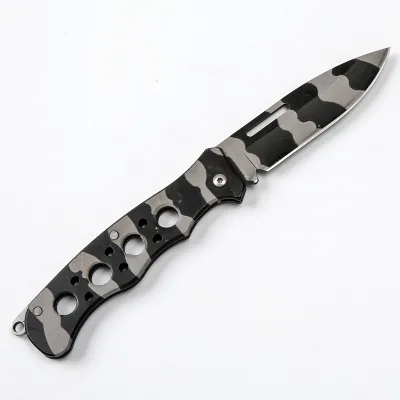
Camping Knife Folded Outdoor Hunting Survival Camping Combat Pocket Knife
$2.80 - $3.02
MOQ: 400 Pieces


Folding Knife Cutting Knife Portable Knife with Wood Handle Camping Knives
$1.00 - $19.99
MOQ: 500 Pieces

Stainless Steel Best Quality Hunting Knife for Camping Application Camping Knife
$1.00 - $19.99
MOQ: 500 Pieces

Outdoor Outdoor New Camping Knife Portable Multifunctional Tactical Knife
$1.00 - $19.99
MOQ: 500 Pieces


Folding Knife Pocket Knife Camping Knife Hunting Knife Survival Knife (#31120)
$1.00 - $10.00
MOQ: 1200 Pieces




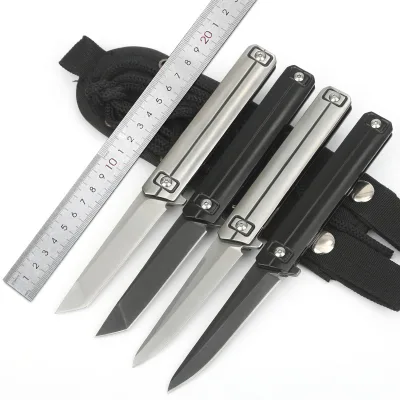
Comprehensive Sourcing Guide
Strategic Sourcing Guide for Industrial and Tactical Camping Knives
Understanding the Technical Landscape of Camping Knife Specifications
When sourcing camping knives for B2B procurement, the first critical step is defining the precise technical specifications required for the intended application. The market offers a diverse array of configurations, ranging from fixed blades designed for heavy-duty tasks to folding mechanisms for portability. Based on current market observations, buyers must navigate a complex matrix of dimensions, materials, and finishing processes.
A primary observation in the current supply landscape is the variation in blade length. Specifications observed in the market include lengths of 160mm, 178mm, 212mm, 215mm, and 220mm, with some listings referencing imperial measurements such as 7 inches, 8.3 inches, 8.46 inches, 8.6 inches, and 9 inches. This variance suggests that a single SKU rarely fits all use cases; a procurement strategy must account for the specific operational needs of the end-user. For instance, a 220mm blade with a 126mm handle offers a different balance compared to a 178mm blade with a 102mm handle.
Blade thickness is another critical differentiator. Data indicates thicknesses ranging from 2.3mm to 3.8mm. A thicker blade, such as one at 3.8mm, typically provides greater durability and structural integrity for tasks like chopping or prying, whereas a 2.3mm blade offers a sharper edge and lighter weight, suitable for precision cutting or food preparation. The material composition is consistently identified as Stainless Steel, which is the industry standard for corrosion resistance in outdoor environments. Furthermore, the handle material is frequently specified as Wood, offering a traditional aesthetic and grip, though the "High Quality" material designation suggests variations in the grade of steel or composite materials used in other segments.
The finishing process also plays a significant role in product performance and aesthetics. Common finishes observed include Titanium Plating, Grey Titanium Plating, and Black Plating. These coatings are not merely cosmetic; they often serve to reduce glare, enhance corrosion resistance, and improve the knife's longevity in harsh conditions. Buyers should verify that the plating process is robust, as poor application can lead to peeling or flaking during heavy use.
Compliance, Certification, and Standard Verification
In the B2B sector, compliance is as vital as the physical product. While specific certification names are not universally standardized across all listings, buyers must rigorously verify that products meet relevant safety and quality standards. The market data shows a mix of standard designations, including "OEM" (Original Equipment Manufacturer) and specific model numbers like K1010, CB072, and FH-120. These model numbers serve as unique identifiers that allow buyers to trace production batches and ensure consistency.
One critical area of verification is the "prod_standard" attribute. Observed values include specific lengths (e.g., 160mm, 229mm) and measurements in inches (e.g., 8.6 inches, 9 inches). However, the presence of "OEM" as a standard in some listings indicates that the product may be manufactured to a buyer's specific requirements rather than a pre-existing industry standard. This requires the procurement team to establish clear technical drawings and tolerance limits before placing an order.
Regarding certifications, while the provided data does not list specific third-party certifications (such as ISO or ASTM), the "New" condition and "High Quality" material descriptions imply that the products are manufactured to current production standards. Buyers should request documentation proving that the stainless steel used meets specific chemical composition standards for corrosion resistance, particularly if the knives are intended for marine or humid environments. Additionally, the "Finished" attributes like Titanium Plating should be backed by adhesion test results to ensure the coating does not degrade under normal usage conditions.
Cost Drivers and Pricing Dynamics
The pricing structure for camping knives is influenced by several key factors, including material quality, finishing complexity, and customization levels. The observed price range in the market spans from $0.69 to $19.99 USD. This wide disparity indicates that cost is not solely a function of the knife's size but is heavily driven by the finishing process and the level of customization.
A knife with a simple Black Plating finish and a standard wooden handle will likely fall at the lower end of the price spectrum. Conversely, a knife featuring Grey Titanium Plating, a custom logo, and a specialized folding mechanism will command a higher price point. The "Customization: Available" attribute is a significant cost driver. Customization often involves setting up new molds, adjusting production lines, and managing smaller batch sizes, all of which increase the unit cost.
The Minimum Order Quantity (MOQ) also impacts the effective cost per unit. The observed MOQ range is from 1 to 2000 units. For buyers seeking to test the market or fulfill small-scale orders, an MOQ of 1 allows for low-risk sampling. However, for large-scale distribution, an MOQ of 2000 units is typical, which can significantly reduce the per-unit cost through economies of scale. Buyers must balance the need for customization and low MOQs against the budget constraints of the project.
Typical Applications and Usage Scenarios
The versatility of camping knives is evident in the diverse usage categories observed in the market. The data lists applications including Industrial Knife, Combat Knife, Hunting Knife, Utility Knife, Multi Functional Knife, Camping Knife, and Kitchen Knife. This broad spectrum indicates that a single product line can often serve multiple market segments, provided the specifications align with the specific task.
For outdoor enthusiasts, the "Camping Knife" and "Hunting Knife" categories are paramount. These applications require a balance of sharpness, durability, and portability. The "Folding" attribute is particularly relevant here, as folded knives are easier to carry in a pocket or pack. However, the data also notes "Unfolded" configurations, which are typically preferred for heavy-duty tasks like processing game or clearing brush.
In industrial or utility contexts, the "Industrial Knife" and "Utility Knife" designations suggest a need for robustness and safety. A 3.8mm thick blade with a 220mm length would be ideal for these applications, offering the necessary leverage and strength. The "Portable" attribute further supports the idea that these knives are designed for mobility, whether for a field technician or a hiker.
Supplier Evaluation and Origin Analysis
When evaluating potential suppliers, the geographic origin of the product is a critical factor. The data identifies two primary manufacturing hubs: Ningbo, China, and Yangjiang, China. Both locations are renowned for their metallurgical expertise and established supply chains for cutlery. Ningbo is often associated with a broader range of industrial manufacturing, while Yangjiang is historically known as the "Cutlery Capital of China," suggesting a deep specialization in knife production.
Suppliers from these regions typically offer the "OEM" and "Customizable" services observed in the market. This means buyers can work directly with manufacturers to tailor the product to their brand specifications. However, the presence of multiple model numbers (e.g., CB015, CB044, CB163, CB309, FH-120, FH-121) suggests that many suppliers operate with a catalog of standard models that can be adapted.
Buyers should evaluate suppliers based on their ability to maintain consistency across batches. The "New" condition and "High Quality" material claims must be backed by a supplier's quality management system. Additionally, the "Packing" options, ranging from standard "Carton" to "Leather Sheath" and "Customizable" packaging, indicate that suppliers should be flexible in their logistics solutions. A supplier that offers "Customizable" packing can help buyers reduce shipping costs or enhance the unboxing experience for end-users.
Quality Control and Long-Term Procurement Considerations
Ensuring long-term success in procurement requires a robust quality control (QC) strategy. Given the wide range of specifications, from 160mm to 229mm lengths and 2.3mm to 3.8mm thicknesses, a one-size-fits-all QC approach is insufficient. Buyers must implement a sampling plan that verifies critical dimensions, material composition, and finish durability.
The "Finished" attributes, such as Titanium Plating and Black Plating, require specific testing protocols. Buyers should verify that the plating adheres properly and does not flake under stress. This can be tested through adhesion tests and abrasion resistance checks. Similarly, the "Handle Material: Wood" requires inspection for cracks, splinters, or poor finishing that could compromise the grip or safety of the user.
Long-term procurement considerations also involve the stability of the supply chain. The "Lead time" and "MOQ" values observed (1-2000 units) suggest that buyers should plan for potential fluctuations in demand. For high-volume orders, securing a contract with a supplier who can handle an MOQ of 2000 units ensures a steady supply. For smaller orders, the flexibility of an MOQ of 1 allows for agile market testing.
Furthermore, the "Logo: OEM" attribute highlights the importance of branding. Buyers should ensure that the supplier has the capability to apply logos consistently and accurately, as this is a key differentiator in the B2B market. The "Packing: Customizable" option also plays a role in long-term branding, allowing buyers to create a cohesive product experience.
Comparative Analysis of Key Product Attributes
To facilitate decision-making, the following table summarizes the key attributes observed in the market, highlighting the variations that buyers must consider.
| Attribute | Observed Range/Options | Procurement Implication |
|---|---|---|
| Blade Material | Stainless Steel | Standard for corrosion resistance; verify grade. |
| Handle Material | Wood | Traditional grip; check for finish quality and durability. |
| Blade Length | 160mm to 229mm (7" to 9") | Match to intended use (precision vs. heavy duty). |
| Blade Thickness | 2.3mm to 3.8mm | Thicker for durability; thinner for sharpness. |
| Folding | Folded / Unfolded | Folded for portability; Unfolded for stability. |
| Finish | Black, Grey Titanium, Titanium Plating | Affects aesthetics and corrosion resistance. |
| Packing | Carton, Leather Sheath, Customizable | Impacts shipping cost and brand presentation. |
| Origin | Ningbo, Yangjiang (China) | Established manufacturing hubs with OEM capabilities. |
| Customization | Available (Logo, Packing, Specs) | Enables branding but may increase cost and lead time. |
| MOQ | 1 to 2000 units | Determines minimum investment and inventory risk. |
| Price Range | $0.69 - $19.99 USD | Wide variance based on specs and customization. |
Conclusion
Sourcing camping knives requires a meticulous approach that balances technical specifications, cost drivers, and supplier capabilities. The market offers a rich variety of options, from compact folding knives to robust fixed blades, each with unique attributes regarding length, thickness, and finish. By understanding the nuances of the observed data—such as the specific model numbers, origin locations, and customization options—buyers can make informed decisions that align with their strategic goals.
The key to successful procurement lies in rigorous verification of quality, clear communication of specifications, and a flexible approach to supplier relationships. Whether sourcing for industrial applications, outdoor recreation, or retail distribution, the ability to navigate the diverse landscape of camping knives will ensure a competitive edge in the market. Buyers should prioritize suppliers who demonstrate a commitment to quality, offer transparent customization options, and can scale production to meet varying demand levels.
FAQs
What blade materials are used for these camping knives?
The blades are made of Stainless Steel, which is the industry standard for corrosion resistance. This material ensures durability in outdoor environments while maintaining a sharp edge for various cutting tasks.
Can I customize the logo and packaging for these knives?
Yes, customization is available for both the logo and the packaging. Buyers can request OEM branding and choose from options like carton boxes or leather sheaths to match their specific brand requirements.
Which locations manufacture these camping knives?
The knives are manufactured in Ningbo and Yangjiang, China. Both locations are established hubs for cutlery production, offering reliable supply chains and expertise in metalworking and finishing processes.
How does the blade thickness affect the knife performance?
Blade thickness ranges from 2.3mm to 3.8mm, influencing durability and sharpness. Thicker blades offer structural integrity for heavy tasks, while thinner blades provide a sharper edge for precision cutting.
What is the price range for these camping knives?
The observed price range spans from 0.69 to 19.99 USD per unit. The cost varies based on factors like finishing processes, customization levels, and the specific model specifications selected.
Which folding options are available for these knives?
Both folded and unfolded configurations are available in the market. Folded knives offer portability for pocket carry, while unfolded fixed blades provide stability for heavy-duty industrial or camping tasks.