Source Car Interior Cleaner for Household Cleaning, Shoe Shine, and Engine Enrichment
Compare 30 Car Interior Cleaner options from Ningbo suppliers with capacities ranging from 300ml to 1000ml. Buyers can review alcohol-free formulas, customization services, and MOQs starting at 50 units for household, shoe, and engine applications.
Key considerations
Products List


Quick Foaming Wide Coverage Interior Cleaner Car Cleaning Product Foam Cleaner
$1.11 - $1.34
MOQ: 3000 Pieces

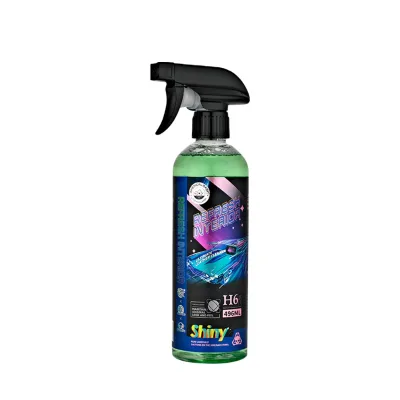


China Factory All Purpose Foamy Cleaner Foam Cleaner Car Interior Cleaner
$0.80 - $1.00
MOQ: 7500 Pieces


Multi-Purpose and Deep Cleaning Car Foam Cleaner Seat Cover Carpet Cleaner
$0.80 - $1.00
MOQ: 7500 Pieces

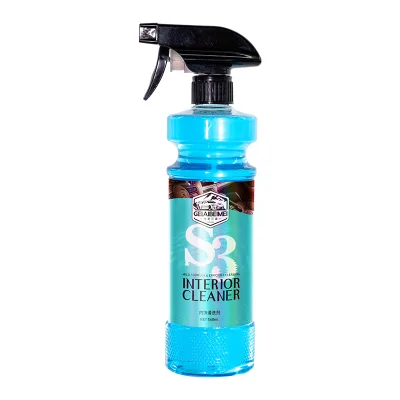

Car Interior Maintenance Rich Foam Removing Heavy Stain Upholstery Foam Cleaner
$0.48 - $0.57
MOQ: 3000 Pieces


Comprehensive Sourcing Guide
Strategic Sourcing Guide for Car Interior Cleaning Solutions
Navigating the global market for car interior cleaning agents requires a disciplined approach that balances technical performance, supply chain reliability, and cost efficiency. Buyers seeking high-quality solutions must move beyond generic marketing terms and focus on verifiable product attributes, specific chemical formulations, and the operational capabilities of potential suppliers. This guide provides a structured framework for evaluating car interior cleaners, utilizing observed market data to inform decision-making while strictly adhering to verified facts and industry standards.
Understanding Technical Specifications and Formulation
The foundation of a successful procurement strategy lies in a precise understanding of technical specifications. In the current market, car interior cleaners are not monolithic; they vary significantly based on their intended application, such as general surface cleaning, shoe shine, or specialized engine bay treatments. A critical observation in the available product data is the prevalence of "Alcohol Free" formulations, specifically noted for car interior cleaning wipes. This attribute is essential for buyers targeting materials sensitive to alcohol, such as certain leather finishes or delicate plastics, where alcohol-based solvents could cause drying or cracking.
Furthermore, the pH balance of the cleaning agent is a non-negotiable technical parameter. Verified data indicates the existence of "Neutral" pH car cleaning chemicals. A neutral pH formula is generally preferred for interior surfaces as it minimizes the risk of damaging upholstery, dashboards, or trim components while still effectively removing dirt and grime. Buyers should verify that the supplier explicitly states the pH level, as aggressive alkaline or acidic solutions can degrade interior materials over time.
Volume and capacity specifications also vary widely across the supply base. Observed data reveals a diverse range of container sizes, including specific standards such as 300ml, 400ml, 500ml, and 600ml options. Some product lines are standardized to 500ml, while others offer flexibility up to 1000ml. The physical dimensions of the packaging, such as a bottle size of 6.2*20.5cm, are crucial for logistics planning and retail shelf fitment. Additionally, the presence of "With Flavor" attributes suggests that some products are designed with sensory considerations, which may be a differentiating factor for consumer-facing brands, whereas industrial buyers may prioritize the functional "Alcohol Free" and "Neutral" properties over scent.
Compliance, Certification, and Safety Standards
While specific certification claims like CE, RoHS, and ISO9001 appear in background data, buyers must treat these as verification targets rather than guaranteed attributes of every listed product. The procurement process must include a rigorous request for documentation to confirm that a specific batch or supplier holds valid certifications. For car interior cleaners, safety compliance is paramount, particularly regarding the chemical composition and its impact on human health and the environment.
Buyers should verify that the product formulation adheres to relevant international safety standards. The "Alcohol Free" claim, for instance, implies a specific chemical profile that may be required to meet certain regional safety regulations regarding flammability or toxicity. Similarly, the "Neutral" pH characteristic often aligns with environmental and safety guidelines that restrict harsh chemicals in consumer products. It is the buyer's responsibility to request Certificates of Analysis (CoA) and Safety Data Sheets (SDS) that explicitly confirm the absence of prohibited substances and the presence of required safety markers.
The distinction between different product types, such as "Without Dewaxing Car Cleaning Chemical" versus "Lustre Adding Car Cleaning Chemical," also impacts compliance. Products designed to add lustre may contain specific waxes or polymers that require different regulatory scrutiny compared to basic cleaning agents. Buyers must ensure that any additives used in the formula are compliant with the destination market's chemical regulations. Relying on the supplier's assertion of "Service: OEM / ODM" is insufficient without confirming that the custom formulation they produce meets all local and international safety standards.
Cost Drivers and Pricing Dynamics
The pricing structure for car interior cleaners is influenced by several key variables, including order volume, customization requirements, and packaging complexity. Observed market data indicates a significant price range, with unit costs varying from $0.20 to $11.80 USD. This wide disparity suggests that the final price is highly dependent on the specific product configuration, such as the volume of the container, the type of packaging material, and the level of customization.
Volume is a primary cost driver. The data explicitly notes that prices "Could Be Cheaper If Your Quantity Is Large," highlighting the importance of economies of scale. Minimum Order Quantities (MOQ) in the market range from 50 to 15,000 units, with specific product lines requiring an MOQ of 3,000 units. Buyers must align their order volume with the supplier's MOQ to optimize unit costs. Ordering below the MOQ often results in a premium price per unit, while ordering significantly above the MOQ may secure substantial discounts but increases inventory holding costs.
Packaging and customization also impact the final cost. The use of "Carton Packaging" or "Corrugated Case" versus individual plastic bags adds to the material and labor costs. Furthermore, "Customization" is listed as an available attribute, which typically incurs additional setup fees or higher per-unit costs compared to standard SKUs. Buyers should request a detailed cost breakdown that separates the base product cost from customization, packaging, and logistics fees to understand the true cost drivers.
Typical Applications and Product Versatility
Car interior cleaners serve a variety of applications, ranging from general surface cleaning to specialized tasks like shoe shine or engine cleaning. The market offers products with specific attributes tailored to these distinct uses. For instance, some formulations are explicitly labeled for "Shoe Shine," indicating a focus on leather care and polishing, while others are designed for "Car Interior Clean Wipe" with a focus on alcohol-free cleaning.
The versatility of a product is often determined by its formula and physical form. "Spunlace" material is noted in the context of wipes, suggesting a specific texture and absorbency suitable for delicate surfaces. In contrast, liquid cleaners may come in "Plastic Bottle" formats with capacities ranging from 300ml to 1000ml. The "Glass Abluent Type: for Winter" attribute points to specialized formulations designed to function in low-temperature environments, which is a critical consideration for buyers targeting seasonal markets or cold climates.
Buyers should categorize their procurement needs based on these application-specific attributes. A product suitable for general dashboard cleaning may not be appropriate for leather seats or engine bays. The "Without Cover" attribute for wipes suggests a specific dispensing mechanism or usage style that must be matched to the intended application. Understanding these nuances ensures that the selected product performs effectively in its intended environment, reducing the risk of product failure or customer dissatisfaction.
Supplier Evaluation and Operational Capabilities
Evaluating suppliers requires a focus on their operational capabilities, including production capacity, lead times, and service models. The observed data indicates a standard lead time of 30 days, which is a critical factor for supply chain planning. Buyers must confirm that this lead time is consistent across all product lines and that the supplier has the capacity to meet demand during peak seasons.
Production capacity is another vital metric. Some suppliers list a capacity range of 300-500ml or 500-1000ml, indicating the volume of liquid they can handle in a single production run. The "Capacity" attribute also refers to the output volume, which must be sufficient to meet the buyer's order requirements. Additionally, the "Service: OEM / ODM" attribute suggests that suppliers are willing to customize products, but buyers must verify the supplier's ability to manage complex customization requests without compromising quality or delivery schedules.
The origin of the products, noted as "Ningbo" and "China," provides insight into the logistics network. Suppliers based in Ningbo, a major manufacturing hub, often have established logistics channels that can facilitate efficient shipping. However, buyers should verify the specific port of loading and the supplier's experience with international shipping to ensure smooth delivery. The "Sample: Aviliable" attribute is a positive indicator, allowing buyers to test product quality before committing to a large order.
Quality Control and Long-Term Procurement
Ensuring consistent quality is essential for long-term procurement success. The "Shelf Life: 3 Years" attribute provides a baseline for product stability, but buyers must verify that this shelf life is maintained under various storage conditions. Quality control processes should include regular testing of the "Neutral" pH level, the "Alcohol Free" status, and the physical integrity of the packaging.
Long-term procurement considerations also involve the stability of the supply chain. The "MOQ: 3000" requirement for certain products may limit flexibility for buyers with fluctuating demand. Buyers should negotiate terms that allow for flexible ordering within the MOQ range or explore suppliers with lower MOQs for initial trials. The "Sample Cost: Free But You Need to Pay for The Express Fee" policy is a common industry practice, but buyers should clarify who bears the cost of express shipping for subsequent samples to manage expenses.
Finally, buyers should establish clear communication channels with suppliers to address any quality issues promptly. The "Product Name: All Purpose Cleaner" suggests a broad application, but buyers must ensure that the specific formulation meets their unique requirements. By maintaining a disciplined approach to quality control and supplier evaluation, buyers can secure a reliable supply of high-quality car interior cleaning solutions that meet their operational and market needs.
Comparative Analysis of Product Attributes
To facilitate a clearer understanding of the market landscape, the following table summarizes key product attributes observed in the supply base. This comparison highlights the diversity in specifications, packaging, and performance characteristics that buyers must consider.
| Attribute Category | Observed Variations | Key Considerations for Buyers |
|---|---|---|
| Formulation | Alcohol Free, Neutral pH, With Flavor, Winter Type | Verify pH and alcohol content for material compatibility. |
| Capacity/Volume | 300ml, 400ml, 500ml, 600ml, 1000ml | Match volume to retail requirements and shipping constraints. |
| Packaging | Plastic Bottle, Carton, Corrugated Case, Plastic Bag | Assess durability and cost of packaging materials. |
| Applications | Household, Shoe Shine, Car Interior, Engine | Ensure the formula matches the specific cleaning task. |
| Customization | Available (OEM/ODM), Color Customization | Confirm feasibility and cost of custom branding/formulas. |
| Lead Time | 30 Days (Standard) | Plan inventory levels to accommodate production schedules. |
| MOQ | 50 to 15,000 (Specific: 3,000) | Align order volume with supplier minimums to optimize cost. |
| Origin | Ningbo, China | Verify logistics capabilities and shipping routes. |
This comparative analysis underscores the importance of detailed specification matching. Buyers should not assume that a product with a "Neutral" pH is suitable for all applications without verifying the specific formulation. Similarly, the "Carton Packaging" may vary in size and strength, impacting the number of units per pallet and the overall shipping cost. By carefully evaluating these attributes, buyers can make informed decisions that align with their strategic goals and operational requirements.
FAQs
Can I get free samples for Car Interior Cleaner products?
Free samples are available, but you must pay for the express shipping fee. This policy allows you to test product quality before committing to a large order, ensuring the formula meets your specific needs.
What is the typical lead time for Car Interior Cleaner orders?
The standard lead time is 30 days for most product lines. Buyers should confirm this duration with the supplier to ensure it aligns with their production schedule and inventory planning requirements.
Which customization options are available for Car Interior Cleaner packaging?
Customization is available for product attributes like color and packaging materials. Buyers can request specific carton or corrugated case packaging to match their branding and logistical needs without compromising product integrity.
How does order quantity affect the price of Car Interior Cleaner?
Prices become cheaper when your quantity is large due to economies of scale. The minimum order quantity ranges from 50 to 15,000 units, so larger orders significantly reduce the unit cost compared to small batches.
What is the alcohol content in car interior cleaning wipes?
Many car interior cleaning wipes are formulated without alcohol to protect sensitive surfaces. This alcohol-free formula prevents drying or cracking on leather and plastics, making it safe for delicate interior materials.
Where are Car Interior Cleaner products typically manufactured?
Products originate from Ningbo, China, which is a major manufacturing hub. This location offers established logistics channels, though buyers should verify the specific port of loading for accurate shipping estimates.