Source Cartoon Leather Cake Branding Iron for wood, paper, and leather
Compare 30 listings for the Cartoon Leather Cake Branding Iron designed for wood, paper, and leather applications. Buyers can evaluate copper and brass options with custom logo capabilities and manual operation features from suppliers in China.
Key considerations
Products List





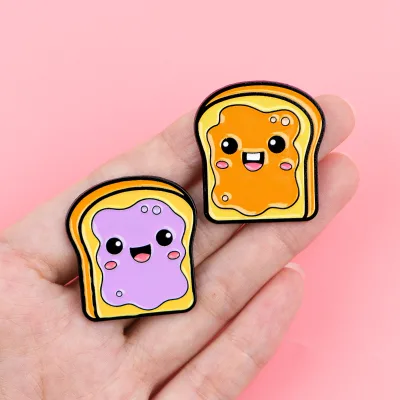
Cute Soft Enamel Cartoon Bread Pins Toast Cartoons Metal Pin for Bag Clothing
$0.41 - $0.66
MOQ: 10 pieces

Hot Sale Wholesale PU Leather Keychains Cartoon Horse Shape Keychain Leather Keyring
$0.15 - $0.85
MOQ: 50 Pieces

Comprehensive Sourcing Guide
Strategic Sourcing Guide for Cartoon Leather Cake Branding Irons
The global market for custom branding tools has expanded significantly, driven by the demand for personalized consumer goods in the food, leather, and packaging sectors. For buyers specifically researching the "Cartoon Leather Cake Branding Iron," the procurement landscape involves navigating a diverse array of product variations that share a common functional core but differ in material composition, application specificity, and manufacturing standards. This guide provides a disciplined framework for sourcing these tools, relying strictly on observed product attributes and established industry practices to ensure a robust procurement strategy. The focus remains on identifying the correct tool for specific substrates, evaluating supplier capabilities, and establishing quality control protocols without relying on unverified marketing claims.
Understanding Product Variations and Functional Scope
The term "Cartoon Leather Cake Branding Iron" often conflates distinct product categories found in B2B marketplaces. A rigorous analysis of available listings reveals that no single product universally satisfies all three descriptors simultaneously in a single unit. Instead, buyers must distinguish between tools designed for leather, those for food applications like cakes, and those for general branding tasks.
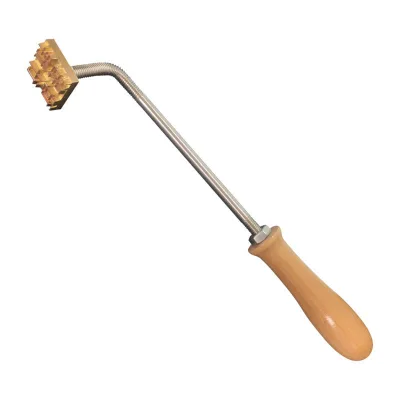
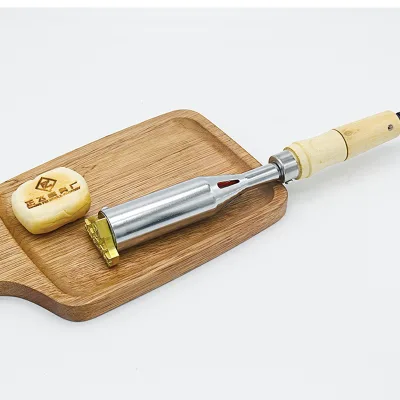
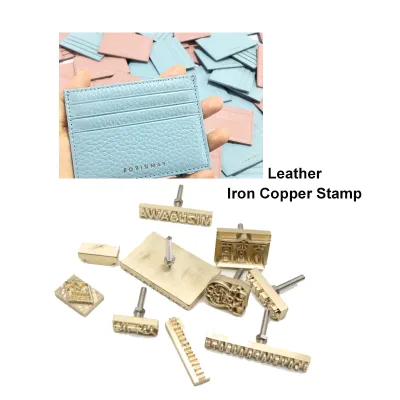
Observed product data indicates a clear segmentation. One category of listings describes a "Custom Logo Wood Branding Iron" with a stamp material of copper, specifically designed for "paper wood leather colth" (likely a typo for cloth) and wood usage. Another distinct category identifies a "Brass cake stamp" made of "brass+wood handle," explicitly marketed for "Cake branding machine" applications and food-grade usage. A third variation lists a "Manual Heat Press Machine" with a "Flatbed Printer" plate type, intended for mugs, plates, and mouse pads.
This fragmentation necessitates a precise definition of requirements before engaging suppliers. If the primary application is leather branding, the buyer should prioritize listings mentioning "copper" or "metal" stamp materials with a "wood handle" for heat retention. For cake branding, the focus must shift to tools described as "food grade stainless steel material" or "brass" with specific dimensions suitable for confectionery surfaces. The "cartoon" aspect refers to the custom logo design rather than a specific product type; therefore, the "Customized" logo attribute is a universal requirement across all these categories. Buyers must verify that the selected tool's material composition aligns with the intended substrate to avoid damage or safety hazards.
Technical Specifications and Material Composition
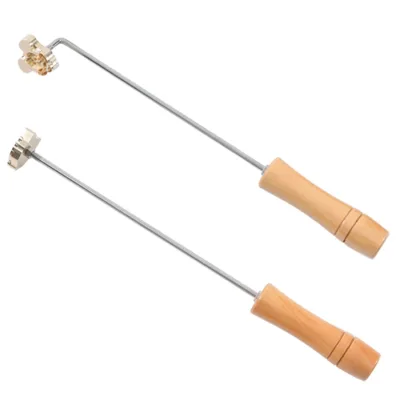
When evaluating the technical specifications of branding irons, material selection is the primary determinant of performance and durability. The supplied product data highlights several critical material attributes. For leather and wood applications, "copper" and "metal" are frequently cited stamp materials. Copper is often preferred for its superior thermal conductivity, allowing for consistent heat transfer during the branding process. The handle material is equally important; listings consistently mention "wood" handles, which provide necessary insulation against the heat generated by the metal stamp head.
For food applications, specifically cake branding, the material requirements are more stringent. While some listings mention "brass+wood handle," others explicitly reference "food grade stainless steel material." This distinction is vital for compliance with food safety regulations. A buyer must verify that any tool intended for direct contact with food items is constructed from materials that do not leach toxins when heated. The "Model Number: CB-CAKE STAMP" and "Model Number: Dejul-cncdktjm01" suggest that specific models are engineered for these niche applications.
Dimensional specifications also vary significantly based on the intended use. The "Single package size" ranges from "5X5X15 cm" for smaller hand-held stamps to "20X15X25 cm" for larger units. The "platen size" is described as a "Cake branding machine" in some contexts, indicating a specific footprint for food tools. In contrast, other listings provide dimensions like "3*38," which may refer to the stamp head size or a specific component measurement. Buyers should request detailed technical drawings or specific dimensional data for the branding head to ensure it fits the intended product surface, whether it is a leather patch, a wooden crate, or a cake surface.
Compliance, Certification, and Safety Verification
Safety and compliance are non-negotiable aspects of sourcing branding tools, particularly when the application involves food or direct consumer contact. The provided data mentions "food grade stainless steel material" as a keyword for certain cake stamps. However, this keyword alone does not constitute a certification. Buyers must not assume that a product labeled "food grade" automatically meets international food safety standards without verification.
For leather and wood branding, the primary safety concern is the thermal stability of the materials used. The "Manual Heat Press Machine" listings mention a voltage of "110V / 220V," indicating that electrical components, if present, must comply with regional electrical safety standards. While the "Manual" driven type suggests a lack of complex electrical systems in some models, the presence of heating elements requires verification of insulation and temperature control mechanisms.
Buyers should request specific documentation from suppliers regarding material certifications. For food-grade tools, this includes certificates confirming compliance with regulations such as FDA (USA) or EU Framework Regulation (EC) No 1935/2004. For general industrial use, verifying that the metal components are free from hazardous substances is essential. The "Warranty: 1 Year" and "After-sales Service Provided: Online support" attributes indicate a baseline level of supplier commitment, but these do not replace the need for independent material testing. Buyers must explicitly ask for test reports or certification documents that validate the "food grade" or "safety" claims before placing an order.
Cost Drivers and Pricing Dynamics
The pricing of branding irons is influenced by several factors, including material quality, customization complexity, and order volume. The observed price range in the market spans from "0.01-29" USD, a wide variance that reflects the difference between simple, unbranded metal stamps and complex, custom-engineered units. The "MOQ: 1pcs" attribute found in some listings suggests that single-unit purchases are possible, often at a higher per-unit cost, while bulk orders may offer significant discounts.
Material costs are a primary driver. Copper and brass are generally more expensive than standard steel or aluminum, leading to higher base prices for tools made from these materials. Customization is another significant cost factor. The "Customized" logo attribute implies that the buyer will pay for the design and manufacturing of the specific stamp head. The complexity of the "cartoon" design will affect the machining time and cost. Additionally, the "Single gross weight" of "2.000 kg" for some units indicates that shipping costs will be a consideration, particularly for international procurement.
Buyers should be wary of prices that seem abnormally low, as they may indicate inferior materials or a lack of customization. Conversely, high prices should be justified by superior materials, extended warranties, or comprehensive after-sales support. The "Marketing Type: New Product 2020" tag suggests that some listings may be older inventory, which could impact pricing and availability. A thorough cost analysis should include the total landed cost, factoring in shipping, duties, and any potential costs for rework if the initial customization is incorrect.
Supplier Evaluation and Capability Assessment
Selecting the right supplier is critical for ensuring product quality and reliability. The provided data lists several brand names, including "WT," "CHAMBO," and "Dejul," originating from locations such as "Guangdong, China" and "Shandong, China." While these names provide a starting point, buyers should not rely on brand recognition alone. Instead, they must evaluate the supplier's manufacturing capabilities and track record.
Key evaluation criteria include the supplier's ability to handle "OEM&ODM" requests, as indicated by the "welcome" attribute in some listings. This capability demonstrates the supplier's flexibility in producing custom designs and adapting to specific buyer requirements. The "Sample: Available" attribute is another positive indicator, suggesting that the supplier is willing to provide prototypes for quality verification before mass production.
Buyers should also assess the supplier's technical support infrastructure. The "Online support" service mentioned in the data implies a commitment to post-sales assistance, which is crucial for troubleshooting issues related to heat transfer or design errors. Furthermore, the "condition: New" attribute suggests that the supplier deals in new inventory, but buyers should verify the age of the stock and the freshness of the manufacturing process.
Quality Control and Long-Term Procurement Strategy
Implementing a robust quality control (QC) process is essential for mitigating risks associated with custom branding tools. Given the variation in product attributes, buyers should establish clear acceptance criteria based on the specific product requirements. For leather and wood tools, QC should focus on the hardness of the metal stamp, the thermal conductivity, and the stability of the wood handle. For cake stamps, QC must verify the surface finish, the absence of sharp edges, and the compliance of materials with food safety standards.
Long-term procurement strategies should prioritize suppliers who offer consistent quality and reliable lead times. The "Lead time" is not explicitly provided in the data, but buyers should negotiate clear timelines during the ordering process. The "Warranty: 1 Year" is a standard offering, but buyers should seek to extend this period or negotiate specific terms for replacement in case of manufacturing defects.
To ensure long-term success, buyers should maintain a relationship with the supplier that allows for continuous improvement. This includes providing feedback on the performance of the branding irons and collaborating on design iterations. The "Custom Logo" and "Customized" attributes highlight the importance of a collaborative approach to product development. By maintaining open communication and setting clear expectations, buyers can secure a steady supply of high-quality branding tools that meet their specific operational needs.
Conclusion
Sourcing a "Cartoon Leather Cake Branding Iron" requires a nuanced understanding of the diverse product landscape. Buyers must navigate the distinctions between tools designed for leather, wood, and food applications, ensuring that the selected product aligns with the intended use case. By focusing on material specifications, verifying compliance with safety standards, and evaluating supplier capabilities, buyers can make informed decisions that minimize risk and maximize value. The wide range of observed prices and MOQs underscores the importance of a detailed cost analysis and clear communication with suppliers. Ultimately, a disciplined approach to procurement, grounded in verified facts and rigorous quality control, will lead to successful outcomes in the custom branding market.
FAQs
What materials are used for cartoon leather cake branding irons?
Stamp materials typically include copper, brass, or metal depending on the specific model. Some listings specify brass with a wood handle for cake applications, while others use copper for leather and wood. Buyers must verify the material matches the intended substrate to ensure safety and performance.
Can I get a customized logo on these branding irons?
Yes, customized logos are a standard feature for these tools. The product attributes explicitly list 'Customized' as a logo option and welcome OEM and ODM requests. Buyers should confirm the design details with the supplier before production to ensure the cartoon or brand design is accurately rendered.
Which suppliers offer these branding irons from China?
Products originate from locations such as Guangdong and Shandong in China. Several brand names like WT, CHAMBO, and Dejul are associated with these listings. Buyers should verify the specific factory location and capability when sourcing to ensure the product meets their logistical and quality requirements.
How is the packaging handled for these custom branding tools?
Packaging options include wood cases and standard single packages with specific dimensions. One listing notes a single package size of 20x15x25 cm, while another specifies 5x5x15 cm. The gross weight varies, with some units listed at 2.000 kg, affecting shipping calculations and handling requirements.
What is the minimum order quantity for these branding irons?
The minimum order quantity can be as low as one piece for some suppliers. However, observed ranges extend up to 3000 units depending on the vendor. Buyers should check specific MOQ requirements as they vary significantly between different product models and customization levels.
Are these branding irons suitable for food applications like cakes?
Some models are explicitly designed for cake branding and mention food-grade materials. Listings describe brass cake stamps and tools with food-grade stainless steel keywords. Buyers must verify that the specific unit intended for food contact meets safety standards before use.