Source Cartridge Oil Filter for Medicine, Industry, and Metallurgy
Compare 30 available Cartridge Oil Filter options tailored for medicine, food and beverage, industry, and metallurgy applications. Buyers can evaluate specifications such as filtration accuracy, pressure ratings, and material types to find the right solution for their needs.
Key considerations
Products List


$5.00 - $50.00
MOQ: 50 Pieces


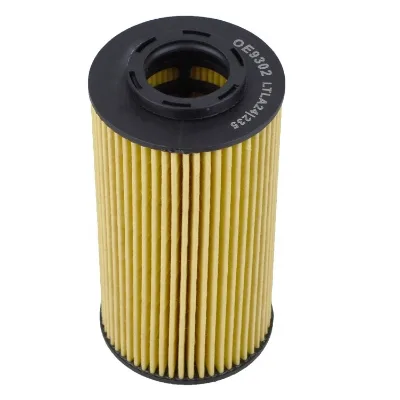


Durable High-Performance Oil Separation Filter Cartridge for Efficient Use
$32.00 - $50.00
MOQ: 2 Pieces


Comprehensive Sourcing Guide
Strategic Sourcing Guide for Cartridge Oil Filters
Understanding Technical Specifications and Performance Metrics
When sourcing cartridge oil filters, the primary objective is to align product specifications with the specific operational demands of the machinery. The market offers a diverse array of configurations, ranging from standard polypropylene (PP) elements to specialized hydraulic oil filter cartridges. A critical observation in the current supply landscape is the variation in filtration grades. Buyers must verify whether the supplier offers a medium filter grade or a high-precision option, as the filtration fineness typically ranges from 1μm to 100μm depending on the intended application. This range dictates the filter's ability to remove contaminants, from large particulates to microscopic debris.
Physical dimensions are equally critical for compatibility. The industry standard for length often includes 10, 20, 30, and 40-inch options, with the 20-inch model frequently appearing as a baseline specification. However, outer diameter (OD) and inner diameter (ID) tolerances must be scrutinized. Common OD measurements observed in the market include Φ60mm, Φ63mm, and Φ65mm, while ID options typically center around Φ28mm and Φ30mm. Mismatching these dimensions can lead to installation failures or bypass valve issues. Furthermore, the maximum working pressure is a vital safety parameter; available data indicates a maximum pressure rating of 0.5MPa for certain standard models, though high-pressure hydraulic systems may require different engineering solutions.
The material composition also defines the filter's longevity and chemical resistance. While some products are constructed from metal to withstand harsh industrial environments, others utilize PP (polypropylene) for cost-effective, single-use applications. The construction type is predominantly cartridge-based, designed to fit into specific housings. Buyers should also consider the maximum working temperature, which can reach up to 100 Celsius in certain high-heat applications. Ignoring these thermal limits can result in material degradation and catastrophic filter failure.
Compliance, Certification, and Standard Verification
In the B2B procurement of industrial filtration components, compliance is not merely a formality but a risk mitigation strategy. The supply chain for cartridge oil filters often originates from China, where manufacturers may adhere to various international standards. A key certification frequently cited in product listings is ISO9001:2015, which indicates that the supplier maintains a quality management system. However, buyers must treat this as a verification point rather than an automatic guarantee of product quality. The presence of a certificate should be confirmed through direct request for documentation, as the mere mention of "Standard Component" or "Non-Standard Component" in a listing does not inherently validate the manufacturing process.
Standardization varies significantly across the sector. Some products are marketed as adhering to standard dimensions such as 9090163mm or 8010070mm, while others offer fully customized dimensions. It is essential to distinguish between "Standard Component" and "Non-Standard Component" claims. A product labeled as a "Standard Component" implies interchangeability with existing OEM parts, whereas a "Non-Standard Component" requires custom tooling and specific engineering validation. Buyers should verify if the supplier offers "Customized" or "Non-Customized" options based on their inventory constraints.
Additionally, the distinction between "Standard" and "Customized" packing methods, such as carton cases versus wooden boxes, impacts logistics and compliance with international shipping regulations. While some suppliers claim to offer "Neutral Carton Cases" or "Customized" packing, the actual compliance with export standards depends on the specific destination country's requirements. Buyers must ensure that the supplier's documentation explicitly states the applicable standards for the specific model number, such as "8010070mm" or "20 Inch PP," to avoid receiving non-compliant goods.
Cost Drivers and Pricing Dynamics
The pricing of cartridge oil filters is influenced by a complex interplay of material costs, manufacturing complexity, and order volume. The observed price range in the market spans from $0.38 to $500, reflecting the vast difference between basic PP filters and high-performance hydraulic elements. Several factors drive these costs. First, the filtration efficiency plays a significant role; filters claiming a 99.99% efficiency rate or a filtration accuracy of less than or equal to 10μm often command a premium due to the advanced media and manufacturing precision required.
Second, the working life of the filter is a major cost determinant. Products with a claimed working life of 3500 to 5200 hours or 2000 hours are priced differently based on the durability of the media and the structural integrity of the housing. Longer service life reduces the frequency of replacement, lowering the total cost of ownership despite a higher initial unit price. Third, the degree of customization affects pricing. "Customized" models, which may involve unique dimensions like 8010070mm or specific pressure ratings, generally incur higher costs than standard off-the-shelf items.
Minimum Order Quantity (MOQ) is another critical cost driver. The market observes an MOQ range from 1 to 2000 units. For small businesses or maintenance teams requiring immediate replacement parts, an MOQ of 1 allows for low-risk testing, albeit at a higher per-unit cost. Conversely, large-scale industrial procurement can leverage MOQs of 2000 to negotiate better pricing, though this requires significant upfront capital and storage capacity. Buyers must balance the trade-off between unit price and inventory holding costs when determining the optimal order quantity.
Typical Applications and Industry Segmentation
Cartridge oil filters serve a broad spectrum of industries, each with unique filtration requirements. The primary application sectors identified in the market include Medicine, Food and Beverage, Industry, and Metallurgy. In the Medicine and Food and Beverage sectors, hygiene and purity are paramount, often necessitating filters with high filtration efficiency and specific material certifications to prevent contamination. The "Oil Filter" designation in these contexts often refers to lubrication systems in medical devices or processing machinery where particle removal is critical for product safety.
In the broader Industrial and Metallurgy sectors, the focus shifts to durability and high-pressure performance. Hydraulic oil filter elements are extensively used in heavy machinery, such as excavators and presses, where the filter must withstand high pressures and abrasive contaminants. The "Air Compressor" application is another significant segment, where filters function as devices for removing tiny air particles to protect compressor internals. In these high-stress environments, the working life of the filter, often measured in thousands of hours, is a key performance indicator.
The versatility of the product is further highlighted by its use in various fluid types. While some filters are designated specifically for "Oil Filter" applications, others serve as "Air Filter" components, demonstrating the dual capability of certain cartridge designs. The "Function" of these devices is consistently described as the removal of particles, whether from oil or air streams. Buyers must carefully map their specific machinery requirements to these application categories to ensure the selected filter meets the operational demands of their specific environment.
Supplier Evaluation and Operational Capabilities
Evaluating a supplier for cartridge oil filters requires a deep dive into their operational capabilities and manufacturing transparency. A "Direct Factory" status is a significant indicator of potential cost savings and supply chain reliability, as it eliminates middlemen and provides direct access to production processes. However, buyers should verify this claim by requesting facility audits or video tours. The "Brand" reputation, such as "Mikovs," can also serve as a proxy for quality, though it should not be the sole criterion for selection.
The supplier's ability to handle customization is another vital evaluation metric. The market shows a mix of "Customization: Available" and "Customized: Non-Customized" offerings. A supplier that can accommodate "Customized" requests, including specific dimensions and packing requirements, offers greater flexibility for unique machinery. Conversely, a supplier offering only "Non-Customized" items may be more efficient for standard replacements but less adaptable to specialized needs.
Logistics and delivery methods are also crucial. The "Delivery Method" of "Express" suggests a focus on speed, which is beneficial for urgent maintenance needs. However, buyers must assess the reliability of this service and the associated costs. The "Condition" of the product, typically listed as "New," should be verified to ensure no refurbished or used items are being sold as new. Additionally, the "Weight" of the product, such as 0.3kg, can impact shipping costs and handling requirements, especially for large orders.
Quality Control and Long-Term Procurement Considerations
Implementing a robust quality control (QC) process is essential for mitigating the risks associated with Cartridge Oil Filter procurement. Buyers should establish clear acceptance criteria based on the observed specifications, such as filtration accuracy, pressure ratings, and dimensional tolerances. The "Filtration Efficiency" claims, ranging from 99% to 99.99%, must be validated through third-party testing or supplier-provided test reports. Relying solely on marketing claims without verification can lead to equipment damage and downtime.
Long-term procurement considerations extend beyond the initial purchase. The "Working Life" of the filter, typically 2000 to 5200 hours, should be monitored to optimize replacement schedules. Overusing a filter beyond its rated life can compromise the entire system, while replacing it too frequently increases operational costs. Buyers should analyze the "Color" and physical appearance of the filter, as deviations from the "Picture Showed" can indicate manufacturing inconsistencies.
Furthermore, the "Packing" method, whether "Carton," "Wooden Box," or "Carton and Wooden Box," plays a role in product preservation during transit. Proper packaging ensures that the filter arrives in pristine condition, free from damage that could compromise its structural integrity. Finally, the "Standard Component" status should be reviewed to ensure compatibility with existing systems, reducing the risk of retrofitting costs. By focusing on these quality and operational factors, buyers can secure a reliable supply chain for their critical filtration needs.
Comparative Analysis of Product Attributes
To facilitate informed decision-making, the following table summarizes key product attributes observed in the market, highlighting the variability that buyers must navigate.
| Attribute Category | Observed Options | Critical Verification Point |
|---|---|---|
| Filtration Grade | Medium Filter | Verify specific micron rating (1μm-100μm) for application. |
| Dimensions (Length) | 10", 20", 30", 40" | Confirm exact fit with housing; 20" is common baseline. |
| Dimensions (Diameter) | OD: Φ60-65mm; ID: Φ28-30mm | Check tolerance against OEM specifications. |
| Pressure Rating | 0.5MPa | Ensure rating exceeds system operating pressure. |
| Material | Metal, PP | Select based on chemical compatibility and temperature. |
| Efficiency | 99%, 99.99% | Request test data to validate efficiency claims. |
| Working Life | 2000h, 3500-5200h | Align with maintenance schedules and cost targets. |
| Customization | Available, Non-Customized | Determine need for bespoke dimensions or packing. |
| Certification | ISO9001:2015 | Verify current certificate validity with supplier. |
| Origin | China | Assess lead times and logistics from origin. |
This comparison underscores the necessity of detailed specification matching. The wide range of options, from standard to customized, requires a disciplined approach to selection. Buyers must prioritize the specific technical requirements of their machinery over generic market trends to ensure optimal performance and reliability.
FAQs
What filtration accuracy does the Cartridge Oil Filter offer?
The filter offers a filtration accuracy of less than or equal to 10 micrometers. This range supports applications in medicine, food and beverage, and industry sectors where particle removal is critical for system protection.
Which dimensions are available for the 20-inch PP filter model?
The 20-inch model features outer diameters of 60mm, 63mm, or 65mm and inner diameters of 28mm or 30mm. These standard dimensions ensure compatibility with various housing units in industrial and hydraulic systems.
Can the supplier provide customized packing options for orders?
Yes, customization is available for packing methods including cartons, wooden boxes, or neutral cases. Buyers can request specific packaging to meet export requirements or protect the product during transit.
What is the maximum working pressure rating for these filters?
The maximum working pressure is rated at 0.5MPa for standard models. This limit applies to typical applications in oil filtration systems where moderate pressure is required for safe operation.
How long is the expected working life of the hydraulic filter element?
The working life ranges from 2000 to 5200 hours depending on the specific model and operating conditions. Filters designed for air compressors or hydraulic systems are engineered for extended durability in industrial environments.
Which certifications are verified for the Cartridge Oil Filter products?
The products hold ISO9001:2015 certification indicating a quality management system is in place. Buyers should verify this documentation directly as it confirms adherence to international manufacturing standards.