Find Cat 6 Ethernet Patch Cord for LAN Networks, Data Centers, and VoIP Systems
Browse 30 listings for the Cat 6 Ethernet Patch Cord and compare conductor materials, shielding types, lengths, certifications, and pricing from multiple suppliers. Filter by UTP or FTP construction and request samples or quotes for your LAN cable projects.
Key considerations
Products List


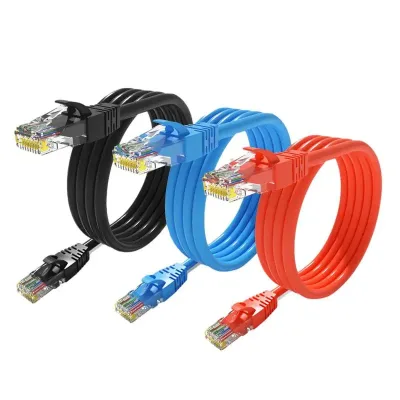


Comprehensive Sourcing Guide
Cat 6 Ethernet Patch Cord Sourcing Guide
Product Scope and Observed Listing Signals
The market for Cat 6 Ethernet patch cords presents a diverse array of options, primarily characterized by their application in local communication and local area network (LAN) infrastructure. Buyers will observe listings that explicitly identify these cables as essential components for data transmission, with transfer rates typically spanning from 1 to 40 Gbps and transmission distances ranging between 30 and 100 meters. The core material is predominantly copper, often specified as bare copper wire, though some suppliers offer variations such as BC, CCS, CCA, TC, CU, or CCAG conductors. This variation in conductor material is a critical observation point, as it directly influences conductivity, durability, and overall signal integrity, requiring buyers to align their technical requirements with the specific material composition offered.
Listing signals indicate a high degree of customization availability, allowing procurement teams to tailor products to specific project needs. Attributes such as customizable colors, lengths, and packaging formats are frequently highlighted, with options ranging from standard carton boxes to individual poly bag packing. The observed price range is notably low, extending from 0.1 to 3.2 USD, which suggests a competitive market with numerous suppliers offering budget-friendly solutions. However, the minimum order quantity (MOQ) varies significantly, starting from as low as 1 unit up to 10,000 units, providing flexibility for both small-scale IT upgrades and large-scale enterprise deployments. Buyers must carefully evaluate these listing signals to ensure that the advertised customization and pricing align with their specific volume and technical requirements.
Technical Specifications to Verify
When evaluating Cat 6 patch cords, the distinction between unshielded twisted pair (UTP) and shielded variants is paramount. Listings frequently reference models such as UTP-CAT6 and UTP CAT6A, alongside shielded twisted pair (STP) standards like stp cat6 and stp cat5e. Buyers must verify the specific construction of the cable, including whether the conductor type is stranded or solid, as this affects flexibility and installation suitability. Stranded conductors are generally preferred for patch cords due to their flexibility, while solid conductors are more common in permanent link installations. Additionally, the wire core material should be confirmed as bare copper wire to ensure optimal performance, and buyers should be cautious of listings that do not explicitly state the conductor type or material composition.
The physical and protective characteristics of the cable also require close scrutiny. Attributes such as waterproof, high-temperature resistant, dustproof, and chemical corrosion resistant properties are claimed by some suppliers, indicating suitability for harsh environments. Buyers should verify the allowed lateral pressure, which can range from less than 100 N/100mm to over 1000 N/100mm, and the allowed tensile strength, which is often specified as less than 100N. These mechanical specifications are crucial for ensuring the cable can withstand installation stresses and environmental conditions. Furthermore, the frequency bandwidth, which may range from 100 to 2000 MHz, should be confirmed to ensure compatibility with the intended network speed and performance requirements.
Compliance and Safety Documentation
Certification is a non-negotiable aspect of sourcing Cat 6 Ethernet patch cords, with RoHS compliance being a widely observed standard across listings. This certification ensures that the cables are manufactured without certain hazardous substances, aligning with environmental regulations in many markets. In addition to RoHS, some suppliers provide ISO, CE, CCC, and VDE certifications, which indicate adherence to international quality and safety standards. Buyers must verify the specific certifications held by the supplier, as the presence of multiple certifications can signal a higher level of manufacturing rigor and quality control. It is essential to request valid certification documents to confirm that the products meet the regulatory requirements of the destination market.
Beyond certifications, the wiring standard used in the patch cords must be verified to ensure compatibility with existing network infrastructure. The T568B standard is commonly referenced, but buyers should confirm that the supplier adheres to this or the T568A standard, depending on their specific network configuration. Incorrect wiring can lead to connectivity issues and reduced performance. Additionally, the product origin, often listed as China, should be considered in the context of supply chain reliability and quality consistency. Buyers should ensure that the supplier provides clear documentation regarding the manufacturing process and quality assurance protocols to mitigate risks associated with international sourcing.
Cost Drivers and Commercial Terms
The cost of Cat 6 Ethernet patch cords is influenced by several factors, including the conductor material, shielding type, and customization options. Listings often highlight "cheap price" as a key attribute, but buyers should be aware that lower prices may correlate with lower quality materials or less rigorous quality control. The observed price range of 0.1 to 3.2 USD suggests that significant price variations exist, driven by differences in material composition and manufacturing complexity. Buyers should request detailed quotes that break down costs by material, labor, and overhead to understand the true cost drivers and avoid hidden fees.
Commercial terms, such as MOQ and lead time, also play a significant role in the total cost of ownership. MOQs can range from 1 to 10,000 units, with some suppliers offering free samples where freight is paid by the customer. Lead times vary, with stock items potentially available within one week and normal orders taking up to 30 days. Buyers should negotiate terms that align with their project timelines and inventory management strategies. Additionally, packaging options, such as carton boxes or individual poly bags, may impact shipping costs and handling efficiency. Clear communication regarding these commercial terms is essential to avoid misunderstandings and ensure smooth procurement processes.
Supplier Qualification and Quality Control
Supplier qualification is critical when sourcing Cat 6 Ethernet patch cords, given the wide range of manufacturers and the potential for quality variations. Buyers should prioritize suppliers who provide comprehensive certification documentation, including RoHS, ISO, CE, CCC, and VDE, as these indicate a commitment to quality and regulatory compliance. The brand name, such as Kangda, may also serve as an indicator of supplier reputation and product consistency. Buyers should conduct due diligence on the supplier’s manufacturing capabilities, quality control processes, and track record to ensure that the products meet their technical and quality requirements.
Quality control measures should be verified through site audits or third-party inspections, focusing on key aspects such as conductor material, shielding integrity, and wiring standards. Buyers should request sample units for testing to evaluate performance characteristics, including transfer rate, transmission distance, and mechanical durability. The allowed lateral pressure and tensile strength should be tested to ensure the cables can withstand installation stresses. Additionally, buyers should inquire about the supplier’s defect rate and warranty policies to assess their confidence in product quality. Establishing a strong relationship with a qualified supplier is essential for ensuring consistent supply and quality over time.
Long-Term Procurement Checks
Long-term procurement success depends on establishing robust checks and balances to monitor supplier performance and product quality over time. Buyers should implement regular quality audits and performance reviews to ensure that the supplier continues to meet agreed-upon standards. This includes verifying that the conductor material, shielding type, and wiring standards remain consistent with initial specifications. Buyers should also monitor changes in certification status and regulatory requirements to ensure ongoing compliance. Regular communication with the supplier regarding any changes in manufacturing processes or materials is essential to maintain product quality and reliability.
Inventory management and supply chain resilience are also critical for long-term procurement. Buyers should work with suppliers to establish reliable lead times and inventory levels to avoid stockouts and production delays. The flexibility of MOQs and customization options should be leveraged to adapt to changing project requirements and market conditions. Additionally, buyers should consider diversifying their supplier base to mitigate risks associated with single-source dependency. By implementing these long-term procurement checks, buyers can ensure a stable and reliable supply of Cat 6 Ethernet patch cords, supporting the ongoing success of their network infrastructure projects.
FAQs
What conductor materials are available for cat 6 ethernet patch cords?
Listed options include bare copper, CCS, CCA, TC, CU, and CCAG conductors. Bare copper is generally preferred for stable performance in permanent links, while CCA and CCS reduce cost for short runs. Confirm the material explicitly when requesting quotes, since pricing and transmission behavior differ between conductor types.
Can I order cat 6 ethernet patch cords with custom lengths and colors?
Yes, customized lengths and colors are available, and the MOQ is 1000 pieces. Length is listed as customized rather than fixed, so specify your required length, jacket color, and packaging in the inquiry. Free samples are offered, with freight paid by the customer before placing a bulk order.
Which certifications do these cat 6 ethernet patch cords carry?
Certifications vary by listing: RoHS appears across all products, while some listings add CE and ISO, and one shows CCC and VDE as well. Always verify the exact certificate set for the specific model you intend to buy, since certification scope differs between individual listings on the page.
How fast can Cat 6 Ethernet Patch Cord orders be delivered?
Stock items ship within one week, while normal orders take about 30 days. Delivery time depends on whether the configuration you need is already in stock, since custom lengths, colors, and packaging require production. Confirm the current schedule with the supplier before committing to a project deadline.
What transmission performance can I expect from these cat 6 patch cords?
Listed specifications mention transfer rates of 1 to 40 Gbps and transmission distances of 30 to 100 meters, with Fluke testing passed on some listings. Actual performance depends on conductor material and cable category, so request test reports for the specific model before large purchases.
How are cat 6 ethernet patch cords packed for shipping?
Packing options include cartons, carton boxes with customization, and individual poly bag packing. OEM packing is also available, which is useful if you need your own branding. State your preferred packing format when inquiring so the supplier can quote the correct packaging cost.
Which jacket material is used on these cat 6 ethernet patch cords?
The listed cover material is PVC, and one CAT6A UTP patch cord is specified with an LSZH jacket. PVC is common and cost effective, while LSZH reduces smoke and halogen emissions, which matters for enclosed spaces. Choose the jacket type based on your installation environment and any applicable safety requirements.
Can I get a Cat 6 Ethernet Patch Cord sample before bulk ordering?
Yes, free samples are available, but the customer pays the freight cost. Sampling lets you verify conductor material, jacket quality, and Fluke test results before committing to the 1000 piece MOQ. Request samples of the exact model and specification you plan to order in bulk.