Source CE American Shopping Basket for Malls, Retail, and Shops
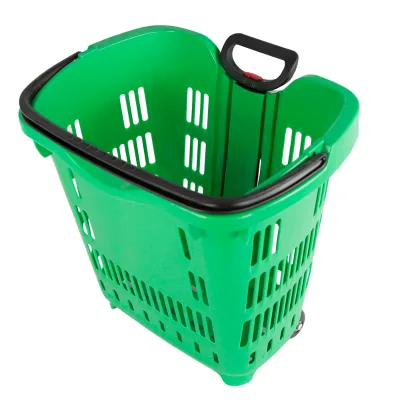
Explore 30 listings for the CE American Shopping Basket, comparing portable wheeled models with capacities from 20 to 80 liters. Buyers can evaluate durable plastic carts designed for shopping malls and cosmetic shops with options for customization and double handles.
Key considerations
Products List




Comprehensive Sourcing Guide
Strategic Sourcing Guide for CE-Certified American Shopping Baskets
Navigating the global procurement landscape for retail equipment requires a precise understanding of product categorization, regulatory compliance, and supply chain logistics. When sourcing "CE American shopping baskets," buyers must distinguish between the specific design characteristics of American-style carts and the regulatory frameworks that govern their entry into European and other international markets. The following guide synthesizes available product attributes and industry standards to provide a structured approach for procurement professionals. This analysis focuses on the intersection of functional design, material composition, and compliance verification without relying on unverified supplier claims or speculative market data.
Understanding Product Architecture and Design Specifications
The term "American Shopping Cart" in a B2B context typically refers to a specific structural design distinct from the European wire-frame or basket-only models. Based on observed product data, the American style often incorporates a robust frame, a large capacity volume, and specific wheel configurations designed for high-traffic environments like shopping malls. The observed product attributes indicate a clear divergence in design intent. Some listings describe "Portable & Wheeled" baskets, while others specify "Intelligent Shopping Carts," suggesting a spectrum from manual utility to technology-integrated solutions.
A critical observation in the current market data is the variation in physical dimensions. Specific product models, such as ZC-22 and ZC-21, exhibit standard dimensions of 520380900mm and 520310255mm respectively. Other models like ZC-3 and ZC-1-A show significantly smaller footprints, measuring 450315270mm and 460320250mm. These variations are not merely aesthetic; they dictate the utility of the unit. The larger dimensions (approaching 900mm in height) align with the traditional American cart profile, offering a high center of gravity and substantial storage volume, often ranging from 20 to 80 liters. Conversely, the smaller dimensions suggest a portable basket variant, likely intended for specialized retail environments or as a secondary cart for smaller stores.
Buyers must verify the "Type of Shopping Basket" attribute carefully. The data distinguishes between "Portable" and "Portable & Wheeled" units. The presence of a "Double" handle configuration is a notable feature in several listings, which enhances user ergonomics and stability during transport. Furthermore, the "Folded" attribute is listed as "Unfolded" for the primary American cart models, indicating that these units are designed as rigid, non-collapsible structures. This is a crucial distinction for logistics planning, as non-foldable units require more complex shipping arrangements compared to collapsible alternatives. The material composition is consistently identified as "Plastic," often with a "Powder Coating" finish, which provides durability and resistance to corrosion in high-moisture environments like grocery aisles.
Compliance Verification and Certification Protocols
The core keyword includes "CE," which stands for Conformité Européenne. This marking indicates that a product meets EU safety, health, and environmental protection requirements. However, the presence of a "CE" certification in product listings must be treated as a verification point rather than an automatic guarantee. The provided data lists "Ce" as a certificate attribute for specific models, but it also includes a low-confidence background note regarding CE certification, emphasizing the need for buyer diligence.
In the context of shopping carts, CE certification is not a single monolithic standard but a declaration of conformity against various directives, such as the Machinery Directive or General Product Safety Directive, depending on the cart's features. For "Intelligent Shopping Carts" that may include electronic components, additional directives regarding electromagnetic compatibility (EMC) and low voltage (LVD) may apply. Buyers should not assume that a "CE" label on a plastic basket implies full compliance without requesting the specific Declaration of Conformity (DoC) from the supplier.
The verification process should focus on the following:
- Documentation Request: Require the supplier to provide the official DoC, which must be signed by an authorized representative within the EU.
- Technical File: Ask for the technical construction file that details the risk assessment, design calculations, and test reports supporting the CE claim.
- Model Specificity: Ensure the certification covers the exact model number (e.g., ZC-22, YD-ZC1) being purchased, as certifications are often model-specific.
- Third-Party Validation: For high-volume orders, consider engaging a third-party inspection agency to verify that the physical product matches the certified technical file.
It is important to note that while the data mentions "Ce" as a certificate, it does not specify the testing body or the specific standard version. Therefore, buyers must treat the CE claim as a preliminary indicator that requires rigorous validation before finalizing any procurement contract.
Cost Drivers and Economic Factors in Procurement
The economic landscape for sourcing American shopping baskets is influenced by several dynamic factors, including material costs, customization requirements, and order volume. The observed price range in the market spans from $0.12 to $25 USD. This wide disparity suggests that the unit price is heavily dependent on the specific model, material grade, and feature set. The lower end of the spectrum likely corresponds to basic, non-customized plastic baskets, while the higher end may include intelligent carts with electronic integration or heavy-duty industrial-grade units.
A primary cost driver is the "Customization" attribute. The data indicates that customization is "Available" for some models but "Non-Customized" for others. Specifically, "Customized Color" orders often trigger a Minimum Order Quantity (MOQ) of 300 pieces, whereas standard orders may have an MOQ of 100 pieces. This tiered pricing structure means that buyers seeking unique branding or color schemes must factor in the higher volume requirement, which impacts the total capital expenditure. Additionally, the "Logo" attribute is listed as "Free" in some contexts, but this is often contingent on meeting the higher MOQ thresholds.
The "MOQ" (Minimum Order Quantity) is another significant economic variable. The observed range spans from 20 to 2000 pieces, with a high-confidence fact stating an MOQ of 100 pieces for certain models. This variability allows buyers to scale their orders based on budget and storage capacity. However, the "Customized Color" MOQ of 300 pieces acts as a barrier to entry for small retailers seeking bespoke solutions. Buyers must calculate the total cost of ownership, including the per-unit price, shipping costs for non-foldable units, and the potential cost of holding inventory if the MOQ exceeds immediate needs.
Furthermore, the "Packing" specifications, such as "5-30PCS/Carton" or "Carton+ Bubble Film," influence logistics costs. The "Standred" (Standard) and "Stand Carton" packing methods suggest variations in protective packaging that can affect the unit's vulnerability during transit. For heavy units weighing between 0.8kg and 3kg, the packaging density and stacking strength are critical to preventing damage, which in turn affects the insurance and replacement costs associated with the shipment.
Typical Applications and Operational Environments
The utility of American shopping baskets is defined by their intended "Usage" environments. The data explicitly lists "Shopping Mall" as a primary application, which aligns with the robust design and large volume (20-68L or 25-80L) of these units. In high-traffic mall environments, the durability of the "Plastic" material and the "Four Wheels" configuration are essential for smooth navigation and load-bearing capacity. The "Durable" feature attribute reinforces the suitability of these carts for commercial settings where they are subjected to constant use.
Beyond general retail, the data highlights specific applications such as "for Cosmetics Shops." This suggests that smaller, more portable variants of the American cart design are utilized in specialized retail sectors where aesthetics and space efficiency are paramount. The "Intelligent Shopping Cart" classification points to emerging applications in modern retail, where carts may be equipped with sensors, digital displays, or payment integration to enhance the customer experience. These intelligent units likely command a higher price point and require different maintenance protocols compared to standard manual carts.
The "Structure" of the unit, described as a "Basket," indicates a design focused on containment and visibility. This is particularly relevant for self-service environments where customers need to easily see their items. The "Double" handle design further supports this by allowing for better control in crowded aisles. Buyers should match the cart's volume and structural integrity to their specific operational needs. For instance, a large shopping mall would benefit from the 900mm height and 80L volume of the ZC-22 model, whereas a boutique cosmetics shop might prefer the compact 250-315mm dimensions of the ZC-1-A or ZC-3 models.
Supplier Evaluation and Origin Verification
When evaluating potential suppliers for American shopping baskets, the "prod_origin" attribute provides a critical starting point. The data consistently identifies "China" and specifically "Jiangsu, China" as the origin locations. Jiangsu is a known manufacturing hub for plastic products and retail equipment, offering a concentration of specialized factories. However, the presence of a specific location does not guarantee quality or reliability. Buyers must conduct due diligence on the specific factory's capacity, quality management systems, and export history.
The "Customization" and "OEM" (Original Equipment Manufacturer) attributes are key indicators of a supplier's flexibility. The data shows that "OEM" is "Optional" and "Customized" is "Available" for some models but "Non-Customized" for others. This suggests a tiered supplier base, where some manufacturers offer full-service customization (including design, color, and logo) while others provide off-the-shelf solutions. Buyers seeking a long-term partnership should prioritize suppliers who demonstrate a robust OEM capability, as this indicates the ability to adapt to changing market demands and branding requirements.
The "Finish" attribute, listed as "Can Be as Request," further underscores the importance of supplier communication. This implies that the supplier has the capability to apply specific finishes, such as the observed "Powder Coating," but the quality of this finish depends on the supplier's equipment and process control. Buyers should request samples of the finish to verify adhesion, color consistency, and resistance to chipping or scratching before placing a large order.
Quality Control and Long-Term Procurement Considerations
Ensuring the long-term viability of the procurement strategy requires a focus on quality control (QC) and after-sales support. The "Condition" of the products is listed as "New," which is a baseline expectation, but the "Durable" attribute suggests a need for rigorous testing of the product's lifespan. Given the "Four Wheels" and "Plastic" construction, buyers should verify the quality of the wheel bearings and the structural integrity of the plastic joints. These are common failure points in shopping carts and can lead to significant downtime and replacement costs.
The "Packing" specifications, such as "Export Carton" and "Carton+ Bubble Film," are critical for maintaining product quality during transit. Buyers should ensure that the packing method is sufficient to protect the units from impact and moisture, especially for international shipments from China. The "Standard" dimensions provided in the data (e.g., 520380900mm) must be cross-referenced with the actual product dimensions to ensure that the packing density is optimized for container loading, thereby reducing shipping costs.
Long-term procurement considerations also include the availability of spare parts and the supplier's ability to support the product lifecycle. For "Intelligent Shopping Carts," the availability of electronic components and software updates is crucial. Buyers should negotiate service level agreements (SLAs) that cover warranty periods, response times for technical support, and the availability of replacement parts. The "Customized Color" MOQ of 300 pieces also implies a need for a stable supply chain to ensure that color consistency is maintained across multiple production runs.
In conclusion, sourcing CE-certified American shopping baskets requires a balanced approach that integrates technical specification analysis, rigorous compliance verification, and strategic supplier evaluation. By focusing on the specific attributes observed in the market data—such as dimensions, material, and customization options—buyers can make informed decisions that align with their operational needs and regulatory requirements. The wide range of available models, from basic portable baskets to intelligent carts, offers flexibility, but it also demands a disciplined procurement process to ensure quality and value.
FAQs
What is the typical MOQ for CE American Shopping Basket orders?
The standard minimum order quantity is 100 pieces for most models. However, orders requiring customized colors have a higher threshold of 300 pieces to proceed with production.
Can I get a CE American Shopping Basket with a custom logo?
Yes, logo customization is available as a free service for many models. This option is typically subject to meeting specific minimum order quantities to be cost-effective.
Which specifications define the size of these shopping carts?
Dimensions vary by model, with common sizes like 520 by 380 by 900 millimeters for larger units. Smaller portable variants may measure around 450 by 315 by 270 millimeters.
How much does a CE American Shopping Basket weigh?
The weight ranges from 0.8 kilograms to 3 kilograms depending on the specific model and material thickness. Heavier units often feature more robust frames for high-volume mall usage.
Are these shopping baskets made of plastic or metal?
The primary material used for these units is plastic, often finished with powder coating for durability. Some models may include metal components for the wheel axles or frame reinforcement.
What is the volume capacity of these shopping carts?
Capacity varies between 20 and 80 liters depending on the specific product model selected. Larger American-style carts generally offer the higher end of this volume range.
Can I source ce american shopping baskets from Jiangsu, China?
Yes, many manufacturers are located in Jiangsu, China, which is a known hub for this equipment. Buyers can filter suppliers by this specific origin to ensure regional consistency.