Source CE Certified Moving Wash Lamp for Stage, Club, and Wedding
Explore 30 CE Certified Moving Wash Lamp options tailored for professional venues. Buyers can compare key attributes like beam angle, power consumption, and control modes to find the right fixture for stage, club, and wedding events.
Key considerations
Products List






Comprehensive Sourcing Guide
Strategic Sourcing Guide for CE Certified Moving Wash Lamps
Understanding the Technical Landscape of Moving Wash Lamps
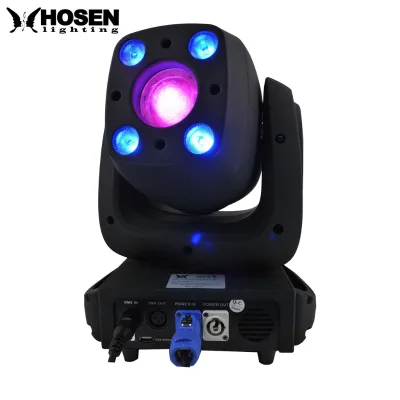
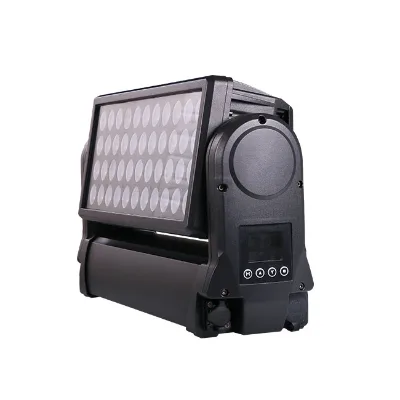
The category of moving wash lamps represents a sophisticated segment of stage lighting, designed to provide broad, even illumination with dynamic movement capabilities. Unlike traditional spotlights that focus on a narrow beam, wash lamps are engineered to cover larger areas, making them essential for creating atmospheric effects in complex environments. When sourcing these units, buyers must first distinguish between the specific optical and mechanical attributes that define performance. The core functionality relies on a combination of high-intensity light sources and precise pan-tilt mechanisms.
Based on observed product attributes, the light source technology is predominantly LED, offering significant advantages in energy efficiency and longevity compared to older discharge lamp technologies. Specific models in the market feature configurations such as 14 pieces of 5W LEDs or 40W LED modules, which dictate the intensity and color mixing capabilities. The emitting color is typically changeable, with RGB (Red, Green, Blue) configurations being standard for achieving a full spectrum of hues. This color mixing is often enhanced by optical elements such as prisms, where a 3+6-facet prism design can split the beam into multiple patterns, adding texture to the wash effect.
The optical performance is further defined by the beam angle and zoom capabilities. While some units offer a fixed beam angle of 25 degrees, others provide a variable zoom range, such as 7 to 50 degrees, allowing the operator to adjust the spread of the light from a tight spot to a wide wash. The beam angle is a critical specification; for instance, a narrower angle of 8° to 15° might be observed in specific moving heads, whereas wash units generally require wider angles. The diffuser material also plays a role in light quality, with polycarbonate and tempered glass being common choices to ensure durability while maintaining light transmission.
Mechanical movement is another defining characteristic. High-performance units often boast a pan range of 540° and a tilt range of 270°, providing extensive coverage of the venue. The control interface is equally vital, with DMX signal control being the industry standard for integration into lighting consoles. The number of control channels varies by model, with configurations ranging from 22 to 24 channels, which determines the granularity of control over features like color, intensity, gobo rotation, and strobe speed. The strobe function itself is often adjustable, allowing for speed variations that can be synchronized with music or show cues.
Compliance and Certification Verification Protocols
For international procurement, particularly in markets with strict safety regulations, verifying compliance is not merely a formality but a critical risk mitigation strategy. The core keyword "CE certified" implies adherence to the European Union's safety, health, and environmental requirements. In the context of the observed product data, the certification status is frequently listed as CE and RoHS (Restriction of Hazardous Substances). These certifications indicate that the electrical components and materials used in the lamp do not contain hazardous substances and meet electromagnetic compatibility standards.
Buyers must treat certification claims as observations that require verification rather than absolute guarantees. The supplied data lists "CE RoHS SGS" and "SGS CE ROHS" as approved standards, suggesting that third-party testing by organizations like SGS may be involved in the validation process. However, the presence of a certificate number or a test report is the only definitive proof of compliance. When evaluating a supplier, the procurement team should request the actual test reports associated with the CE mark. It is important to note that while the observed data mentions these certifications, the buyer must ensure that the specific batch of products being purchased carries the valid documentation, as certification is often model-specific and not automatically transferable across all SKUs from a manufacturer.
The voltage specifications observed, ranging from 110V to 240V, indicate that many units are designed for universal input, which simplifies logistics for global buyers. However, the input voltage must match the local grid standards to prevent equipment failure. The electric current type is listed as AC, which is standard for mains-powered stage lighting. Additionally, the IP (Ingress Protection) rating is a crucial compliance metric for environmental durability. While some units are rated IP20, suitable for indoor use only, others may have different ratings. Buyers must verify the IP rating against the intended application environment; an IP20 rating is insufficient for outdoor use or dusty venues, whereas higher ratings would be necessary for such conditions.
Cost Drivers and Pricing Structure Analysis
The pricing of moving wash lamps is influenced by a complex interplay of technical specifications, build quality, and supply chain factors. The observed price range in the market spans from 1 USD to 1360 USD, a variance that reflects the vast difference between entry-level fixtures and high-end professional units. This wide spectrum indicates that price alone is not a reliable indicator of quality without a detailed breakdown of specifications.
Several key factors drive the cost of these units. The primary driver is the LED configuration and power consumption. Units with higher power ratings, such as 350W models, or those with a higher quantity of LEDs (e.g., 14 pieces of 5W), generally command a higher price due to the cost of the light engine and the associated heat management systems. The mechanical complexity of the pan-tilt mechanism also contributes significantly to the cost. A unit with a 540° pan and 270° tilt range requires more robust motors and gears than a simpler fixture, increasing manufacturing costs.
Material selection is another critical cost determinant. The shell and body materials observed include aluminum and aluminum alloy, which are preferred for their heat dissipation properties and durability. ABS plastic is also noted for certain components, likely the housing or diffusers, which may be used to reduce weight and cost in lower-tier models. The inclusion of high-quality optical elements, such as tempered glass diffusers or complex prism assemblies, adds to the manufacturing expense.
The packaging and shipping logistics also impact the final landed cost. The observed packing options include carton boxes and flight cases. Flight cases, which are heavy-duty protective containers, are more expensive to manufacture and ship but are essential for protecting expensive equipment during transport. The net weight of the units, ranging from 10.5kg to 21.5kg, directly influences shipping costs, which can be a significant portion of the total procurement budget for international buyers.
Minimum Order Quantity (MOQ) is another factor affecting the effective unit price. The observed MOQ range is 1 to 100 units. Buyers purchasing a single unit for a small venue will likely pay a higher per-unit price compared to those placing an order for 100 units, where economies of scale can reduce the cost. The warranty period, typically observed as 1 year, also factors into the pricing, as it represents a liability cost for the supplier that is often baked into the product price.
Typical Application Scenarios and Performance Requirements
The versatility of moving wash lamps makes them suitable for a diverse range of application scenarios. The observed data explicitly lists KTV, clubs, weddings, stages, discos, and concerts as primary use cases. Each of these environments imposes different performance requirements on the lighting equipment.
In nightclubs and KTV venues, the demand is for high-intensity, dynamic effects that can create an immersive atmosphere. The ability to change colors rapidly and the presence of adjustable speed strobes are critical features here. The wide beam angles and pan-tilt capabilities allow the lights to sweep across the dance floor, creating a sense of movement and energy. The durability of the unit is also paramount in these high-traffic environments, where the equipment may be subjected to frequent movement and potential physical impact.
Weddings and corporate events often require a more refined aesthetic. The ability to create soft, even washes of light is essential for illuminating the venue without harsh shadows. The zoom capabilities, allowing for adjustments between 7 and 50 degrees, are particularly useful here to adapt the light spread to the size of the room. The color mixing capabilities ensure that the lighting can match the theme of the event, whether it is a warm, romantic tone or a vibrant, celebratory palette.
Concerts and large-scale stage productions demand the highest level of performance. The power consumption of 350W units and the high brightness of LED arrays are necessary to cut through the darkness of large venues. The control channel count, often 24 channels, allows for precise synchronization with other lighting fixtures and media systems. The long lifespan of the LEDs, observed as 30,000 to 50,000 hours, is a crucial factor for touring productions where reliability is non-negotiable. The robust construction, with aluminum alloy bases and tempered glass diffusers, ensures that the fixtures can withstand the rigors of touring and frequent setup and teardown.
Supplier Evaluation and Geographic Considerations
When evaluating potential suppliers for CE certified moving wash lamps, buyers should focus on the supplier's location, production capabilities, and reputation. The observed product origin data points to Guangzhou and Guangdong in China as the primary manufacturing hubs. These regions are well-established centers for stage lighting manufacturing, offering a dense ecosystem of suppliers, component manufacturers, and logistics providers.
The concentration of suppliers in this region suggests a competitive market with a wide variety of options. However, buyers must exercise caution when selecting a supplier from this region. The presence of certifications like CE and RoHS should be verified through independent testing reports, as the proximity to manufacturing does not guarantee compliance. Buyers should request samples to test the actual performance of the units, including the accuracy of the color mixing, the smoothness of the pan-tilt movement, and the reliability of the DMX control.
Supplier evaluation should also include an assessment of their after-sales support and warranty terms. The observed warranty period is typically 1 year, which is standard for the industry. Buyers should clarify the terms of the warranty, including what is covered (e.g., LED failure, motor failure) and the process for claiming repairs or replacements. The availability of spare parts, such as fuses, drivers, and lenses, is also a critical factor in long-term procurement.
The packaging and shipping capabilities of the supplier are also important. The observed options of carton boxes and flight cases indicate that suppliers are equipped to handle different shipping needs. Buyers should ensure that the supplier can provide flight cases for high-value shipments to minimize the risk of damage during transit. The lead time for production and delivery should also be discussed, as this can impact project timelines. While specific lead times are not provided in the data, buyers should establish clear expectations regarding production schedules and shipping methods.
Quality Control and Long-Term Procurement Strategies
Implementing a robust quality control (QC) process is essential for ensuring that the purchased moving wash lamps meet the required standards. Given the technical complexity of these units, a simple visual inspection is insufficient. Buyers should consider implementing a multi-stage QC process that includes factory audits, pre-shipment inspections, and performance testing.
Factory audits can help verify the supplier's production capabilities and quality management systems. Buyers should look for evidence of standardized production processes, such as ISO certifications, and check the supplier's track record for delivering compliant products. Pre-shipment inspections should focus on verifying the physical condition of the units, checking for any cosmetic defects, and ensuring that the packaging is secure. Performance testing should be conducted on a sample basis to verify that the units meet the specified technical parameters, such as beam angle, color accuracy, and movement range.
Long-term procurement strategies should focus on building a sustainable relationship with reliable suppliers. This involves establishing clear communication channels, defining quality expectations, and negotiating favorable terms for future orders. Buyers should also consider the total cost of ownership, including energy consumption, maintenance costs, and the lifespan of the LEDs. The observed lifespan of 30,000 to 50,000 hours suggests that these units are designed for long-term use, but the actual lifespan can vary based on usage patterns and environmental conditions.
To mitigate risks, buyers should diversify their supplier base to avoid dependency on a single source. This strategy can help ensure continuity of supply in the event of production delays or quality issues with a specific supplier. Additionally, buyers should stay informed about industry trends and technological advancements to ensure that their procurement decisions remain relevant and competitive. By adopting a disciplined, evidence-based approach to sourcing, buyers can secure high-quality CE certified moving wash lamps that meet their specific needs and deliver value over the long term.
Comparative Analysis of Key Specifications
To facilitate informed decision-making, the following table summarizes the key specifications observed across different models in the market. This comparison highlights the variations in power, control, and optical features that buyers should consider when selecting the right unit for their application.
| Specification | Model LY-500S | Model LY-1405W | Model LY-740M | Model LY-1804W | Model FJG120P |
|---|---|---|---|---|---|
| LED Quantity | 14PCS 5W | 40W LED | N/A | N/A | N/A |
| Power Consumption | N/A | 350W | N/A | 250W | 250W |
| Control Mode | DMX Signal | 24CH | N/A | 22CH | N/A |
| Beam Angle | 25° | 8°-15° | N/A | N/A | 7-50 Degree |
| Pan Tilt Angle | N/A | Pan 540°, Tilt 270° | N/A | N/A | N/A |
| Material | Aluminum | N/A | Aluminum Alloy | N/A | N/A |
| Diffuser | Polycarbonate | N/A | Tempered Glass | N/A | N/A |
| IP Rating | N/A | N/A | IP 20 | N/A | N/A |
| Lifespan | 50000 hours | N/A | N/A | N/A | 30000h |
| Weight | N/A | N/A | 10.5kg | N/A | 21.5kg |
| Certification | CE, RoHS | CE, SGS, ROHS | N/A | N/A | N/A |
This table illustrates the diversity in the market, with different models optimized for specific applications. For instance, the LY-1405W offers a high power rating and extensive pan-tilt range, making it suitable for large venues, while the LY-500S focuses on a specific beam angle and long lifespan. Buyers should use this data as a starting point for their evaluation, ensuring that the selected unit aligns with their specific technical requirements and budget constraints.
FAQs
What certifications do these moving wash lamps hold?
These lamps hold CE and RoHS certifications, often verified by SGS. The product data lists CE RoHS SGS as approved standards, ensuring compliance with safety and environmental requirements for international markets.
Can I customize the control mode for these fixtures?
Yes, customization is available for the control mode. The units support DMX signal control, allowing integration with professional lighting consoles for precise management of color, strobe speed, and movement.
Which voltage range do these lamps support for global use?
The lamps support a wide voltage range from 110V to 240V. This universal input capability ensures compatibility with different electrical grids, though the specific unit must match the local AC power standard.
How long is the expected lifespan of the LED light source?
The LED light source has an expected lifespan of 50,000 hours. Some models may list 30,000 hours, but the high-confidence data confirms a 50,000-hour rating for the primary LED configuration.
What materials are used for the lamp body and diffuser?
The body is constructed from aluminum or aluminum alloy for heat dissipation. The diffuser is made of polycarbonate or tempered glass, ensuring durability while maintaining high light transmission quality.
Which application scenarios are these lamps designed for?
These lamps are designed for KTV, clubs, weddings, concerts, and stage events. The dynamic beam angles and color mixing capabilities make them suitable for creating atmospheric effects in these diverse environments.
Can the strobe speed be adjusted on these moving wash lamps?
Yes, the strobe speed is adjustable on these units. The product attributes confirm an adjustable speed strobe function, allowing operators to synchronize light effects with music or show cues.