Source Vacuum Disperser with PLC Control for Paint, Chemical, and Food
Find 30 Vacuum Disperser with PLC Control models from Henan, China. Compare specifications including motor power, stirring types, and mixing capacities to identify the right equipment for your industrial dispersion needs.
Key considerations
Products List
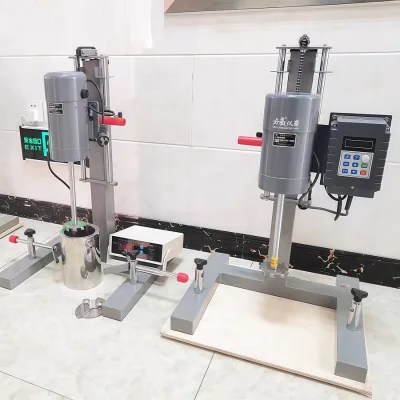
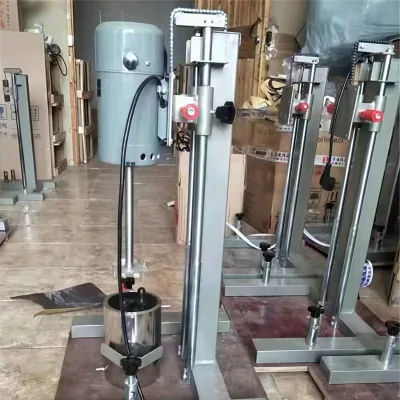
Laboratory Disperser with Remote Control & Cloud-Based Process Management
$300.00 - $400.00
MOQ: 1 pieces
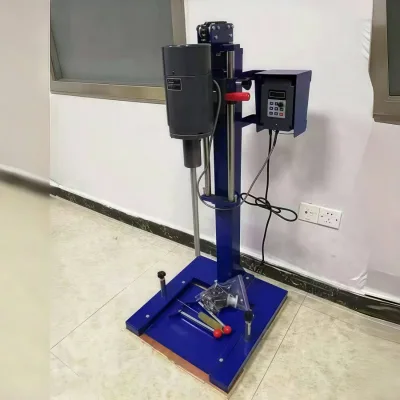
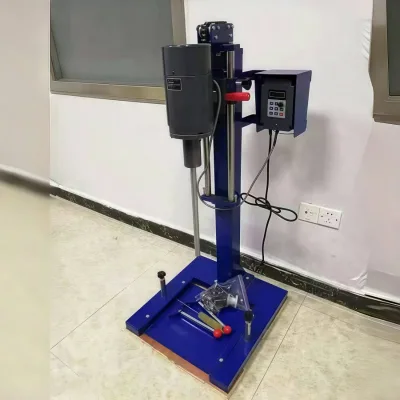
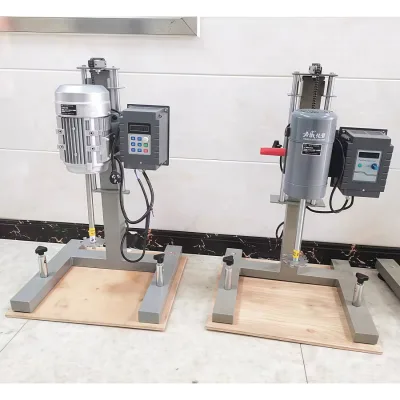
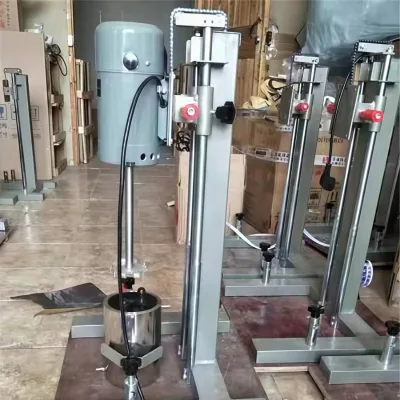


$99999.00
MOQ: 1 Pieces


Comprehensive Sourcing Guide
Vacuum Disperser with PLC Control Sourcing Guide
The Vacuum Disperser with PLC Control represents a critical asset for modern manufacturing lines requiring precise viscosity management and homogeneous mixing of complex formulations. These units integrate high-speed agitation mechanisms with automated control systems to manage the dispersion of powders into liquids, ensuring consistent product quality while minimizing operator intervention. The inclusion of PLC (Programmable Logic Controller) technology allows for the precise regulation of speed, mixing time, and vacuum pressure, which is essential for applications involving volatile solvents or sensitive chemical reactions where air entrapment must be eliminated.
Procurement of this equipment requires a clear understanding of the specific operational parameters, as the market offers a wide spectrum of configurations ranging from laboratory-scale units to industrial continuous mixers. Buyers must distinguish between models designed for high-viscosity fluids and those optimized for liquid with suspended solids, as the stirring type and disc diameter directly impact the final product's texture and stability. The decision to invest in a PLC-controlled system hinges on the need for repeatable batch processes, data logging capabilities, and the ability to adjust parameters remotely, which are standard expectations for facilities aiming to scale production without compromising quality control.
Product Scope and Observed Listing Signals
The observed product listings indicate a diverse range of capabilities, with specific models identified by model numbers such as FS-119, FS-75, and ECLJ100L-1000L, suggesting a modular approach to capacity and function. Listings frequently highlight a mixing capacity that spans from 500 to 999 liters up to 1000 liters and above, indicating that suppliers cater to both mid-sized batch operations and large-scale industrial requirements. The material composition is a primary signal of durability, with main materials listed as Stainless Steel, Carbon Steel, and Alloy Steel, allowing buyers to select units based on their specific corrosion resistance needs and the chemical nature of the substances being processed.
Listing signals also reveal significant variation in speed control and stirring mechanisms, with some units offering dual-speed or variable-speed options and stirring types ranging from diving to spiral configurations. The presence of keywords like "Efficient Agitation" and "High Speed Mixer" alongside specific speed ranges of 30-39 R/min or 1000-6000 Rpm suggests that the market includes both low-shear mixing for delicate applications and high-shear dispersion for rapid particle breakdown. Buyers should note that while some listings mention "Vacuum" as an additional capability, the specific implementation of vacuum systems and their integration with the PLC control logic must be verified against the actual technical datasheet to ensure the unit meets the specific process requirements.
Technical Specifications to Verify
When evaluating the core components, the motor power is a critical specification that dictates the machine's ability to handle different viscosities, with observed ranges spanning from 400W to 1100W for certain models. It is essential to verify that the motor power aligns with the intended load, as underpowered motors can lead to overheating and premature failure, particularly when processing viscous fluids or liquids with suspended solids. The dispersion disc diameter, observed in listings to range from 100mm to 600mm, must be matched to the mixing drum shape and volume to ensure optimal flow patterns and effective shear forces are generated throughout the entire batch.
The control interface and speed range are equally vital, as the transition from manual operation to PLC control requires precise verification of the speed control logic and the ability to maintain stability under varying loads. Buyers must confirm whether the system supports the specific speed range required for their application, noting that some listings indicate a speed range of 30-39 R/min while others suggest 1000-6000 Rpm, which implies different functional categories within the product line. Additionally, the working condition of the unit, typically listed as "New," should be confirmed, and the physical dimensions, such as the standard size of 150023002500mm, must be checked against the available floor space in the facility to ensure proper installation and maintenance access.
Compliance and Safety Documentation
Safety and regulatory compliance are paramount when sourcing industrial mixing equipment, and buyers should verify that the unit carries recognized certifications such as ISO and CE, which are explicitly mentioned in the product attributes. These certifications indicate that the manufacturer adheres to specific international standards for electrical safety, mechanical integrity, and electromagnetic compatibility, which is crucial for ensuring the safety of operators and the reliability of the equipment in a commercial setting. The presence of these certifications should be validated through official documentation provided by the supplier, rather than relying solely on marketing claims, to ensure that the specific model being purchased has undergone the necessary testing and approval processes.
Beyond general certifications, the documentation must include detailed safety manuals that cover the operation of the vacuum system and the PLC control interface, ensuring that all safety interlocks and emergency stop functions are clearly defined. The warranty period, observed to be 1.5 years in several listings, serves as a baseline for the manufacturer's confidence in the product's durability, but buyers should also review the specific terms regarding the coverage of core components like the motor and the control board. It is important to confirm that the warranty covers both parts and labor for the specified duration and to understand the procedures for claiming service, as this directly impacts the total cost of ownership and operational continuity.
Cost Drivers and Commercial Terms
The pricing structure for vacuum dispersers with PLC control is influenced by several key factors, including the mixing capacity, the complexity of the control system, and the material grade used in construction. Listings show a wide price range, from 300 USD to nearly 1,000,000 USD, reflecting the vast difference between small laboratory units and large industrial systems with advanced automation features. Buyers must analyze the cost drivers carefully, as a higher price often correlates with larger mixing capacities, more robust materials like Alloy Steel, and more sophisticated PLC programming that allows for complex recipe management and data logging.
Commercial terms such as the Minimum Order Quantity (MOQ) and packaging requirements also play a significant role in the overall procurement cost, with observed listings indicating an MOQ of 1 unit and packaging in nail wooden boxes. The single-item selling unit suggests that these machines are typically sold as standalone assets rather than part of a larger kit, which simplifies the ordering process but requires careful budgeting for shipping and installation. Buyers should negotiate terms that include clear delivery timelines and installation support, as the complexity of integrating a vacuum disperser with existing production lines can lead to unforeseen costs if not properly managed in the initial contract.
Supplier Qualification and Quality Control
Supplier qualification should focus on the manufacturer's ability to provide comprehensive after-sales support, with observed listings highlighting services such as online support, video technical support, and a 1.5-year warranty. The availability of these support channels is a strong indicator of the supplier's commitment to customer satisfaction and their ability to resolve technical issues quickly, which is critical for minimizing downtime in a production environment. Buyers should verify the specific scope of the after-sales service, including whether it covers remote diagnostics, on-site repairs, and the availability of spare parts, to ensure that the supplier can maintain the equipment throughout its operational life.
Quality control processes must be scrutinized to ensure that the manufacturing standards are consistent and that the final product meets the specified technical requirements. The use of high-carbon steel and stainless steel in construction suggests a focus on durability, but buyers should request evidence of quality control procedures, such as material certification and factory acceptance testing, to confirm that the components meet the required specifications. Additionally, the customization options available, such as customerized color and specific model configurations, should be evaluated to ensure that the supplier has the flexibility to tailor the equipment to the unique needs of the buyer's application without compromising quality or lead times.
Long-Term Procurement Checks
Long-term procurement success depends on the ability to maintain the equipment's performance over time, which requires a proactive approach to maintenance and spare parts management. The low maintenance cost is cited as a unique selling point, but buyers should verify the specific maintenance requirements, such as the frequency of motor checks, seal replacements, and PLC software updates, to ensure that the equipment remains efficient and reliable. Establishing a maintenance schedule based on the manufacturer's recommendations and the intensity of usage is essential for preventing unexpected failures and extending the lifespan of the disperser.
Finally, buyers should plan for future scalability and technology upgrades by selecting a supplier that offers a clear path for system expansion or component upgrades. The customizable nature of the equipment, with options for different mixing drum shapes and speed controls, suggests that the system can be adapted to changing production needs, but this requires a supplier that is willing to collaborate on long-term development. Regular reviews of the equipment's performance against the original specifications and the evolving needs of the production line will help ensure that the investment continues to deliver value and supports the company's growth objectives.
FAQs
What is the warranty period for this vacuum disperser?
The warranty period is 1.5 years for this equipment. This coverage includes after-sales service provided via online support and video technical assistance to ensure operational reliability.
Which certifications does the vacuum disperser hold?
The product holds ISO and CE certifications. These standards confirm compliance with international safety and quality requirements for industrial machinery used in chemical and coating applications.
How is the motor power specified for this unit?
The motor power ranges from 400W to 1100W depending on the specific model configuration. This range supports efficient agitation for various viscous fluids and liquids with suspended solids.
Can the color be customized for this disperser?
Yes, the color is customizable to meet specific buyer requirements. This flexibility allows the equipment to integrate seamlessly into existing production lines or facility aesthetics.
What is the mixing capacity range for this machine?
The mixing capacity ranges from 500 to 999 liters, with options for 1000 liters and above. This capacity supports large-scale production needs in the paint and coating industries.
How is the speed controlled on this disperser?
Speed control is available in dual speed or variable speed modes. The speed range spans from 30 to 39 R/min for specific applications or up to 6000 R/min for high-speed mixing.
Where is the place of origin for this product?
The place of origin is Henan, China. This location indicates the manufacturing base for the high-speed disperser and its core components like the motor.