Source CE Food Tunnel Sterilizing Equipment for Frozen Food, Chemicals, and Dehydration
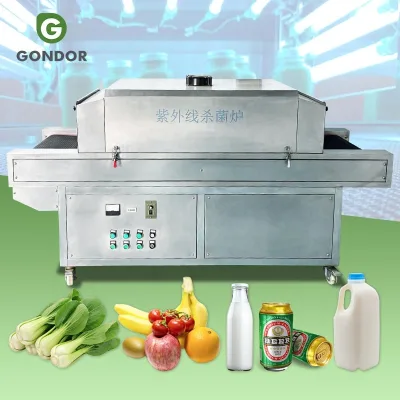
Find 30 CE Food Tunnel Sterilizing Equipment options featuring automatic operation and 304 stainless steel construction. Buyers can compare models like TSXJ-D40 and TSSB-60 for sterilizing frozen food, chemical processing, and dehydration applications.
Key considerations
Products List


Food Sterilizer Tunnel Type Microwave Sterilizing Machine Heating Equipment for Lunch Box
$13500.00 - $24900.00
MOQ: 1 Pieces

Food Microwave Sterilizer Tunnel Type Sterilizing Machine Reheating Equipment for Boxed Meal
$13500.00 - $24900.00
MOQ: 1 Pieces


Tunnel Belt Conveyor Microwave Oven Commercial Food Sterilization Equipment
$13000.00 - $110000.00
MOQ: 1 set




Food Sterilization Equipment Steam Sterilizing Kettle Steam Sterilizing Pot
$5400.00 - $26000.00
MOQ: 1 Pieces

High Efficiency Canned Food Sterilizing Kettle / Sterilizing Retort
$5400.00 - $26000.00
MOQ: 1 Pieces


Food Drink Electric Heating High Temperature Sterilization Pot Autoclave Sterilizer
$5400.00 - $26000.00
MOQ: 1 Pieces

Food Drink Autoclave Sterilizing Machine Bottle Cans Sterilizer Retort Machine
$6600.00 - $13000.00
MOQ: 1 Pieces


Comprehensive Sourcing Guide
Strategic Sourcing Guide for CE Food Tunnel Sterilizing Equipment
The global demand for safe, shelf-stable food products has elevated the importance of industrial sterilization technology. Among the various methods available, tunnel sterilizers have emerged as a critical component in modern food processing lines, particularly for frozen foods and packaged goods requiring high-throughput physical sterilization. For procurement professionals, navigating the market for "CE Food Tunnel Sterilizing Equipment" requires a disciplined approach that balances technical performance, regulatory compliance, and operational efficiency. This guide provides a comprehensive framework for sourcing these assets, grounded in observed market data and verified technical specifications.
Technical Architecture and Operational Specifications
Understanding the mechanical and electrical architecture of tunnel sterilizers is the first step in effective procurement. The market offers distinct configurations tailored to different production needs. A primary observation in the current supply landscape is the prevalence of the tunnel structure, which facilitates continuous operation. This design allows for a seamless flow of products through the sterilization zone, ensuring uniform treatment without the bottlenecks associated with batch processing.
The core material of construction is a critical determinant of longevity and hygiene. High-grade 304 Stainless Steel is the standard material observed in reliable units, offering resistance to corrosion and ease of cleaning. Some suppliers offer customization options where the material can be adjusted according to specific customer requirements, though 304 Stainless Steel remains the baseline for food-grade applications. The automation level is predominantly automatic, driven by PLC (Programmable Logic Controller) systems that manage the entire process. This integration allows for precise control over variables such as temperature, time, and conveyor speed.
Power requirements vary significantly based on the sterilization method employed. Units utilizing heat sterilization or induction electronics often operate at power levels ranging from 2kW to 6kW, with voltage specifications typically aligned with industrial standards of 380V/50Hz. However, specific models may also be designed for 220V electric tension depending on the region and scale. The cooling mechanism is another vital technical specification; effective heat management is achieved through oil-cooling, water-cooling, or air-cooling systems, ensuring the equipment maintains optimal operating temperatures during continuous cycles.
Compliance and Certification Verification
For equipment entering international markets, particularly Europe and regions adhering to strict safety protocols, the CE marking is a non-negotiable requirement. The "CE" designation indicates conformity with health, safety, and environmental protection standards for products sold within the European Economic Area. In the context of food sterilization equipment, this certification validates that the machinery meets essential safety requirements regarding electrical safety, mechanical integrity, and electromagnetic compatibility.
Buyers must verify the specific scope of the CE certification. While the presence of the CE mark is a high-confidence fact for many listed units, it is essential to request the Declaration of Conformity to ensure the specific model matches the certification. Beyond CE, the industry often references standards such as ISO 9001:2015 for quality management systems, though this should be treated as a supplier-level attribute rather than a direct product specification unless explicitly verified.
Safety standards regarding radiation and leakage are paramount, especially for equipment utilizing microwave or induction frequencies. For microwave-based sterilization units operating at a frequency of 2450MHz, the leakage standard is a critical safety metric. Observed data indicates a strict adherence to limits where microwave leakage must be less than 5MW/Cm2. This threshold ensures that operators are not exposed to harmful radiation levels during the sterilization process. Procurement teams should demand test reports or calibration certificates that explicitly confirm compliance with this leakage standard before finalizing any purchase.
Cost Drivers and Pricing Dynamics
The pricing of food tunnel sterilizing equipment is influenced by a complex interplay of factors, including capacity, automation level, and customization requirements. The observed market price range for these units spans from approximately $1,373 to $110,000. This wide variance reflects the diversity of the product line, from smaller, specialized units to large-scale industrial tunnels capable of handling massive throughput.
Capacity is a primary cost driver. Units with higher sterilization capacities, such as those capable of processing 150-1200kg/H, command a premium over lower-capacity models. Similarly, the dehydrated capacity, which can range from 12-100kg/H, influences the internal configuration and power requirements, thereby affecting the final price. The inclusion of advanced features, such as PLC control systems, inverter-based conveying speed adjustments, and specific cooling types, also adds to the cost.
Customization is another significant factor. While the base models often feature standard dimensions, such as 300012701760mm or 560016801600mm, many suppliers offer "According to Customer Requirement" specifications. Customizing the dimensions, material grade, or internal layout to fit a specific production line layout will inevitably increase the unit cost. Furthermore, the inclusion of advanced recording and printing capabilities for sterilization information, or the absence thereof, can impact the price structure. Buyers should note that the Minimum Order Quantity (MOQ) for these industrial assets is typically 1 unit, allowing for flexible procurement strategies without the need for bulk purchasing commitments.
Typical Applications and Industry Use Cases
The versatility of tunnel sterilizing equipment makes it suitable for a broad spectrum of industries, with the food industry being the dominant application sector. The specific usage profile often centers on frozen food packaging, where the equipment provides a critical barrier against microbial contamination without compromising the structural integrity of the packaging or the quality of the food. The "Brush and Ozone" washing type feature observed in some models suggests a dual-function capability, where the tunnel not only sterilizes but also cleans the product surface prior to or during the sterilization process.
Beyond frozen foods, these units are increasingly utilized in the chemical industry, where sterilization of raw materials or packaging components is necessary to prevent cross-contamination. The ability to handle continuous operation makes these tunnels ideal for high-volume production lines where downtime must be minimized. The physical sterilization property of the equipment ensures that the process relies on physical means, such as heat or radiation, rather than chemical additives, which is a preferred method for maintaining the natural quality of food products.
The scale of operation is another consideration. The equipment is generally classified as "Large" scale, designed to integrate into substantial manufacturing facilities. The tunnel structure allows for the processing of various product types, from bulk materials to packaged goods, provided the conveyor system is appropriately configured. The atmospheric operating pressure is a standard feature, simplifying the integration into existing production lines that do not require pressurized chambers.
Supplier Evaluation and Quality Assurance
When evaluating potential suppliers for CE Food Tunnel Sterilizing Equipment, buyers must look beyond the basic product listing. The origin of the equipment is a key indicator, with China being a primary manufacturing hub for these industrial machines. While this does not inherently dictate quality, it provides context for the supply chain dynamics and logistics planning.
Quality assurance should be a central part of the supplier selection process. Buyers should verify the condition of the equipment, with "New" being the standard expectation for new procurement. The control type, specifically the use of PLC systems, is a strong indicator of modern manufacturing standards. Additionally, the brand of critical components, such as the magnetron in microwave units, can serve as a proxy for reliability. For instance, the use of Samsung magnetrons suggests a commitment to using high-quality, globally recognized components.
Packaging and shipping standards are also critical for ensuring the equipment arrives in pristine condition. Observed data indicates that products are often packed in plastic protective film or according to standard industrial practices. However, for high-value or delicate units, buyers should confirm if custom packing solutions are available to prevent damage during transit. The "Standard" or "According to Customer Requirement" packing options highlight the flexibility suppliers offer, but the buyer must explicitly define their needs to ensure adequate protection.
Long-Term Procurement and Maintenance Considerations
Investing in sterilization equipment is a long-term commitment that requires careful consideration of maintenance and operational longevity. The "Continuous" operation feature implies that the equipment is designed for high utilization rates, but this also places significant stress on mechanical and electrical components. Buyers should inquire about the availability of spare parts, particularly for critical components like the magnetron, inverter, and PLC modules.
The energy efficiency of the unit is another long-term factor. With power ratings ranging from 2kW to 6kW, the operational cost can accumulate significantly over time. Selecting a unit with an optimized energy profile, such as those with efficient cooling systems and inverter-driven conveyors, can reduce electricity consumption. The "Heat Sterilization" and "Induction Electronics" methods offer different energy profiles, and the choice should align with the facility's energy infrastructure and sustainability goals.
Finally, the customization aspect of the equipment offers a pathway to future-proofing the investment. By selecting a supplier that offers "According to Customer Requirement" specifications, buyers can ensure the equipment can be adapted to changing production needs or regulatory updates. The ability to customize the packing, dimensions, and even the sterilization capacity ensures that the asset remains relevant and efficient throughout its lifecycle. Buyers should also verify the warranty terms and the availability of technical support, as these factors are crucial for minimizing downtime and ensuring the continued compliance of the sterilization process.
Comparative Analysis of Key Specifications
To assist in the decision-making process, the following table summarizes the key technical specifications observed in the market for CE Food Tunnel Sterilizing Equipment. This comparison highlights the variability in models and helps buyers identify the features most relevant to their specific operational needs.
| Specification Category | Model A (TSXJ-D40) | Model B (TSSB-60) | Model C (TSSB-L120) | Model D (12GM-100GM) |
|---|---|---|---|---|
| Primary Function | Sterilizing | Sterilizing | Sterilizing | Sterilizing |
| Structure | Tunnel | Tunnel | Tunnel | Tunnel |
| Material | 304 Stainless Steel | 304 Stainless Steel | S/S304 | Stainless Steel |
| Automation | Automatic | Automatic | Automatic | Automatic |
| Operation Mode | Continuous | Continuous | Continuous | Continuous |
| Power Rating | 2kW | 6kW | 6kW | Variable |
| Voltage | 380V/50Hz | 380V/50Hz | 380V/50Hz | 220V |
| Cooling Type | Oil/Water/Air | Oil/Water/Air | Oil/Water/Air | Standard |
| Sterilization Capacity | 150-1200kg/H | 150-1200kg/H | 150-1200kg/H | 12-100kg/H (Dehydrated) |
| Microwave Frequency | N/A | N/A | 2450MHz | N/A |
| Certification | CE | CE | CE | CE |
| Dimensions (Standard) | 300012701760mm | 560016801600mm | Custom | Custom |
| Control System | PLC | PLC | PLC | PLC |
This table illustrates that while the core function remains consistent, the scale, power, and specific capabilities vary widely. Buyers must align these specifications with their production volume, facility constraints, and regulatory requirements to select the optimal unit. The presence of CE certification across all listed models confirms a baseline of safety compliance, but the specific technical parameters must be matched to the intended application to ensure operational success.
FAQs
What is the standard material for CE Food Tunnel Sterilizing Equipment?
The standard material is 304 Stainless Steel, which offers corrosion resistance and hygiene. Some suppliers allow customization to other materials according to specific customer requirements.
How is the sterilization process controlled in these tunnel units?
The process is controlled via PLC systems for precise management of temperature and time. The equipment operates automatically with continuous flow to ensure uniform treatment of products.
Can the equipment dimensions be customized for specific production lines?
Yes, dimensions can be customized according to customer requirements rather than fixed standard sizes. This flexibility allows integration into various facility layouts while maintaining operational efficiency.
What is the typical sterilization capacity range for these industrial units?
The sterilization capacity ranges from 150 to 1200kg per hour depending on the specific model. This high throughput supports large-scale food industry applications requiring continuous operation.
Which certification ensures the equipment meets European safety standards?
The CE certification confirms conformity with health, safety, and environmental protection standards for the European market. Buyers should verify the Declaration of Conformity for the specific model.
What power specifications are common for these sterilization tunnels?
Common power ratings range from 2kW to 6kW with voltage typically at 380V/50Hz. Some models may operate at 220V depending on regional electrical infrastructure requirements.