Source Ceramic Bus Auto Brake Pads for Trucks, Buses, Trailers
Compare 30 listings of Ceramic Bus Auto Brake Pads from verified Chinese manufacturers. Buyers can evaluate low-metallic and semi-metallic formulas, testing standards, and customization options for truck brake systems.
Key considerations
Products List


Auto Parts Ceramic Metallic Non Asbestos 29315 Brake Pads for Truck Bus Back Plate
$11.60 - $19.00
MOQ: 100 Sets


Wva29174 Hot Selling Bus Truck Disc Auto Parts Durable Ceramic Brake Pads
$15.00 - $30.00
MOQ: 50 Sets


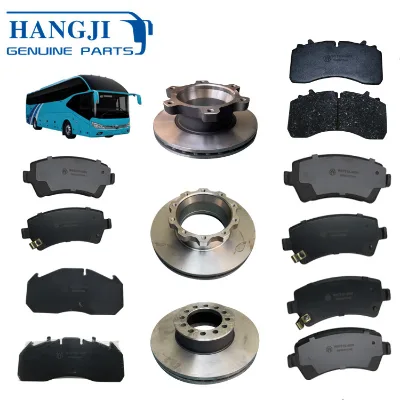


Comprehensive Sourcing Guide
Strategic Sourcing Guide for Ceramic Bus Auto Brake Pads
Understanding Material Composition and Performance Profiles
The core keyword "Ceramic Bus Auto Brake Pads" directs buyers toward a specific segment of the automotive braking market, yet the supplied product data reveals a complex landscape where multiple material formulations coexist. While the search term emphasizes ceramic technology, the available product attributes indicate a broader inventory that includes low-metallic, semi-metallic, and high-temperature resistant formulas. Buyers must recognize that "ceramic" in a commercial listing does not automatically guarantee a pure ceramic composition, especially when the data explicitly lists "Low-Metallic" and "Semi-Metallic" as primary formula types alongside ceramic options.
The technical specification for the observed products highlights a "Low-Metallic" species with a "High Temperature Resistant Formula." This distinction is critical for bus and heavy truck applications where thermal management is paramount. Ceramic formulations are often prized for low dust generation and quiet operation, but the supplied facts suggest that the available supply chain heavily features metallic and low-metallic variants designed for durability and heat resistance. When sourcing, procurement teams should verify the exact percentage of ceramic content versus metallic fibers. The data notes a "100% No Asbestos" status, which is a fundamental safety baseline for all modern brake pads, but the specific friction material blend must be confirmed against the vehicle manufacturer's original equipment (OE) specifications.
The observed product attributes list "High Performance Parts" as a key advantage, suggesting that the available inventory is engineered for demanding operational environments. For bus operators, the trade-off between wear resistance and stopping power is significant. The "Metallic" species mentioned in the data typically offers superior heat dissipation compared to pure ceramic, which can be advantageous for heavy-duty vehicles like trucks and buses that experience frequent braking cycles. However, if the specific operational requirement is low dust and noise reduction, a ceramic or semi-metallic blend may be more appropriate. Buyers should not assume that all listed "Truck Brake Pads" or "Bus Auto Spare" items are ceramic; the data shows a mix of "Low-Metallic" and "Semi-Metallic" formulas, necessitating a rigorous review of the technical data sheet for each specific SKU.
Compliance Standards and Certification Verification
Navigating the regulatory landscape for commercial vehicle brake components requires a meticulous verification of certifications. The supplied product facts list a robust array of certifications, including DOT, ISO/TS, ISO, BSCI, FSC, HACCP, GSV, GMP, IATF-ISO, ISO ECE, and AMECA. These acronyms represent a mix of safety standards, quality management systems, and social compliance protocols. For a buyer sourcing brake pads for buses, the most critical certifications are those related to safety and international vehicle standards.
The data explicitly mentions "TUV/ISO/Ts16949/ECE/R90" under the "Frontech Certification" attribute. ECE R90 is a specific European regulation concerning replacement brake linings, which is a vital benchmark for any brake pad intended for the European market or for vehicles that must meet international safety standards. Similarly, IATF 16949 (often referenced as TS16949 in older contexts) is the global standard for quality management in the automotive industry. The presence of these certifications suggests that the manufacturing facilities adhere to rigorous quality control processes. However, buyers must verify that the specific batch of brake pads being purchased carries these certifications. A supplier may hold a general ISO certificate for the factory, but the product itself must be tested and certified to the relevant standard, such as ECE R90 or specific DOT requirements for the North American market.
The "Standard" attribute in the data is listed as "OE" (Original Equipment) and "Standard," indicating that the products are designed to meet or exceed factory specifications. This is a crucial compliance indicator. Buyers should request the specific test reports that validate the claim of meeting OE standards. The data also mentions "100% Tested" and "100% Testing" as quality attributes. While this is a positive observation, it is an internal claim. External verification through third-party testing laboratories is recommended to ensure that the "High Performance" and "Wear Resistant" claims are substantiated by objective data. The presence of "HACCP" and "BSCI" in the list, while important for general supply chain ethics and food safety (if applicable to the facility's broader operations), are less directly relevant to the mechanical performance of brake pads but indicate a supplier committed to broader corporate social responsibility.
Cost Drivers and Economic Factors in Procurement
The economic landscape for sourcing ceramic and metallic brake pads is influenced by several variables, including material costs, manufacturing complexity, and order volume. The observed price range in the supplied data spans from $0.50 to $999 USD. This wide variance suggests that the market includes everything from individual components to complete axle sets or specialized high-performance kits. The "MOQ" (Minimum Order Quantity) is consistently listed as 50 sets, 50 PCS, or 50 sets across different product entries, indicating a standardized threshold for small to medium-sized orders.
Material composition is a primary cost driver. Ceramic formulations generally command a higher price point than low-metallic or semi-metallic alternatives due to the cost of raw materials and the complexity of the sintering process required to achieve the desired friction properties. The data lists "Low-Metallic" as a dominant formula, which may offer a more cost-effective solution for budget-conscious buyers, provided it meets the thermal requirements of the specific bus or truck model. The "Forging+CNC Cutting" craft mentioned in the attributes suggests a high level of manufacturing precision, which can increase production costs but also ensures dimensional accuracy and consistent performance.
Packaging and logistics also impact the final landed cost. The data references "Neutral Packaging," "Pallet," and "Fallet" (likely a typo for Pallet) as packaging options. Custom packaging requests, such as "Customer Request" for color and packing, can add to the unit cost and extend lead times. The "Delivery Time" is noted as "According to Order Quantity," implying that larger orders may require longer production schedules. Buyers should factor in the cost of shipping, which can be significant for heavy items like brake pads, and the potential for volume discounts if the order quantity exceeds the standard MOQ of 50 sets. The "Barke Pad Warranty" of 30,000-50,000 Kms is another economic factor; a longer warranty period often correlates with higher initial costs but lower long-term replacement expenses.
Typical Applications and Vehicle Fitment Analysis
The application scope for the available brake pads is extensive, covering a wide range of commercial and passenger vehicles. The data explicitly states "Application: Brake System" and "Usage: for Truck Trailer Brake Control," while also listing "Car Fitment: All Trucks" and "Car Model: All Cars." This broad compatibility suggests that the products are designed as universal replacements or are available in a vast array of specific part numbers to fit various makes and models.
For bus operators, the "Drum Brakes Classification: Floor" and "Brake Shoe" attributes indicate that the inventory includes components for drum brake systems, which are common in heavy-duty trucks and older bus models. However, the "Pistons: 2/4/6 Pistons" attribute points to disc brake applications, which are increasingly standard in modern buses and trucks. The "Position: Front" designation highlights that these pads are likely intended for the front axle, where the majority of braking force is applied. Buyers must carefully cross-reference the vehicle's brake system type (disc vs. drum) and the specific axle position (front, rear, or both) before placing an order.
The "Main Market" attributes list a global reach, including South America, North America, Eastern Europe, Southeast Asia, Africa, and Western Europe. This geographic diversity implies that the products are designed to meet various regional regulatory and performance standards. For example, a brake pad suitable for the hot climates of Southeast Asia may have different thermal characteristics than one designed for the cold winters of Northern Europe. The "Formula: Low-Metallic, High Temperature Resistant Formula" is particularly relevant for heavy-duty applications in regions with challenging terrain or high ambient temperatures. Buyers should ensure that the selected product is not only a physical fit but also a thermal and chemical match for the specific operating environment of their fleet.
Supplier Evaluation and Quality Assurance Protocols
Evaluating a supplier for brake pad procurement requires a deep dive into their manufacturing capabilities and quality assurance systems. The data identifies "Frontech" as the factory name and "Frontech Premium" as the brand name. While the guide does not recommend specific suppliers, the presence of a named factory and brand suggests a level of supply chain transparency. Buyers should verify the factory's location, listed as "Shandong, China," and assess its logistical capabilities for international shipping.
Quality control is a central theme in the supplied data, with repeated mentions of "100% Tested," "High Performance," and "Wear Resistant." The "Craft: Forging+CNC Cutting" indicates a high-precision manufacturing process, which is essential for ensuring the dimensional consistency of brake pads. However, buyers should not rely solely on these claims. A robust supplier evaluation should include a request for recent third-party test reports, specifically looking for data on friction stability, wear rates, and noise performance. The "Standard: OE" claim should be backed by documentation showing that the product has been tested against the original equipment specifications of the vehicle manufacturer.
The "Customization: Available" attribute is a significant advantage for buyers with specific requirements. This could include custom packaging, specific color codes, or tailored friction formulas. However, customization often introduces variability and potential quality risks. Buyers should establish clear quality benchmarks before approving custom orders. The "Package Type" and "Packing" attributes show flexibility, but buyers must ensure that the packaging protects the brake pads from moisture and physical damage during transit. A supplier that offers "Neutral Packaging" may be suitable for private labeling, but the structural integrity of the packaging must be verified.
Long-Term Procurement and Fleet Management Considerations
Sourcing brake pads is not a one-time transaction but a long-term procurement strategy that impacts fleet maintenance costs and safety. The "Barke Pad Warranty" of 30,000-50,000 Kms is a critical metric for long-term planning. A longer warranty period indicates the manufacturer's confidence in the product's durability, which can reduce the frequency of replacements and lower the total cost of ownership. However, buyers should understand the terms of the warranty, including what constitutes a valid claim and the process for handling defects.
The "Market: Aftermarket" designation suggests that these products are intended for the replacement market rather than original equipment installation. This means that buyers are looking for components that match or exceed the performance of the original parts. The "High Temperature Resistance" and "Wear Resistant" attributes are key indicators of longevity. For bus fleets operating in stop-and-go urban environments or on long-haul routes, the ability of the brake pads to withstand repeated thermal cycling without fading or cracking is essential.
Buyers should also consider the supply chain resilience. The "Delivery Time: According to Order Quantity" implies that lead times can vary. For fleet managers, maintaining a buffer stock of critical brake components is advisable to prevent downtime. The "MOQ: 50 Sets" provides a baseline for inventory planning, but buyers should negotiate volume discounts for larger orders to optimize cash flow. The "Main Market" diversity suggests that the supplier has a broad distribution network, which can be beneficial for global fleets, but buyers should verify the availability of specific part numbers in their local regions to avoid long shipping delays.
Technical Comparison of Available Formulations
To assist buyers in making informed decisions, the following table compares the key attributes of the brake pad formulations observed in the supplied data. This comparison highlights the trade-offs between different material types and their suitability for various applications.
| Attribute | Low-Metallic Formula | Semi-Metallic Formula | Ceramic Formula (Implied) |
|---|---|---|---|
| Primary Composition | Metallic fibers, non-asbestos | Metallic fibers, ceramic, non-asbestos | Ceramic fibers, non-asbestos |
| Heat Resistance | High Temperature Resistant | High Temperature Resistant | High (Varies by specific blend) |
| Wear Characteristics | Wear Resistant | Wear Resistant | High Wear Resistance |
| Dust Generation | Moderate | Moderate to High | Low |
| Noise Level | Moderate | Moderate | Low |
| Typical Application | Truck, Bus, Heavy Duty | Truck, Bus, Heavy Duty | Passenger, Light Commercial |
| Cost Factor | Moderate | Moderate to High | High |
| Certification | DOT, ECE R90, ISO | DOT, ECE R90, ISO | DOT, ECE R90, ISO |
Note: The table is derived from the "Formula" and "Species" attributes in the supplied data. The "Ceramic" column represents the potential characteristics of ceramic formulations often found in this category, though the specific data emphasizes "Low-Metallic" and "Semi-Metallic" options.
In conclusion, sourcing Ceramic Bus Auto Brake Pads requires a nuanced approach that balances material science, regulatory compliance, and economic efficiency. Buyers must look beyond the core keyword and scrutinize the specific formulations, certifications, and quality controls of the available products. By verifying the "100% Tested" claims, understanding the "Low-Metallic" vs. "Ceramic" trade-offs, and ensuring the "OE" standards are met, procurement teams can secure a supply chain that delivers safety, performance, and value for their fleet operations.
FAQs
What material formulas are available for these brake pads?
The available formulas include Low-Metallic, Semi-Metallic, and Ceramic options. Some products specifically feature a High Temperature Resistant Formula designed for heavy-duty truck and bus applications.
Which certifications do the brake pad manufacturers hold?
Manufacturers hold certifications such as DOT, ISO, ECE R90, and IATF 16949. These standards ensure compliance with international safety and quality management requirements for automotive parts.
Can buyers request custom packaging and colors for orders?
Yes, customization is available for packaging and color upon customer request. Buyers should note that specific custom requests may influence lead times and require clear quality benchmarks.
What is the minimum order quantity for these brake pads?
The standard minimum order quantity is 50 sets or 50 pieces. This threshold applies across various product entries including truck and bus brake pad models.
How are the brake pads tested for quality assurance?
All products undergo 100% testing before shipment to ensure high performance and wear resistance. This internal quality control verifies that the parts meet OE standards and safety requirements.
Where are these brake pads manufactured and shipped from?
The products originate from factories located in Shandong, China. This location serves as the primary production hub for the Frontech brand and its associated automotive spare parts.
What warranty coverage is provided for the brake pads?
The brake pads come with a warranty covering 30,000 to 50,000 kilometers of usage. This warranty period reflects the expected durability and performance under normal operating conditions.