Source Ceramic Coffee Cup and Saucer with Flower Spoon for Offices, Retail, and Gifts
Find and compare 30 Ceramic Coffee Cup and Saucer with Flower Spoon options from verified suppliers. Evaluate features like heat preservation, eco-friendly materials, and customization to select the best fit for your business needs.
Key considerations
Products List


Porcelain Cup Coffee Cups Set and Saucers with Spoon for Promotional Gift
$0.60 - $5.00
MOQ: 2000 Pieces


China Manufacturer Coffee Cup Saucer Ceramic Cup Saucer Custom Porcelain Cup and Saucer
$1.50 - $3.50
MOQ: 5000 Sets


Simple Coffee Cup Saucer Custom Ceramic Cup with Saucer 160ml Small Tea Cup Saucer
$0.50 - $1.50
MOQ: 5000 Sets

Colorful Cup with Saucer Porcelain Tea Cup Saucer Custom 200ml Large Coffee Cup Saucer
$0.50 - $1.50
MOQ: 5000 Sets

High Quality Ceramic Tea Cup with Saucer Stoneware Custom Ceramic Cup Saucer
$1.45 - $2.80
MOQ: 5000 Sets


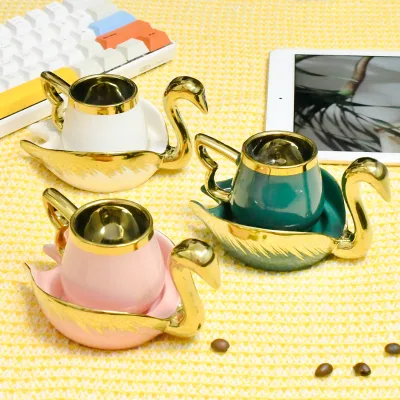


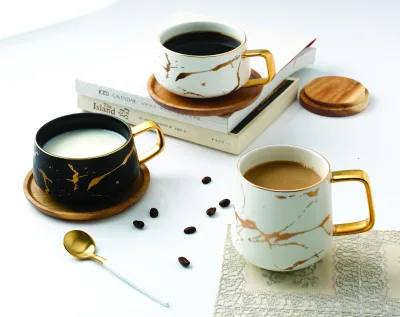
Comprehensive Sourcing Guide
Ceramic Coffee Cup and Saucer with Flower Spoon Sourcing Guide
The market for ceramic coffee cups and saucers with flower spoons presents a diverse range of options suitable for both promotional campaigns and daily household use. Buyers observing current listings will encounter products defined by specific material compositions, primarily ceramic and porcelain, which offer distinct advantages in heat retention and durability. These items are frequently designed with creative or simple styles, featuring round shapes and multicolor options that cater to varied aesthetic preferences. The inclusion of a flower spoon is a common accessory that enhances the user experience, particularly for those enjoying cappuccino, latte, or standard coffee beverages in a home or office setting.
When evaluating potential suppliers, it is critical to distinguish between general product attributes and specific performance claims. While many listings highlight features such as being eco-friendly, lead-free, and food-safe, these attributes must be verified against actual certification documents rather than assumed from product descriptions. The observed product range includes models with capacities ranging from 6 to 12 ounces, with dimensions typically around 12 to 12.5 centimeters. Understanding these baseline specifications helps buyers narrow their search to products that align with their specific volume requirements and design expectations before engaging in deeper technical discussions.
Product Scope and Observed Listing Signals
Buyers should first analyze the functional capabilities listed in product descriptions to ensure the items meet operational needs. The observed data indicates that many ceramic and porcelain cups are engineered to withstand high temperatures, making them suitable for microwave and dishwasher use. This functional versatility is a key selling point for daily use items, yet it is essential to confirm that the specific glaze and material composition support these claims without degradation over time. Additionally, the presence of handles on many models suggests a focus on user comfort and safety when handling hot liquids, a standard expectation for this category.
The customization landscape for these products is extensive, offering significant flexibility for branding and design requirements. Suppliers frequently offer customized surface patterns, colors, and even the inclusion of specific logos, allowing for tailored solutions for corporate gifts or retail collections. The observed product models, such as TP0026PHK and TP0045PHK, demonstrate that manufacturers can accommodate requests for decal papers with gold lines or specific color palettes like white, blue, yellow, red, and green. However, buyers must verify the minimum order quantities (MOQ) associated with these customizations, as the observed range spans from 1 unit for samples to 5,000 units for full production runs.
Technical Specifications to Verify
Dimensional accuracy and capacity consistency are paramount when sourcing ceramic drinkware for commercial or retail distribution. The observed standards indicate specific size variations, such as 12CM for 12-ounce models and 12.5CM for 9-ounce variants, which must be strictly adhered to for packaging and shelf compatibility. Buyers should request detailed technical drawings or physical samples to verify that the stated dimensions, including height and diameter, match the product standard exactly. Discrepancies in these measurements can lead to issues with custom packaging, such as gift boxes or window boxes, which are commonly used for these items.
Material integrity and surface decoration processes require rigorous verification to ensure the final product meets quality expectations. The listings mention materials like pottery, ceramic, and porcelain, each with different firing temperatures and structural properties that affect heat resistance and weight. Surface decorations, ranging from solid colors to printed fancy patterns and coffee cup designs, must be evaluated for durability and adhesion. It is crucial to confirm that the surface pattern is customized correctly and that the decoration process, such as the application of decal papers, does not compromise the food-safe nature of the glaze or the structural integrity of the cup.
Compliance and Safety Documentation
Safety compliance is a non-negotiable aspect of sourcing ceramic drinkware, particularly for products intended for food and beverage contact. The observed product data lists certifications such as LFGB, ROHS, and REACH, which are critical indicators of compliance with European and international safety standards. Buyers must request valid, up-to-date test reports from accredited laboratories to verify that the specific batch of cups and saucers meets these regulatory requirements. Relying solely on the supplier's claim of being "lead-free and food safe" without documentary evidence poses a significant risk of non-compliance in target markets.
Beyond general safety certifications, specific documentation regarding the materials and manufacturing processes should be reviewed to ensure long-term product safety. The presence of certifications like LFGB suggests that the products have undergone rigorous testing for heavy metal migration and other chemical hazards. Buyers should ensure that the supplier can provide a Certificate of Analysis (CoA) or a Declaration of Conformity (DoC) that explicitly covers the specific product model and material composition. This documentation serves as the primary defense against liability issues and ensures that the products can be legally sold in regions with strict food safety regulations.
Cost Drivers and Commercial Terms
Pricing for ceramic coffee cups and saucers is influenced by a complex interplay of material costs, customization levels, and order volume. The observed price range of 0.35 to 99 USD reflects the vast difference between basic, unbranded units and highly customized, premium designs with intricate decorations like gold lines. Buyers should understand that the cost per unit will decrease significantly as the order quantity increases, but the minimum order quantity (MOQ) for custom designs often starts at 100 pieces or higher. This threshold is a critical commercial term that affects the feasibility of small-batch orders and requires careful budget planning.
Packaging and logistics represent another significant component of the total landed cost that buyers must account for. The observed product data indicates various packaging options, including gift boxes, window boxes, and cartons, each with different material costs and volume implications. For instance, a 24-piece carton configuration requires specific handling and shipping considerations that differ from individual gift box packaging. Additionally, the origin of the products, primarily from China and specifically Hunan, impacts lead times and freight costs. Buyers should negotiate clear terms regarding who bears the cost of packaging materials and how these costs are factored into the final unit price.
Supplier Qualification and Quality Control
Establishing a robust supplier qualification process is essential to mitigate risks associated with ceramic manufacturing, which is prone to defects like cracking or glaze imperfections. Buyers should verify the supplier's production capabilities, including their ability to handle custom designs and maintain consistent quality across large batches. The observed data mentions sample lead times of 7 days, which serves as a benchmark for evaluating the supplier's responsiveness and operational efficiency. A qualified supplier should be able to provide samples that match the final production quality, allowing for a thorough assessment of the product before committing to a large order.
Quality control protocols must be clearly defined and agreed upon before production begins to ensure that the final products meet the buyer's standards. This includes establishing clear acceptance criteria for surface decorations, dimensional accuracy, and structural integrity. Buyers should consider implementing third-party inspection services, particularly for the first production run, to verify that the products comply with the agreed-upon specifications and certifications. The supplier's willingness to accept logos and provide detailed packing instructions is also a strong indicator of their commitment to quality and customer service.
Long-Term Procurement Checks
Sustaining a successful procurement relationship requires ongoing monitoring of product consistency and supplier performance over time. Buyers should regularly review the supplier's ability to maintain the same level of quality and compliance as the initial order, especially when scaling up production volumes. The observed product models, such as MU-152 and SIL20-090904, highlight the importance of tracking specific SKUs to ensure that any changes in materials or processes do not negatively impact the product's performance or safety. Continuous communication with the supplier regarding any updates in standards or regulations is vital for maintaining compliance.
Finally, buyers must plan for the long-term viability of the product line by assessing the supplier's capacity to handle future demand and potential design iterations. The ability to customize colors and patterns suggests that the supplier has the flexibility to adapt to changing market trends, but this capability must be backed by reliable production capacity. Establishing a clear framework for reordering, including lead times and MOQ adjustments, will help streamline the procurement process and ensure a steady supply of high-quality ceramic coffee cups and saucers. Regular audits and performance reviews will help identify any potential issues early and foster a collaborative partnership with the supplier.
FAQs
What certifications do these ceramic coffee cups have?
These ceramic coffee cups hold LFGB, ROHS, and REACH certifications. They are also lead-free and food safe, ensuring compliance with strict safety standards for daily use and promotional purposes.
Can I customize the color and surface pattern of the cups?
Yes, customization is available for colors like white, blue, yellow, red, and green. The surface pattern can also be customized, allowing for unique designs such as coffee cup and saucer themes with gold lines.
What is the minimum order quantity for these porcelain cups?
The minimum order quantity is 100 pieces for specific models. However, general listings show an MOQ range from 1 to 5000 units depending on the specific product model and customization requirements.
Are these cups safe for use in microwaves and dishwashers?
Yes, the cups are microwave and dishwasher safe for home use. They are designed to withstand high temperatures and are suitable for daily use in both office and home environments.
What is the capacity and standard size of the ceramic cups?
The cups come in capacities of 6 oz, 9 oz, and 12 oz. Standard sizes include 12 cm and 12.5 cm diameters, with specific models like TP0026PHK offering 12 oz capacity.
How are these ceramic cups packaged for shipping?
Packaging options include gift boxes, window boxes, and cartons. Specific models may use paper packaging or carton packing with 24 pieces per carton, ensuring safe transport for promotional or daily use items.
Where are these ceramic coffee cups manufactured?
These products originate from China, with specific manufacturing locations in Hunan. The origin is consistently listed as China for the various ceramic and porcelain cup models available.