Source Ceramic Electric Room Heater with Remote Control for Office, Home, and Business
Find and compare 30 Ceramic Electric Room Heater with Remote Control options from verified Chinese manufacturers. Evaluate features like adjustable thermostats, energy-saving modes, and various mounting types to find the right solution for your procurement needs.
Key considerations
Products List


Portable 1500W Electric Room Ceramic Heater, PTC Fan Heater with Rotation Control
$20.00 - $35.00
MOQ: 1000 Pieces


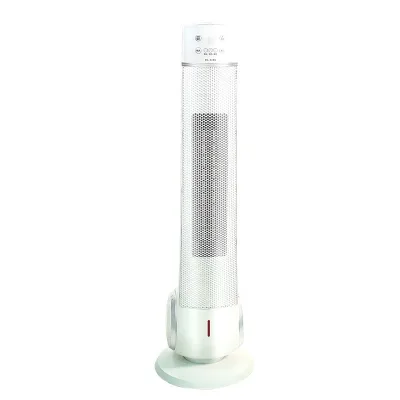
Ceramic Heater with Optional Remote Controller Overheat Protertion Oscillation
$21.18 - $24.63
MOQ: 336 pieces


Comprehensive Sourcing Guide
Ceramic Electric Room Heater with Remote Control Sourcing Guide
The global market for ceramic electric room heaters with remote control offers a diverse range of solutions tailored for both residential and commercial environments. Based on observed product listings, these units are frequently designed for indoor use in spaces ranging from 10 to 25 square meters, making them suitable for offices, homes, and business settings. The core functionality often includes multiple heat settings, energy-saving modes, and adjustable thermostats, allowing buyers to select units that balance comfort with operational efficiency.
Procurement decisions must account for significant variations in installation requirements and physical dimensions found in current listings. While some models are engineered for wall mounting with specific ventilation features, others are designed as free-standing floor units that may or may not include ventilation systems. Buyers should carefully review the mounting type and size specifications, as observed data indicates a wide spectrum of dimensions, from compact units around 695mm in width to larger panels exceeding 1500mm, ensuring the selected heater fits the intended physical space.
Product Scope and Observed Listing Signals
Buyers must distinguish between different product configurations based on the presence or absence of remote control capabilities, as this is a critical differentiator in the current market. While the core keyword specifies remote control, observed listings reveal a mix of products where some units explicitly include remote control functionality alongside manual and digital controls, while others are listed without this feature. This inconsistency necessitates a rigorous verification step where the buyer confirms the specific control type for each SKU, ensuring the procurement order matches the requirement for wireless operation.
The scope of available products also varies significantly regarding heating power and element technology, which directly impacts performance in different room sizes. Listings indicate heating elements ranging from electric wire to ceramic, with power outputs spanning from under 1000W to over 2500W. For instance, specific models are identified with power ratings like 1500W or 2500W, while others are categorized by their application area, such as 12-15m² or 22-25m². Procurement teams must align the heating power and element type with the thermal load requirements of the target application area to avoid underheating or energy waste.
Technical Specifications to Verify
Voltage compatibility is a primary technical specification that requires immediate attention, as observed listings show units designed for different electrical standards. Some products are specified for 110-130V~ operation, while others are rated for 220-240V~, reflecting the diverse electrical infrastructure of potential markets. Buyers must verify the voltage rating against the destination country's grid to prevent equipment failure or safety hazards, as a mismatch in voltage can render the heater inoperable or dangerous.
Physical dimensions and power cord length are equally critical for installation planning and logistics. The observed data highlights a wide range of standard sizes, such as 140045090mm or 120027060mm, alongside customizable size options. Additionally, specific listings note a power cord length of 1.5m, which may be insufficient for certain room layouts. Procurement teams should request detailed dimensional drawings and cord length specifications for every model to ensure the unit can be installed safely without requiring extension cords that could compromise safety standards.
Compliance and Safety Documentation
Safety features are a non-negotiable aspect of sourcing electric heaters, and observed listings highlight specific protections that should be verified in documentation. Products are frequently described as featuring overheat protection, a critical safety mechanism that prevents the unit from reaching dangerous temperatures. Buyers must request test reports or certification documents that explicitly confirm the presence and efficacy of overheat protection systems, as well as any other safety mechanisms like tip-over switches or thermal fuses that may be standard for the category.
Thermostat accuracy and control precision are also essential compliance indicators for modern heating units. The observed data mentions adjustable thermostats with ranges such as 5-65 degrees, suggesting a need for precise temperature regulation. Procurement teams should verify that the thermostat calibration meets relevant regional standards for accuracy and stability. Documentation should confirm that the digital or manual control systems function reliably within the specified range, ensuring the heater maintains a consistent and safe operating temperature without fluctuation.
Cost Drivers and Commercial Terms
Pricing in this category is highly variable, driven by factors such as heating power, control complexity, and customization options. Observed listings show a price range from 1.2 to 395 USD, reflecting the difference between basic models and advanced units with features like remote control, multiple heat settings, and energy-saving modes. Buyers should understand that higher prices often correlate with advanced functionalities, such as digital control interfaces or larger heating surfaces, rather than just brand premiums.
Minimum Order Quantity (MOQ) and packaging requirements are significant commercial terms that affect the total cost of ownership. The observed MOQ range spans from 1 to 4000 units, indicating that suppliers offer flexibility for small trials but may require bulk commitments for standard pricing. Packaging is typically listed as cartons or containers, and buyers must factor in the cost of protective packaging for international shipping. Additionally, the availability of customization, such as adjustable sizes or specific branding, may introduce additional costs or longer lead times that must be negotiated upfront.
Supplier Qualification and Quality Control
Geographic origin is a key indicator of supply chain dynamics and manufacturing capabilities in this sector. The observed data points to suppliers located in Fujian and Hebei, China, regions known for their manufacturing infrastructure. Buyers should verify the specific factory location and assess the supplier's capacity to handle the required volume, as production capabilities can vary significantly between facilities even within the same region. Understanding the origin helps in anticipating logistics costs and potential supply chain disruptions.
Quality control processes must be validated through the supplier's ability to provide consistent product specifications and customization support. Listings indicate that products can be customized according to customer needs, including size adjustments, which requires a robust quality assurance framework. Buyers should request evidence of the supplier's quality control protocols, such as in-process inspections and final product testing, to ensure that customized units meet the same safety and performance standards as standard models.
Long-Term Procurement Checks
Sustainability and energy efficiency are becoming increasingly important criteria for long-term procurement strategies. Many observed products feature energy-saving modes and adjustable thermostats, which contribute to reduced operational costs over time. Buyers should evaluate the long-term energy consumption profiles of different models, considering how features like multiple heat settings and remote control usage impact overall electricity usage. Selecting units with proven energy-saving capabilities can lead to significant cost reductions in large-scale deployments.
Maintenance and replacement part availability are critical for ensuring the longevity of the heating units. While specific maintenance schedules are not detailed in the observed data, the presence of features like adjustable thermostats and remote controls suggests a need for periodic calibration or battery replacement. Procurement teams should establish a relationship with the supplier to ensure a steady supply of spare parts and technical support. This proactive approach minimizes downtime and ensures that the heating systems remain operational and efficient throughout their intended lifespan.
FAQs
How is the Ceramic Electric Room Heater with Remote Control installed?
Installation methods vary by model, with options including wall-mounted and floor stand configurations. Some units feature ventilation while others do not, depending on the specific design. Buyers should verify the mounting type and physical dimensions, such as 1400x450x90mm or 1200x270x60mm, to ensure compatibility with their intended indoor space and usage requirements.
What power options are available for ceramic electric room heaters?
Heating power ranges from 500-999W to over 2500W, catering to different application areas from 10-19m² up to 22-25m². Models like the YG-800W and 2500W offer distinct capacity levels. Voltage options include 110-130V and 220-240V, ensuring compatibility with various regional electrical standards for home and business use.
Can the Ceramic Electric Room Heater with Remote Control be customized?
Yes, customization is available according to customer needs, including adjustable sizes and specific functional requirements. Manufacturers offer options for remote control, manual control, and digital control interfaces. Buyers can request specific packing methods, such as cartons or containers, and tailor features like energy-saving modes and thermostat settings to their operational preferences.
Which safety features are included in these electric heaters?
Common safety features include overheat protection and multiple heat settings to prevent excessive temperatures. The adjustable thermostat allows precise temperature management, typically ranging from 5-65 degrees. These functions ensure safe operation in indoor environments, complementing the electric wire or ceramic heating elements for reliable and controlled heat output in offices and homes.
What are the typical specifications for these radiant panel heaters?
Specifications vary by model, with sizes ranging from medium to large. Standard dimensions include 695x189x67mm, 1400x450x90mm, and 1500x270x60mm. Power cords are typically 1.5m long. Models are identified by codes like JH-NR10-13B or YG-1600W, indicating specific power outputs and feature sets suitable for various indoor heating applications.