Source Circular Knitting Knee Brace for Running, Tennis, and Football
Find 30 verified options for Circular Knitting Knee Brace designed for protection and comfort. Compare features like material, size, and customization to select the right support for running, tennis, or football.
Key considerations
Products List
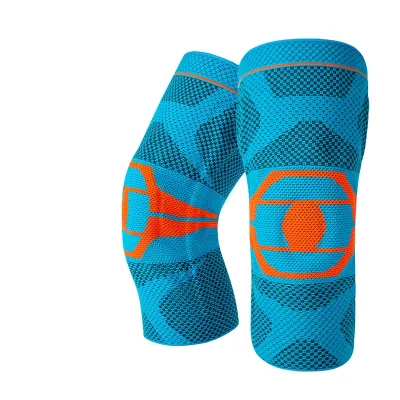


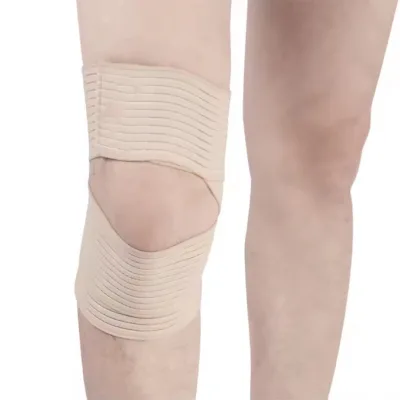


$22.90 - $26.00
MOQ: 50 Pieces

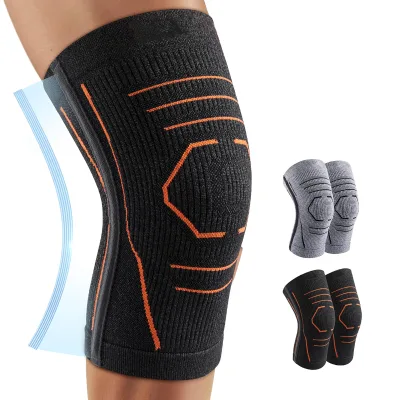


Comprehensive Sourcing Guide
Strategic Sourcing Guide for Circular Knitting Knee Braces
Understanding the Technical Architecture of Circular Knit Knee Supports
The core keyword "Circular Knitting Knee Brace" points to a specific manufacturing methodology that defines the structural integrity and performance of the product. In the context of B2B procurement, understanding the weaving technology is paramount. The supplied data explicitly identifies "Circular Knitting" and "Circular Knit" as the primary weaving technologies for these items. This process involves creating a continuous tube of fabric, which is distinct from flat knitting or weaving. This tubular construction is critical because it allows the knee brace to conform naturally to the complex geometry of the human knee without creating seams that could cause chafing or pressure points during high-intensity movement.
The material composition is a primary variable in the technical specification of these braces. The observed product attributes list both "Polyester" and "Nylon" as the constituent materials. Polyester is often selected for its durability and resistance to abrasion, while Nylon is frequently chosen for its elasticity and strength-to-weight ratio. The procurement strategy must account for the fact that different models may utilize different material blends to achieve specific performance goals. For instance, some listings indicate a "Thicken" specification, while others specify "Medium" thickness. This variation suggests that the linear density of the yarn and the stitch gauge of the circular knitting machine directly influence the final product's compression level and thermal retention.
The "Single package size" is consistently observed at 35x20x3 cm, and the "Single gross weight" is recorded at 0.250 kg. These dimensions and weights are essential for logistics planning and freight cost estimation. The "Thicken" and "Medium" thickness attributes, combined with the circular knitting process, indicate that the product is designed to provide "Comprehensive Protection" and "Knee Protection" while preventing knee injury. The "Feature" attributes further clarify that these products are engineered to be "Breathable" and "non slip," ensuring that the compression remains effective without restricting blood flow or sliding down the leg during activity. The "Keep Warm" feature is also noted, suggesting that the density of the circular knit provides thermal insulation, which is a secondary but valuable function for athletes in cooler environments or those recovering from injury.
Compliance Verification and Certification Landscape
When sourcing medical or sports support devices like knee braces, compliance and certification are non-negotiable aspects of the procurement process. The provided data contains low-confidence background information regarding "CE" certification and "ISO 13485" standards. It is crucial to treat these as potential requirements rather than guaranteed attributes of every listed product. The "ISO 13485" standard specifically relates to medical device quality management systems. If the buyer intends to market these products as medical-grade knee supports, verifying that the supplier holds a valid ISO 13485 certification is a mandatory step. Without this verification, the product may not meet regulatory requirements in the European Union or other jurisdictions that mandate strict quality management for medical devices.
Similarly, the "CE" mark indicates conformity with health, safety, and environmental protection standards for products sold within the European Economic Area. The supplied text lists this under "low-confidence background," meaning that the mere presence of a product listing does not confirm that the specific item has undergone the necessary testing and documentation to bear this mark. Buyers must explicitly request the Certificate of Conformity (CoC) and the Declaration of Conformity (DoC) from the supplier before finalizing an order. Relying on the assumption that all circular knitting knee braces are automatically compliant can lead to significant legal and financial risks, including product seizures at customs or liability issues in the event of an injury.
The "prod_standard" attribute in the data shows values such as "100g," "150g," and "80g." While these likely refer to the weight or density of the fabric per unit area, they are not international safety standards. Buyers should not confuse these internal product specifications with regulatory standards. Instead, these figures should be used to compare the relative density and potential compression levels of different models. The "Shelf Life" is listed as "Five Years," which is a useful operational metric for inventory management but does not replace the need for material safety testing. Procurement teams must verify that the materials used (Polyester or Nylon) meet the relevant flammability and chemical safety standards for the target market, as these are not explicitly detailed in the provided product attributes.
Cost Drivers and Pricing Dynamics in the Supply Chain
The pricing structure for circular knitting knee braces is influenced by a complex interplay of material costs, manufacturing complexity, and order volume. The observed listed price range in the data spans from $0.42 to $27.90 USD. This wide variance indicates that the final cost is highly dependent on the specific configuration of the product. The lower end of the spectrum likely corresponds to basic models with "Medium" thickness, standard colors, and minimal customization. Conversely, the higher price points may reflect "Thicken" specifications, specialized "Comprehensive Protection" features, or the inclusion of custom branding and packaging.
The "MOQ" (Minimum Order Quantity) range observed is from 1 to 2448 units. This flexibility is a significant cost driver. Suppliers offering an MOQ of 1 are likely catering to sample orders or very small startups, which often carry a higher unit cost due to the lack of economies of scale. In contrast, orders approaching the upper limit of 2448 units will likely benefit from significant volume discounts. The "Selling Units" are listed as "Single item," which suggests that the base price is per piece, but the total cost per unit will decrease as the order quantity increases. Buyers must calculate the "Total Landed Cost," which includes the unit price, shipping, duties, and insurance, to determine the true cost efficiency of an order.
Material costs are another primary driver. The use of "Nylon" versus "Polyester" can impact the base price, as Nylon is generally more expensive due to its superior elasticity and strength. Additionally, the "Customization" feature is available, which introduces variable costs. Customization can include "Customized" labels, specific "Colors" (such as Blue, Black, Pink, Light Blue, Grey, Green, Red, Orange), and tailored "prod_packing" options like "PE Bag and Cartons" or "Neutral Export Package." Each layer of customization adds to the production time and cost. The "Service" attribute mentions "OEM" (Original Equipment Manufacturer), which implies that the supplier can produce goods under the buyer's brand. OEM services typically involve setup fees and higher per-unit costs compared to buying off-the-shelf generic products.
Typical Applications and Market Segmentation
The versatility of circular knitting knee braces allows them to serve a broad spectrum of applications across various sports and demographics. The "Sport Type" attribute lists Running, Tennis, Football, Volleyball, Baseball, Basketball, Softball, Cycling, Weightlifting, and Bicycle. This extensive list confirms that the product is designed for high-impact and repetitive motion activities where knee stability is critical. The "Function" attributes, specifically "Protection," "Knee Protection," and "Prevent Knee Injury," align with the needs of athletes seeking to mitigate the risk of ligament strains, meniscus tears, or general joint fatigue.
The "Applicable To The Crowd" and "Age Group" attributes both specify "Adult," indicating that these products are not intended for pediatric use. This is a crucial distinction for buyers targeting youth sports leagues or children's markets, as the sizing and compression levels may differ significantly. The available sizes—S, M, L, XL, and M, L, XL—suggest a standard sizing chart that buyers must cross-reference with their target demographic's anthropometric data. The "Feature" of being "non slip" is particularly relevant for sports like running and cycling, where the brace must remain in place despite sweat and friction.
Beyond competitive sports, the "Health Care" and "Keep Warm" functions suggest a secondary market in rehabilitation and general wellness. The "Application" is explicitly listed as "Knee Sleeve," which is often used for post-injury recovery or to provide support during daily activities for individuals with chronic knee issues. The "Waterproof" attribute is listed as "Non-Waterproof," which means these braces are not suitable for water sports or environments where they will be submerged. Buyers targeting swimmers or triathletes must verify if the material offers water resistance or if a different product line is required. The "Shelf Life" of five years ensures that these products are durable enough for long-term storage, making them suitable for retailers who maintain inventory over extended periods.
Supplier Evaluation and Operational Capabilities
Evaluating a supplier for circular knitting knee braces requires a deep dive into their operational capabilities and production consistency. The "Place of Origin" is consistently listed as "Jiangsu, China," a region known for its robust textile manufacturing infrastructure. This concentration of suppliers can offer competitive pricing and a wide variety of options, but it also necessitates rigorous due diligence to ensure quality consistency. The "Weaving Technology" is confirmed as "Circular Knitting," which implies the supplier possesses the specific machinery required for this process. Buyers should verify the age and maintenance status of these machines, as older equipment may produce inconsistent stitch patterns or tension issues.
The "Service" attribute indicates "OEM" availability, which is a strong indicator of a supplier's flexibility and capability to handle custom orders. However, the availability of OEM services does not guarantee the quality of the final output. Buyers must assess the supplier's quality control processes, particularly regarding the "Customization" of labels and packaging. The "prod_packing" options, ranging from "PE Bag and Cartons" to "Neutral Export Package," suggest that the supplier can adapt to different logistical requirements. For international buyers, the ability to provide "Neutral Export Package" is often preferred to avoid branding conflicts or to allow for private labeling.
The "Single gross weight" of 0.250 kg and "Single package size" of 35x20x3 cm are critical for logistics planning. Buyers should calculate the number of units that can fit into a standard shipping container to optimize freight costs. The "Customization" of the "Label" is another area where supplier capability is tested. A supplier with a strong in-house printing and labeling department can ensure that custom labels are applied accurately and durably, whereas a supplier outsourcing this step may face delays or quality issues. The "Model Number" variations, such as "hx184," "DNYJ-01," "DNCK-12," "LF-02," and "DNYJ-04," indicate a diverse product portfolio. Buyers should request samples of these specific models to evaluate the consistency of the circular knitting process across different product lines.
Quality Control Protocols and Long-Term Procurement Strategy
Establishing a robust quality control (QC) protocol is essential for maintaining the integrity of the supply chain for circular knitting knee braces. The "Feature" attributes of "Breathable" and "non slip" are subjective claims that must be validated through physical testing. Buyers should implement a sampling plan that includes testing for breathability, such as measuring air permeability, and testing for slip resistance, which involves subjecting the brace to friction and movement simulations. The "Thickness" variations ("Thicken" vs. "Medium") require specific measurement protocols to ensure that the product meets the stated specifications. Deviations in thickness can affect the compression level and, consequently, the protective function of the brace.
The "Material" composition of Polyester or Nylon must be verified to ensure it matches the order specifications. This can be done through chemical analysis or visual inspection of the fabric structure. The "Circular Knitting" process should be inspected for defects such as dropped stitches, uneven tension, or color bleeding, especially for products with multiple colors like "Grey+Green" or "Blue, Black and Blue." The "Standard" values of 100g, 150g, and 80g should be treated as internal benchmarks, and buyers should request test reports that confirm the fabric weight matches these figures.
For long-term procurement, building a strategic partnership with the supplier is more beneficial than transactional buying. The "Customization" and "OEM" capabilities suggest that the supplier is willing to collaborate on product development. Buyers should engage in joint product development to refine the "Model Number" specifications and optimize the "prod_packing" for their specific market needs. The "Shelf Life" of five years allows for a longer planning horizon, but buyers must monitor the "Season" attribute, which is listed as "Universal." This implies that the product is not seasonal, but market trends may still fluctuate. Buyers should maintain a buffer stock to mitigate supply chain disruptions, especially given the "MOQ" range which can vary significantly.
Finally, the "Brand" attribute "ollas" appears in the data, but buyers should not assume that all products are branded. Many listings may be generic or unbranded. If the buyer intends to create their own brand, they must ensure that the supplier can handle the transition from OEM to ODM (Original Design Manufacturer) if design changes are required. The "Service" of OEM is a starting point, but the ability to innovate and adapt to market feedback is the key to long-term success. By focusing on technical specifications, verifying compliance, managing costs, and implementing strict quality control, buyers can successfully source high-quality circular knitting knee braces that meet the demands of the global sports and medical markets.
FAQs
What materials are used for circular knitting knee braces?
These braces are primarily constructed from Polyester or Nylon. The specific material depends on the model, with some designed for durability and others for elasticity. Both materials support the circular knitting process to ensure a seamless fit.
Which sizes are available for adult circular knitting knee braces?
Available sizes include S, M, L, XL, and M, L, XL options. These sizes are specifically designed to fit the adult demographic. Buyers should verify the specific sizing chart for each model to ensure proper compression and fit.
Can buyers request customization for circular knitting knee braces?
Yes, customization is available for these products. Buyers can request custom labels, specific colors like Blue or Grey, and tailored packaging options. OEM services are also offered to produce goods under the buyer's brand name.
How thick are the circular knitting knee braces available?
The thickness varies between Medium and Thicken specifications depending on the model. This variation affects the level of compression and thermal retention provided. Buyers should select the thickness based on their specific protection or warmth needs.
What is the shelf life of circular knitting knee braces?
The shelf life is listed as five years for these products. This duration ensures durability for inventory management and long-term storage. It applies to the materials used, such as Polyester and Nylon, under standard storage conditions.
Which sports are these circular knitting knee braces suitable for?
They are suitable for Running, Tennis, Football, Volleyball, and Cycling among other sports. The design focuses on protection and injury prevention for high-impact activities. The non-slip feature ensures they stay in place during intense movement.