Source Class II Electric Patient Stretcher for Ambulance, Hospital, Rescue
Explore 30 verified listings for the Class II Electric Patient Stretcher designed for ambulance transport, hospital transfers, and emergency rescue operations. Buyers can compare models, specifications, and pricing from multiple Chinese manufacturers to find the right equipment.
Key considerations
Products List
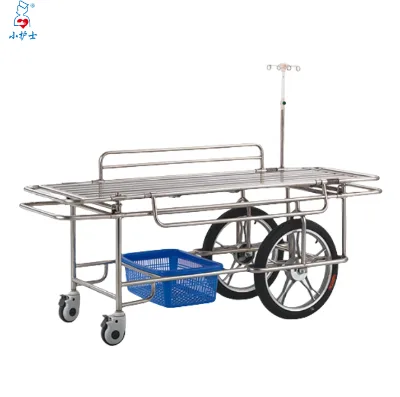
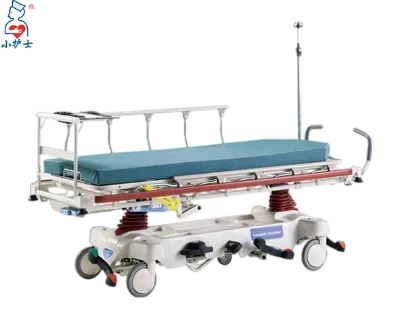
E-8 Patient Transfer Bed Hospital Stretcher Bed Emergency Stretcher
$2031.50 - $2234.65
MOQ: 1 Minimum


High Quality Rescue Hydraulic Adjustment Loading Heigth Ambulance Electric Stretcher
$1000.00 - $8000.00
MOQ: 20 Pieces

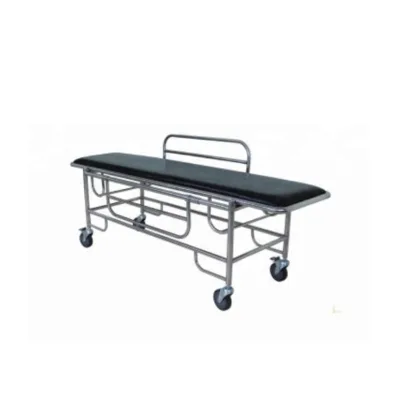

Multi-Function 3 Function Bed Clinic Medical Patient Transfer Stretcher
$1150.00 - $1200.00
MOQ: 1 Pieces


Hospital Use Ambulance Stretcher Patient Transport Stretcher for Rescue Use
$300.00 - $400.00
MOQ: 1 Pieces


High-Quality Emergency Medical Stretcher for Reliable Patient Transport
$1100.00 - $1280.00
MOQ: 2 Sets


Premium Folding Medical Stretcher with Height Adjustment for Transport
$1600.00 - $2000.00
MOQ: 2 Pieces
Comprehensive Sourcing Guide
Strategic Sourcing Guide for Class II Electric Patient Stretchers
Understanding the Product Category and Technical Landscape
When sourcing a Class II Electric Patient Stretcher, buyers must first distinguish this equipment from Class I manual devices. The core keyword indicates a medical device requiring regulatory oversight due to its electrical operation and potential for patient harm if malfunctioning. While the supplied product data contains numerous manual and hydraulic models, such as the "Pukang Medical" hydraulic stretcher with a 240kg load capacity, the specific search for an electric variant requires a focused verification of power systems. The observed data includes a "Power Source: Electric" attribute linked to a "Hospital Bed" type, suggesting that electric mechanisms are present in the broader stretcher and bed ecosystem, but buyers must explicitly confirm the electric actuation is applied to the stretcher lifting and folding mechanisms rather than just a bed frame.
Technical specifications for these devices typically involve a robust frame material, often high-strength aluminum alloy or thick-walled aluminum tubes, to ensure durability during emergency rescue and patient transfer. The observed data highlights "High-Strength Aluminum Alloy" and "Thick-Walled Aluminum Alloy Tubes" as standard materials for ambulance and emergency rescue applications. For an electric model, the frame must support the weight of the electric motor, battery, and control unit while maintaining the structural integrity required for a 240kg maximum safety loading, a figure observed in similar hydraulic units. The backrest lift mechanism is a critical feature; the data confirms "Backrest Lift: Yes" and "Backrest: Adjustable for Patient Comfort" as standard expectations. Buyers should verify that the electric system provides smooth, synchronized adjustment of the backrest and leg sections to facilitate patient comfort and clinical procedures.
The operational environment is another key technical differentiator. The data lists "Using Ambient: Hospital" and "Application: Ambulance / Emergency Rescue / Patient Transfer." An electric stretcher intended for ambulance use must withstand vibration and varying temperatures, while a hospital-based unit may prioritize quiet operation and precise positioning. The "Single Person Operation" attribute observed in the data is a vital safety feature, ensuring that medical staff can maneuver the stretcher without requiring excessive physical force. However, the transition from manual to electric power introduces new variables regarding battery life, charging protocols, and emergency manual override capabilities, which are not explicitly detailed in the provided manual product facts but are essential for a Class II device.
Regulatory Compliance and Certification Verification
Navigating the regulatory landscape for Class II medical devices is a primary concern for procurement teams. The supplied product facts consistently reference "CE" certification and "ISO13485/ISO9001" quality certifications. These are non-negotiable baselines for any reputable supplier of electric medical equipment. The "CE" mark indicates conformity with health, safety, and environmental protection standards for products sold within the European Economic Area, while ISO13485 specifically addresses quality management systems for medical devices. Buyers must verify that the certification documents are current and issued by a notified body, as the mere presence of the CE logo on a product listing does not guarantee compliance for the specific electric model being sourced.
The distinction between Class I and Class II devices is critical in this context. The provided data lists several items as "Class I," which typically covers lower-risk devices. However, the core keyword specifies a "Class II" electric stretcher. This classification implies a higher risk profile, often due to the electrical components and the potential for failure during patient transport. Buyers must ensure the supplier explicitly states the device classification in their technical documentation. If a supplier offers a manual stretcher with Class I certification but markets an electric version without updated classification data, this is a significant red flag. The "Certificate: CE/ISO13485/ISO9001" observed in the data suggests a robust quality system, but the buyer must confirm that this certification covers the specific electric actuation system and battery integration of the Class II model.
Furthermore, while the data mentions "EN 1789" and "EN 1865-1" as low-confidence background standards, these are relevant to ambulance equipment. EN 1789 specifically covers the requirements for road ambulances, including the mounting and safety of stretchers. Although the data treats these as background, a buyer sourcing an electric stretcher for ambulance use should actively verify compliance with these standards. The "Max safety loading: 240Kg" observed in the data provides a concrete benchmark for load-bearing capacity, but buyers must ensure the electric model meets or exceeds this threshold, as the added weight of the motor and battery could reduce the effective payload if the frame is not reinforced.
Cost Drivers and Total Cost of Ownership Analysis
The pricing landscape for electric patient stretchers is influenced by several factors beyond the initial purchase price. The observed price range in the data spans from 13 to 11,000 USD, a wide variance that likely reflects differences between disposable items, basic manual stretchers, and complex electric systems. For a Class II electric stretcher, the cost will be significantly higher than the lower end of this range due to the inclusion of motors, control panels, batteries, and advanced safety features. Buyers should anticipate that the "Selling Units: Single item" nature of the data suggests that these are high-value capital assets rather than consumables.
The total cost of ownership (TCO) extends beyond the initial acquisition cost. The "Warranty: 1 Year" observed in the data is a standard baseline, but for electric devices, the longevity of the battery and the availability of spare parts are critical cost drivers. The "After-sale service: Free spare parts" attribute is a significant value proposition that can reduce long-term maintenance expenses. However, buyers must clarify the scope of "free spare parts." Does this include the battery, motor, or control board, or only structural components like castors and frame brackets? The "Castor: 200mm" specification indicates the wheel size, which affects maneuverability and wear rates; larger castors may require more frequent replacement in high-traffic hospital environments.
Additionally, the "Customization: Available" and "OEM & ODM: Support" attributes suggest that buyers can tailor the stretcher to specific fleet requirements, which may incur additional costs. Customization could involve specific color schemes ("Color: White" is observed), branding, or integration with existing ambulance monitoring systems. The "Single package size: XX cm" and "prod_packing: Carton" or "Wooden" options also impact logistics costs. Wooden packing is generally more robust for international shipping but adds weight and cost, while carton packing is lighter but may offer less protection for heavy electric units. Buyers should calculate the shipping costs based on the "prod_origin: China" or "Jiangsu, China" locations, factoring in the weight of the electric components and the need for specialized freight handling.
Typical Applications and Operational Requirements
The operational context of an electric patient stretcher dictates the necessary features and durability requirements. The data explicitly lists "Application: Ambulance / Emergency Rescue / Patient Transfer," indicating that these devices are designed for high-stress environments. In an ambulance setting, the stretcher must be compatible with the vehicle's loading system. The "Model Type: Automatic Loading Stretcher" observed in the data highlights a specific category where the stretcher can be mechanically or electrically loaded into the ambulance, reducing physical strain on paramedics. For a Class II electric stretcher, the "Operation: Single Person Operation" attribute is essential, allowing a single paramedic to raise, lower, and fold the stretcher without assistance.
In hospital settings, the "Using Ambient: Hospital" attribute suggests a need for precision and quiet operation. Electric stretchers in emergency departments or operating rooms must allow for rapid repositioning of patients for imaging or surgical procedures. The "Backrest: Adjustable for Patient Comfort" and "Leg System: Mechanical Foldable Legs" (though the data notes mechanical legs, electric models often combine this with electric backrests) are crucial for patient comfort during transport. The "Mattress: Foam Padded Surface" is a standard feature, but buyers should verify the density and fire-retardant properties of the foam, especially for Class II devices used in critical care.
The "Condition: New" attribute confirms that the market primarily deals in new equipment, which is standard for medical devices requiring strict hygiene and safety standards. However, the "Disposable" attribute observed in the data likely refers to accessories like mattress covers or linens rather than the stretcher itself. Buyers must ensure that the electric stretcher is designed for repeated cleaning and disinfection, as hospital protocols require rigorous infection control. The "Folded" state is another operational consideration; the stretcher must fold compactly for storage in ambulances or small hospital rooms, and the electric mechanism must allow for easy folding without compromising the structural integrity of the frame.
Supplier Evaluation and Quality Assurance Protocols
Evaluating suppliers for Class II electric stretchers requires a rigorous assessment of their manufacturing capabilities and quality control systems. The data lists "Place of Origin: Hebei, China" and "Jiangsu, China," indicating that the majority of suppliers are located in these regions. Buyers should verify the specific factory location and conduct audits to ensure compliance with ISO13485. The "Brand Name: Pukang Medical" is observed, but buyers should not rely on a single brand; instead, they should evaluate multiple suppliers based on their track record with electric medical devices.
Quality control should focus on the electrical safety and mechanical reliability of the stretcher. Buyers must request test reports for the electric motor, battery safety, and emergency manual override systems. The "Max safety loading: 240Kg" is a key metric, but buyers should verify that this limit is tested under dynamic conditions, such as during transport over uneven surfaces. The "Certification: CE,ISO" and "Certificate: CE/ISO13485/ISO9001" are essential, but buyers should also check for specific electrical safety certifications like IEC 60601-1, which is the international standard for medical electrical equipment.
The "OEM & ODM: Support" attribute indicates that suppliers are willing to customize products, but buyers must ensure that customization does not compromise safety. For example, changing the frame material or battery capacity could affect the device's classification and safety profile. The "Customization: Available" option should be used carefully, with clear specifications agreed upon in the contract. Additionally, the "After-sale service: Free spare parts" is a critical factor in supplier selection. Buyers should clarify the response time for spare parts delivery and the availability of technical support for troubleshooting electrical issues.
Long-Term Procurement and Maintenance Considerations
Long-term procurement strategies for Class II electric stretchers must account for the lifecycle of the device, including battery replacement, software updates, and component wear. The "Warranty: 1 Year" is a standard starting point, but buyers should negotiate extended warranty options that cover the battery and motor, as these are the most expensive components to replace. The "Shelf Life: 1years" observed in the data likely refers to consumable accessories or batteries, and buyers should plan for regular replacement schedules to ensure device reliability.
Maintenance protocols should include regular inspection of the electric system, including wiring, connectors, and battery health. The "Power Source: Electric" attribute necessitates a robust charging infrastructure, especially in ambulance fleets where the stretcher may be used continuously. Buyers should verify the charging time and the availability of spare batteries to ensure uninterrupted service. The "Model: E-6" and "Model: E-9" observed in the data suggest that suppliers offer multiple models, and buyers should choose a model with a proven track record of reliability and ease of maintenance.
Finally, buyers should consider the scalability of their procurement strategy. The "MOQ: 1-200" range indicates flexibility in order quantities, allowing buyers to start with small orders and scale up as needed. However, for large hospital networks or ambulance fleets, negotiating volume discounts and long-term service agreements is advisable. The "Product Name: Emergency Strecher" and "Product Name: Ambulance Stretcher" highlight the specific use cases, and buyers should ensure that the selected model meets the specific needs of their organization. By focusing on these long-term considerations, buyers can ensure a reliable and cost-effective procurement process for Class II electric patient stretchers.
FAQs
What certifications are required for class ii electric patient stretchers?
CE and ISO13485 certifications are standard requirements for these devices. While some listings show Class I classification, electric models typically need Class II compliance to ensure safety for electrical operation and patient handling in emergency environments.
Can a single person operate a Class II Electric Patient Stretcher?
Yes, single person operation is a standard feature for these stretchers. This capability allows medical staff to manage lifting and folding mechanisms without assistance, ensuring efficient patient transfer in both hospital and ambulance settings.
What is the maximum safety loading capacity for these stretchers?
The maximum safety loading capacity is typically 240 kilograms. This limit ensures structural integrity during patient transport, though buyers must verify that electric components do not reduce the effective payload compared to manual hydraulic models.
How long is the warranty period for class ii electric patient stretchers?
A standard warranty period is one year for these medical devices. Buyers should confirm if free spare parts are included during this period to cover potential motor or battery failures specific to electric actuation systems.
Which materials are used for the frame of these stretchers?
Frames are commonly constructed from high-strength aluminum alloy or thick-walled aluminum tubes. These materials provide the necessary durability for emergency rescue while keeping the unit lightweight for single-person operation and transport.
Can the backrest be adjusted on a Class II Electric Patient Stretcher?
Yes, the backrest is adjustable for patient comfort and clinical procedures. Electric models offer smooth, synchronized adjustment of the backrest and leg sections, facilitating rapid repositioning in hospital or ambulance environments.