Source Cloth Wooden Hanger for Home, Shops, and Travel
Compare 30 Cloth Wooden Hanger options from verified suppliers. Buyers can evaluate models like OFFE2005 and WCH-87988, checking materials, dimensions, and customization features for tops, trousers, and underwear storage needs; compare the available evidence and request quotations based on your requirements.
Key considerations
Products List


Wooden Clothes Coat Hanger Hooks
$0.85 - $0.99
MOQ: 10 Pieces
Nanping Jianyang Heng Xinwang Bamboo and Wooden Products Co., Ltd.


2021 Hot Sale Wood Clothes Hanger Multifunctional Wooden Garment Hanger
$0.21 - $3.20
MOQ: 5000 Pieces


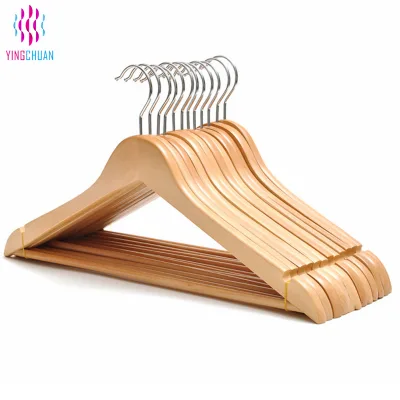


Lindon Wooden Hangers Manufacturer High Quality Wooden Hangers for Cloths
$0.23 - $0.93
MOQ: 1000 Pieces


Heavy-Duty Space-Saving Clothes Hangers with Multi-Purpose Functionality
$0.30 - $0.50
MOQ: 3000 Pieces


Comprehensive Sourcing Guide
Cloth Wooden Hanger Sourcing Guide
Sourcing cloth wooden hangers requires careful attention to the specific material composition and structural design observed in current listings. Buyers should verify that the wood type aligns with their durability expectations, as observed products range from standard wooden constructions to those featuring specific hardware like double hooks. The presence of customizable colors and shapes indicates that suppliers can adapt these units for various retail environments, from general home use to specialized clothing shops.
Procurement teams must also evaluate the packing configurations to ensure logistics compatibility with their distribution centers. Observed data shows variations such as 100 pieces per carton or single pieces per bag, which directly impacts shipping costs and handling efficiency. Understanding these packing standards is essential for calculating the true landed cost and ensuring that the hangers arrive without damage or excessive void space during transit.
Product Scope and Observed Listing Signals
The market for wooden hangers displays a wide range of models, including specific identifiers like OFFE2005 and WCH-87988, which suggest distinct design iterations available from different manufacturers. These listings often highlight functional attributes such as the ability to press trousers or accommodate tops and underwear, indicating a multifunctional scope that extends beyond simple garment support. Buyers should look for these specific model numbers to ensure they are sourcing the exact configuration required for their inventory needs.
Listing signals also reveal significant variability in dimensions, with observed standards ranging from compact 15cm units to larger 44.5cm structures. This variation implies that a single supplier may offer a broad catalog, or that different factories specialize in different size classes. Procurement strategies should account for this diversity by requesting samples of specific dimensions to confirm that the physical footprint matches the intended garment types and storage rack systems.
Technical Specifications to Verify
Technical verification must begin with the precise dimensions and material composition of the hanger to ensure structural integrity. Observed specifications include exact measurements like 15.841.1cm or 17.1'' × 0.5'' × 9.1'', which buyers should cross-reference against their own storage requirements. It is critical to confirm whether the wood is treated or finished to prevent warping, especially since some listings note the material simply as "wooden" without further detail on the species or treatment process.
Installation methods and hook configurations are equally vital technical parameters that affect usability and display aesthetics. The data indicates that some units utilize nail installation and feature double hooks, while others may have fixed types or different hook arrangements. Buyers should explicitly request technical drawings or physical samples to verify the hook strength and the stability of the nail or mounting mechanism before committing to a large order volume.
Compliance and Safety Documentation
While specific certification data is limited in the provided listings, buyers must proactively request documentation regarding the safety of the wood and any finishes used. Trusted category knowledge suggests that wooden products intended for clothing retail should be free from harmful chemicals and splinters, particularly if they are used in environments where customers handle the garments directly. Even if FSC certification is mentioned in background notes, it should not be assumed without a valid certificate from the specific supplier.
Safety compliance also extends to the physical stability of the hanger under load. Buyers should verify that the wooden structure can support the weight of heavy garments without bending or breaking, as this is a common failure point in lower-quality wooden hangers. Requesting test reports or a declaration of conformity regarding mechanical strength ensures that the product meets the safety expectations of the end-user and reduces the risk of product liability issues.
Cost Drivers and Commercial Terms
Cost drivers for wooden hangers are heavily influenced by the customization level, material quality, and the complexity of the finishing process. The observed price range of 0.01 to 3.35 USD suggests a wide disparity based on these factors, where simple, standard models cost significantly less than those with custom colors, shapes, or specialized features like trouser presses. Buyers should analyze the unit price against the specific customization requirements to determine the most cost-effective solution for their brand.
Commercial terms and payment structures vary significantly among suppliers, with observed options including T/T and L/C. The Minimum Order Quantity (MOQ) also presents a major variable, ranging from as low as 10 units to as high as 35,000 units, which dictates the financial commitment required to initiate a purchase. Procurement teams must negotiate terms that align with their cash flow and inventory turnover rates, ensuring that the MOQ does not create excessive stock pressure while still securing a competitive unit price.
Supplier Qualification and Quality Control
Supplier qualification should focus on verifying the origin and production capabilities of the manufacturer, as observed data points to origins in China, Nanping, Guilin, and Ningbo. These locations are known for specific manufacturing clusters, but buyers must confirm that the specific factory has the capacity to maintain consistent quality across large batches. Relying solely on the listed origin is insufficient; direct engagement with the production facility is necessary to assess their quality control protocols.
Quality control measures must include rigorous inspection of the wood grain, finish smoothness, and hook attachment strength. Since packing methods vary from cartons to individual bags, the supplier's ability to protect the product during shipping is a key quality indicator. Buyers should implement a pre-shipment inspection protocol that checks for defects such as cracks, loose hooks, or inconsistent coloring, ensuring that the final delivered goods match the approved samples in every detail.
Long-Term Procurement Checks
Long-term procurement success depends on establishing a reliable supply chain that can adapt to changing market demands and volume fluctuations. The observed ability to customize specifications and shapes suggests that suppliers with flexible production lines are better positioned to support long-term partnerships. Buyers should prioritize suppliers who demonstrate a history of maintaining consistent quality over time and who can scale production up or down without compromising the product integrity.
Continuous monitoring of supplier performance is essential to mitigate risks associated with lead times and logistics. With shipment options ranging from sea to air and express, buyers must evaluate the reliability of the supplier's logistics partners to ensure timely delivery. Regular audits and feedback loops should be established to address any recurring quality issues or delays, ensuring that the wooden hanger supply remains a stable and cost-effective component of the overall procurement strategy.
FAQs
What customization options are available for cloth wooden hangers?
Customization is available for these hangers, allowing buyers to tailor specific attributes to their needs. Options include customizable colors and shapes, such as flat or curved designs. The product model OFFE2005 supports these variations. Buyers can request specific packaging configurations, such as 100 pieces per carton, to meet their logistical requirements and branding standards effectively.
What are the standard specifications for the WCH-87988 model?
The WCH-87988 model features a standard size of 15.8 by 4 by 1.1 cm. It is packaged individually in a single bag for protection. Originating from Nanping, China, this specific model is designed for general clothing storage. The compact dimensions make it suitable for various wardrobe spaces while maintaining structural integrity for hanging garments securely.
Which materials are used in the construction of these hangers?
These hangers are constructed from wood and plastic materials. The wooden variants, such as model WCH-8720, measure 15 by 5 by 2.5 cm and are designed for home use. Plastic options, like model WSWA7784, offer durability. The material choice depends on the desired aesthetic and functional requirements, with wooden hangers often preferred for their classic look and strength.
Can I find hangers with double hooks for specific applications?
Yes, double hook configurations are available for specific applications. The product attributes indicate a double hook design, which is suitable for hanging multiple items or utilizing vertical space efficiently. This feature is particularly useful in retail environments or homes where maximizing storage capacity is essential. The installation method typically involves nails for secure mounting.
What are the shipping and payment terms for bulk orders?
Shipping options include sea, air, and express freight methods to accommodate different urgency levels. Payment terms are structured as T/T or L/C, providing flexibility for international transactions. These terms apply to various models, including those from Guilin and Ningbo. Buyers should confirm specific lead times and packaging requirements, such as carton quantities, during the negotiation phase.
What is the typical MOQ for Cloth Wooden Hanger orders?
The minimum order quantity ranges from 10 to 35,000 pieces, depending on the specific model and customization level. Standard models may have lower MOQs, while customized items might require higher volumes. This range allows both small businesses and large retailers to place orders that fit their inventory needs. Buyers should verify the exact MOQ for their selected product code.