Source Clothes Storage Organizer for Living Room, Bedroom, and Closet
Find 30 verified options for Clothes Storage Organizer including fabric bins, non-woven holders, and wall shelves. Compare specifications, customization, and pricing from suppliers in China to find the right solution for your needs.
Key considerations
Products List


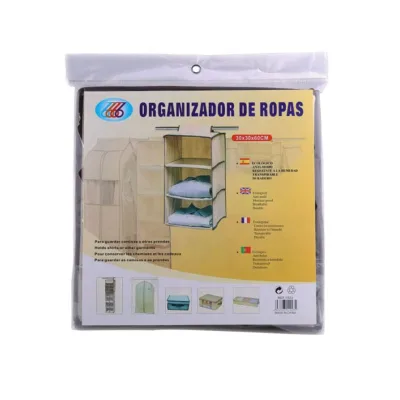
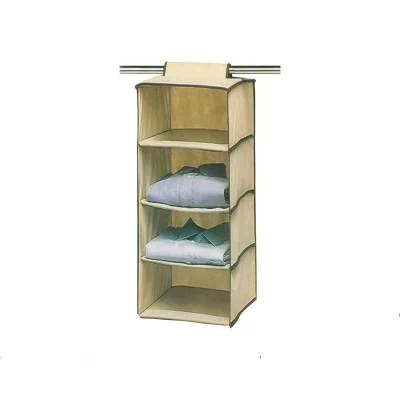


Storage Bag Garment Cover Storage Organizer Closet Organizer Package Bag
$2.00 - $2.80
MOQ: 100 Pieces
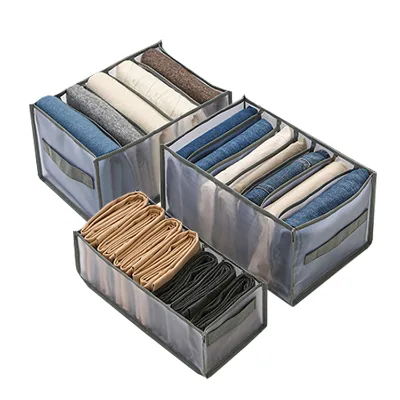
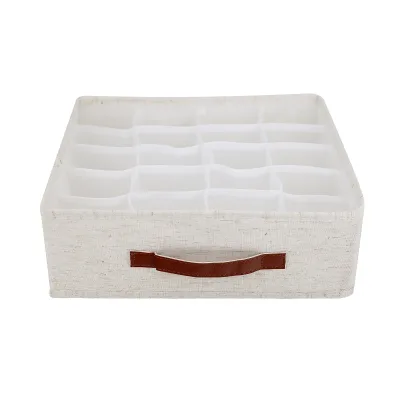

Storage Box Collapsible Clothes Organizer for Jeans Foldable Clothing Storage Box
$0.80 - $1.80
MOQ: 1000 Pieces

Multifunction Closet Storage Washable Drawer Organizer for Clothes Storage Box
$0.80 - $1.80
MOQ: 1000 Pieces

Fabric Clothing Folding Storage Box Organizers for Home Use Living Room
$0.80 - $1.80
MOQ: 1000 Pieces



Comprehensive Sourcing Guide
Clothes Storage Organizer Sourcing Guide
Sourcing clothes storage organizers requires a nuanced understanding of material performance, spatial constraints, and supply chain reliability. These products serve as essential tools for maximizing vertical and horizontal space in residential and commercial environments, ranging from living rooms to retail backrooms. Buyers must navigate a market characterized by significant variation in construction quality, from lightweight non-woven fabrics to rigid polypropylene structures. The decision to source these items often hinges on balancing cost-efficiency with durability, ensuring that the final product meets specific aesthetic and functional requirements without compromising on safety or longevity.
The procurement process is further complicated by the diversity of customization options available from manufacturers. Suppliers frequently offer tailored solutions regarding dimensions, branding, and packaging, which can streamline logistics but also introduce complexity into quality assurance protocols. Understanding the interplay between standard specifications and custom requests is critical for maintaining consistency across large orders. Buyers need to establish clear communication channels with suppliers to define tolerances and material grades precisely, preventing discrepancies between the ordered product and the delivered goods.
Product Scope and Observed Listing Signals
The current market landscape for clothes storage organizers reveals a wide spectrum of product types, primarily categorized into storage boxes, bins, and wall-mounted holders. Listings indicate a strong presence of rectangular-shaped units designed for simplicity and functionality, often marketed under styles described as "original" or minimalist. These products are frequently constructed from fabric materials, including non-woven varieties, which offer a balance between breathability and structural integrity. The observed data highlights specific model numbers such as AR001, AR005, and GUA0917, suggesting a fragmented market where manufacturers may use internal coding systems that require careful mapping to physical product attributes.
Packaging methods vary significantly across suppliers, with common options including cartons, OPP bags, and PE bags. This variation impacts both the protection of the goods during transit and the final presentation to the end consumer. For instance, some products are listed with specific packing dimensions, such as 11310050cm for carton packaging, while others are compactly packed in OPP bags with dimensions like 405050. Buyers must consider how these packaging choices affect shipping volume and cost, as well as the ease of assembly for the end user. The presence of customized logo options on many listings indicates a strong trend toward private labeling, allowing retailers to brand these essential household items effectively.
Technical Specifications to Verify
Dimensional accuracy is a primary technical concern when sourcing clothes storage organizers, as improper sizing can lead to fit issues in customer homes or retail displays. Observed specifications include a wide range of sizes, from compact units measuring 30x30x60cm to larger structures with capacities described as 18.5" H X 12.6" W X 14.3" L. It is crucial to verify whether these dimensions refer to the external footprint or the internal usable volume, as this distinction affects storage capacity claims. Additionally, dimensional tolerances should be explicitly defined; some listings note a tolerance of >=±2cm, which buyers must assess against their quality standards to ensure consistency across batches.
Material composition and structural integrity are equally important verification points. Products are often described using terms like "90gsm nonwoven" or "PP plastic," indicating the base material used for construction. Buyers should request detailed material specifications to understand the weight, density, and durability of the fabric or plastic components. For example, non-woven fabric organizers may vary in GSM (grams per square meter), which directly correlates with their load-bearing capacity and resistance to tearing. Furthermore, the absence of metal components in some designs, as noted in certain listings, simplifies the supply chain but may limit the structural support available for heavier loads, requiring careful evaluation of the intended use case.
Compliance and Safety Documentation
While specific certification requirements can vary by destination market, buyers should prioritize products that adhere to recognized social and environmental standards. Some suppliers in the observed data list BSCI factory certification, which indicates compliance with ethical labor practices and working conditions. This certification is particularly valuable for brands that emphasize corporate social responsibility and want to ensure their supply chain is free from labor violations. Buyers should request valid BSCI audit reports to verify the current status of the supplier’s compliance, as these certifications require regular renewal and monitoring.
Other potential compliance areas include material safety and environmental regulations, such as CE or RoHS standards, although these are noted as low-confidence in the provided context and should be verified on a case-by-case basis. For products intended for the European market, ensuring that materials do not contain harmful substances is critical. Buyers should ask suppliers to provide material safety data sheets (MSDS) or test reports from accredited laboratories to confirm that fabrics and plastics meet local regulatory requirements. This due diligence helps mitigate the risk of product recalls or customs delays due to non-compliance with safety standards.
Cost Drivers and Commercial Terms
Pricing for clothes storage organizers is influenced by several key factors, including material costs, customization levels, and order volume. The observed price range spans from $0.5 to $179.99, reflecting the diversity of products from simple fabric bags to more complex storage systems. Minimum order quantities (MOQs) also vary widely, ranging from 1 piece for sample orders to 3000 pieces for bulk production, with some suppliers setting specific MOQs like 500 pcs for customized items. Buyers must align their order volumes with supplier MOQs to optimize unit costs, keeping in mind that higher volumes typically result in lower per-unit prices due to economies of scale.
Supply ability and lead times are critical commercial terms that impact inventory planning. Some suppliers advertise a supply ability of 10,000 units per month, which provides assurance for large-scale procurement needs. However, buyers should confirm actual lead times for both production and shipping, as these can fluctuate based on raw material availability and global logistics conditions. The port of shipment, often listed as Ningbo, Shanghai, or Lianyungang, also affects shipping costs and transit times. Understanding these commercial dynamics allows buyers to negotiate favorable terms and maintain a steady supply of products to meet market demand.
Supplier Qualification and Quality Control
Evaluating supplier qualifications involves more than just reviewing certifications; it requires a holistic assessment of their manufacturing capabilities and quality control processes. Buyers should verify the supplier’s place of origin, with many listings indicating production in Zhejiang or Jiangsu, China, regions known for their textile and manufacturing expertise. This geographic concentration can offer advantages in terms of supply chain efficiency and access to raw materials. However, buyers must conduct thorough due diligence to ensure that the supplier has the capacity to maintain consistent quality across large production runs.
Quality control measures should be explicitly defined in the purchase agreement, including inspection protocols for materials, assembly, and final packaging. Given the observed variations in packing methods, buyers should specify how products will be inspected to prevent damage during transit. For customized orders, pre-production samples are essential to verify that the final product matches the agreed-upon specifications for size, material, and branding. Implementing a robust quality control plan, potentially involving third-party inspections, helps mitigate the risk of receiving defective goods and ensures that the supplier meets the buyer’s standards for product integrity.
Long-Term Procurement Checks
Sustaining a successful procurement relationship with Clothes Storage Organizer suppliers requires ongoing monitoring and adaptation to market changes. Buyers should regularly review supplier performance metrics, including on-time delivery rates, product defect rates, and responsiveness to issues. This continuous evaluation helps identify potential risks early and allows for proactive management of the supply chain. Additionally, staying informed about industry trends, such as new materials or sustainable packaging options, can provide opportunities for product differentiation and cost savings.
As consumer preferences evolve, buyers must remain flexible in their sourcing strategies to meet changing demands. This may involve exploring new suppliers with innovative designs or adjusting product specifications to align with current market trends. Regular communication with suppliers about future product needs and potential changes in volume can help strengthen the partnership and ensure mutual growth. By maintaining a strategic approach to supplier management, buyers can secure a reliable supply of high-quality clothes storage organizers that meet the needs of their customers while supporting their business objectives.
FAQs
What customization options are available for clothes storage organizers?
Customization is available for these storage organizers, allowing buyers to tailor products to specific needs. Options include customized logos and sizes, with some models offering specific dimensions like 30x30x60cm or 18.5 inches in height. Buyers should verify specific model requirements before ordering.
Which certifications do the factories producing these organizers hold?
The factories producing these items hold BSCI factory certification, ensuring compliance with social accountability standards. This certification applies to the manufacturing facilities located in China, specifically in regions like Zhejiang and Jiangsu. Buyers can request proof of this certification during the sourcing process.
How is the packaging handled for these fabric storage boxes?
Packaging varies by model and includes options such as cartons, OPP bags, and PE bags. Some specific items are packed in OPP bags while others use PE bags or standard cartons. The single package size for certain non-woven fabric models is approximately 31x31x5 cm.
Can I find suppliers with a minimum order quantity of 500 pieces?
Yes, some suppliers offer a minimum order quantity of 500 pieces for specific wall organizer shelf models. Other models may have MOQs ranging from 1 to 3000 pieces depending on the product type. Buyers should check the specific model number to confirm the exact MOQ requirement.
What materials are used to make these storage holders and racks?
These storage holders are primarily made from fabric, including non-woven fabric with a weight of 90gsm. Some models also utilize PP plastic, while others are constructed without metal components. The material choice depends on the specific product model and intended usage for clothes storage.
Which locations are the manufacturers of these organizers based in?
Manufacturers are located in China, with specific origins noted in Zhejiang and Jiangsu provinces. The shipping ports for these products include Ningbo, Shanghai, and Lianyungang. Buyers can expect the goods to originate from these established industrial regions in China.
What is the supply capacity for these clothes storage organizers?
The supply ability for these items is reported as 10,000 units per month for certain models. This capacity supports regular bulk orders for storage boxes and bins. Buyers should confirm current production schedules with the specific factory to ensure timely delivery.