Source CNC Lathe Controller for Turning, Machining, and Milling
Explore 30 verified options for the CNC Lathe Controller to compare features like variable speed, multi-axis support, and touch screen interfaces. Buyers can evaluate specifications from manufacturers in Shandong and Shenzhen for turning machines and machine tools.
Key considerations
Products List


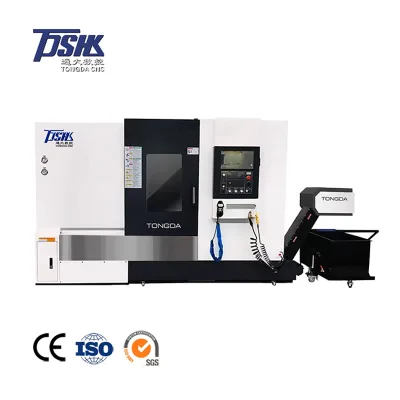
Cnc Controller for Lathe Cnc Lathe Tool Turret High Speed Lathe Tool CNC Metal
$40474.47 - $41052.68
MOQ: 1


CNC Controller for Heavy-Duty Engine Lathes CNC Controller for Swiss-Type Lathes
$600.00 - $750.00
MOQ: 1 Pieces

Precision CNC Lathe Controller for Complex Turning and Boring Operations
$220.00 - $290.00
MOQ: 1 Pieces


Advanced 2 Axis CNC Lathe Controller for Precision Machining
$180.00 - $280.00
MOQ: 1 Pieces
Fujian Jingyang Intelligent Equipment Manufacturing Co., Ltd


Comprehensive Sourcing Guide
Strategic Sourcing Guide for CNC Lathe Controllers
Navigating the procurement landscape for CNC lathe controllers requires a disciplined approach that balances technical capability with supply chain reliability. The core keyword "CNC Lathe Controller" represents a critical component in modern machining operations, serving as the central nervous system for machine tools. Buyers must distinguish between generic control units and specialized systems designed for specific lathe configurations. The market offers a diverse array of options, ranging from basic manual interfaces to complex multi-axis systems capable of high-precision automation. This guide outlines the essential factors for evaluating these systems, ensuring that procurement decisions are grounded in verifiable data and industry best practices rather than marketing assertions.
Technical Architecture and Control Capabilities
The technical specifications of a CNC controller define its operational limits and suitability for specific machining tasks. When evaluating potential units, buyers should prioritize the number of axes supported, as this directly correlates with the complexity of parts that can be manufactured. Available configurations in the current market range from 2-axis to 6-axis systems, with specific models supporting 3-axis and 2-axis setups. The selection of the axis count must align with the intended application, whether it is simple turning operations or complex multi-step machining processes.
Performance metrics such as control accuracy are paramount for high-precision manufacturing. Evidence suggests that certain high-end controllers offer control accuracy down to 0.1 micrometers, a specification that is critical for tight-tolerance applications. The display interface is another vital technical component; modern systems often feature 8.4-inch TFT LCD screens with 800x600 resolution and true color capabilities. These displays facilitate intuitive programming and real-time monitoring of machine status. Furthermore, the presence of a touch screen main panel and a sub-panel enhances operator interaction, allowing for rapid parameter adjustments without the need for external devices.
Processing power and memory capacity also play significant roles in system performance. Controllers equipped with 32-bit CPU architectures generally provide superior processing speeds compared to older 17-bit models. Memory allocation, such as a user store room of 240M bytes, ensures that extensive part programs and complex tool offset data can be stored locally without external storage dependencies. The signal type, whether continuous or discrete, and the voltage output capabilities, such as 2-way 0~10v analog outputs, must be compatible with the specific drive systems and sensors integrated into the lathe.
Compliance, Certification, and Safety Standards
Verifying compliance with international standards is a non-negotiable step in the procurement process. Buyers must ensure that the controller meets the necessary safety and quality certifications for their target markets. Common certifications observed in the industry include CE and ISO 9001. The CE mark indicates conformity with health, safety, and environmental protection standards for products sold within the European Economic Area. ISO 9001 certification demonstrates that the manufacturer adheres to a quality management system that ensures consistent product quality.
It is important to note that certification status can vary between different models and production batches. Some units may be certified as "Customized" or "Non-Customized," while others might carry specific regional approvals like GS. Buyers should not assume that all listed products possess the same certification status. Instead, they must request current certification documents for the specific model number being purchased. For instance, while some models list certifications as "CE,GS,ISO 9001," others may only list "ISO: CE." This distinction is crucial for regulatory compliance in the buyer's jurisdiction.
In addition to product certifications, the origin of the product influences the regulatory framework. Products originating from regions like Shandong or Shenzhen in China are subject to specific export regulations and quality control protocols. Buyers should verify that the supplier can provide valid documentation proving the product's origin and compliance status. The absence of a specific certification on a product listing does not necessarily imply non-compliance, but it does require further verification before proceeding with a purchase.
Cost Drivers and Pricing Dynamics
Understanding the cost structure of CNC controllers is essential for budgeting and financial planning. The price range for these units can vary significantly, with observed market listings spanning from $180 to $49,999. This wide disparity is driven by several factors, including the number of axes, processing power, display quality, and the level of customization required. A basic 2-axis controller with a standard display will naturally cost less than a 6-axis system with advanced touch interfaces and high-precision control capabilities.
The Minimum Order Quantity (MOQ) is another critical cost driver. In the current market, many suppliers offer an MOQ of just 1 piece, which allows for small-batch procurement and reduces initial capital expenditure. This flexibility is particularly beneficial for small workshops or companies testing new machinery configurations. However, buyers should be aware that while the unit price might be low for single-unit orders, the total cost of ownership includes shipping, installation, and potential customization fees.
Customization is a significant factor that can influence the final price. Products that offer OEM services and logo printing capabilities often come at a premium. The ability to customize the product packing, such as using wood frames or cartons, can also add to the cost depending on the fragility of the unit and the shipping requirements. Buyers should request a detailed breakdown of costs to understand how much of the price is attributed to the hardware, software licensing, and value-added services like customization.
Typical Applications and Operational Context
CNC lathe controllers are designed for a variety of industrial applications, with the primary use case being machine tool automation. The specific application case often dictates the required specifications. For example, controllers are frequently integrated into CNC lathes and turning machines where precision and reliability are paramount. The function of these controllers extends beyond simple driving; they provide comprehensive control over the machine's operations, including automatic control modes and variable frequency starting capabilities.
The versatility of these controllers allows them to be used in diverse manufacturing environments. Some models are specifically optimized for cutting tools, while others are designed for general machine tool applications. The ability to handle variable speeds and multiple axes makes them suitable for both simple turning operations and complex contouring tasks. The "Cutter Offset" feature, often designated as "C," allows for precise tool compensation, which is essential for maintaining part dimensions over long production runs.
When selecting a controller for a specific application, buyers must consider the operational environment. Factors such as the required starting mode, the number of stator phases (typically three-phase), and the casing protection type must match the machine's electrical and mechanical requirements. For instance, a controller with a protection type casing is better suited for environments with dust or moisture. The interface options, such as RS232 connectivity, also determine how easily the controller can communicate with external devices and networked systems.
Supplier Evaluation and Verification Protocols
Evaluating suppliers requires a rigorous due diligence process to ensure reliability and product quality. Buyers should look for suppliers that provide comprehensive after-sales support, including video technical support and online assistance. The longevity of the supplier's experience, such as claims of 60 years of service, can be an indicator of stability, though this should be verified against independent records. It is also important to confirm the supplier's ability to handle customization requests, as many buyers require specific branding or configuration adjustments.
The condition of the product is another critical evaluation criterion. Buyers must ensure that the controllers are supplied as "New" units to avoid issues related to wear and tear or outdated firmware. The packaging method, whether it involves wood frames or cartons, should be sufficient to protect the unit during transit. Suppliers that offer "Wood Frame Packing" are often better equipped to handle heavy or sensitive equipment, reducing the risk of damage during shipping.
Furthermore, buyers should verify the supplier's location and logistics capabilities. Products originating from specific regions like Shandong or Shenzhen may have different lead times and shipping costs. While specific lead times are not always disclosed in public listings, buyers should inquire about the expected delivery schedule to plan their production timelines effectively. The ability to provide a clear chain of custody and origin documentation is essential for customs clearance and regulatory compliance.
Quality Control and Long-Term Procurement Strategy
Implementing a robust quality control strategy is vital for minimizing downtime and ensuring consistent performance. Buyers should establish clear acceptance criteria based on the technical specifications provided, such as accuracy levels and display resolution. Regular testing of the controller's performance, including its response to variable frequency starting and its ability to maintain 0.1um control accuracy, is recommended. The mathematical model of the controller, whether linear or otherwise, should be validated against the intended machining processes.
Long-term procurement considerations involve planning for maintenance and upgrades. The availability of spare parts and the supplier's commitment to after-warranty service are key factors. Buyers should negotiate service level agreements that guarantee timely technical support and software updates. The standardization of components, such as the use of 16-axis configurations or specific pole counts, can also impact the ease of future maintenance and system expansion.
Finally, buyers should maintain a continuous evaluation of the market to stay informed about new technologies and standards. While current standards like ISO 9001 are well-established, emerging standards such as ISO 13485 may become relevant for specific industries. By staying informed and maintaining a proactive approach to supplier management, buyers can ensure that their CNC Lathe Controller procurement strategy remains effective and aligned with evolving industry demands. The integration of these strategies will lead to a more resilient and efficient manufacturing operation.
FAQs
What is the control accuracy of the SZGH-880TC controller?
The SZGH-880TC controller offers a control accuracy of 0.1 micrometers for high-precision machining tasks. This level of precision is essential for tight-tolerance applications in CNC lathe operations, ensuring consistent part quality across production runs.
Which display specifications are available for these controllers?
These controllers feature an 8.4-inch TFT LCD display with 800x600 resolution and true color capabilities. The interface includes a touch screen main panel and a sub-panel to facilitate intuitive programming and real-time monitoring of machine status.
Can buyers customize the product with their own logo?
Yes, customization is available including logo printing services for these CNC lathe controllers. Buyers can also request specific packing options like wood frames or cartons to suit their shipping and branding requirements.
What certifications do these controllers typically hold?
Common certifications observed include CE, ISO 9001, and GS depending on the specific model and configuration. Buyers should verify the exact certification status for the model number they intend to purchase to ensure regulatory compliance.
How many axes can these controllers support?
The controllers support configurations ranging from 2-axis to 6-axis setups, with specific models available for 2, 3, or 6 axes. The selection of axis count must align with the intended application complexity.
What is the minimum order quantity for these units?
The minimum order quantity is 1 piece, allowing for small-batch procurement and reducing initial capital expenditure. This flexibility is beneficial for small workshops or companies testing new machinery configurations.
Where are these controllers manufactured?
These controllers originate from regions in China, specifically Shandong and Shenzhen. Buyers should verify the specific origin for the model they purchase to understand applicable export regulations and quality control protocols.
What after-sales services are provided for these units?
After-sales support includes video technical support and online assistance for troubleshooting and maintenance. Buyers should confirm the specific service level agreements to ensure timely technical support and software updates.