Source CNC Machine Linear Guide for Automation, Milling, and Drilling
Explore 30 listings for CNC Machine Linear Guide systems featuring ball type rails, various precision grades, and customization options. Buyers can compare specifications like carrying capacity, rail length, and surface treatment to find suitable components for industrial machinery.
Key considerations
Products List


High Speed Low Noise Linear Motion Guide CNC Machine Tool Linear Guide Rail
$10.00 - $40.00
MOQ: 10 Pieces


Smooth Movement CNC Linear Guide Wholesale Price Linear Motion Guide Rail
$10.00 - $40.00
MOQ: 10 Pieces


Comprehensive Sourcing Guide
CNC Machine Linear Guide Sourcing Guide
Selecting the right linear guidance system is a critical decision for maintaining the precision, speed, and longevity of CNC machinery. These components serve as the foundational interface between stationary rails and moving carriages, enabling smooth, low-friction motion along a single axis. For procurement specialists, understanding the nuances of ball type linear guides, slider structures, and material hardness is essential to avoid costly downtime or premature wear. This guide synthesizes observed market signals and technical requirements to help buyers navigate the complex landscape of linear motion components effectively.
The market for CNC machine linear guides is characterized by a wide variance in specifications, pricing, and supplier capabilities. Buyers must distinguish between generic offerings and high-precision components designed for specific industrial applications. By focusing on verified technical attributes such as precision grades, corrosion resistance, and surface treatments, purchasers can align their procurement strategies with the operational demands of their machinery. This approach ensures that every component selected contributes to the overall reliability and performance of the production line.
Product Scope and Observed Listing Signals
The current market landscape for linear guides reveals a diverse array of product configurations, with observed prices ranging from $1 to $14,000 USD. This significant price variance reflects differences in precision levels, material quality, and brand reputation, such as the presence of established names like ERSK or generic equivalents. Buyers should recognize that lower price points may correspond to standard precision grades, while higher costs often indicate specialized features like high corrosion resistance or specific hardness ratings. Understanding this spectrum helps in budgeting and setting realistic expectations for component quality.
Observed minimum order quantities (MOQs) typically range from 1 to 10 pieces, indicating flexibility for both prototype development and small-batch production runs. Many suppliers offer customization options, including OEM services and specific color choices for sliders, such as red and green, which can aid in visual identification during maintenance. Additionally, the availability of samples, sometimes at freight collect, allows buyers to physically inspect the product before committing to larger orders. This flexibility is crucial for verifying fit and function in custom CNC machine setups.
Technical Specifications to Verify
Precision is paramount in CNC applications, and buyers must verify the precision grade of the linear guides, which are often categorized into levels such as N, H, P, SP, and UP. These grades dictate the allowable deviation in running accuracy, directly impacting the finish quality of machined parts. Furthermore, the hardness of the slider, typically observed in the range of 60-62 HRC, is a critical indicator of wear resistance and load-bearing capacity. Ensuring that the selected components meet the required hardness standards is essential for maintaining long-term performance under heavy operational loads.
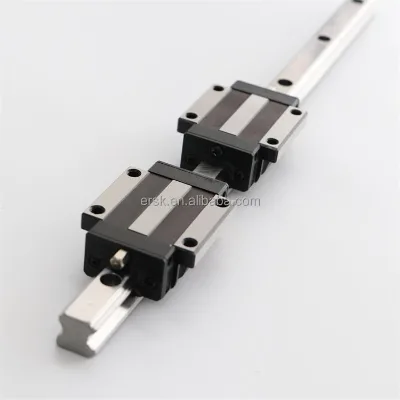
The structural design and material composition also play vital roles in the selection process. Linear guides are generally classified as ball type, utilizing recirculating balls to minimize friction between the rail and slider. The rails themselves may be available in various standard sizes, such as 15, 20, 25, 30, 35, 45, and 55mm, with maximum lengths extending up to 6000mm. Buyers should also consider the surface treatment, such as polished finishes, and the type of slider, whether rectangular or flange, to ensure compatibility with the specific mounting constraints of their CNC machines.
Compliance and Safety Documentation
Certification standards provide a baseline for quality management and environmental responsibility, with ISO 9001 being a common requirement among suppliers. Some listings indicate compliance with ISO 9001:2000 or the more recent ISO 9001:2015 standards, alongside ISO 14001 for environmental management. These certifications suggest that the manufacturer has established robust processes for quality control and continuous improvement. Buyers should request valid certification documents to verify that the supplier adheres to internationally recognized standards for manufacturing and operational safety.
In addition to management system certifications, buyers must ensure that the components meet relevant industry standards for linear motion, such as HGR45 or specific model designations like SBR and GZB. These standards define the dimensional tolerances and performance criteria that the linear guides must satisfy. It is also important to verify that the machinery test reports are provided by the supplier, offering evidence of the product's performance under simulated operating conditions. This documentation serves as a critical validation tool for ensuring that the components will perform reliably in real-world CNC applications.
Cost Drivers and Commercial Terms
Several factors influence the total cost of ownership for linear guides, including the precision grade, material quality, and surface treatment processes. High-quality steel materials and polished surfaces contribute to higher initial costs but offer better durability and reduced maintenance needs. Buyers should evaluate the trade-off between upfront investment and long-term operational savings, considering that higher precision grades and corrosion-resistant features may reduce downtime and replacement frequency. This holistic view of cost helps in making more informed procurement decisions.
Commercial terms such as delivery time and shipping methods also impact the overall procurement strategy. Observed delivery times can be as short as 5-7 days, which is beneficial for urgent maintenance or production needs. Suppliers offer various shipping options, including vessel, railway, and airway transport, allowing buyers to choose the most cost-effective or expedient method based on their inventory requirements. Additionally, the availability of free samples at freight collect can reduce initial testing costs, although buyers should factor in shipping expenses when calculating the total cost of evaluation.
Supplier Qualification and Quality Control
Robust quality control processes are essential to ensure that every linear guide meets the specified tolerances and performance criteria. Buyers should prioritize suppliers who conduct 100% inspection before shipment, as this practice minimizes the risk of receiving defective components. The presence of detailed machinery test reports further demonstrates the supplier's commitment to quality and provides objective data on the product's reliability. Verifying these quality assurance measures is a critical step in mitigating supply chain risks.
Supplier origin and manufacturing capabilities also play a significant role in the selection process. Many suppliers are located in key manufacturing hubs in China, such as Nanjing and Fujian, which are known for their expertise in producing high-quality linear motion components. Buyers should assess the supplier's ability to provide OEM services and customize products to meet specific requirements. Additionally, the use of wooden packing or rust-protected packaging for overseas shipments indicates a commitment to protecting the product during transit, ensuring that it arrives in pristine condition.
Long-Term Procurement Checks
Establishing a long-term relationship with a reliable supplier requires ongoing monitoring of product performance and supplier responsiveness. Buyers should regularly review the condition of installed linear guides, paying attention to signs of wear, corrosion, or misalignment. High corrosion resistance is a desirable feature for environments where exposure to moisture or chemicals is common, as it extends the service life of the components. Proactive maintenance and timely replacement of worn parts can prevent catastrophic failures and ensure continuous production.
Continuous improvement in procurement practices involves staying informed about new technologies and standards in the linear guide industry. Buyers should engage with suppliers to discuss potential upgrades or alternative products that may offer better performance or cost efficiency. By maintaining open communication and leveraging supplier expertise, buyers can optimize their linear motion systems for future CNC machine upgrades or expansions. This strategic approach ensures that the procurement function remains aligned with the evolving needs of the manufacturing operation.
FAQs
What certifications do cnc machine linear guides typically have?
Most cnc machine linear guides carry ISO 9001, CE, and ISO 14001 certifications. These standards ensure quality management and environmental compliance. Buyers should verify specific certification versions like ISO 9001:2015 when sourcing. This guarantees the manufacturer follows rigorous production protocols for precision components.
Which precision grades are available for linear guide rails?
Precision grades typically range from 1 to 5, with standard levels including N, H, P, SP, and UP. Higher grades offer tighter tolerances for high-precision machines. Selecting the correct grade depends on the specific application requirements. Always confirm the grade with the supplier before ordering to ensure compatibility.
Can I customize cnc machine linear guides for my project?
Yes, customization is available for many linear guide products. Buyers can request specific colors, slider types, or packaging options. OEM services are also supported for branded components. Contact the supplier to discuss your unique requirements and ensure the customized parts meet your technical specifications.
What is the typical lead time for shipping linear guides?
Delivery time is often around 5 to 7 days for standard orders. Shipping methods include vessel, railway, or airway depending on urgency. Express shipping is also available for faster delivery. Check with the supplier for exact lead times based on your location and order quantity to plan your production schedule effectively.
How are cnc machine linear guides packaged for shipment?
Products are usually packed in wooden boxes or cartons. Some items require rust protection for overseas shipping. High-quality steel materials are used to ensure durability. Proper packaging prevents damage during transit. Verify the packing details with the supplier to ensure your goods arrive in perfect condition.
What is the minimum order quantity for linear guide samples?
The minimum order quantity can be as low as one piece for samples. Some suppliers offer free samples at freight collect. This allows buyers to test quality before bulk ordering. Confirm the sample policy with the supplier to understand any associated costs or shipping requirements for your evaluation.