Source CNC Router Ballscrew Nut for Automation, 3D Printing, and Milling
Explore 30 listings for CNC Router Ballscrew Nut options featuring various models like SFU and DKF. Buyers can compare specifications including precision grades C3 to C7, screw diameters, and nut types such as End Cap and Circulator to find suitable components for industrial machinery.
Key considerations
Products List


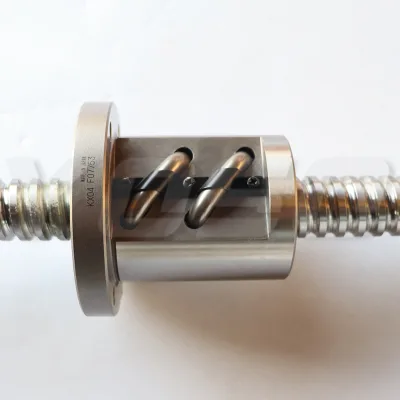

High Precision Stainless Steel Ballscrew Nut for Miniature Applications
$100.00 - $10000.00
MOQ: 1 Sets

OEM High Precision CNC Brass Knurled Insert Nuts for Plastic CNC Router
$0.05 - $0.50
MOQ: 10000 Pieces
Comprehensive Sourcing Guide
Strategic Sourcing Guide for CNC Router Ball Screw Nuts
Navigating the global market for CNC router ball screw nuts requires a disciplined approach that separates verified product attributes from general market assumptions. Buyers must rely on specific technical data, observed supply chain realities, and rigorous verification protocols to ensure component reliability. The following guide synthesizes available product facts and industry knowledge to provide a structured framework for procurement professionals. This analysis focuses on the specific characteristics of ball screw assemblies, including their models, precision ratings, and packaging requirements, to facilitate informed decision-making without relying on unverified supplier claims.
Technical Specifications and Model Identification
The foundation of a successful procurement strategy lies in the precise identification of technical specifications. In the current market, ball screw nuts are not generic components; they are defined by specific model numbers, thread diameters, and nut configurations. Observed product data indicates a wide variety of model identifiers, ranging from generic descriptions like "cnc ball screw" to specific alphanumeric codes such as SFU5005, SFU4010, SFU6310, and SFNU2005-4. These codes are critical for matching the nut to the corresponding screw and the machine's load requirements.
The physical dimensions of the screw are equally vital. Available data highlights specific diameter ranges, including 11-20mm and 21-30mm, as well as broader ranges like 12mm-80mm. When sourcing for a CNC router, the buyer must verify that the selected nut's diameter matches the screw's pitch and load capacity. The nut type is another defining characteristic. The market offers distinct configurations, including "End Cap" and "Circulator" types. The choice between these depends on the specific motion control requirements of the router, such as the need for high rigidity or specific preload settings.
Furthermore, the internal construction of the nut assembly is a key specification. Some products are described as having a "Double" nut number configuration, while others are "Single." Additionally, the row count within the nut assembly varies, with observations noting "4-Row" configurations. This multi-row design often correlates with higher load-bearing capabilities and improved stiffness, which is essential for heavy-duty CNC routing applications. The material composition is consistently identified as "Steel," ensuring the necessary hardness and wear resistance for continuous operation.
Precision Standards and Performance Ratings
Precision is a non-negotiable attribute for CNC router components, directly influencing the accuracy of the final machined product. The market data explicitly lists precision ratings such as C7, C5, and C3. These ratings refer to the tolerance levels of the ball screw and nut assembly, with C3 representing the highest precision and C7 offering a more standard tolerance. Buyers must understand that a "C7" rating, while common, may not be sufficient for high-precision engraving or fine-detail milling, whereas C3 or C5 ratings are preferred for tight-tolerance applications.
The standardization of these components is another area requiring careful attention. While general industry standards like ISO 3408 and JIS B1192 are often referenced in the broader context of ball screws, the specific product listings provided indicate a mix of standards. Some entries list "Milled" as a standard, while others reference "1605" or "customized" standards. This variability suggests that buyers cannot assume a universal standard applies to all listed products. Instead, the procurement process must involve a direct verification of the standard against the machine manufacturer's specifications. The "Precision" keyword is frequently associated with these products, but the specific numerical value (e.g., C7) must be confirmed on the technical datasheet.
Additionally, the surface treatment plays a role in performance longevity. The observed data points to "Polishing" as a surface treatment method. This process reduces friction and wear, contributing to smoother motion and extended service life. However, the extent of this treatment and its compliance with specific industry norms should be verified during the supplier evaluation phase.
Compliance, Certification, and Origin Verification
Geographic origin and manufacturing standards are critical factors in assessing the reliability and compliance of ball screw nuts. The supply data indicates that products originate from various regions within China, including Nanjing, Zhejiang, Guangdong, and Shandong. Each of these locations may have different manufacturing ecosystems and quality control cultures. While the origin is consistently listed as China, the specific province can sometimes correlate with the type of manufacturing capability available, though this should not be used as a sole determinant of quality without further due diligence.
Compliance with international standards is a complex area. The provided facts mention "ISO 3408" and "JIS B1192" as background standards, but these are not explicitly confirmed as the active standard for every listed product. Therefore, buyers must treat these as reference points rather than guaranteed certifications. The procurement process should mandate that suppliers provide explicit documentation confirming which standard the specific batch of nuts meets. Relying on the assumption that a product from a specific region automatically complies with a specific standard is a significant risk.
Furthermore, the "Customized/OEM" attribute is listed as "Yes" for many products, indicating that manufacturers are capable of producing non-standard items. This flexibility is beneficial for unique CNC router designs but introduces a layer of complexity regarding compliance. Customized parts may not adhere to standard industry tolerances unless explicitly agreed upon in the contract. Buyers must ensure that any custom specifications are clearly documented and that the supplier has the capability to maintain those specifications consistently across production runs.
Cost Drivers and Pricing Dynamics
Understanding the cost structure of ball screw nuts is essential for budgeting and negotiation. The observed price range in the market is vast, spanning from $0.05 to $10,000. This extreme variance is driven by several factors, including the model complexity, precision rating, diameter, and order quantity. A basic SFU4010 nut with C7 precision will naturally cost significantly less than a custom-machined, C3 precision, 4-row nut with a large diameter.
The Minimum Order Quantity (MOQ) is another significant cost driver. The observed MOQ range is 1 to 10,000 units. For buyers requiring small batches for prototyping or maintenance, a low MOQ is advantageous, though it may come with a higher unit cost. Conversely, large-scale production runs can leverage economies of scale, but the high MOQs observed in the market may require significant capital commitment. Buyers must balance the need for inventory against the cash flow implications of high MOQs.
Packaging requirements also influence the final cost. The data shows a variety of packaging methods, including "Carton," "Carton+Pallet," "Plywood Wooden Box," and specific requirements for "Rust Protected and Packed for Over Sea." These packaging options are not merely logistical details; they represent additional material and labor costs that are often passed on to the buyer. For international shipments, the requirement for rust protection and specialized packing is critical to prevent damage during transit, but it adds to the overall price. Buyers should explicitly request a breakdown of packaging costs to understand the full landed cost of the components.
Supplier Evaluation and Quality Control
Evaluating suppliers for ball screw nuts requires a multi-faceted approach that goes beyond price comparison. The "Service" attribute, specifically "OEM Services," indicates that many suppliers offer value-added services, but the quality of these services varies. Buyers should assess the supplier's ability to provide technical support, customization capabilities, and after-sales service. The "Stock" attribute, described as "Large," suggests that some suppliers maintain significant inventory, which can reduce lead times and improve supply chain resilience. However, buyers must verify the actual stock levels and the turnover rate to ensure that the inventory is current and not obsolete.
Quality control is paramount in this sector. The "Precision" and "Accuracy" attributes must be verified through independent testing or third-party inspection. Buyers should request test reports that confirm the accuracy ratings (C3, C5, C7) and the dimensional tolerances of the nuts. The "Milled" standard and "Polishing" surface treatment should be visually and mechanically inspected to ensure they meet the required specifications. Additionally, the "Nut Type" (End Cap or Circulator) must be verified to ensure it matches the design requirements of the CNC router.
The "Customization" availability is a double-edged sword. While it allows for tailored solutions, it also increases the risk of quality inconsistencies. Buyers should establish clear quality control protocols for customized orders, including pre-production samples and in-process inspections. The "Standard Export Package" and "Customized" packing options should be agreed upon in writing to ensure that the components arrive in the specified condition.
Typical Applications and Long-Term Procurement
Ball screw nuts are integral to the motion systems of CNC routers, providing the linear motion necessary for cutting, engraving, and milling. The specific applications depend on the precision and load capacity of the nut. High-precision C3 or C5 nuts are typically used in applications requiring fine detail and tight tolerances, such as woodworking engraving or metal milling. Standard C7 nuts are suitable for general-purpose routing where extreme precision is not the primary concern.
Long-term procurement considerations involve the lifecycle management of these components. The "Steel" material and "Polishing" surface treatment contribute to durability, but wear and tear are inevitable. Buyers should plan for regular maintenance and replacement schedules. The "Customized" nature of some products means that replacement parts may need to be ordered specifically, rather than sourced from off-the-shelf inventory. This underscores the importance of maintaining a relationship with a reliable supplier who can provide consistent replacements over the long term.
The "Suitable for Overseas" and "Have to Be Rust Protected" packaging attributes highlight the importance of logistics in long-term procurement. Buyers must ensure that the packaging is robust enough to withstand long-distance shipping and storage conditions. The "Plywood Wooden Box" and "Carton+Pallet" options are often preferred for heavy or high-value items to prevent damage.
Comparison of Key Product Attributes
To facilitate quick decision-making, the following table summarizes the key attributes observed in the market for CNC router ball screw nuts. This comparison highlights the variability in models, precision, and packaging, which buyers must navigate during the sourcing process.
| Attribute Category | Observed Variations | Procurement Consideration |
|---|---|---|
| Model Series | SFU5005, SFU4010, SFU6310, SFNU2005-4, SFNU 2505 2510, DKF, FF, FFZD | Match model to screw diameter and machine load requirements. |
| Precision Rating | C7, C5, C3, CRows Number:4-Row | Higher precision (C3/C5) increases cost but improves accuracy. |
| Nut Configuration | Single, Double, End Cap, Circulator | Select based on rigidity and preload needs of the application. |
| Screw Diameter | 11-20mm, 21-30mm, 12mm-80mm | Ensure compatibility with the existing or planned screw assembly. |
| Material | Steel | Standard material; verify hardness and heat treatment if critical. |
| Packaging | Carton, Carton+Pallet, Plywood Wooden Box, Rust Protected | Choose based on shipping distance and storage conditions. |
| Origin | China, Nanjing, Zhejiang, Guangdong, Shandong | Verify specific factory capabilities and quality control standards. |
| Customization | Available, Yes, Customized | Confirm technical drawings and tolerance agreements for custom orders. |
In conclusion, sourcing CNC router ball screw nuts requires a meticulous approach that balances technical specifications, cost factors, and supplier reliability. By focusing on verified attributes such as model numbers, precision ratings, and packaging requirements, buyers can mitigate risks and ensure the procurement of high-quality components. The vast range of options in the market offers flexibility, but it also demands a disciplined evaluation process to select the right product for the specific application.
FAQs
What precision ratings are available for cnc router ballscrew nuts?
Available precision ratings include C7, C5, and C3, with C3 offering the highest tolerance. Buyers must verify the specific rating against machine requirements, as C7 is standard while C3 suits high-precision engraving.
Which nut types are commonly offered for these assemblies?
Common configurations include End Cap and Circulator types, with some options featuring Double or Single nut numbers. The choice depends on motion control needs, such as rigidity or preload settings for specific router applications.
Can I find customized or OEM options for these components?
Yes, customized and OEM services are available for many products. Manufacturers can produce non-standard items, but buyers must document custom specifications clearly to ensure consistent quality and adherence to agreed tolerances.
What are the typical screw diameter ranges for these nuts?
Screw diameters typically range from 11-20mm and 21-30mm, with broader options like 12mm-80mm also available. Matching the nut diameter to the screw pitch and load capacity is essential for proper function.
How are these products packaged for overseas shipping?
Packaging options include Carton, Carton+Pallet, and Plywood Wooden Box, often requiring rust protection for overseas transport. Specific requirements vary by supplier, so buyers should confirm packing details to prevent transit damage.
What materials are used to manufacture these ball screw nuts?
The primary material used is Steel, ensuring necessary hardness and wear resistance for continuous operation. This material choice supports durability and performance in heavy-duty CNC routing applications.
Where are these products typically manufactured?
Products originate from various regions in China, including Nanjing, Zhejiang, Guangdong, and Shandong. Buyers should verify the specific province and manufacturer capabilities rather than assuming quality based solely on the country of origin.