Source Cohesive Bandage for Muscle Pain Relief, Athletic Protection, and Hospital Care
Compare 30 Cohesive Bandage options from verified Chinese manufacturers. These elastic fiber and non-woven rolls offer waterproof, breathable, and hemostatic features for muscle pain relief, athletic protection, and general hospital use.
Key considerations
Products List


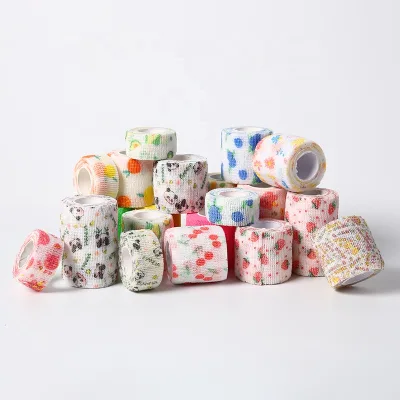


Comprehensive Sourcing Guide
Strategic Sourcing Guide for Cohesive Bandages in Global Markets
Understanding Product Specifications and Variants
When sourcing cohesive bandages, buyers must first navigate a complex landscape of technical specifications that define the product's utility and fit. The core product category, identified as "Bandage" with specific functional attributes like "Waterproof," "Ventilation," and "Hemostasis," requires precise alignment between buyer needs and supplier capabilities. The market data indicates a significant variation in model numbers and standard dimensions, suggesting that a single SKU rarely covers all procurement needs.
The observed product models range from generic dimensional codes like "25mm, 50mm, 75mm, 10mm, 15mm*4.5m" to specific alphanumeric identifiers such as "JS1M1101," "JS1M1107," and "JS1M1106." These variations often correlate with specific width and length combinations. For instance, standard widths observed in the supply chain include 2.5cm, 5cm, 7.5cm, 10cm, and 15cm, with lengths frequently standardized at 4.5 meters (450cm). However, some listings also reference lengths of 4 meters or 5 meters, and widths such as 6cm or 12cm, indicating that buyers must verify exact dimensions against their clinical or operational requirements.
Material composition is another critical specification. The supply chain predominantly features products made from "Elastic Fiber and Non Woven" blends, with specific formulations noted as "95% Nonwoven/Cotton; 5% Spandex." This composition directly influences the bandage's elasticity and breathability. Buyers should also note the "Fiber Weight GSM" (Grams per Square Meter), which varies across listings with observed values of 30g, 34g, 78g, and 80g. A higher GSM generally suggests a denser, more durable material, while lower GSM values may indicate a lighter, more breathable option suitable for sensitive skin or long-term wear.
| Specification Category | Observed Variants | Procurement Consideration |
|---|---|---|
| Widths | 2.5cm, 5cm, 7.5cm, 10cm, 15cm, 6cm, 12cm | Match width to body part (e.g., fingers vs. limbs). |
| Lengths | 4m, 4.5m, 5m, 450cm | Ensure sufficient coverage for the intended application. |
| Material | Elastic Fiber/Non Woven, 95% Nonwoven/Cotton, 5% Spandex | Verify fiber blend for breathability and stretch recovery. |
| GSM | 30g, 34g, 78g, 80g | Higher GSM often implies greater durability and compression. |
| Models | JS1M1101, JS1M1106, JS1M1107, HF F-3 | Cross-reference model numbers with specific dimension charts. |
Compliance and Certification Verification
In the medical and athletic supply sectors, compliance is not merely a formality but a prerequisite for market access and liability protection. The supplied data highlights several key certifications that buyers should prioritize during the vetting process. The most frequently observed certifications include "FDA," "ISOCE" (likely referring to ISO and CE combined), and standalone "CE" marks. Additionally, some listings reference "CE ISO FDA" as a combined certificate set, suggesting a comprehensive compliance framework.
Buyers must treat these certifications as observations of specific supplier capabilities rather than universal guarantees for all listed products. The presence of "Latex Free/Later" attributes is particularly critical for products intended for hospital, office, or home use, where allergic reactions to latex are a significant concern. The data explicitly notes "Without Ethylene Oxide Sterilization" and "Without Disinfection" for certain items, which implies that these bandages are intended for external use on intact skin or as protective layers rather than for direct wound care requiring sterile environments.
When evaluating a supplier, procurement teams should request valid, up-to-date copies of these certificates. It is essential to verify that the certification scope matches the specific product model being ordered. For example, a "CE" mark must be issued by a notified body authorized for the specific medical device category or athletic equipment class. Similarly, "FDA" registration or clearance must correspond to the intended use of the bandage. The absence of "Ethylene Oxide Sterilization" does not necessarily indicate a lower quality product; rather, it defines the product's classification as non-sterile, which is standard for many cohesive bandages used for support and compression rather than wound dressing.
Cost Drivers and Pricing Dynamics
The pricing structure for cohesive bandages is influenced by a confluence of factors, including material composition, order volume, and packaging requirements. The observed price range in the market spans from $0.01 to $3.00 USD per unit. This wide variance suggests that price is highly dependent on the specific product configuration and the scale of the purchase.
Several key drivers influence where a specific product falls within this range. First, the material cost is a primary factor. Bandages utilizing a higher percentage of cotton or specialized elastic fibers, such as the 95% Nonwoven/Cotton blend with 5% Spandex, may command a higher price point compared to those using basic synthetic fibers. Second, the GSM rating affects cost; products with higher fiber weights (e.g., 78g or 80g) generally cost more due to the increased raw material usage.
Packaging also plays a significant role in the final cost. The data indicates multiple packaging configurations, ranging from "Individually Packed in Cellophane" to "1roll/Poly Bag" and "OPP Bag + Carton." Bulk packaging in cartons typically reduces the per-unit cost compared to individual retail-style packaging. Furthermore, the Minimum Order Quantity (MOQ) is a critical cost driver. The observed MOQ range is vast, spanning from 1 to 10,000 units. Buyers ordering at the lower end of this spectrum (e.g., 1-100 units) will likely face higher per-unit costs, while those leveraging the high-volume end (up to 10,000 units) can negotiate significantly lower prices.
Customization is another variable that impacts pricing. The product attributes list "Customization: Available" and "Customized" as options. Custom orders involving specific dimensions, branding, or unique packaging requirements will invariably carry a premium over standard stock items. Buyers should be prepared for a tiered pricing model where the unit price decreases as the order volume increases, but custom specifications may reset the baseline cost.
Typical Applications and Functional Use Cases
Cohesive bandages serve a diverse range of applications, driven by their unique functional properties. The primary use cases identified in the market data include "Muscle Pain Relief," "Athletic Protection," and general support for "Hospital, Office, Home, Training" environments. The functional attributes of "Waterproof," "Ventilation," and "Breathable" make these products suitable for active scenarios where sweat management and environmental exposure are concerns.
The "Hemostasis" attribute suggests that certain variants are designed to assist in stopping bleeding, although the "Without Disinfection" note clarifies that these are likely for minor external pressure rather than deep wound management. The "Easy Tear by Hands" feature is a critical functional advantage for both medical professionals and athletes, allowing for quick application and removal without the need for scissors, which is particularly valuable in emergency or high-movement settings.
The target demographic is explicitly listed as "Adult," indicating that the sizing and compression levels are calibrated for adult anatomy. However, the wide range of widths (2.5cm to 15cm) allows for application on various body parts, from small joints like fingers and wrists to larger areas like knees, elbows, and calves. The "Disposable" feature aligns with the single-use nature of many cohesive bandages, although the "5 Years" shelf life indicates that the product remains stable for extended periods before use, allowing for strategic stockpiling.
Supplier Evaluation and Sourcing Strategy
Evaluating suppliers for cohesive bandages requires a rigorous approach that goes beyond price comparison. The origin of the products is consistently listed as "China," which is a major manufacturing hub for medical and athletic supplies. Buyers should verify the supplier's production capacity and quality control systems, especially given the variation in certifications observed.
Key evaluation criteria should include the supplier's ability to provide consistent product specifications. The data shows multiple model numbers (JS1M1101, JS1M1106, etc.) and standard dimensions, which implies a need for clear communication to ensure the correct variant is supplied. Buyers should request samples to verify the "Fiber Weight GSM" and material composition against the provided specifications. The "Customized" attribute suggests that suppliers may offer OEM services; buyers should assess the supplier's flexibility in handling custom orders, including lead times and minimums for customized runs.
Logistics and delivery timelines are also critical. The observed delivery times range from 15-20 days to 20-35 days. These lead times can vary based on order volume, customization requirements, and current production schedules. Buyers should factor these timelines into their inventory planning to avoid stockouts. Payment terms such as "T/T" (Telegraphic Transfer) and "L/C" (Letter of Credit) are standard, and buyers should negotiate terms that balance cash flow needs with supplier security.
Quality Control and Long-Term Procurement
Ensuring consistent quality in Cohesive Bandage procurement involves establishing clear quality control protocols. The "Shelf Life" of 5 years is a significant factor for long-term storage, but buyers must verify storage conditions to maintain product integrity. The "Basic Packing" of individual cellophane or poly bags helps protect the bandages from dust and moisture, but the outer "Carton" or "Innerbox" packaging must be robust enough to prevent damage during transit.
For long-term procurement, buyers should focus on building a relationship with suppliers who demonstrate stability in their certification status and production consistency. The presence of "CE ISO FDA" certificates indicates a commitment to international standards, but these should be re-verified periodically. Buyers should also monitor the "Feature" attributes, such as "Protective," "Easy to Tear," and "Tensile" strength, to ensure the product continues to meet performance expectations over time.
Standardization is key to reducing procurement complexity. By defining a core set of specifications—such as a preferred width range (e.g., 5cm, 7.5cm, 10cm) and a standard length (4.5m)—buyers can streamline their ordering process and leverage volume discounts. Additionally, understanding the "Payment Term" options allows for better financial planning, with T/T offering speed and L/C providing security for larger transactions.
In conclusion, sourcing cohesive bandages requires a balanced approach that considers technical specifications, compliance, cost dynamics, and supplier reliability. By leveraging the observed data points and maintaining a disciplined verification process, buyers can secure high-quality products that meet their specific operational and clinical needs while managing costs effectively. The wide range of available options, from standard dimensions to customized solutions, offers significant flexibility, provided that buyers engage in thorough due diligence to match the right product to the right application.
FAQs
What certifications do Cohesive Bandage suppliers typically hold?
Suppliers typically hold FDA, CE, and ISO certifications for their cohesive bandages. These certifications ensure compliance with international safety standards, though specific models may vary in their exact certification scope and validity.
How are cohesive bandages packaged for international shipping?
Cohesive bandages are commonly packed individually in cellophane or poly bags, then placed in cartons or inner boxes. This packaging protects the product during transit while maintaining hygiene for hospital, office, or home use.
Which specifications are available for Cohesive Bandage widths and lengths?
Available specifications include widths of 2.5cm, 5cm, 7.5cm, 10cm, and 15cm with lengths of 4.5 meters or 450cm. Some models also offer lengths of 4 meters or 5 meters to suit different application needs.
Can cohesive bandages be customized for specific orders?
Yes, customization is available for cohesive bandages regarding dimensions, packaging, or branding. Buyers should expect that custom orders may have different lead times and minimum order quantities compared to standard stock items.
What is the typical lead time for Cohesive Bandage delivery?
The typical delivery time ranges from 15 to 35 days depending on order volume and customization. Standard orders often ship within 15-20 days, while larger or customized batches may require up to 35 days for production.
Are cohesive bandages sterile or latex-free?
Most cohesive bandages listed are latex-free but are not sterile or disinfected. They are intended for external use on intact skin rather than for direct wound care requiring a sterile environment.