Source Coin Operated 5DX Simulator Motorbike for Amusement Parks, Arcades, and Events
Explore 30 listings for the Coin Operated 5DX Simulator Motorbike to compare specifications like weight, voltage, and player capacity. Buyers can evaluate options ranging from 1 to 3 players with various certifications and packing methods for commercial use.
Key considerations
Products List


Virtual Reality 9d Vr Motorbike Racing Simulator Arcade Game Machine
$6799.00 - $7299.00
MOQ: 1 Pieces


Hot Selling Popular Electronic Coin Operated Motorcycle Simulator Arcade
$2800.00 - $3300.00
MOQ: 1 Pieces


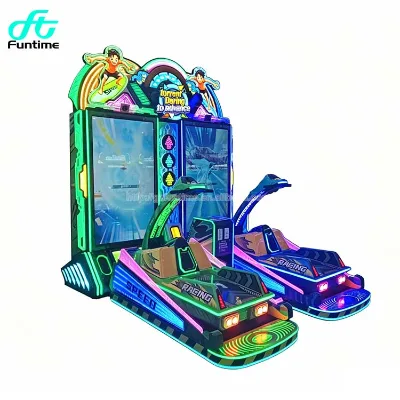


Comprehensive Sourcing Guide
Sourcing Guide for Coin-Operated 5DX Simulator Motorbike Units
Understanding the 5DX Simulator Motorbike Market Segment
The coin-operated 5DX simulator motorbike represents a specialized niche within the amusement and arcade equipment sector. These units are designed to provide an immersive racing experience by combining high-fidelity visual projections with physical motion platforms that mimic the dynamics of a real motorcycle. Unlike static racing cabinets, 5DX simulators integrate motion feedback, often utilizing hydraulic or electric actuators to tilt and vibrate in response to on-screen events. The core product category is frequently identified by specific model identifiers such as the EP-Vr Motorbike, JM-VR-MOTO03, and various iterations like the JM-VR-Racing01. These machines are primarily manufactured in the Guangdong region of China, a hub for amusement park equipment production.
When sourcing these units, buyers must recognize that the market is not monolithic. The product listings reveal a spectrum of configurations, ranging from single-player setups to dual-player stations. The observed product attributes indicate that while some units are strictly non-customized, others offer significant customization options for branding, color, and specific game content. The typical target demographic for these machines spans from teenagers to adults, with age recommendations often cited as 12 years and older, or specifically within the 15 to 50-year-old range. This broad age appeal makes them suitable for a variety of commercial venues, including dedicated amusement parks, shopping mall arcades, and family entertainment centers.
Technical Specifications and Hardware Configuration
A critical aspect of evaluating a 5DX simulator motorbike is the detailed examination of its technical specifications. The hardware foundation typically involves a robust frame constructed from materials such as fiberglass and metal, ensuring durability under high-traffic conditions. The physical dimensions of these units vary significantly depending on the model. For instance, specific models have been observed with dimensions around 210cm in length, 72cm in width, and 100cm in height, while others, such as the Super Moto Racing Game Machine, may reach a length of 246cm, a width of 195cm, and a height of 185cm. The standard allowable passenger capacity is generally one player, though some configurations support two players simultaneously.
The electrical requirements are a vital consideration for installation. Most units operate on a standard voltage range of 220V to 240V, which aligns with commercial power standards in many regions. Power consumption figures observed in the market data indicate a range, with some specific models listing a power draw of 260W. The weight of the unit is substantial, with a typical mass of 300kg, necessitating careful planning for floor load capacity and transportation logistics. The control platform often features a 20-inch interface, serving as the primary input device for the rider.
The visual and audio experience is driven by the integrated game content. Listings indicate that these simulators can support varying numbers of pre-installed games, ranging from 4PCS to 16PCS, with some specific configurations mentioning 8PCS for movie content. The motion technology is often linked to the "5DX" designation, implying a multi-axis movement system that enhances the realism of the racing simulation. Buyers should verify the specific actuator type and range of motion, as these directly impact the user's immersion and the machine's mechanical longevity.
Compliance, Certification, and Safety Standards
Navigating the regulatory landscape is essential for importing and operating coin-operated amusement equipment. The supply chain data indicates that many manufacturers in the Guangdong region adhere to international safety and quality standards. Common certifications observed in product listings include CE (Conformité Européenne) and TUV, which are critical for market entry into Europe and other regions requiring strict safety compliance. Some listings also reference ISO standards, often appearing in the format "ISOTUV," suggesting a combination of quality management and technical safety certifications.
However, buyers must exercise caution when interpreting certification claims. While CE and RoHS are frequently mentioned in the background context, the presence of a CE mark on a product listing does not automatically guarantee that every unit in a specific batch has passed independent third-party testing. The certification status should be verified through official documentation provided by the supplier, such as test reports from accredited laboratories. The "Allowable Passenger" and safety features are often tied to these certifications, ensuring that the motion mechanisms do not exceed safe acceleration limits for the intended age group.
Furthermore, the manufacturing process itself is a factor in compliance. Some units are produced using injection molding for specific components, which can affect the structural integrity and fire resistance of the casing. Buyers should request proof of compliance with local electrical safety standards, such as UL in the United States or GS in Germany, in addition to the CE mark. The warranty period is another indicator of manufacturer confidence; a standard 1-year warranty is commonly offered, covering defects in materials and workmanship.
Cost Drivers and Pricing Dynamics
The pricing of coin-operated 5DX simulator motorbikes is influenced by several variable factors, resulting in a wide observed range of 510 to 9200 USD. This significant spread reflects differences in build quality, motion system complexity, screen resolution, and the inclusion of advanced features. The lower end of the price spectrum likely corresponds to basic models with simpler motion systems and fewer games, while the higher end includes premium units with advanced hydraulic motion, high-definition projection, and extensive customization options.
Material costs play a substantial role in pricing. Units constructed with high-grade fiberglass and reinforced metal frames will command a higher price than those using lighter or less durable materials. The inclusion of a wooden box or wood frame for shipping, as opposed to standard bubble and stretch film packaging, also adds to the cost but ensures better protection during transit. Additionally, the complexity of the game content, such as the number of pre-loaded titles or the licensing fees for specific racing franchises, can drive up the unit price.
The Minimum Order Quantity (MOQ) is another critical cost driver. The observed MOQ range is between 1 and 3 units, offering flexibility for small arcade operators who may wish to test the market with a single unit. However, purchasing in larger quantities often results in a lower unit cost due to economies of scale in manufacturing and shipping. Buyers should also factor in the cost of customization, such as specific color schemes or branding, which may incur additional fees beyond the base unit price.
Typical Applications and Venue Suitability
The versatility of the 5DX simulator motorbike makes it suitable for a diverse range of commercial applications. The primary target venue is the amusement park, where these units serve as high-traffic attractions that draw in families and thrill-seekers. The immersive nature of the experience, combining visual and physical feedback, makes it particularly effective in locations where users are looking for an active, engaging activity rather than passive entertainment.
Beyond amusement parks, these simulators are increasingly found in shopping malls, family entertainment centers (FECs), and dedicated gaming arcades. The compact footprint of some models, such as those with a width of 72cm, allows them to fit into smaller spaces within a mall or a corner of a larger arcade. The age range of 12 to 50 years ensures a broad appeal, making the machine a viable investment for venues catering to both teenagers and adults.
The coin-operated nature of these units is designed for high-volume, unattended operation. The robust construction, including the 300kg weight and metal components, is intended to withstand the rigors of public use. The "Super Moto Racing Game Machine" designation suggests a focus on high-energy gameplay, which is ideal for venues that rely on impulse spending and short-duration play sessions. Buyers should consider the specific layout of their venue when selecting a model, ensuring that the required clearance for motion and the power supply requirements are met.
Supplier Evaluation and Quality Control Protocols
Selecting a reliable supplier is paramount to ensuring the long-term success of the investment. Given that the majority of these products originate from Guangdong, China, buyers should conduct thorough due diligence on potential manufacturers. Key evaluation criteria include the supplier's experience with 5DX technology, their track record with international exports, and their ability to provide after-sales support. The presence of specific model numbers like JM-VR-MOTO03 or EP-Vr Motorbike can help identify established product lines rather than generic, unbranded units.
Quality control should be a central part of the procurement process. Buyers should request detailed information about the production technology, such as injection molding processes for plastic components, and verify the quality of the fiberglass and metal assembly. Inspection of the packing method is also crucial; options range from simple bubble and stretch film to robust wooden boxes, which offer superior protection for international shipping. The supplier should provide a clear description of the packing standard to ensure the unit arrives in perfect condition.
Verification of the warranty terms is another essential step. A standard 1-year warranty is common, but buyers should clarify what is covered, including parts, labor, and shipping costs for replacements. The supplier's responsiveness to technical issues and their ability to provide remote troubleshooting or on-site support can significantly impact the operational uptime of the machine. Buyers should also inquire about the availability of spare parts, as the longevity of the motion system and electronic components depends on the ability to replace worn-out parts.
Long-Term Procurement and Operational Considerations
Beyond the initial purchase, long-term procurement considerations involve maintenance, upgrades, and scalability. The 5DX simulator motorbike is a complex piece of equipment that requires regular maintenance to ensure optimal performance. Buyers should establish a relationship with the supplier for ongoing support, including access to firmware updates and replacement parts. The warranty period is a starting point, but a proactive maintenance plan is necessary to extend the lifespan of the unit beyond the initial 12 months.
Scalability is another factor to consider. If the initial unit performs well, the buyer may wish to expand the fleet. The observed MOQ range of 1 to 3 units suggests that suppliers are flexible, but bulk orders may offer better pricing and shipping efficiencies. Buyers should also consider the future-proofing of the game content. As technology evolves, the ability to update the game library or upgrade the visual display system can keep the machine relevant and attractive to customers.
Finally, buyers must plan for the logistical aspects of installation and operation. The weight of 300kg and the specific dimensions of the unit require careful planning for delivery and placement. The voltage requirements of 220-240V must be compatible with the local power grid, and appropriate electrical infrastructure must be in place. By addressing these long-term considerations during the sourcing phase, buyers can ensure a smooth installation and a profitable operation for their coin-operated 5DX simulator motorbike units.
FAQs
What is the typical weight of a Coin Operated 5DX Simulator Motorbike?
The typical weight is 300kg, requiring careful floor load planning. This substantial mass ensures stability during high-intensity motion sequences for riders aged 15 to 50 years old.
Can buyers customize the color of the Coin Operated 5DX Simulator Motorbike?
Yes, the color is customizable to match specific venue branding needs. Manufacturers offer this option alongside other customization features for the fiberglass and metal frames.
Which certifications are commonly available for these motorbike simulators?
Common certifications include CE and TUV, ensuring compliance with international safety standards. Some units also reference ISO standards to verify quality management and technical safety.
How many players can a single Coin Operated 5DX Simulator Motorbike support?
Most units support a single player, though some configurations allow for two players simultaneously. The allowable passenger capacity depends on the specific model and frame design.
What is the standard voltage requirement for these racing simulators?
The standard voltage requirement is 220V to 240V, aligning with commercial power standards. Specific models may list a power consumption of 260W for operation.
Which packaging methods are used for shipping these motorbike units?
Packaging typically includes bubble film, stretch film, and a wooden box or frame. This robust packing ensures protection during transit for units originating from Guangdong, China.
What warranty period is typically offered for these amusement park machines?
A standard 1-year warranty is commonly offered, covering defects in materials and workmanship. Buyers should verify specific terms regarding parts, labor, and shipping costs for replacements.