Source Coil Trampoline Spring for Auto, Furniture, and Home Appliance
Explore 30 listings for Coil Trampoline Spring options tailored for automobile, furniture, and home appliance applications. Buyers can compare specifications like wire diameter, load capacity, and surface treatment to find suitable extension or compression springs from verified Chinese manufacturers.
Key considerations
Products List



Comprehensive Sourcing Guide
Strategic Sourcing Guide for Coil Trampoline Springs
Understanding the Technical Profile of Coil Springs
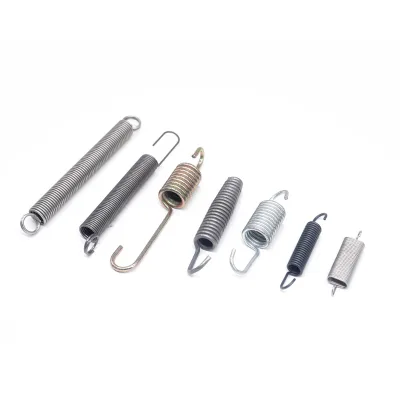
When sourcing coil trampoline springs, buyers must first distinguish between the specific mechanical requirements of trampoline applications and general industrial spring variants. The core product category often labeled as "Coil Trampoline Spring" typically falls under the broader classification of extension springs, though compression and tension variants are frequently listed in the same supply chain. The fundamental geometry is a spiral or coil configuration designed to store mechanical energy. In the observed market data, the wire diameter for these components ranges significantly, with specific listings indicating a range of 0.2mm to 20mm for general coil springs, and more specialized ranges of 0.2mm to 30mm for compression models. For trampoline-specific applications, the wire gauge is often cited in specific increments such as 16, 18, 19, 20, 22, 23, and 24, which dictates the tensile strength and elasticity of the final product.
The material composition is a critical variable. While the primary material is generally steel, specific listings highlight the availability of stainless steel options for environments requiring corrosion resistance. The load capacity observed in the supply chain varies, with documented examples showing capacities of 10 lb, 20 lb, and 22 lb. However, these figures should be treated as observations of specific product listings rather than universal standards for all coil trampoline springs. The functional purpose of these springs includes restoration, buffering, and pressing, with some designs also serving roles in measurement, drive, and phonation. The style is predominantly spiral or coil, and the load type is explicitly categorized as extension, compression, or tension depending on the specific model number and intended use case.
Compliance, Certification, and Material Standards
Verifying compliance is a non-negotiable step in the procurement of safety-critical components like trampoline springs. The supply chain data indicates that reputable manufacturers often hold ISO9001 certification, which serves as a baseline for quality management systems. Some listings further reference attestation against RoHS, REACH, and California Proposition 65 (CA65), suggesting adherence to strict environmental and chemical safety standards. Buyers must verify these certifications directly with the supplier, as the presence of such claims in a product description does not guarantee that every unit in a batch meets the standard.
Material standards are equally vital. The distinction between standard steel and stainless steel affects both the cost and the longevity of the spring. In outdoor applications, such as commercial trampolines, the risk of rust and corrosion is high, making the verification of stainless steel content or the effectiveness of surface treatments essential. The surface treatment processes observed include nickel, zinc, and chrome plating, as well as heat treatment and spraying. These processes are not merely aesthetic; they are functional barriers against oxidation. Buyers should request specific test reports regarding salt spray resistance for any spring intended for outdoor use, as the supplied data mentions these treatments but does not provide quantitative performance data.
Cost Drivers and Pricing Dynamics
The pricing structure for coil trampoline springs is influenced by several interconnected factors, primarily material costs, customization levels, and order volume. The observed price range in the market is extremely narrow, with some listings showing prices between 0 and 0.85 USD. This low-end pricing often correlates with high-volume industrial orders or generic inventory items. However, buyers should be cautious when interpreting these figures, as they may not reflect the cost of custom-engineered solutions.
The Minimum Order Quantity (MOQ) is a significant cost driver. The data shows a wide range of MOQs, from 1 piece to 1000 pieces. A specific high-confidence fact notes an MOQ of 1000 pieces for certain brands, which can impact the unit price significantly for smaller buyers. Customization is a major variable; while the market offers "standard" inventory, the ability to customize length, wire diameter, and load capacity often incurs additional tooling or setup costs. The single package size is typically around 25x20x18 cm or 25x20x20 cm, and the single gross weight is approximately 0.3 kg to 0.325 kg. These packaging dimensions and weights influence shipping costs, which can become a substantial portion of the total landed cost for low-value items.
Typical Applications and Usage Scenarios
While the core keyword focuses on trampoline springs, the supply chain data reveals a diverse range of applications for coil springs that share similar technical specifications. The primary usage is explicitly listed for automobiles, auto parts, and cars, indicating that many "trampoline" springs are actually automotive extension springs repurposed or marketed for recreational use. Beyond automotive and recreational sectors, these springs are utilized in industrial machinery, furniture, motorcycles, and home appliances. The versatility of the coil spring design allows it to function in compression, extension, and tension scenarios across these varied industries.
For trampoline-specific applications, the spring must withstand repetitive high-cycle loading. The "restoration" and "buffer" functions listed in the product attributes are directly relevant to the shock absorption required in gymnastics and recreational trampolines. However, buyers must ensure that the specific spring selected is rated for the dynamic loads of a trampoline, which differ from static industrial loads. The "Hot sale Gymnastics Spring Floor Coil Spring" listing suggests a direct link to sports equipment, but the presence of "Automobiles" and "Motorcycles" in the usage list indicates that a single product listing may cater to multiple markets. Buyers should clarify the specific application context to ensure the spring's fatigue life matches the intended usage frequency.
Supplier Evaluation and Production Capabilities
Evaluating suppliers requires a deep dive into their production processes and geographic origins. The data identifies two primary regions of origin: Zhejiang, China, and Hebei, China. These regions are known for their manufacturing clusters, but the specific location can impact logistics and communication. The production process is frequently cited as "Cold Roll," which is a standard method for forming high-strength springs. Buyers should verify if the supplier utilizes cold rolling exclusively or if they employ additional heat treatment processes to relieve internal stresses and enhance durability.
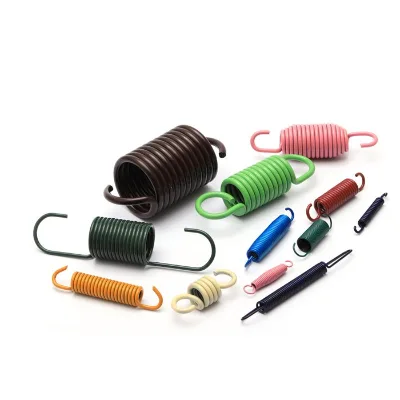
The level of customization available is a key differentiator among suppliers. The market data indicates that customization is "Available" for length, size, and color, with options for red, blue, yellow, gray, black, or fully customized finishes. Some suppliers offer "Customized as your requests" for length and "Standard and customized" for model numbers. When evaluating a supplier, buyers should assess their ability to handle these custom requests efficiently. The delivery time is listed as "Agreed Based on Quantity," which implies that lead times are flexible and dependent on the order volume. This variability requires clear communication regarding expected timelines. Additionally, the packaging options, ranging from PE boxes and standard cartons to trays and customer-specific requests, should be aligned with the buyer's logistics requirements to prevent damage during transit.
Quality Control and Long-Term Procurement Strategy
Implementing a robust quality control (QC) strategy is essential for mitigating the risks associated with coil spring procurement. Given the variation in load capacities and material types, buyers should not assume that all products in a category meet the same performance criteria. The "Single Gross Weight" and "Single Package Size" variations observed (e.g., 0.3 kg vs. 0.325 kg) suggest that even seemingly identical products may have slight manufacturing variances. A rigorous QC plan should include incoming inspection of wire diameter, tensile strength testing, and cycle life testing to ensure the springs can withstand the repetitive loading of trampoline use.
For long-term procurement, establishing a relationship with a supplier who offers consistent customization and reliable lead times is crucial. The "Delivery Time" being "Agreed Based on Quantity" highlights the need for a clear contract that defines lead times for specific order volumes. Buyers should also consider the total cost of ownership, which includes not just the unit price but also the cost of potential failures, shipping, and inventory holding. The availability of "Custom" colors and "Custom" sizes allows for branding opportunities, but these customizations must be validated for quality consistency. Finally, maintaining a clear record of certifications like ISO9001 and material specifications (e.g., Stainless Steel vs. Carbon Steel) ensures that the supply chain remains transparent and compliant with safety standards over time.
Summary of Key Sourcing Parameters
To facilitate a streamlined comparison during the sourcing process, the following table summarizes the critical parameters observed in the market for coil trampoline springs. This data serves as a reference for defining requirements and evaluating supplier responses.
| Parameter | Observed Range / Options | Notes for Verification |
|---|---|---|
| Material | Steel, Stainless Steel | Verify grade and corrosion resistance. |
| Wire Diameter | 0.2mm – 20mm (General), 0.2mm – 30mm (Compression) | Confirm specific gauge for load requirements. |
| Wire Gauge | 16, 18, 19, 20, 22, 23, 24 | Check compatibility with trampoline frame. |
| Load Capacity | 10 lb, 20 lb, 22 lb | Ensure rating exceeds dynamic trampoline loads. |
| Surface Treatment | Nickel, Zinc, Chrome Plated, Heat, Spraying | Request salt spray test results for outdoor use. |
| Certification | ISO9001, RoHS, REACH, CA65 | Verify current validity of certificates. |
| MOQ | 1 – 1000 pcs | Negotiate based on order volume and customization. |
| Origin | Zhejiang, China; Hebei, China | Assess logistics and communication efficiency. |
| Packaging | PE Box, Carton, Tray, Custom | Confirm protection against shipping damage. |
| Customization | Length, Size, Color, Load Type | Define exact specifications before ordering. |
By adhering to these structured observations and verification steps, buyers can navigate the complex landscape of Coil Trampoline Spring procurement with confidence, ensuring that the final products meet the rigorous demands of safety, durability, and performance.
FAQs
What certifications do Coil Trampoline Spring manufacturers typically hold?
Reputable manufacturers often hold ISO9001 certification as a baseline for quality management. Some listings further reference attestation against RoHS, REACH, and California Proposition 65 for environmental safety.
Which materials are used to manufacture coil trampoline springs?
The primary material is generally steel, though stainless steel options are available for corrosion resistance. The specific grade affects both the cost and the longevity of the spring in outdoor environments.
How does the wire diameter affect the spring performance?
Wire diameter ranges from 0.2mm to 20mm for general models and up to 30mm for compression variants. Specific gauges like 16 through 24 dictate the tensile strength and elasticity required for trampoline use.
Can buyers customize the length and color of these springs?
Customization is available for length, size, and color including red, blue, yellow, gray, and black. Buyers can request specific dimensions and finishes to match their branding or application needs.
What is the typical minimum order quantity for these springs?
The observed MOQ range spans from 1 piece to 1000 pieces depending on the supplier. A specific high-confidence fact notes an MOQ of 1000 pieces for certain brands, impacting unit pricing for smaller orders.
Which surface treatments protect the springs from corrosion?
Surface treatments include nickel, zinc, and chrome plating, as well as heat treatment and spraying. These processes act as functional barriers against oxidation, especially for springs intended for outdoor use.