Source Cold Forming Pharmaceutical Aluminum Foil for Blister Packaging
Find and compare 30 listings for Cold Forming Pharmaceutical Aluminum Foil. Evaluate options including 8011 alloy, various temper states, and customized thicknesses for blister packaging applications.
Key considerations
Products List


Cold Forming Pharmaceutical Alu Aluminum Blister Foil for Pills Packaging
$2000.00 - $3000.00
MOQ: 2 Tons

alu foil Roll Cold Forming Aluminum Foil for Pharmaceutical Blister Pack
$2000.00 - $3000.00
MOQ: 2 Tons


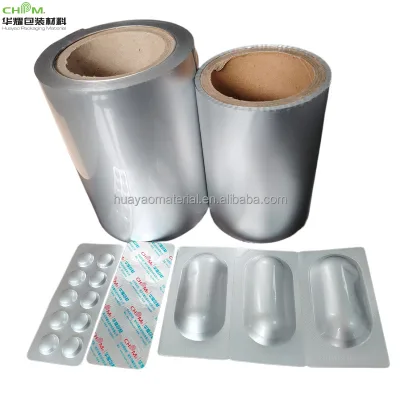
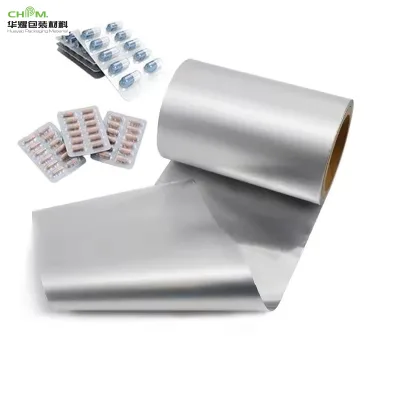
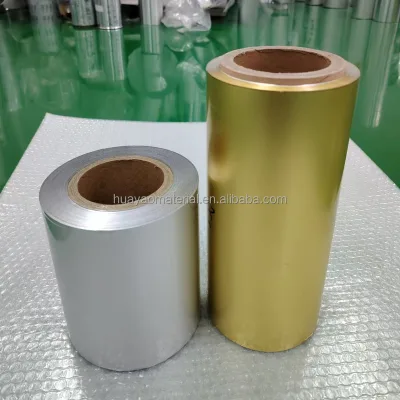

Cold Forming Pharmaceutical Alu Aluminum Blister Foil for Pills Packaging
$36.00 - $52.00
MOQ: 1 Pieces

Alu Alu Bottom Foil Cold Forming Foil for Pharmaceutical Capsule Packaging
$36.00 - $52.00
MOQ: 1 Pieces


Pharmaceutical Foil Aluminum Foil Roll for Pharmaceutical Capsule Packaging
$36.00 - $52.00
MOQ: 1 Pieces


Comprehensive Sourcing Guide
Cold Forming Pharmaceutical Aluminum Foil Sourcing Guide
Procuring Cold Forming Pharmaceutical Aluminum Foil requires a precise understanding of material science, regulatory compliance, and supply chain reliability. This guide synthesizes observed market data and technical specifications to help procurement professionals navigate the complexities of sourcing high-barrier packaging materials for blister packs. By focusing on verified attributes such as alloy composition, temper, and surface treatments, buyers can mitigate risks associated with product degradation, seal integrity failures, and regulatory non-compliance.
The following sections provide a structured approach to evaluating suppliers, interpreting technical data sheets, and establishing robust commercial terms. The guidance is grounded in observed listing signals, including specific alloy models like 8011 and 8000, and standard thickness ranges, while emphasizing the critical need for independent verification of certifications and performance claims. This disciplined approach ensures that sourcing decisions are based on tangible evidence rather than marketing assertions.
Product Scope and Observed Listing Signals
The market for Cold Forming Pharmaceutical Aluminum Foil is characterized by a diverse range of product models and material configurations. Observed listings indicate a primary focus on the 8011 alloy, often specified in conjunction with other common aluminum grades such as 1050, 1060, 3003, 5052, and 5005. These alloys are selected for their balance of formability, strength, and barrier properties. Buyers should note that while 8011 is a dominant material, the specific model numbers observed, such as WDPVj11, WDPVj9, and hm8011, suggest that suppliers may use internal coding systems that do not directly correlate to standard industry nomenclature. Therefore, procurement teams must always request the underlying material specification sheet rather than relying solely on supplier model codes.
Listing signals also reveal significant variation in product structure and surface treatment. The observed data highlights a "Opa+PVC+Alu" structure, indicating a multi-layer laminate where the aluminum foil serves as the primary barrier layer. Surface states range from "Single Light Aluminum Foil" to "Double light Aluminum Foil," and treatments include printing and coating. Notably, PVDC coating weights are observed in ranges of 40g, 60g, 90g, and 120g, which directly impact the foil’s oxygen and moisture barrier capabilities. Buyers must verify whether the listed coating weights are consistent with their specific product’s stability requirements, as higher barrier needs may necessitate thicker or specialized coatings.
Technical Specifications to Verify
Thickness is a critical parameter that defines the foil’s formability and barrier performance. Observed standards list thicknesses such as 0.018-0.040mm for cold forming applications, alongside other specifications like 0.14mm, 0.16mm, and 0.18mm, which may refer to different product categories or laminate totals. Buyers must distinguish between the thickness of the pure aluminum layer and the total laminate thickness. The "Thick Foil" and "Single Zero Foil" classifications observed in listings require clarification, as these terms can be ambiguous. Procurement teams should insist on precise micrometer measurements for the aluminum layer to ensure compatibility with high-speed blister packaging machinery.
Temper and rolling characteristics are equally vital for ensuring the foil can withstand the deep drawing process without cracking. The observed data includes "Soft," "Hard," and "Half Hard" tempers, with specific mentions of "8011 H18," which denotes a hard temper suitable for rigid applications. For cold forming, a specific temper balance is required to allow the foil to stretch around the blister cavity while maintaining structural integrity. Buyers should verify the exact temper designation and rolling characteristics, such as "Finish Rolling," to ensure the material meets the mechanical demands of their packaging line. Additionally, the "Hsl" attribute observed in some listings, ranging from 3-4G to 6-8g, likely refers to surface treatment or coating weight, which must be cross-referenced with performance data.
Compliance and Safety Documentation
Regulatory compliance is non-negotiable in pharmaceutical packaging. The observed listings mention ISO9001 and ISO14001 certifications, which indicate general quality and environmental management systems. However, for pharmaceutical applications, buyers must verify compliance with more specific standards, such as ISO 15378 for primary packaging materials for medicinal products. While ISO 15378 is noted in the background knowledge, its specific application status must be confirmed with the supplier. Procurement teams should request evidence of compliance with local pharmacopoeias, such as the USP or EP, which dictate strict limits on extractables and leachables.
Safety documentation must also include material safety data sheets (MSDS) and certificates of analysis (CoA) for each batch. The observed "SGS" certification suggests third-party testing capabilities, but buyers should specify which tests were performed. Critical tests include heavy metal migration, solvent residue analysis, and seal strength verification. Buyers should not assume that a general ISO certification covers pharmaceutical-grade safety requirements. Instead, they must demand batch-specific CoAs that confirm the absence of contaminants and verify that the PVDC coating, if present, meets food and pharmaceutical contact regulations.
Cost Drivers and Commercial Terms
Pricing in the aluminum foil market is influenced by raw material costs, processing complexity, and order volume. The observed price range of $4.35 to $3800 USD reflects significant variation, likely due to differences in order quantity, foil thickness, and coating specifications. Buyers should recognize that the lower end of this range may correspond to smaller sample orders or basic single-layer foils, while the higher end may reflect large-volume contracts for specialized, coated, or printed foils. Understanding this variance is essential for budgeting and negotiating fair pricing based on actual consumption needs.
Minimum Order Quantities (MOQ) and lead times are key commercial terms that impact supply chain flexibility. Observed MOQs range from 1 to 1000 units, with a specific mention of 500kgs for certain products. Lead times are observed at 7-10 days, which is relatively fast but may vary based on customization requirements. Buyers should clarify whether the MOQ applies to the raw foil roll or the finished laminate. Additionally, the "customized" standard and "as your requirement" thickness options suggest that bespoke orders may incur higher MOQs and longer lead times. Procurement teams should negotiate flexible terms that allow for adjustments based on production forecasts.
Supplier Qualification and Quality Control
Supplier qualification extends beyond certification checks to include an assessment of manufacturing capabilities and quality control processes. The observed "Export Standard" and "Paper Carton+Pallet" packing methods indicate a level of professionalism in handling and shipping, which is crucial for preventing damage to delicate foil rolls. Buyers should verify the supplier’s ability to maintain consistent thickness and temper across large production batches. Inconsistent quality can lead to packaging failures, product recalls, and significant financial losses.
Quality control should include regular audits of the supplier’s production line and testing facilities. Buyers should request data on yield rates, defect rates, and corrective action procedures. The observed "Customization: Available" attribute suggests that suppliers can tailor products to specific needs, but this flexibility must be balanced with rigorous quality assurance. Procurement teams should establish clear acceptance criteria for incoming materials, including visual inspection for surface defects and mechanical testing for seal integrity. Regular supplier performance reviews should be conducted to ensure ongoing compliance with quality standards.
Long-Term Procurement Checks
Sourcing Cold Forming Pharmaceutical Aluminum Foil is a long-term commitment that requires continuous monitoring and relationship management. Buyers should establish a structured review process to evaluate supplier performance against key metrics such as on-time delivery, quality consistency, and responsiveness to issues. The observed "Delivery Time: 7-10days" should be tracked over time to identify any trends in delays or disruptions. Proactive communication with suppliers regarding market fluctuations in aluminum prices can help in anticipating cost changes and adjusting procurement strategies accordingly.
Furthermore, buyers should stay informed about evolving regulatory requirements and industry best practices. As pharmaceutical packaging standards become more stringent, suppliers must adapt their processes and documentation to remain compliant. Procurement teams should encourage suppliers to invest in research and development to improve barrier properties and sustainability. By fostering a collaborative relationship based on transparency and mutual growth, buyers can secure a reliable supply of high-quality cold forming aluminum foil that supports their product’s safety and efficacy.
FAQs
What customization options are available for Cold Forming Pharmaceutical Aluminum Foil?
Customization is available for this product to meet specific buyer requirements. The standard offers various thicknesses, surface states, and treatments like printing or coating. Buyers can request specific models and packing methods to align with their pharmaceutical packaging needs.
Which certifications do the manufacturers hold for this aluminum foil?
Manufacturers hold ISO9001 and ISO14001 certifications for quality and environmental management. Some suppliers also provide SGS certification to ensure product reliability. These standards verify that the production processes meet international requirements for pharmaceutical-grade materials.
How long is the delivery time for Cold Forming Pharmaceutical Aluminum Foil orders?
The standard delivery time is typically 7 to 10 days for confirmed orders. This lead time applies to standard specifications and may vary based on order volume and customization requests. Buyers should confirm specific timelines with the supplier before finalizing the purchase.
What is the minimum order quantity for purchasing this aluminum foil?
The minimum order quantity can range from 1 unit to 1000 units depending on the supplier. Some specific listings indicate a minimum of 500 kilograms for bulk transactions. Buyers should check individual product pages to confirm the exact MOQ for their selected model.
Can I find cold forming aluminum foil with specific thickness requirements?
Yes, thickness options include single zero foil, thick foil, and specific ranges like 0.018 to 0.040 mm. Custom thicknesses such as 0.14mm, 0.16mm, or 0.18mm are also available as per buyer requirements. The product supports various thickness standards to suit different pharmaceutical packaging applications.
What surface states are available for this pharmaceutical aluminum foil?
Available surface states include single light aluminum foil and double light aluminum foil. Some products feature PVDC coating with weights of 40g, 60g, 90g, or 120g. The surface treatment can also be printed or coated to meet specific barrier and aesthetic requirements.
Where are the manufacturers of this aluminum foil located?
The products originate from China, as indicated by the product origin field. This location is common for suppliers offering 8011 alloy aluminum foil with various temper conditions. Buyers can expect sourcing from established manufacturing regions within China.
What packing methods are used for shipping this aluminum foil?
Packing options include export standard packaging, paper cartons with pallets, or boxes. The specific packing method depends on the product model and buyer requirements. These methods ensure the foil remains protected during transit and storage.