Source Color Push Pins for Office School Promotion
Compare 30 listings of Color Push Pins from verified Chinese manufacturers. Buyers can evaluate options for office, school, and promotional use with varying materials, sizes, and customization features.
Key considerations
Products List



Comprehensive Sourcing Guide
Strategic Sourcing Guide for Color Push Pins
The global market for office and promotional fasteners relies heavily on the versatility and low cost of Color Push Pins. For procurement professionals, navigating this category requires a disciplined approach that distinguishes between generic stationery items and specialized industrial fasteners. The supplied data indicates a diverse product landscape where "High Quality Color Push Pins" coexist with industrial magnetic pins and organizational badges. This guide synthesizes observed market attributes, technical specifications, and compliance requirements to assist buyers in making informed sourcing decisions without relying on unverified claims or specific supplier recommendations.
Technical Specifications and Material Composition
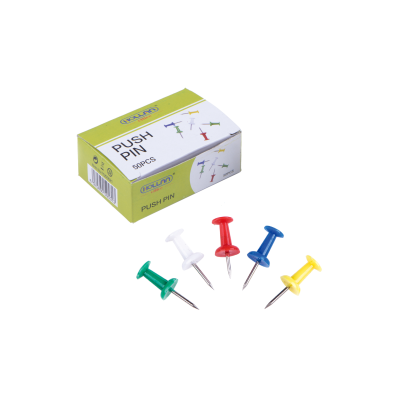
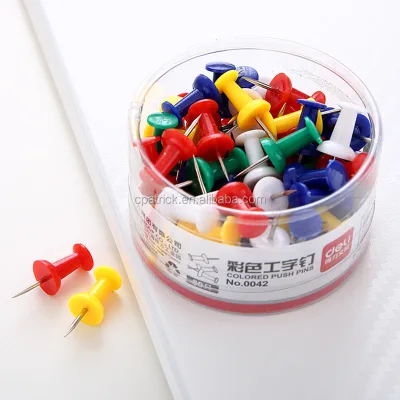
Understanding the physical attributes of the product is the first step in defining procurement requirements. The market data reveals a significant variation in material composition and structural design. The primary observation for standard Color Push Pins indicates a "Metal" construction, often featuring a "Flat" head design. This structural characteristic is critical for applications requiring a low profile to prevent snagging on documents or surfaces. The color palette is a defining feature, with standard offerings including White, Green, Red, Blue, and Yellow. These colors are not merely aesthetic but serve functional purposes in office organization and school environments.
However, buyers must exercise caution when interpreting specifications, as the data also lists products with the model number "11200003" alongside items described as "Industrial Magnet" or "Organization Badge." This suggests that the search term "Color Push Pins" may aggregate distinct product categories. For instance, one observed specification lists a standard size of "D11x17mm," while another cites "2.8X2.1CM." These discrepancies highlight the necessity for buyers to verify exact dimensions before placing orders. Furthermore, the presence of "Nickel" coating on metal components suggests a focus on corrosion resistance, which is essential for products intended for long-term use in varying environmental conditions.
When evaluating technical specifications, procurement teams should prioritize the "Type" classification. The data distinguishes between "Standard Pin" and "Magnetic Pin" variants. A standard pin relies on mechanical friction to hold materials, whereas a magnetic pin utilizes an "Industrial Magnet" mechanism. The choice between these two types depends entirely on the substrate being fastened. Additionally, the "Wearing Way" attribute of "Breast" and the "Attachment" type of "Safety Pin" appear in the data, indicating that some products in this search category are designed as wearable accessories rather than office fasteners. Buyers must clearly define whether the requirement is for stationery, industrial fastening, or promotional apparel to avoid sourcing mismatches.
Compliance, Certification, and Safety Standards
In the B2B procurement of fasteners and office supplies, compliance with international standards is non-negotiable. The supplied facts explicitly mention "SGS" and "ISO" certifications. These designations indicate that certain suppliers have undergone third-party verification for quality management systems and product safety. When sourcing Color Push Pins, particularly those intended for educational or corporate environments, verifying that the supplier holds valid ISO certification is a prudent risk mitigation strategy. It ensures that the manufacturing process adheres to consistent quality control protocols.
The "SGS" certification is particularly relevant for material safety. Given that push pins are often handled by children in school settings or by employees in high-volume office environments, the materials used must not contain hazardous substances. While the data confirms the availability of SGS certification for specific items, it does not guarantee that every product listed under the "Color Push Pins" keyword meets this standard. Buyers must request current certification documents for the specific batch or model number they intend to purchase.
Furthermore, the "Customization" attribute is listed as "Available" for many items, including options for "Soft Enamel," "Hard Enamel," "Embossed," and "Laser" logos. Customization introduces additional compliance considerations. If a buyer requests custom branding on metal pins, the inks, enamels, or adhesives used must also meet relevant safety standards, such as REACH or RoHS, depending on the destination market. The data mentions "Enamel" as a technical process, which implies a firing or curing step that must be controlled to ensure durability and safety. Procurement teams should verify that any custom finishes applied to the metal or plastic components do not compromise the structural integrity or safety of the final product.
Cost Drivers and Pricing Dynamics
The economic landscape for Color Push Pins is characterized by a wide range of potential costs, influenced heavily by material, customization, and order volume. The observed price range in the market data is listed as 0-10 USD, which likely represents unit prices for bulk orders or a mix of low-cost and premium variants. However, this range is broad and should not be interpreted as a fixed price point for all transactions. The "Selling Units" are listed as "Single item" in some contexts, while "MOQ" (Minimum Order Quantity) ranges from 0 to 1,000,000. This vast disparity in MOQ suggests that the market accommodates both small-scale sampling and massive industrial procurement.
Several factors drive the cost of these products. First, the material composition is a primary cost driver. "Stainless Steel" is listed as a material option, which is generally more expensive than standard steel or plastic alternatives due to its superior corrosion resistance and durability. Second, the coating process adds value; "Nickel" coating is a specific technical attribute that increases production costs compared to uncoated or painted finishes. Third, customization significantly impacts pricing. The ability to apply "Soft Enamel" or "Laser" logos requires additional machinery, labor, and quality checks, which will increase the unit cost compared to standard, unbranded pins.
Buyers should also consider the packaging costs. The data lists various packaging types, including "Blister Card," "Paper Box," "Bubble Bag," "Velvet Box," and "Carton." Premium packaging, such as velvet boxes or blister cards, adds to the overall cost but may be necessary for promotional or gift applications. Conversely, "Bulk" or "Pallet" packaging is more economical for high-volume industrial use. The "Payment" terms, including "T/T," "Paypal," "Western Union," "L/C," and "Credit Card," also influence the financial dynamics of the transaction. Buyers should negotiate terms that align with their cash flow needs, as larger orders often warrant more favorable payment schedules.
Typical Applications and Usage Scenarios
The versatility of Color Push Pins allows them to serve a multitude of applications across different sectors. The data explicitly identifies "Office," "School," "Promotion," and "Industrial" as key usage scenarios. In office environments, these pins are essential for organizing documents, marking files, and attaching notes to corkboards or magnetic boards. The availability of multiple colors (White, Green, Red, Blue, Yellow) supports color-coding systems, which are vital for efficient information management.
In the educational sector, the "School" application is prominent. Here, safety and durability are paramount. The "Flat" head design is particularly useful in schools to prevent injury, as it minimizes the risk of accidental punctures. Additionally, the "Customization" feature allows schools to brand pins with logos or educational themes, making them effective tools for school spirit or event promotion.
The data also points to "Gift," "Decoration," and "Souvenirs" as usage categories, often associated with the "Organization Badge" type of product. These items, which may feature "Enamel" finishes and "Safety Pin" attachments, are designed to be worn or displayed. This blurs the line between a simple fastener and a wearable accessory. For buyers in the promotional products industry, this distinction is crucial. A product listed as a "color push pin" might actually be a lapel pin intended for corporate events or conferences. Understanding the end-use is essential for selecting the correct product specifications, such as the "Wearing Way" or "Attachment" type.
Supplier Evaluation and Origin Verification
When evaluating potential suppliers, buyers must scrutinize the "Place of Origin" and logistical capabilities. The data indicates that products originate from "Zhejiang, China," "Anhui China," and "Shenzhen, China." These regions are known for their manufacturing capabilities in hardware and stationery. However, the presence of multiple origin locations for similar products suggests a fragmented supply chain. Buyers should verify the specific factory location for their order to ensure consistency in quality and to assess logistical risks.
The "Delivery Time" is another critical factor in supplier evaluation. The observed range of "7-10 Days for Sampling" and "12-15 Days for Production" provides a baseline for planning. However, buyers must confirm if these timelines apply to their specific order volume and customization requirements. The "Shipment" options, including "Via Sea/Air/DHL, FedEx, UPS," offer flexibility but come with varying cost implications. For urgent orders, air freight or courier services like DHL and FedEx may be necessary, while sea freight is more cost-effective for large, non-urgent shipments.
Supplier reliability can also be gauged by their packaging and standardization practices. The data lists "Standard Export Packing" and "Carton" as common packaging methods, which are essential for protecting products during international transit. Additionally, the availability of "Customized" sizes and standards indicates a supplier's flexibility. Buyers should request samples to verify that the supplier can meet specific size requirements, such as the "D11x17mm" or "2.8X2.1CM" dimensions observed in the market.
Quality Control and Long-Term Procurement Considerations
Implementing a robust quality control (QC) process is vital for maintaining product integrity, especially when dealing with metal fasteners that may be subject to wear and tear. The "Nickel" coating and "Stainless Steel" material options suggest a focus on durability, but QC measures must verify the thickness of the coating and the hardness of the metal. Buyers should establish clear acceptance criteria for defects such as bent pins, loose heads, or inconsistent coloring. The "SGS" and "ISO" certifications mentioned in the data provide a foundation for trust, but on-site inspections or third-party QC reports for specific batches are recommended for large orders.
Long-term procurement considerations involve building a sustainable supply chain. The "Customization" feature allows for brand alignment over time, but buyers must ensure that the supplier can maintain consistency in their enamel or laser processes. The "Model Number" variations, such as "PB5," "magnetic pin," and "Fasteners and Attachment Accessories 136," highlight the need for precise documentation. Procurement teams should maintain a standardized list of approved model numbers and specifications to prevent confusion in future orders.
Furthermore, the "Payment" terms and "MOQ" flexibility should be reviewed periodically. As order volumes grow, buyers may be able to negotiate lower MOQs or more favorable payment terms. The "Production" lead time of 12-15 days should be factored into inventory planning to avoid stockouts. By maintaining open communication with suppliers and adhering to the verified specifications and certifications, buyers can ensure a reliable supply of high-quality Color Push Pins that meet their operational and promotional needs.
Comparative Analysis of Product Variants
To assist buyers in making informed decisions, the following table summarizes the key differences between the observed product variants based on the supplied data. This comparison highlights the diversity within the "Color Push Pins" category and aids in selecting the right product for specific applications.
| Feature | Standard Office Pin | Industrial Magnetic Pin | Promotional Badge/Pin |
|---|---|---|---|
| Primary Material | Metal (Standard) | Metal (with Magnet) | Stainless Steel / Metal |
| Head Design | Flat | Variable | Enamel / Embossed |
| Coating | Nickel | Nickel | Soft/Hard Enamel |
| Usage | Office, School | Industrial Fastening | Gift, Decoration, Souvenirs |
| Attachment | Mechanical Friction | Magnetic | Safety Pin / Breast Wear |
| Packaging | Blister Card / Box | Standard Export | Velvet Box / Bubble Bag |
| Certification | SGS / ISO (Varies) | SGS / ISO (Varies) | ISO (Varies) |
| Customization | Available | Available | High (Logo, Size) |
This table underscores that while the core keyword is "Color Push Pins," the functional requirements vary significantly. A buyer seeking office supplies should focus on the "Standard Office Pin" attributes, while a buyer in the promotional industry should prioritize the "Promotional Badge" characteristics. By aligning procurement needs with these specific attributes, buyers can optimize their sourcing strategy and avoid the pitfalls of mismatched product specifications.
FAQs
What materials are used for Color Push Pins?
The primary material is metal, with specific options including stainless steel. Some products feature nickel coating to enhance corrosion resistance and durability for long-term use in offices or schools.
Which certifications are available for these products?
Certain listings confirm SGS and ISO certifications for quality and safety management. Buyers should verify these documents for specific batches, especially for items intended for educational environments or child safety.
How long is the typical delivery time for production?
Production typically takes 12 to 15 days after sampling, which requires 7 to 10 days. Shipping can be arranged via sea, air, or courier services like DHL and FedEx depending on urgency.
Can buyers request custom logos on the pins?
Yes, customization is available for logos using soft enamel, hard enamel, embossed, or laser techniques. This allows for branding on promotional items or organizational badges while maintaining the structural integrity of the pin.
What are the standard color options for these pins?
Standard offerings include white, green, red, blue, and yellow to support color-coding systems. These colors are designed for office organization, school use, and promotional events to enhance visibility and categorization.
Where are these products typically manufactured?
Products originate from manufacturing hubs in Zhejiang, Anhui, and Shenzhen, China. Buyers should verify the specific place of origin for their order to ensure consistency in quality and to assess logistical risks.
What packaging types are available for bulk orders?
Packaging options range from blister cards and paper boxes to bubble bags and velvet boxes. Bulk orders may utilize standard export packing, cartons, or pallets to protect items during international transit.