Source Color Screen USB Data Logger for Cold Chain, Labs, and Warehouses
Find and compare 30 Color Screen USB Data Logger options from verified suppliers. Buyers can evaluate specifications like IP ratings, memory capacity, and reporting formats to select the right device for cold chain, laboratory, or warehouse monitoring needs.
Key considerations
Products List


High-Precision Industrial Touchscreen Color Data Logger for Monitoring
$243.00 - $702.00
MOQ: 5 Pieces

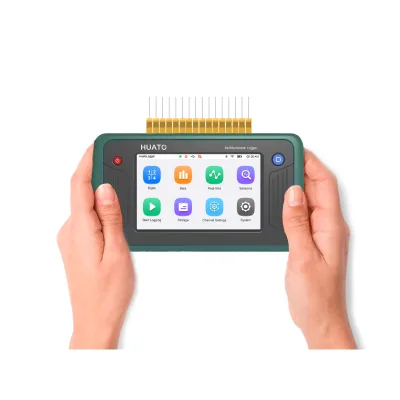
High Precision Multi-Channel Temperature Data Logger with Touch Screen
$100.00 - $599.00
MOQ: 1 Pieces


Comprehensive Sourcing Guide
Strategic Sourcing Guide for Color Screen USB Data Loggers
The procurement of temperature and humidity monitoring devices has evolved significantly, with the "Color Screen USB Data Logger" emerging as a critical tool for industries requiring real-time visibility and robust data integrity. For buyers navigating this market, understanding the intersection of hardware capabilities, data reporting formats, and regulatory compliance is essential. This guide synthesizes available product attributes and industry standards to provide a disciplined framework for sourcing these devices. The focus remains on verifying technical specifications, ensuring supply chain reliability, and aligning procurement strategies with specific operational needs.
Technical Specifications and Hardware Capabilities
When evaluating a Color Screen USB Data Logger, the primary distinction lies in the user interface and the precision of the sensing elements. The presence of a color screen is not merely aesthetic; it often indicates a device capable of displaying real-time trends, alarm statuses, and battery levels without the need for external software. Buyers must scrutinize the resolution and the measuring range to ensure the device fits the intended environment.
Based on observed product attributes, the measuring range for temperature typically spans from -30°C to +60°C or -30°C to +70°C, depending on the specific model configuration. Humidity sensors in these units often cover a range of 0% to 100% Relative Humidity (Rh), with some specifications noting a practical limit of 90% Rh. The resolution is a critical metric for accuracy; high-quality units in this category typically offer a resolution of 0.1°C or 0.1% Rh. This level of granularity is necessary for applications involving pharmaceutical storage or cold chain logistics where minor deviations can compromise product quality.
The physical construction of the logger is equally important. Materials such as ABS plastic are commonly used to provide durability while keeping the unit lightweight, with some models weighing as little as 25g. The ingress protection rating is a vital safety feature. Observed data indicates a variance in ratings, with some units achieving IP67, which implies complete protection against dust and temporary immersion in water, while others are rated IP65 or IP54. Buyers must verify the specific IP rating against their operational environment; for instance, a device with an IP54 rating may suffice for indoor office use but would be inadequate for outdoor or wash-down industrial settings.
| Feature | Observed Specification | Procurement Verification Point |
|---|---|---|
| Measuring Range (Temp) | -30°C to +60°C / +70°C | Confirm min/max limits match storage requirements. |
| Measuring Range (Humidity) | 0% to 100% Rh (or 90% Rh) | Verify sensor linearity at extremes. |
| Resolution | 0.1°C / 0.1% Rh | Ensure precision meets regulatory tolerance. |
| IP Rating | IP54, IP65, IP67 | Match rating to environmental exposure risks. |
| Material | ABS | Assess impact resistance and chemical compatibility. |
| Interface | USB 2.0 | Confirm compatibility with existing OS and drivers. |
Data Management and Reporting Capabilities
The utility of a data logger is defined by its ability to capture, store, and transmit data effectively. A core requirement for modern procurement is the capability to generate reports in standard formats such as PDF and CSV. These formats allow for seamless integration with quality management systems and regulatory audits. The reporting interface often includes features like programmable start delays, typically ranging from 0 to 254 minutes, with a default setting of 30 minutes. This flexibility allows users to synchronize logging with specific operational windows.
Memory capacity is another critical specification. Units observed in the market offer significant storage, with some models supporting up to 32,000 data points. This capacity ensures that the device can record data over extended periods without frequent downloads, which is crucial for remote monitoring scenarios. The communication interface is predominantly USB 2.0, which facilitates rapid data transfer to computers. Buyers should verify that the USB interface supports the necessary drivers for their operating systems and that the data transfer protocol is secure.
Furthermore, the alarm functionality adds a layer of safety to the monitoring process. Advanced loggers support both single-type and cumulative-type alarms, allowing users to trigger alerts based on immediate threshold breaches or accumulated exposure time. The alarm delay is often user-configurable, ranging from 0 to 254 minutes, providing a buffer against transient spikes that do not represent genuine threats. The recording interval is also customizable, spanning from 10 seconds to 18 hours, enabling the device to be optimized for either high-frequency monitoring or long-term trend analysis.
Compliance, Certification, and Regulatory Standards
In the B2B procurement of data loggers, compliance is non-negotiable. The market offers devices with various certifications, including CE, RoHS, and ISO. These certifications indicate that the product meets specific safety, environmental, and quality management standards. For example, CE marking suggests conformity with health, safety, and environmental protection standards for products sold within the European Economic Area, while RoHS compliance ensures the absence of specific hazardous materials.
It is important to note that certification status must be verified on a per-shipment basis. While some product listings indicate ISO, CE, and RoHS certifications, buyers should not assume that every unit in a bulk order carries these credentials without explicit confirmation from the supplier. Additionally, the standard of the product itself, such as PVC or specific dimensional standards (e.g., 116.31.9cm or 95.5mm49mm7.8mm), must be cross-referenced with industry requirements.
For industries like food and beverage or pharmaceuticals, FDA certification for memory or data capacity might be a relevant consideration, although this is often a specific attribute of the software or data handling rather than the hardware itself. Buyers must also be aware of industry-specific standards, such as EN12830, which may apply to certain temperature monitoring applications, though this standard is often considered background knowledge and requires specific verification for the target application.
Cost Drivers and Procurement Economics
The pricing of color screen USB data loggers is influenced by several factors, including the complexity of the sensor, the durability of the housing, and the sophistication of the data reporting features. The observed price range in the market spans from $0 to $1350, a wide variance that reflects differences in quality, brand, and feature sets. Lower-cost units may offer basic logging capabilities with limited resolution or battery life, while premium models provide high-resolution sensors, robust IP ratings, and advanced alarm systems.
Minimum Order Quantity (MOQ) is another economic factor to consider. The observed MOQ range is between 1 and 50 units. This flexibility allows buyers to test the market with small orders before committing to larger volumes. However, bulk purchasing often unlocks better pricing tiers and customization options. Customization is a significant cost driver; features such as custom branding, specific packaging (Carton Packaging or Box), and tailored data formats can increase the unit cost but add value for specific client needs.
Buyers should also account for the total cost of ownership, which includes battery replacement, calibration costs, and software licensing. While the initial purchase price is a primary consideration, the long-term reliability and the cost of maintaining compliance through regular calibration are equally important. Units with longer battery life and higher durability may have a higher upfront cost but result in lower operational expenses over time.
Supplier Evaluation and Quality Control
Selecting the right supplier is as critical as selecting the right product. When evaluating potential partners, buyers should look for evidence of consistent quality control processes. The origin of the products, often listed as Henan or China, should be verified against the supplier's track record for manufacturing consistency. A supplier with a strong reputation for quality will provide detailed documentation, including test results and calibration certificates.
Quality control measures should include checks on the IP rating, ensuring that the sealing is effective against dust and water. For units with color screens, the display quality and responsiveness should be tested to ensure they function correctly under various lighting conditions. The accuracy of the temperature and humidity sensors should be validated against a known standard. Buyers should request sample units for independent testing before placing large orders.
Furthermore, the supplier's ability to provide customization is a key differentiator. Whether it is custom packaging, specific firmware configurations, or tailored reporting formats, the supplier must demonstrate the technical capability to meet these requirements. Communication channels should be open and responsive, ensuring that any issues during the procurement process are addressed promptly.
Typical Applications and Operational Use Cases
Color screen USB data loggers are versatile tools used across a wide range of industries. In the home and residential sector, they are used for monitoring environmental conditions to ensure comfort and safety. In commercial and industrial settings, they are essential for cold chain logistics, pharmaceutical storage, and food processing. The ability to monitor both temperature and humidity makes them ideal for environments where both factors can impact product quality.
The "Disposable" usage attribute observed in some models suggests that these devices are designed for single-use applications, such as monitoring shipments where the device is discarded after the journey. This is common in the logistics industry to ensure that each shipment has a dedicated, tamper-proof record. Conversely, reusable models with SD card memory or internal storage are preferred for long-term facility monitoring.
The specific application dictates the required specifications. For example, a facility storing sensitive electronics might require a logger with a high IP rating and precise temperature resolution, while a warehouse monitoring general storage conditions might prioritize battery life and data capacity. The programmable recording interval allows users to balance data granularity with storage constraints, ensuring that critical events are captured without overwhelming the system with unnecessary data.
Long-Term Procurement Considerations
Sourcing color screen USB data loggers is not a one-time transaction but part of a long-term strategy for quality assurance. Buyers should consider the lifecycle of the device, including battery replacement schedules and the availability of replacement parts. The durability of the ABS casing and the integrity of the USB interface over repeated use cycles are important factors.
As technology evolves, the compatibility of the data logger with new operating systems and software platforms must be considered. A device that is compatible with USB 2.0 today may face obsolescence if future systems require USB 3.0 or wireless connectivity. Therefore, buyers should evaluate the upgrade path and the supplier's commitment to supporting their products over time.
Finally, the regulatory landscape is dynamic. Standards and compliance requirements may change, necessitating that the procurement strategy includes a mechanism for updating the device fleet. Buyers should maintain a relationship with suppliers who can provide updates or replacements that meet new regulatory standards, ensuring continuous compliance and operational continuity. By focusing on these long-term factors, organizations can build a resilient supply chain for their critical monitoring needs.
FAQs
What is the measuring range for temperature in these loggers?
The measuring range typically spans from -30°C to +60°C or -30°C to +70°C depending on the specific model configuration. Some units also support humidity measurement from 0% to 100% Rh with a resolution of 0.1% Rh for precise monitoring.
Can these devices generate reports in standard formats?
Yes, the devices can generate reports in PDF and CSV formats for seamless integration with quality management systems. Users can configure start delays and recording intervals to suit specific operational windows while ensuring data integrity.
Which IP ratings are available for these data loggers?
Available IP ratings include IP54, IP65, and IP67, offering varying levels of protection against dust and water. Buyers must verify the specific rating against their operational environment, as IP67 provides complete protection against temporary immersion.
How much memory capacity do these loggers typically hold?
Units observed in the market offer significant storage, with some models supporting up to 32,000 data points. This capacity ensures the device can record data over extended periods without frequent downloads, which is crucial for remote monitoring scenarios.
What certifications do these products usually carry?
Common certifications include CE, RoHS, and ISO, indicating conformity with safety and environmental standards. Buyers should verify certification status on a per-shipment basis as not every unit may carry these credentials without explicit confirmation.
Is customization available for these data logger products?
Customization is available for features such as branding, packaging, and tailored data formats. This flexibility allows buyers to meet specific client needs, though it may impact the unit cost and lead time depending on the supplier.