Source Color Enamel Wedding Dinner Plates for Hotels, Restaurants, Events
Explore 30 listings for Color Enamel Wedding Dinner Plates suitable for hotels, restaurants, and events. Buyers can compare customization options, sizes, and eco-friendly features from verified suppliers.
Key considerations
Products List







Comprehensive Sourcing Guide
Strategic Sourcing Guide for Color Enamel Wedding Dinner Plates
Understanding Product Definitions and Material Variations
When sourcing Color Enamel Wedding Dinner Plates, buyers must first distinguish between true enamel-on-metal products and ceramic or porcelain items that may be marketed with similar aesthetic descriptors. The supplied product data reveals a complex landscape where the term "Enamel Plate" appears alongside explicit references to "Ceramic," "Porcelain," and "On-glazed" techniques. This distinction is critical for wedding procurement, as the material properties dictate durability, thermal shock resistance, and the final visual finish. True enamel plates are typically steel or iron coated with vitreous enamel, offering a glossy, chip-resistant surface ideal for outdoor or high-traffic events. However, the observed listings also include "Classic Luxury Kitchen Cabinet Ceramic Plates" and "Enamel Plate" items with "Multicolor" and "Color Changing" features.
Buyers should verify the specific material composition before finalizing orders. The data indicates a mix of materials, including "Ceramic & Porcelain" and "AB Grade" classifications. For a wedding setting, where the aesthetic is paramount, the "On-glazed" technique mentioned in the specifications suggests a high-gloss finish that mimics the look of enamel but is fundamentally ceramic. The "Color Changing" feature observed in some listings adds a dynamic element suitable for modern, themed weddings, yet this requires specific lighting conditions to be effective. The "Simple" style and "Printed" fancy patterns noted in the data suggest a range of design options from minimalist to elaborate. It is essential to confirm whether the "Best Mommy" or "JW" branded items represent the specific design language required for the event, as these names imply distinct target demographics or design themes.
Technical Specifications and Dimensional Standards
The technical specifications for dinner plates vary significantly across the supply base, necessitating a rigorous review of dimensional data. The observed product models list a wide range of diameters, including "7-17 inch," "9 inch, 7 Inch, 7.5 Inch, 8 inch, 10inch, 11inch, 12inch, 13in, 15in, 16in, 17in, 18in," and metric equivalents like "14-16-18-20-24CM." For wedding catering, standard plate sizes usually include salad plates (approx. 7-8 inches), dinner plates (10-11 inches), and dessert plates (7-8 inches). The availability of sizes up to 24 cm (approx. 9.5 inches) and even 18 inches suggests that some listings may refer to serving platters or large decorative pieces rather than individual place settings.
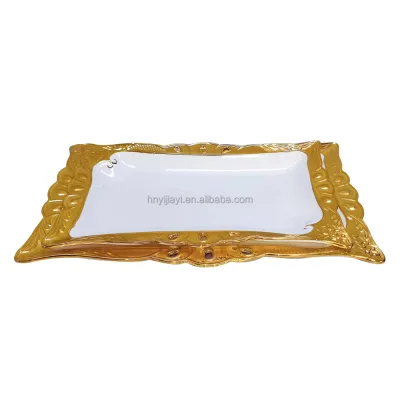
The "Single package size" of "30X20X20 cm" and a "Single gross weight" of "1.000 kg" provide insight into the bulkiness and density of the products. A weight of 1 kg per unit is substantial for a dinner plate, indicating a heavy, high-density ceramic or a thick enamel coating, which is desirable for premium wedding events but increases shipping costs. The "Rectangle" shape option noted in the specifications offers an alternative to traditional round plates, catering to modern wedding themes. Buyers must cross-reference the "prod_model" numbers, such as "RNPCE00021" or the range "14-16-18-20-24CM," with their specific menu requirements. The "Standard" listed as "12-14-16-18-20-24CM" further confirms that metric sizing is a primary specification method in this supply chain.
Cost Drivers and Pricing Structures
The pricing landscape for color enamel and ceramic wedding plates is influenced by material grade, customization levels, and order volume. The observed price range spans from $0.28 to $50 USD, a variance that reflects the difference between basic stock items and highly customized, premium designs. The lower end of the spectrum likely corresponds to standard, non-customized ceramic plates or bulk enamel items, while the upper end may include custom-designed, "Classic Luxury" pieces with specific branding or complex "Color Changing" features.
Several factors drive these costs. First, the "Customized" attribute is prevalent, with options for "Design\color\logo\size\package Customized." Implementing custom logos or specific color palettes for a wedding theme incurs additional setup and production costs. Second, the "MOQ" (Minimum Order Quantity) ranges from 10 to 5000 units. Smaller orders, such as those for intimate weddings, may face higher per-unit costs due to the "Tbd" (To Be Determined) nature of some MOQs and the fixed costs of production setup. Third, the "Production Time" of "About 30 Days" for customized orders adds a temporal cost factor, requiring early procurement planning. The "Sample: Free" offering allows buyers to verify quality before committing to large volumes, mitigating financial risk. Additionally, the "Export Standard" packing and "Color Box" packaging contribute to the final cost, ensuring the plates arrive in pristine condition for the event.
Compliance, Certification, and Safety Verification
For wedding catering, food safety compliance is non-negotiable. While the supplied data mentions "AB Grade" material and "Eco-Friendly" features, it does not explicitly list specific international safety certifications such as FDA, LFGB, or CE. Buyers must treat these attributes as observations of the product's intended use rather than guaranteed compliance with specific regulatory standards. The "Eco-Friendly" claim suggests an environmentally conscious production process, which is increasingly important for modern wedding planning, but this must be verified against the specific destination country's import regulations.
The "Non-Disposable" nature of the plates confirms they are intended for reuse, which aligns with sustainable wedding practices. However, the "Stocked" feature indicates that some items are ready for immediate shipment, while others require production time. Buyers should request specific test reports for lead and cadmium leaching, particularly for "Color Changing" or "Printed" items where pigments are used. The "On-glazed" technique implies a surface coating that must be food-safe. Without explicit certification data in the source material, the procurement strategy must include a requirement for the supplier to provide third-party lab test results prior to shipment. The "100% TT" payment term and "Western Union" options suggest a transactional relationship where trust is built through verified product samples and clear contractual terms regarding quality assurance.
Supplier Evaluation and Operational Capabilities
Evaluating suppliers for wedding dinner plates requires a focus on their ability to handle customization and maintain consistency. The data indicates that suppliers offer "OEM: Acceptable" services and have "Customization: Available" for various attributes. The "Place of Origin" is listed as "China," with specific mentions of "Hunan, China," a region known for its ceramic industry. This geographic concentration suggests a robust supply chain but also requires buyers to verify the specific factory capabilities.
The "Production Time" of approximately 30 days for customized orders is a key operational metric. Wedding dates are fixed, and a 30-day lead time necessitates early ordering to avoid delays. The "Shipping" options of "Port to Port" or "Door to Door" provide flexibility, but the "Single gross weight" of 1 kg per unit means that freight costs will be significant for large orders. Buyers should evaluate the supplier's ability to handle "Color Box" packaging and "Export Standard" packing to ensure the plates survive transit. The "Sample: Free" policy is a strong indicator of supplier confidence, allowing buyers to physically inspect the "Multicolor" and "Printed" finishes. Furthermore, the "Suitable for: Hotel Restaurant" attribute suggests that the plates are durable enough for commercial use, which is a positive proxy for wedding durability, though the specific "Style: Simple" and "Modern" design elements must match the wedding aesthetic.
Quality Control and Long-Term Procurement Considerations
Implementing a robust quality control (QC) protocol is essential for wedding events where the margin for error is minimal. Given the "Color Changing" and "Printed" features, visual inspection is critical to ensure consistency in color shifts and print alignment. The "AB Grade" material classification implies a tiered quality system; buyers must explicitly define what constitutes "Grade A" quality for their specific needs, as "Grade B" items may have minor cosmetic imperfections that are unacceptable for a wedding.
Long-term procurement considerations involve the "Disposable: Non-Disposable" nature of the plates. While these are reusable, the "Eco-Friendly" claim suggests they should be durable enough for multiple uses. However, the "Enamel" and "Ceramic" materials are prone to chipping if not handled correctly. Buyers should inquire about the "On-glazed" durability and the resistance of the "Color Changing" coating to repeated washing. The "Package: Color Box" and "1PCS/OPP Bag" options offer different levels of protection; for a wedding, the "Color Box" is likely preferred for presentation, while the "OPP Bag" might be used for bulk storage.
| Feature | Observation from Data | Procurement Implication |
|---|---|---|
| Material | Ceramic, Porcelain, Enamel | Verify food safety and chip resistance. |
| Customization | Design, Color, Logo, Size | Confirm setup costs and lead times. |
| Dimensions | 7-18 inches, 12-24 cm | Match specific menu course sizes. |
| Packaging | Color Box, Export Standard | Ensure protection during shipping. |
| MOQ | 10-5000 units | Plan order volume to optimize cost. |
| Lead Time | ~30 Days for custom | Order well in advance of the event. |
Finalizing the Procurement Strategy
The final step in sourcing Color Enamel Wedding Dinner Plates involves synthesizing the technical, financial, and operational data into a coherent procurement plan. The wide range of observed prices and specifications means that buyers cannot rely on a single product listing. Instead, they must engage in a multi-stage selection process. Start by requesting samples of the "Multicolor" and "Color Changing" options to verify the visual impact under wedding lighting conditions. Confirm the "Customized" capabilities, specifically regarding logo placement and color matching to the wedding theme.
Verify the "Production Time" of 30 days against the wedding date, allowing a buffer for potential delays. Ensure the "Shipping" method aligns with the venue's logistics, considering the "Single gross weight" of 1 kg per unit. Finally, establish clear quality acceptance criteria based on the "AB Grade" and "On-glazed" specifications, requiring test reports for food safety compliance. By rigorously applying these checks, buyers can secure high-quality, aesthetically pleasing dinner plates that meet the demands of a wedding event while managing costs and risks effectively. The "Eco-Friendly" and "Stocked" attributes provide additional value, supporting sustainable and timely event planning.
FAQs
Can I customize the color and logo for these plates?
Yes, customization for design, color, logo, size, and package is available. Buyers should expect a production time of about 30 days for these custom orders, and samples are offered free of charge to verify the final appearance before bulk production begins.
What material grades are available for these dinner plates?
The products are classified as AB Grade and made from ceramic or porcelain materials. Some listings specify an on-glazed technique, while others mention enamel features, so buyers must verify the specific material composition to ensure it meets their durability and food safety requirements.
What is the minimum order quantity for these plates?
The minimum order quantity ranges from 10 to 5000 units depending on the specific supplier and product type. Some items list the MOQ as TBD, requiring direct negotiation, while others have fixed lower limits suitable for smaller events or larger commercial catering needs.
How long does production take for customized orders?
Production time for customized orders is approximately 30 days. This timeline applies when design, color, or logo changes are requested, so buyers should plan their procurement schedule well in advance of their wedding date to accommodate this manufacturing duration.
Are these plates suitable for hotel and restaurant use?
Yes, the plates are explicitly listed as suitable for hotels and restaurants. They are non-disposable and feature eco-friendly attributes, indicating they are durable enough for commercial reuse, though buyers should verify specific chip resistance for high-traffic wedding environments.