Source Color Printing Round Aluminum Jar for Tea Food Chemical
Compare 21 listings for Color Printing Round Aluminum Jar options suitable for tea, food, and chemical packaging. Buyers can review customization, certifications, and MOQs from verified Chinese manufacturers.
Key considerations
Products List




Comprehensive Sourcing Guide
Color Printing Round Aluminum Jar Sourcing Guide
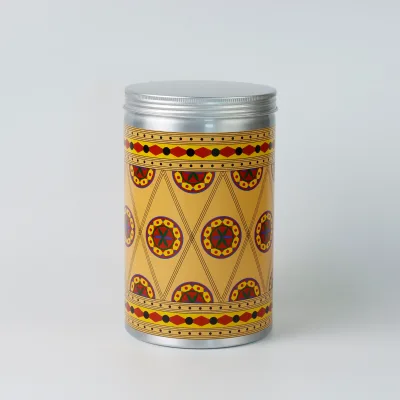
Sourcing color printing round aluminum jars requires a strategic balance between aesthetic appeal and functional integrity. These containers are widely utilized in the food, cosmetic, and chemical industries due to their durability and premium finish. The aluminum material provides excellent barrier properties against light, oxygen, and moisture, which is critical for preserving the shelf life of sensitive products such as teas, creams, and specialty foods. Buyers must recognize that the "color printing" aspect is not merely decorative; it serves as a primary branding tool and a protective layer for the metal substrate. Understanding the manufacturing capabilities of suppliers regarding print quality, adhesion, and corrosion resistance is essential for ensuring the final product meets both marketing and regulatory standards.
The procurement process for these jars involves navigating a diverse supplier landscape, primarily concentrated in manufacturing hubs like Zhejiang, China. Listings indicate a wide range of customization options, including specific models like NB-PACK and PPC-AJ, which suggest varying internal geometries and sealing mechanisms. Buyers should approach this category with the understanding that "round" is a standard shape, but the specific dimensions, wall thickness, and lid compatibility can vary significantly between suppliers. The availability of customization allows for tailored solutions, but it also introduces complexity in quality control. Therefore, establishing clear technical specifications and verifying supplier capabilities early in the sourcing journey is crucial to avoiding discrepancies between the ordered sample and the bulk production run.
Product Scope and Observed Listing Signals
The market for color printing round aluminum jars presents a broad spectrum of product variations, as evidenced by the observed listing signals. Suppliers offer jars in various capacities, ranging from small 5g portions to larger 300g containers, catering to different product densities and consumer usage patterns. The material is consistently identified as aluminum, often paired with glass or metal lids, indicating a hybrid packaging ecosystem. Listings also highlight specific attributes such as "Eco-Friendly" status and "Customized Package" options, which appeal to brands seeking sustainable and unique unboxing experiences. The presence of multiple model numbers, such as SWC-JAL5, suggests that suppliers may have proprietary designs or standardized molds that buyers can select from, rather than starting from a blank slate.
Observed price ranges and minimum order quantities (MOQs) provide insight into the commercial dynamics of this category. Prices can be as low as $0.05 per unit, reflecting the high-volume nature of aluminum packaging production, while MOQs vary widely from 1 to 50,000 pieces. This variance allows both small startups and large enterprises to engage with suppliers, though lower MOQs may come with higher per-unit costs or limited customization options. The listings also mention specific certifications like ISO, CE, and CIQ, which serve as indicators of supplier maturity and adherence to international quality and safety standards. Buyers should interpret these signals as starting points for verification rather than guaranteed attributes, as certification status can change and may not apply to every SKU within a supplier’s catalog.
Technical Specifications to Verify
When evaluating color printing round aluminum jars, buyers must verify critical technical specifications that impact product performance and supply chain efficiency. Key parameters include the jar’s dimensions, wall thickness, and the type of lid or closure system used. Listings mention screw lids and child-resistant closures, which are essential for specific product categories like medicines or hazardous chemicals. The sealing type, whether it is a screw cap or a press-on lid, directly affects the jar’s ability to maintain product freshness and prevent leakage. Buyers should request detailed technical drawings or CAD files to confirm that the jar’s internal volume matches the labeled capacity and that the threading is compatible with their chosen closure mechanism.
Another critical aspect is the printing and coating process, which determines the durability and appearance of the color printing. Buyers should inquire about the type of lacquer or enamel used, as this affects the jar’s resistance to scratching, corrosion, and chemical interaction with the contents. The color accuracy and print resolution are also vital, especially for brands with strict visual identity guidelines. Suppliers may offer gradient designs or specific color matches, but these require rigorous proofing and approval processes. Additionally, the standard packaging formats, such as carton and pallet configurations, should be verified to ensure efficient storage and transportation. Understanding these technical details helps buyers avoid costly rework or product failures in the field.
Compliance and Safety Documentation
Compliance and safety documentation are non-negotiable requirements for sourcing aluminum jars, particularly when they are intended for food, cosmetic, or pharmaceutical use. Buyers must ensure that suppliers provide relevant certifications, such as ISO, CE, and CIQ, which attest to the manufacturer’s quality management systems and product safety standards. For food-contact applications, additional documentation may be required to demonstrate compliance with local and international food safety regulations, such as FDA or EU standards. These documents should include migration test results, heavy metal analysis, and material safety data sheets (MSDS) to verify that the aluminum and any coatings do not leach harmful substances into the product.
Child-resistant closures, if specified, require specific testing and certification to ensure they meet regulatory requirements for safety. Buyers should verify that the supplier has conducted or can provide evidence of successful child-resistance tests, as this is a critical safety feature for certain product categories. Furthermore, the eco-friendly claims made in listings should be substantiated with relevant certifications or material declarations, such as recyclability reports or biodegradability assessments. Buyers should also check for any specific industry standards that apply to their product, such as cosmetic packaging regulations or chemical storage guidelines. Maintaining a comprehensive file of all compliance documents is essential for audits and regulatory inspections.
Cost Drivers and Commercial Terms
The cost of color printing round aluminum jars is influenced by several key drivers, including material prices, printing complexity, and order volume. Aluminum is a commodity with fluctuating market prices, which can impact the final cost of the jars. The complexity of the color printing, such as the number of colors used or the use of special effects like gradients, can also increase production costs. Buyers should negotiate based on a clear understanding of these cost drivers to avoid unexpected price increases. Additionally, the MOQ plays a significant role in pricing, with larger orders typically benefiting from economies of scale. Suppliers may offer tiered pricing structures, so buyers should evaluate the total cost of ownership, including shipping and handling, rather than just the unit price.
Commercial terms, such as payment methods, lead times, and warranty policies, are also critical factors in the sourcing decision. Buyers should clarify the payment terms, such as deposit requirements and balance payments, to manage cash flow effectively. Lead times can vary depending on the complexity of the order and the supplier’s production schedule, so it is important to establish realistic timelines for production and delivery. Warranty policies should cover defects in materials and workmanship, providing protection for the buyer in case of quality issues. Buyers should also consider the supplier’s flexibility in handling changes or cancellations, as market conditions can change rapidly. Clear and fair commercial terms help build a sustainable and mutually beneficial partnership.
Supplier Qualification and Quality Control
Supplier qualification is a critical step in ensuring the reliability and quality of color printing round aluminum jars. Buyers should conduct thorough due diligence on potential suppliers, including site visits, audits, and reviews of their production capabilities. Key areas to assess include the supplier’s quality control processes, testing equipment, and staff expertise. Suppliers with robust quality management systems, such as ISO certification, are more likely to deliver consistent product quality. Buyers should also evaluate the supplier’s ability to handle customization requests, as this requires flexibility and technical know-how. Establishing a strong relationship with a qualified supplier can lead to better pricing, priority production, and improved support.
Quality control measures should be implemented throughout the production process to ensure that the final product meets the buyer’s specifications. This includes incoming material inspections, in-process checks, and final random inspections before shipment. Buyers should define clear acceptance criteria for print quality, dimensional accuracy, and sealing integrity. Third-party inspection services can be engaged to provide an unbiased assessment of the product quality. Additionally, buyers should establish a feedback loop with the supplier to address any quality issues promptly and implement corrective actions. Continuous improvement initiatives, such as regular quality reviews and performance metrics, can help maintain high standards and drive efficiency in the supply chain.
Long-Term Procurement Checks
Long-term procurement checks are essential for maintaining the quality and reliability of color printing round aluminum jars over time. Buyers should regularly review supplier performance metrics, such as on-time delivery rates, defect rates, and responsiveness to issues. These metrics provide valuable insights into the supplier’s operational efficiency and commitment to quality. Buyers should also stay informed about changes in regulations, market trends, and material costs that may impact the sourcing strategy. Regular communication with the supplier can help identify potential risks and opportunities for improvement. By proactively managing the supplier relationship, buyers can ensure a stable and cost-effective supply of high-quality packaging.
Sustainability and innovation are increasingly important factors in long-term procurement. Buyers should encourage suppliers to adopt eco-friendly practices and explore new materials or technologies that can enhance product performance and reduce environmental impact. This may include using recycled aluminum, developing biodegradable coatings, or optimizing packaging designs to reduce waste. Buyers should also consider diversifying their supplier base to mitigate risks associated with single-source dependencies. By fostering a culture of continuous improvement and innovation, buyers can stay ahead of market trends and deliver value to their customers. Long-term success in sourcing color printing round aluminum jars requires a strategic, proactive, and collaborative approach.
FAQs
What materials are used for color printing round aluminum jars?
The jars are constructed from aluminum to ensure durability and lightweight handling. Customization is available to meet specific branding needs while maintaining structural integrity for various storage applications.
Which certifications do these aluminum jars typically hold?
Products often carry ISO, CE, and CIQ certifications to ensure quality and safety compliance. These standards verify that the manufacturing processes meet international requirements for food and chemical packaging applications.
Can I order custom packaging for these aluminum jars?
Yes, customized packaging options are available to suit your specific product requirements. You can select from various standard sizes ranging from 5g to 300g or request tailored dimensions for your brand.
What is the minimum order quantity for aluminum jars?
Minimum order quantities vary by supplier but can range from 1 unit up to 50,000 units. Some specific listings indicate a minimum of 1,000 or 5,000 pieces depending on the customization level.
Where are these aluminum jars manufactured?
These products originate from China, with specific manufacturing hubs located in Zhejiang. This location supports efficient production and export logistics for international buyers seeking cost-effective packaging solutions.
What sizes are available for color printing round aluminum jars?
Available sizes include standard weights like 5g, 10g, 15g, 30g, 60g, 80g, 100g, 120g, 150g, 250g, 300g, and 500g. Volume options also extend to 100ml, 50ml, 200ml, and 1000ml for different product types.
How are these aluminum jars packed for shipping?
Jars are typically packed in standard export cartons and may be placed on pallets for bulk transport. Shipping methods include sea or air freight to ensure safe delivery to your destination.