Source Commercial Potato Peeling and Chipping Machine for Catering, Food Processing, and Retail
Explore 30 listings for the Commercial Potato Peeling and Chipping Machine designed for commercial catering, vegetable processing, and other industrial applications. Buyers can compare models like JH-MG and QP-100 with features including SUS 304 construction and multifunctional peeling capabilities.
Key considerations
Products List


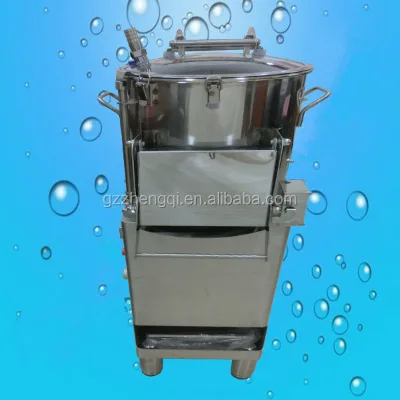
Commercial French Fries Potato Chips Washing Cutting Potato Peeling and Chipping Machine
$3080.00 - $29880.00
MOQ: 1 Pieces




Comprehensive Sourcing Guide
Strategic Sourcing Guide for Commercial Potato Peeling and Chipping Machinery
Navigating the global market for commercial potato peeling and chipping equipment requires a disciplined approach to technical verification and supplier evaluation. Buyers in the catering, food processing, and industrial sectors must distinguish between general-purpose units and specialized lines capable of handling high-volume output. The available market data indicates a diverse range of machinery, from compact units suitable for small-scale operations to large, automated lines designed for industrial throughput. This guide synthesizes observed product attributes, technical specifications, and procurement realities to assist buyers in making informed decisions without relying on unverified claims or specific supplier recommendations.
Technical Specifications and Functional Capabilities
The core functionality of commercial potato processing machinery centers on the dual objectives of peeling and washing, often integrated into a single production line. Observed product attributes reveal that modern units are frequently categorized as "Automatic Peelers" or "Washer" types, with specific models designated for multifunctional operations. The material composition is a critical technical differentiator; the majority of reliable units in the current market utilize SUS 304 or 304 Stainless Steel. This material choice is essential for food safety, ensuring resistance to corrosion from water, cleaning agents, and the acidic nature of certain vegetables.
Capacity and output rates vary significantly across the product spectrum. Data indicates a wide range in performance metrics, with some compact models reporting an output of 10kg/h, while larger industrial lines achieve outputs up to 165kg/h. Buyers must align these figures with their actual production needs. For instance, a facility requiring continuous processing for a commercial catering operation may need a unit with a "High Output" feature, whereas a smaller kitchen might prioritize a compact footprint over raw speed. The power consumption is another vital specification; observed units operate on voltages ranging from 220V to 220~240V/100-120V, with power ratings such as 1.5KW. It is imperative for buyers to verify that the electrical infrastructure at their facility matches these requirements before finalizing a purchase.
Physical dimensions and weight are equally important for logistics and installation. The market presents a variety of form factors, with some units measuring approximately 460450800mm and weighing around 61kg, while others are significantly larger, with dimensions reaching 680010002100mm and weights up to 1000kg. The "When open the cover size" of 830mm suggests specific ergonomic or maintenance access considerations that must be accounted for in the facility layout. Noise levels are also a technical parameter to consider, with some specifications noting a noise level of ≤75dB, which is relevant for maintaining a compliant working environment in open kitchen settings.
Compliance, Safety, and Material Standards
While specific certification documents are not universally listed for every product in the current dataset, the adherence to material standards is a primary indicator of quality. The consistent mention of "SUS 304" and "304 Stainless Steel" aligns with international food-grade material standards, which are non-negotiable for equipment processing edible goods. Buyers should verify that the stainless steel grade is explicitly stated in the technical datasheet and that the material certification accompanies the shipment.
Packaging standards also play a role in compliance and product integrity. Observed packaging methods include "Fumigation Free Wooden Case," "Standard Export Packing," and generic "Wooden" crates. The "Fumigation Free" designation is particularly significant for international shipping, as it ensures compliance with phytosanitary regulations required by many importing countries. This prevents delays at customs and ensures the equipment arrives in a condition ready for immediate installation.
Furthermore, the "prod_standard" attribute in the data sometimes refers to physical dimensions (e.g., 680010002100mm) rather than a regulatory standard. Buyers must be cautious not to confuse physical specifications with safety certifications. When evaluating a supplier, procurement teams should explicitly request documentation regarding electrical safety certifications (such as CE, UL, or local equivalents) and food safety compliance (such as HACCP alignment for the machine design). The absence of these specific certifications in the provided product list does not imply non-compliance but necessitates direct inquiry to the supplier to confirm adherence to the regulatory framework of the buyer's destination country.
Cost Drivers and Pricing Dynamics
The pricing for commercial potato peeling and chipping machinery is highly variable, reflecting the complexity of the unit, the material quality, and the level of automation. The observed price range in the market spans from $190 to $79,800. This vast disparity is driven by several key factors. At the lower end of the spectrum, units are likely compact, manual or semi-automatic, and designed for low-volume applications. These may feature simpler construction and lower power ratings. Conversely, the upper end of the price range corresponds to fully automated lines, such as the "Potato Washing Peeling Machinery Line," which includes integrated washing, peeling, and potentially sorting capabilities.
Material costs are a primary driver of price. Units constructed entirely from high-grade 304 Stainless Steel will command a premium over those using mixed materials or lower-grade steel. The weight of the machine is also a strong indicator of cost; a unit weighing 1000kg implies a substantial amount of steel and complex mechanical engineering, directly influencing the manufacturing and shipping costs. Additionally, the "Customized" nature of many products allows for tailored specifications, which inevitably increases the unit price compared to standard off-the-shelf models.
Buyers should also consider the total cost of ownership, which includes shipping, installation, and maintenance. The "MOQ" (Minimum Order Quantity) observed ranges from 1 to 10 units. While some suppliers offer a single unit purchase, bulk orders may unlock better pricing structures. However, the data does not provide specific tiered pricing models, so buyers must negotiate based on their specific volume requirements. The "Gross Weight" and "Net weight" differences also impact freight costs, which can be substantial for heavy industrial units weighing over a ton.
Typical Applications and Operational Scope
The versatility of commercial potato processing equipment is evident in the "Application Fields" and "Suit for" attributes. These machines are primarily designed for "Commercial Catering" and "Other" industrial applications. The specific "Application" list includes Potato, Taro, Sweet Potato, and similar root vegetables. This indicates that the machinery is not limited to potatoes alone but can handle a variety of tubers, making it a valuable asset for diverse food processing facilities.
The "Function" attribute highlights "Multifunctional" capabilities, with specific mentions of "Peeling," "Washing," and "Cutter" functions. This suggests that many units are designed to perform multiple stages of preparation in a single pass, reducing the need for separate machines and streamlining the workflow. For example, a "Potato Washing Peeling Machine" combines two critical steps, saving space and labor. The "High Output" feature is particularly relevant for large-scale operations, such as frozen food factories or large-scale catering services, where throughput is a critical success factor.
The "Key Words" and "Item" descriptions further clarify the operational scope. Terms like "Automatic Peeler" and "Potato Washing Peeler Machine" suggest a focus on automation to reduce human intervention and improve hygiene. The "Capacity" of 10kg/h for smaller units versus 165kg/h for larger ones allows buyers to select equipment that matches their specific production volume. Whether for a small restaurant preparing fresh fries or a large factory processing frozen products, the correct selection of application-specific machinery ensures operational efficiency and product quality.
Supplier Evaluation and Verification Protocols
Evaluating suppliers for industrial food machinery requires a rigorous vetting process, especially given the diversity of product origins. The "Place of Origin" data points to major manufacturing hubs in China, specifically "Shandong" and "Guangdong." These regions are known for their industrial manufacturing capabilities, but buyers must verify the specific factory's reputation and history. The "Video Outgoing" attribute indicates that some suppliers provide video demonstrations of their machinery in operation. This is a valuable tool for buyers to assess the actual performance, noise levels, and ease of use of the equipment before committing to a purchase.
When assessing a supplier, buyers should look for transparency in their product listings. The presence of detailed specifications, such as "prod_model" codes (e.g., JH-MG, JOHTANK-QP-1100, QP-100), suggests a structured product line. However, the variation in model numbers and the lack of a unified naming convention across different listings highlight the need for careful verification. Buyers should request detailed technical drawings, material certificates, and references from previous clients in similar industries.
The "Customization" availability is a significant factor in supplier evaluation. Many products are listed as "Customized" or having "Customized" standards. This implies that suppliers are willing to adapt their machinery to specific buyer requirements. Buyers should assess the supplier's flexibility and the lead time required for custom modifications. A supplier that offers customization but lacks clear communication channels or technical support may pose a risk to the project timeline.
Quality Control and Long-Term Procurement Considerations
Ensuring the long-term reliability of commercial potato processing equipment involves a proactive approach to quality control. Buyers should implement a pre-shipment inspection protocol that verifies the material grade, weld quality, and mechanical assembly. The "Standard Export Packing" and "Fumigation Free Wooden Case" are good indicators of a supplier's attention to detail, but visual inspection of the packaging upon arrival is necessary to ensure the machine has not been damaged during transit.
Maintenance and spare parts availability are critical long-term considerations. The "Function" of the machine, such as "Peeling" and "Washing," involves moving parts that will experience wear and tear. Buyers should inquire about the availability of spare parts, such as cutting blades, abrasive rollers, and seals. The "Weight" and "Dimension" specifications can also help in planning for maintenance access; a machine that is too heavy or has limited access points may be difficult to service.
Furthermore, the "Noise level" and "Power source" specifications should be monitored over time. A significant increase in noise or power consumption could indicate mechanical issues or the need for component replacement. Buyers should establish a relationship with the supplier for ongoing technical support and training. The "Video Outgoing" feature can be leveraged not just for sales but for training staff on proper operation and maintenance procedures.
In conclusion, sourcing commercial potato peeling and chipping machinery requires a balance of technical analysis, supplier due diligence, and strategic planning. By focusing on material standards, verifying capacity and power requirements, and understanding the cost drivers, buyers can navigate the market effectively. The wide range of available models, from compact 61kg units to massive 1000kg lines, offers solutions for various scales of operation, but success depends on matching the specific needs of the facility with the precise capabilities of the selected equipment.
FAQs
What material is used for commercial potato peeling machines?
Most units are constructed from SUS 304 or 304 Stainless Steel to ensure food safety and corrosion resistance. This material choice is critical for resisting cleaning agents and acidic vegetable juices during processing.
How much does a commercial potato peeling machine cost?
Prices range from 190 to 79800 USD depending on automation and capacity. Lower costs typically cover compact units, while higher prices reflect fully automated lines with integrated washing and peeling capabilities.
Which models offer high output for industrial use?
Models like the JH-MG and JOHTANK-QP-1100 are designed for high output and multifunctional operations. These units can handle outputs up to 165kg/h, suitable for large-scale commercial catering and food processing.
Can I find machines with customizable specifications?
Yes, many suppliers offer customized products and standards to meet specific buyer requirements. Customization allows for tailored dimensions and features, though it may impact the final unit price and lead time.
What is the typical packaging for these machines?
Standard packaging includes Fumigation Free Wooden Cases or Standard Export Packing to ensure safe transit. This packaging method complies with phytosanitary regulations, preventing delays at customs for international shipments.
How much power do these machines consume?
Typical units operate on 220V or 220~240V/100-120V with power ratings around 1.5KW. Buyers must verify their facility's electrical infrastructure matches these voltage and power requirements before purchase.