Source Commercial Stainless Steel Popcorn Machine for Theaters, Fairs, and Retail
Find 30 Commercial Stainless Steel Popcorn Machine options from verified Chinese suppliers. Compare key specs like 1400W-1500W power, 304 stainless steel construction, and automatic operation to select the right unit for your business needs; compare the available evidence and request quotations based on your requirements.
Key considerations
Products List


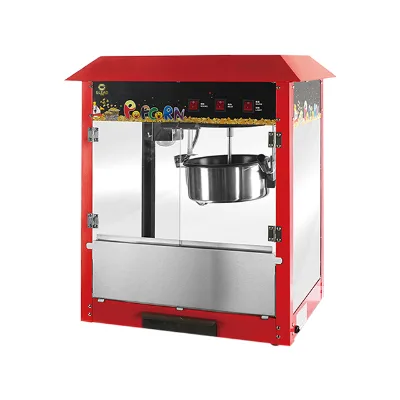

Industrial Popcorn Machine Automatic Popcorn Machine Commercial Popcorn Machine
$1500.00 - $2000.00
MOQ: 1 Sets


China Factory Stainless Steel Electric Commercial Industrial Popcorn Machine
$6300.00 - $6500.00
MOQ: 1 Pieces


Hot Sale All Stainless Steel High Capacity Industrial Caramel Coating Popcorn Machine
$6500.00 - $6800.00
MOQ: 1 Pieces
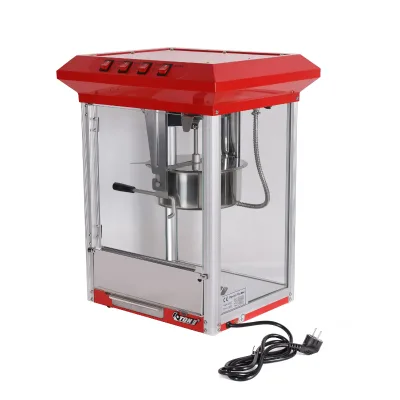

China Popcorn Machine Commercial Popcorn Machine Industrial Popcorn Machine
$4500.00 - $5500.00
MOQ: 1 Boxes


Commercial Stainless Steel Body 8oz 220V 110V Electric Popcorn Machine Popcorn Maker
$68.00 - $78.00
MOQ: 100 Pieces


Comprehensive Sourcing Guide
Commercial Stainless Steel Popcorn Machine Sourcing Guide
Procuring a Commercial Stainless Steel Popcorn Machine requires distinguishing between units designed for high-volume theater operations and those suited for smaller concession stands. The observed market data indicates a diverse range of models, with specific units like the TPC-8H and FY-812A offering distinct dimensional profiles and power ratings. Buyers must carefully align their operational capacity needs with the physical footprint of the machinery, as dimensions can vary significantly from compact 560mm units to larger 850mm configurations.
The material composition is a critical differentiator, with many listings specifying 304 stainless steel for durability and hygiene compliance. This grade of steel is essential for food contact surfaces to prevent corrosion and ensure easy cleaning in busy environments. However, procurement teams should verify that the specific unit they select matches the intended application, whether for general candy production or specialized popcorn making, as the internal mechanisms and heating elements differ based on the primary function.
Product Scope and Observed Listing Signals
The current market listings reveal a wide price spectrum, ranging from approximately 45 to 8000 USD, which reflects the variance in build quality, automation levels, and included features. While some models are marketed with strong and durable attributes, others emphasize ease of operation and specialized features like easy cleaning. Buyers should treat these price points as indicative of the product tier rather than a fixed standard, as the final cost often depends on customization options and specific packaging requirements like wooden crates versus standard cartons.
Listing signals also highlight the availability of both automatic and semi-automatic grades, allowing buyers to select the level of labor intensity that fits their staffing model. The observed data shows that some units are explicitly labeled as non-customized, while others offer full customization capabilities. This distinction is vital for businesses seeking branded equipment or specific capacity adjustments, such as the 8 Oz capacity noted in certain models, versus those designed for bulk processing without specific volume constraints.
Technical Specifications to Verify
Power consumption and voltage compatibility are the first technical parameters to validate, as listings show variations from 1400W to 3000W and voltage ranges spanning 110-240V or specific 220V50Hz requirements. A mismatch in voltage can lead to equipment failure or safety hazards, so buyers must confirm that the machine's electrical specifications align with their local power grid infrastructure. The core components, typically featuring a robust motor, must be capable of sustaining the thermal processing required for consistent popping without overheating during extended commercial use.
Dimensional analysis is equally critical, as the physical footprint of the machine dictates installation feasibility in existing kitchen layouts. Observed specifications include heights up to 1800mm and widths around 600mm, which may require significant floor space or custom cabinetry. Buyers should verify the exact length, width, and height of the unit against their available space, ensuring that the net weight of approximately 15.5kg or higher does not exceed floor load limits or complicate the installation process in tight commercial environments.
Compliance and Safety Documentation
Safety compliance is a non-negotiable aspect of sourcing, with CE certification appearing as a standard requirement for many listed units. This certification indicates that the machinery meets essential health, safety, and environmental protection standards for the European market, which often serves as a baseline for global quality expectations. Buyers should request the specific test reports provided for machinery testing to ensure that the unit has undergone rigorous evaluation for electrical safety and mechanical integrity before deployment.
In addition to electrical safety, the material standards must be verified to ensure food-grade compliance, particularly regarding the use of 304 stainless steel. While some listings mention ISOCE certification, buyers should treat this as a claim requiring independent verification rather than an automatic guarantee. It is essential to obtain documentation confirming that all food-contact surfaces meet local regulatory standards for hygiene and that the thermal processing components do not introduce any hazardous materials into the popcorn production process.
Cost Drivers and Commercial Terms
The minimum order quantity (MOQ) is a significant commercial term, with observed ranges varying from single units to batches of 100 pieces, though many suppliers set a standard MOQ of 10 pieces. This threshold can impact the total cost of ownership for smaller businesses, as purchasing in bulk may unlock better unit pricing but requires higher upfront capital. Buyers should negotiate based on their specific volume needs, considering whether the cost savings from a larger order justify the inventory holding costs and storage requirements.
Packaging and logistics represent another major cost driver, with options ranging from standard carton packaging to more protective wooden packaging for international shipping. The choice of packaging affects the final landed cost and the risk of damage during transit, particularly for heavy units weighing over 15kg. Buyers must clarify who bears the responsibility for freight costs and insurance, as well as the lead times associated with custom orders, which may extend beyond standard production schedules if specific branding or modifications are requested.
Supplier Qualification and Quality Control
Supplier qualification should focus on verifying the place of origin and the manufacturing capabilities of the vendor, with Guangdong and Shanghai identified as key production hubs in China. Buyers should assess the supplier's track record in producing commercial-grade equipment, ensuring they have the infrastructure to maintain consistent quality across batches. The presence of a motor as a core component suggests that the supplier must have expertise in sourcing reliable electrical parts to ensure the longevity and performance of the machine.
Quality control processes must be explicitly defined, including the provision of machinery test reports and the ability to conduct pre-shipment inspections. Buyers should request evidence of the supplier's internal quality assurance protocols, such as material testing for stainless steel grades and functional testing of the heating elements. Establishing a clear communication channel for addressing defects or performance issues is crucial, as the commercial nature of the equipment demands high reliability and minimal downtime during peak operating hours.
Long-Term Procurement Checks
Long-term procurement success depends on the availability of spare parts and the durability of the core components, particularly the motor and heating elements. Buyers should inquire about the expected lifespan of the machine and the availability of replacement parts to minimize operational disruptions. The observation of "Strong and Durable" as a key selling point should be validated through user testimonials or warranty terms that cover the mechanical integrity of the unit over extended periods of heavy use.
Maintenance requirements and the ease of cleaning are also critical factors for long-term ownership, as commercial environments demand high hygiene standards. Features like "Easy Clean" and "Easy Operation" should be verified in practice to ensure they translate to reduced labor costs and faster turnaround times between batches. Buyers should establish a maintenance schedule with the supplier to ensure that the machine remains in optimal condition, preventing premature wear and extending the useful life of the investment.
FAQs
What is the power consumption of a Commercial Stainless Steel Popcorn Machine?
The power consumption is typically 3 Kw for heavy-duty commercial units. This high wattage ensures rapid heating for consistent popping. Some models list a power rating of 1400W or 1500W for specific components. Always verify the exact electrical requirements against your facility's capacity before installation to prevent circuit overloads.
Can I customize the Commercial Stainless Steel Popcorn Machine for my brand?
Yes, customization is available for many commercial popcorn makers. Buyers can often request specific branding, color schemes, or minor structural adjustments. The product attributes indicate that customized options exist alongside non-customized standard models. Contact manufacturers directly to discuss your specific branding needs and any associated lead times or costs.
What certifications do commercial stainless steel popcorn machines usually have?
Most commercial units carry CE certification to ensure compliance with European safety standards. Some listings also mention ISOCE or provide machinery test reports. These certifications verify that the electrical and mechanical components meet rigorous safety requirements. Always request valid certification documents from the supplier before finalizing any purchase agreement.
What is the typical MOQ for ordering a Commercial Stainless Steel Popcorn Machine?
The minimum order quantity is often 10 pieces for standard commercial models. However, some suppliers may accept orders as low as 1 unit for testing or small businesses. The observed range spans from 1 to 100 units depending on the manufacturer. Check specific supplier listings to confirm their exact MOQ policies and bulk pricing tiers.
How much does a Commercial Stainless Steel Popcorn Machine weigh?
The net weight is typically around 15.5kg for standard commercial units. This weight reflects the durable 304 stainless steel construction and internal motor. Larger industrial models may weigh more due to increased capacity and robust heating elements. Accurate weight data is essential for calculating shipping costs and ensuring your counter or floor can support the equipment.
What voltage is required for a Commercial Stainless Steel Popcorn Machine?
These machines generally operate on 110-240V with 50-60Hz frequency. Some specific models require 220V at 50Hz. The wide voltage range allows for international use with appropriate adapters. Always match the machine's voltage specification to your local power supply to avoid damaging the motor or heating elements during operation.