Source Compact Electric Mini SUV for urban delivery, commuting, and city errands
Find 30 Compact Electric Mini SUV models with varying wheelbases, drive systems, and charging times. Buyers can compare specifications like tire sizes, motor power, and dimensions to select the right vehicle for urban mobility needs.
Key considerations
Products List


Urban Electric SUV with Affordable Pricing and Compact Size for City Driving
$8091.00 - $8540.50
MOQ: 1 sets


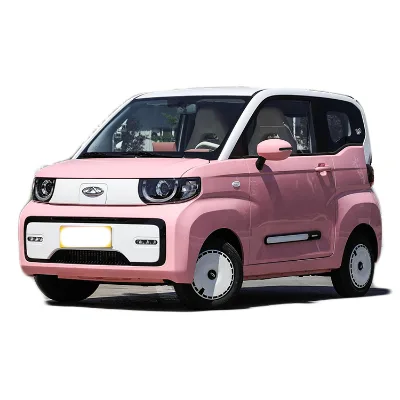


Compact 4 Seats Mini Electric Car New EV Safety and Efficiency Combined
$4150.00 - $4358.00
MOQ: 1 Pieces


Eco-Friendly Compact Electric Car Mini New EV for Adults with Five Doors
$3850.00 - $4043.00
MOQ: 1 Pieces

Compact Mini Electric Vehicle New EV Car with Five Doors for Comfortable Travel
$3850.00 - $4043.00
MOQ: 1 Pieces


Mini Electric Vehicle New EV Car with Exceptional Space and High Efficiency
$3850.00 - $4043.00
MOQ: 1 Pieces


SUV Electric Carelectric Car Electric Car SUV Electric Car Low Speed Cars
$4080.00 - $4300.00
MOQ: 4 Pieces

Electric Car Mini New Energy Micro Vehicles Electric Vehicle Electric Car
$1500.00 - $2000.00
MOQ: 1 Pieces




Comprehensive Sourcing Guide
Strategic Sourcing Guide for Compact Electric Mini SUVs
The global shift toward electrification has accelerated the demand for compact electric mini SUVs, a segment defined by agility, urban efficiency, and increasingly sophisticated battery management systems. For B2B procurement professionals, sourcing these vehicles requires a nuanced understanding of technical variances, regulatory landscapes, and supply chain logistics. Unlike traditional internal combustion engine vehicles, electric mini SUVs present unique challenges regarding battery chemistry, charging infrastructure compatibility, and regional certification standards. This guide synthesizes available market data to provide a structured approach for evaluating suppliers, verifying product specifications, and mitigating procurement risks in this dynamic sector.
Technical Specifications and Performance Variances
When evaluating compact electric mini SUVs, buyers must first distinguish between the diverse technical configurations available in the current market. The product landscape is not monolithic; rather, it features distinct variations in body style, drive systems, and powertrain architecture. A critical observation in the current supply base is the prevalence of "Mini" body styles paired with "Closed" body types, designed specifically for urban environments where maneuverability is paramount.
The propulsion systems vary significantly between Front-Wheel Drive (FWD) and Rear-Wheel Drive (RWD) configurations. While FWD is common for stability in wet conditions, RWD offers different handling dynamics that may be preferred for specific regional driving patterns. The energy source is consistently "Pure Electric," eliminating the need for fuel type verification, yet the motor specifications can differ. For instance, some units are rated at approximately 171 HP, while others may fall into lower power bands suitable for light commercial use.
Dimensions and wheelbase are primary determinants of interior space and ride quality. Market data indicates a range of wheelbase measurements, with specific models featuring a 2750 mm wheelbase for enhanced stability, while others operate with a 2423 mm or 2010 mm wheelbase to maximize compactness. Tire specifications also vary, ranging from 225/55 R18 for larger performance-oriented units down to 145/70 R12 for micro-urban vehicles. These physical constraints directly impact the vehicle's center of gravity and cargo capacity.
Furthermore, charging capabilities are a critical differentiator. Fast charging times observed in the market range from 0.5 hours to 0.67 hours, indicating rapid replenishment capabilities for high-turnover fleets. Conversely, slow charging cycles can extend up to 6.8 hours, which is relevant for overnight depot charging strategies. Battery voltage systems also vary, with some units operating on 72V systems, necessitating specific compatibility checks with existing charging infrastructure.
Compliance, Certification, and Regulatory Standards
Navigating the regulatory landscape is perhaps the most complex aspect of sourcing electric vehicles. Unlike generic machinery, automobiles must adhere to strict safety and environmental standards that vary by destination country. Buyers must verify that the supplier's products meet the specific standards of the target market. In the provided context, standard dimensions are listed in specific formats (e.g., 440118671633), which often correlate with the physical footprint required for regulatory compliance in specific regions.
Certification checks should extend beyond the manufacturer's claims. Buyers must request documentation proving compliance with local safety regulations, including crash test results, electromagnetic compatibility (EMC) standards, and battery safety protocols. The braking systems, observed to be "Electromagnetic" in certain listings, require verification against regional safety mandates to ensure they meet deceleration and fail-safe requirements.
It is essential to distinguish between "New" condition vehicles and refurbished units, as the latter may have different warranty implications and residual value. The origin of the vehicle, such as production in Fujian, China, or other regions, dictates the initial regulatory framework the vehicle was built to satisfy. However, this does not guarantee automatic compliance in the destination market. Buyers must ensure that the supplier can provide the necessary homologation documents or assist in the re-certification process required for importation.
Cost Drivers and Pricing Dynamics
The pricing structure for compact electric mini SUVs is influenced by a complex interplay of factors, including battery capacity, motor power, and included features. The observed price range in the market spans from $72 to $21,500, a variance that reflects the spectrum from basic micro-mobility solutions to fully equipped urban SUVs. This wide range necessitates a clear definition of requirements before engaging with suppliers to avoid budget misalignment.
Several key cost drivers emerge from the technical specifications. The motor power, such as the 171 HP units, directly impacts the price, as does the wheelbase and overall vehicle size. Larger dimensions and higher power outputs generally command a premium. Additionally, the inclusion of advanced features like automatic gearboxes and specific tire sizes (e.g., 225/55 R18) adds to the manufacturing cost.
The Minimum Order Quantity (MOQ) is another significant financial consideration. The market shows an MOQ range from 1 to 100 units. For buyers seeking to test the market or fulfill small fleet needs, a low MOQ of 1 is advantageous. However, larger fleet deployments may benefit from negotiating volume discounts, though the specific discount tiers are not universally standardized and must be negotiated on a case-by-case basis.
Packing methods also influence the landed cost. "Standard Export Packing" is common, but "Nude Packing" may reduce shipping costs if the buyer has their own protective packaging solutions. Buyers must calculate the total cost of ownership, including shipping, insurance, and potential customs duties, rather than focusing solely on the unit price.
Typical Applications and Use Cases
The versatility of compact electric mini SUVs allows them to serve a wide array of applications, from personal urban commuting to commercial logistics. The "Mini" body style and "Closed" configuration make these vehicles ideal for dense city centers where parking is limited and traffic congestion is high. The fast charging capabilities, with times as low as 0.5 hours, support high-utilization scenarios such as ride-sharing services or last-mile delivery fleets.
For commercial applications, the "Left Drive" configuration is essential for markets where traffic flows on the right side of the road. The specific dimensions, such as the 2750 mm wheelbase, provide a balance between cargo space and maneuverability, making them suitable for small business deliveries. The "Steering: Left" attribute confirms their suitability for right-hand traffic jurisdictions.
In some cases, these vehicles are adapted for specialized uses. The presence of "Customization: Available" indicates that buyers can request modifications for specific operational needs, such as adding cargo racks, specialized lighting, or branding. The "Voltage: 72V" specification suggests potential use in environments where specific power requirements are necessary, though this must be matched with the appropriate charging infrastructure.
Supplier Evaluation and Verification
Selecting the right supplier requires a rigorous due diligence process that goes beyond the initial product listing. Buyers should prioritize suppliers who demonstrate transparency in their manufacturing processes and supply chain. The origin of the product, such as "Fujian, China" or general "China" origin, provides a starting point for verification but does not guarantee quality.
Key evaluation criteria include the supplier's ability to provide detailed technical documentation, including the specific model names like "Ballet C-at," "Nano Box," "Macaron," and "EQ1." These model identifiers help in cross-referencing specifications and ensuring that the buyer is evaluating the correct product variant. The supplier should also be able to explain the "prod_standard" dimensions clearly, as these often relate to the vehicle's compliance with international shipping and safety standards.
Reputation and history are vital. While specific supplier names should not be recommended, buyers should look for evidence of long-term stability, such as consistent production of "New" condition vehicles and a track record of fulfilling orders within the observed MOQ ranges. The ability to offer "Standard Export Packing" or "Nude Packing" options demonstrates logistical flexibility.
Quality Control and Inspection Protocols
Quality control is paramount when importing vehicles, as defects can lead to significant financial losses and safety hazards. Buyers should implement a multi-stage inspection protocol. The first stage involves verifying the "Condition" of the vehicle as "New" and ensuring that all components, from the "Electromagnetic" braking system to the "Electric" motor, are functioning correctly.
Inspection should also cover the physical specifications. The "Front Tire Size" must match the ordered specifications exactly, as variations can affect performance and safety. The "Wheelbase" measurements, whether 2750 mm or 2423 mm, should be verified to ensure the vehicle meets the intended design requirements.
Battery health is a critical quality metric. Buyers should request test results or certifications regarding the battery's cycle life and charging efficiency. The "Fast Charging Time" of 0.5 hours or 0.53 hours should be validated under controlled conditions to ensure the supplier's claims are accurate. Additionally, the "Slow Charging Time" of 6.8 hours should be verified to ensure it aligns with the buyer's operational schedule.
Long-Term Procurement Considerations
Sourcing compact electric mini SUVs is not just a transactional event but a strategic partnership that requires long-term planning. Buyers must consider the availability of spare parts, the longevity of the battery, and the scalability of the fleet. The "Customization: Available" feature suggests that the supplier may offer ongoing support for fleet modifications, which is valuable for long-term operations.
The "prod_packing" method, whether "Standard Export Packing" or "Nude Packing," should be evaluated for its impact on long-term storage and maintenance. Proper packaging ensures that vehicles remain in pristine condition during transit and storage. Furthermore, the "Gearbox: Automatic" specification implies a need for specific maintenance protocols that differ from manual transmission vehicles.
Buyers should also plan for the end-of-life cycle of the vehicles. The "Energy Type: Pure Electric" nature of these vehicles means that battery recycling and disposal must be managed according to local environmental regulations. Establishing a relationship with a supplier who can assist with battery take-back programs or recycling initiatives can add significant value to the procurement strategy.
Finally, the "Displacement: 1600-2500CC" attribute, while seemingly contradictory for an electric vehicle, may refer to equivalent internal combustion engine displacement for regulatory classification purposes. Buyers must clarify this metric to ensure accurate tax and registration categorization in their target markets. By addressing these long-term considerations, buyers can ensure a sustainable and efficient procurement process for their Compact Electric Mini SUV fleets.
FAQs
What is the fast charging time for these vehicles?
Fast charging times range from 0.5 to 0.67 hours depending on the specific model configuration. Some units like the Ballet C-at support charging in just half an hour, while others may take slightly longer to reach full capacity.
Which drive systems are available for compact electric mini SUVs?
Available drive systems include both Front-Wheel Drive and Rear-Wheel Drive configurations. Buyers should verify the specific drive type required for their operational needs, as FWD offers stability while RWD provides different handling dynamics.
Can buyers customize these electric mini SUVs for specific needs?
Yes, customization is available for many models to meet specific operational requirements. Buyers can request modifications such as specialized cargo racks or branding, though specific options depend on the supplier and the selected model variant.
What is the minimum order quantity for purchasing these vehicles?
The minimum order quantity ranges from 1 to 100 units depending on the supplier and product model. Small fleet deployments can start with a single unit, while larger orders may benefit from volume negotiation but must meet the supplier's specific MOQ.
How does the wheelbase affect the vehicle dimensions and stability?
Wheelbase measurements vary significantly, ranging from 2010 mm to 2750 mm across different models. A longer wheelbase like 2750 mm typically offers enhanced stability and interior space, while shorter bases maximize compactness for urban maneuverability.
What are the standard packing options for these electric vehicles?
Standard packing options include Standard Export Packing and Nude Packing depending on the supplier. Buyers should confirm the packing method as it influences shipping costs and protection levels during transit to the destination market.