Source Comprehensive Training Resistance Band for Home, Gym, and Leg Workouts
Compare 30 Comprehensive Training Resistance Band options from verified Chinese manufacturers. Buyers can evaluate microfiber and latex bands with varying dimensions, weights, and certifications like CE and RoHS for home or gymnasium use.
Key considerations
Products List


Elastic Functional Training Cross Fit High Performance Training Resistance Band
$1.00 - $3.00
MOQ: 333 Pieces

Multiple Training Premium Exercise Safe Sport Body Exercise Resistance Band
$2.00 - $3.00
MOQ: 333 Pieces

Fitness Multiple Exercise Gym Home Body Training Equipment Resistance Band
$8.60 - $9.10
MOQ: 109 Pieces

Multiple Exercise Fitness Sport Core Training Body Elastic Resistance Band
$2.00 - $2.05
MOQ: 487 Pieces


Exercise Training Strength Yoga Multi-Functional Fitness Resistance Band
$2.30 - $8.90
MOQ: 200 Pieces




Comprehensive Sourcing Guide
Comprehensive Training Resistance Band Sourcing Guide
Understanding Product Variability and Core Specifications
Sourcing comprehensive training resistance bands requires a clear understanding that this category encompasses a wide spectrum of product configurations rather than a single uniform item. The market data indicates significant diversity in physical attributes, packing methods, and dimensional standards. Buyers must recognize that product attributes such as weight, dimensions, and material composition vary substantially between models. For instance, observed product weights range from a lightweight 75 grams to a heavier 1.1 kilograms, while item dimensions span from compact 60 x 5 x 0.07 cm configurations to larger 208 x 4.5 x 0.6 cm variants. This variability suggests that "comprehensive training" can refer to everything from portable, single-unit bands to larger, multi-component sets designed for home or gymnasium use.
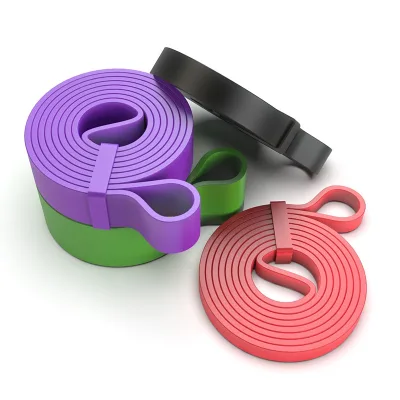
When evaluating technical specifications, the material composition is a primary differentiator. The available inventory highlights Microfiber as a key material option, which is often selected for durability and comfort during high-intensity workouts. However, the product kind is explicitly identified as a Latex Band in several listings, indicating that natural or synthetic latex remains a dominant construction method for the elastic properties required in resistance training. Buyers should not assume all listed products share the same material; instead, they must verify the specific material composition against their intended application. Furthermore, the color options observed include Solid Color, Red, and Multiple, which may influence aesthetic matching for commercial gyms or personal branding for fitness influencers.
The physical state of the product upon delivery is another critical specification. Some models are listed as "Unfolded," while others are "Folded," and packing methods vary from individual Polypropylene (PP) bags to Paper Boxes and Cartons (CTN). These packing differences directly impact logistics costs and storage efficiency. For example, a product packed in a Paper Box may offer better protection for retail display but occupy more volume than a unit in a simple PP bag. Additionally, the power source for these bands is consistently listed as Manual, confirming that they are passive resistance tools requiring no external energy input. The appliance classification further clarifies their intended environment, with listings specifying usage in both Home and Gymnasium settings.
Compliance, Certification, and Regulatory Standards
Navigating the regulatory landscape for fitness equipment is essential for B2B buyers, particularly when importing from major manufacturing hubs. The supplied facts indicate that products originate from China, a leading global exporter of fitness gear. In this context, compliance is not merely a suggestion but a prerequisite for market entry in many regions. The observed certification data lists CE, ISO, and RoHS as available credentials. The CE mark signifies conformity with health, safety, and environmental protection standards for products sold within the European Economic Area. ISO certification implies that the manufacturer adheres to international standards for quality management, while RoHS (Restriction of Hazardous Substances) ensures the product does not contain specific hazardous materials, a critical factor for consumer safety.
However, buyers must exercise caution regarding the universality of these certifications. The data notes that certification availability is marked as "Yes" for certain items, but it does not guarantee that every single SKU in the category holds these specific credentials. Compliance should be treated as a verification step rather than an inherent attribute of the entire product line. When engaging with suppliers, procurement teams should request current, valid certificates for the specific model numbers they intend to purchase, such as HSN-0398 or HSN-0510. Relying on general category claims without verifying the specific batch or model can lead to customs delays or legal liabilities.
Furthermore, the product standard is listed as "Customized" in some instances, while other entries provide specific dimensional standards like 40 x 32 x 32 cm or 208 x 4.5 x 0.6 cm. This duality suggests that while some products adhere to fixed industry dimensions, others are tailored to specific client requirements. For buyers seeking compliance, it is vital to clarify whether the "Customized" standard refers to the product dimensions, the packaging, or the certification process itself. If a buyer requires a product to meet a specific national standard (e.g., ASTM in the US or EN in Europe), they must explicitly state this requirement during the inquiry phase, as the "Customized" label may simply refer to the ability to alter dimensions rather than meet a specific regulatory benchmark.
Cost Drivers and Pricing Structure Analysis
The financial landscape of sourcing resistance bands is influenced by several dynamic factors, with the observed price range of 0.28 to 9.83 USD per unit serving as a baseline for market expectations. This wide variance indicates that price is not a linear function of the product category but is heavily dependent on specific attributes such as material quality, packaging complexity, and order volume. The lower end of the price spectrum likely corresponds to basic, single-unit bands with minimal packaging, such as those in PP bags, while the higher end may reflect premium configurations with paper box packaging, custom branding, or specialized materials like high-grade microfiber.
Minimum Order Quantity (MOQ) is another significant cost driver, with observed ranges spanning from 20 to 5000 units. This flexibility allows buyers to tailor their procurement strategy based on their capital constraints and inventory needs. A small retailer might opt for an MOQ of 20 to test the market, whereas a large gym chain or distributor would likely negotiate for volumes closer to 5000 to secure better unit economics. The relationship between MOQ and unit price is typically inverse; higher volumes generally yield lower per-unit costs. However, buyers must also consider the total landed cost, which includes freight charges. The fact that samples are listed as "Freight Collect" means that the buyer is responsible for shipping costs even for small trial orders, which can significantly impact the initial investment.
Logistics and packaging also play a crucial role in the final cost structure. Products packed in Cartons (CTN) or Paper Boxes may incur higher shipping costs due to increased volume and weight compared to those in simple PP bags. Additionally, the customization of logos is listed as an available service. While this adds value for brand differentiation, it often incurs additional setup fees or higher per-unit costs, especially for smaller order quantities. Buyers should factor in these potential surcharges when calculating their total cost of ownership. The product weight, ranging from 75 grams to 1.1 kilograms, further influences freight costs, as heavier items may attract higher shipping rates depending on the carrier's weight-based pricing models.
Typical Applications and Usage Scenarios
The versatility of comprehensive training resistance bands is evident in their classification across various appliance types and exercise parts. The data specifies usage in both Home and Gymnasium environments, indicating that these products are designed to serve a broad audience ranging from individual fitness enthusiasts to professional athletic training facilities. The exercise part is explicitly identified as "Leg," suggesting that a significant portion of the inventory is optimized for lower-body strengthening, such as squats, lunges, and leg presses. However, the "Gym & Training" sport classification implies a broader application that may include upper-body and full-body workouts depending on the specific band configuration and resistance level.
For home users, the convenience of the product is paramount. The "Folded" status of certain models and their compact dimensions (e.g., 60 x 5 x 0.07 cm) make them ideal for storage in small living spaces. These features align with the growing trend of home fitness, where space efficiency and portability are key decision factors. Conversely, for gymnasium applications, the durability and consistent resistance provided by Latex and Microfiber materials are essential. The ability to handle higher intensity training without degradation ensures that the equipment remains safe and effective for repeated use by multiple users.
The gender classification in the data presents an interesting observation, with listings specifying both "Women" and "Unisex." This suggests that while some bands may be marketed specifically towards female demographics, perhaps due to color or resistance level preferences, the core functionality of the product is generally applicable to all genders. Buyers should not limit their sourcing strategy to a single gender category unless they are targeting a niche market. Instead, they should consider the "Unisex" nature of the product to maximize their potential customer base. The "Adult" age classification further confirms that these products are intended for mature users, distinguishing them from children's fitness equipment which may have different safety and durability requirements.
Supplier Evaluation and Customization Capabilities
When selecting a supplier for resistance bands, the ability to customize is a critical differentiator. The supplied facts confirm that customization is available, with specific mentions of accepting customized logos and tailored product standards. This capability allows buyers to create a unique brand identity, which is particularly valuable for private label opportunities or corporate wellness programs. The "Customized" standard and the acceptance of custom logos indicate that suppliers are willing to adapt the product to meet specific client needs, whether that involves altering dimensions, changing colors, or adding branding elements.
However, buyers must evaluate the supplier's capacity to deliver on these customization promises consistently. The observation that the product standard can be "Customized" or adhere to specific dimensions suggests a flexible manufacturing process. Buyers should inquire about the lead times associated with custom orders, as these may differ from standard stock items. Additionally, the requirement for sample freight to be collected by the buyer implies that the supplier expects a certain level of commitment before proceeding with large-scale custom production. This is a standard practice in B2B trade but requires buyers to budget for initial sample costs and shipping.
The origin of the products, listed as China, provides context for the manufacturing ecosystem. Chinese manufacturers are known for their scale and flexibility, but buyers should still conduct due diligence regarding the supplier's quality control processes. The presence of certifications like CE, ISO, and RoHS is a positive indicator, but it should be verified that the supplier maintains these standards consistently across all production runs. Buyers should also assess the supplier's communication responsiveness and their ability to provide detailed product specifications, as the observed data shows a wide range of dimensions and weights that require precise management to avoid fulfillment errors.
Quality Control and Long-Term Procurement Strategy
Ensuring consistent quality in resistance band procurement requires a robust quality control (QC) strategy. Given the variability in product weights and dimensions, buyers should establish clear acceptance criteria before production begins. The observed product weights range from 75 grams to 1.1 kilograms, and dimensions vary from 60 x 5 x 0.07 cm to 208 x 4.5 x 0.6 cm. These discrepancies highlight the importance of verifying that the delivered goods match the ordered specifications exactly. Buyers should request pre-shipment inspections or third-party QC reports to ensure that the material composition, dimensions, and packaging meet the agreed-upon standards.
Long-term procurement considerations also involve managing the relationship with the supplier to ensure supply chain stability. The wide MOQ range (20-5000) offers flexibility, but buyers should aim to build a relationship that allows for scalable ordering. As demand grows, the ability to increase order volumes without compromising quality or lead times is crucial. The "Customized" nature of the product standard suggests that buyers may need to work closely with the supplier to refine product specifications over time. This collaborative approach can lead to better product-market fit and improved customer satisfaction.
Finally, buyers should consider the lifecycle of the product. Resistance bands are subject to wear and tear, particularly in high-use environments like gyms. The material composition, whether Microfiber or Latex, will determine the product's durability and lifespan. Buyers should request information on the expected usage life and any maintenance requirements to ensure that the product remains a reliable asset for their customers. By focusing on quality control and long-term planning, buyers can mitigate risks and build a sustainable procurement strategy for comprehensive training resistance bands.
FAQs
What certifications are available for these resistance bands?
Available certifications include CE, ISO, and RoHS for specific models. Buyers must verify that these credentials apply to the exact SKU, such as HSN-0398, before ordering to ensure regulatory compliance in their target region.
Can I customize the logo on these training bands?
Yes, suppliers accept customized logos for branding purposes. This service is available alongside other customization options like tailored product standards, though it may affect lead times and minimum order quantities.
What is the minimum order quantity for these bands?
The minimum order quantity ranges from 20 to 5000 units depending on the supplier and specific model. Lower MOQs suit small retailers testing the market, while larger volumes secure better unit economics for distributors.
How are these resistance bands packed for shipping?
Packing methods vary from individual PP bags to paper boxes and cartons. The chosen packaging affects logistics costs and storage efficiency, with options like CTN or paper boxes offering better protection for retail display.
Where are these products manufactured and shipped from?
All listed products originate from China, a leading global exporter of fitness gear. Buyers should expect the shipping origin to be China regardless of the specific model number or customization level requested.
What materials are used to make these resistance bands?
The inventory includes Microfiber and Latex Band constructions for durability and elasticity. Buyers should verify the specific material composition for each model, as options vary between natural latex and synthetic microfiber blends.