Find Concrete Pump Trailer for Construction, Mining, and Residential Projects
Source 30 verified Concrete Pump Trailer options with varying delivery distances and aggregate capacities. Buyers can compare wet shotcrete types, hydraulic processes, and productivity rates from suppliers in China to match specific engineering needs.
Key considerations
Products List


China Electirc Trailer Concrete Trailer Pump Concrete Pump Equipment
$4900.00 - $5950.00
MOQ: 1 Pieces


$18000.00 - $35000.00
MOQ: 1 sets


Concrete Machinery Tant Stationary Trailer Diesel Cement Concrete Pump Truck
$50000.00 - $100000.00
MOQ: 1 Pieces


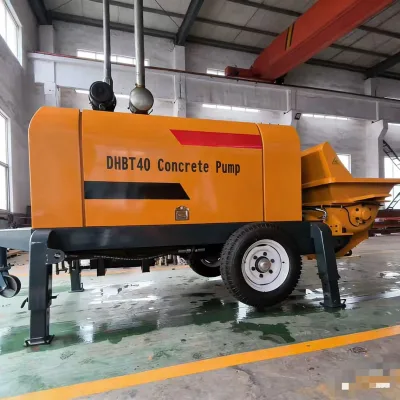


Used Mini Concrete Pump Truck Machine Mobile Electric Concrete Pump for Sale
$7500.00 - $13000.00
MOQ: 1 Pieces

Comprehensive Sourcing Guide
Strategic Sourcing Guide for Concrete Pump Trailers
Navigating the global market for concrete pump trailers requires a disciplined approach that balances technical performance with rigorous compliance verification. Buyers in the construction engineering sector must distinguish between general product descriptions and verified specifications. The following guide synthesizes observed market data to provide a framework for evaluating suppliers, understanding cost drivers, and ensuring equipment reliability without relying on unverified claims.
Technical Specifications and Performance Metrics
When evaluating a Concrete Pump Trailer, the primary focus must be on the machine's ability to handle specific aggregate sizes and delivery distances. The market presents a diverse range of models, each defined by distinct operational parameters. A critical observation from current listings is the variation in maximum aggregate diameter. Some units are engineered for smaller aggregates, with specifications indicating a maximum size of 15mm, while others are robust enough to handle larger materials, with observed maximum aggregate diameters reaching 30mm. This distinction is vital for buyers working with different concrete mixes, as using a pump with insufficient aggregate capacity can lead to blockages and operational downtime.
Delivery distance capabilities further segment the market. Buyers must verify whether the equipment meets the vertical and horizontal requirements of their specific project sites. Data indicates a wide spectrum of performance: some units list a maximum vertical delivery distance of 20-30 meters and a horizontal distance of 40-50 meters, suitable for low-rise or confined urban sites. In contrast, high-performance models are observed to achieve vertical conveying heights of 50-60 meters and horizontal distances extending up to 180 meters. These figures are not universal; they vary by model, such as the HW15-15 or the YG series (including YG-10, YG-20, and YG-30).
Productivity rates also vary significantly across the catalog. Observed productivity ranges from 25 cubic meters per hour to 50 cubic meters per hour, with specific models delivering volumes between 10-15 m³/h and others reaching 30-35 m³/h. The feeding height is another structural attribute to consider, with observed values around 1400mm, which impacts the ease of loading concrete mixers. Additionally, the structure of the pump, often described as cylinder type, and the vibrating amplitude, which ranges from 1.0mm to 2.6mm, influence the stability and efficiency of the concrete flow. Buyers should treat these attributes as observations of specific listings rather than guarantees for every unit in the category.
Compliance, Certification, and Standards Verification
Ensuring that a Concrete Pump Trailer meets international and local safety standards is a non-negotiable aspect of procurement. The market data highlights that many units carry certifications such as CE and ISO9001, often associated with specific color configurations like yellow. However, the presence of a certification label on a product page does not automatically validate the specific unit being purchased. Buyers must verify that the certification applies to the exact model and configuration they intend to acquire.
Dimensional standards are another area requiring careful scrutiny. Product standards listed in the market data include specific dimensions such as 17507001200mm, 210010001200mm, and 400015001800mm. These measurements likely refer to the overall footprint or specific component dimensions of the trailer. It is essential to confirm that these dimensions align with the logistical constraints of the buyer's site, including gate widths, transport road limits, and on-site maneuvering space.
Furthermore, the origin of the equipment plays a role in compliance. A significant portion of the observed market data indicates products originating from China, with specific mentions of Henan as a production hub. While this geographic information is factual, buyers must ensure that the manufacturing processes, such as hydraulic machining, adhere to the safety regulations of the destination country. The "Wet" shotcrete type and "Hydraulic" machining process are standard attributes, but their implementation must be verified against local occupational health and safety standards.
Cost Drivers and Pricing Structures
The pricing for concrete pump trailers in the current market is highly variable, with observed ranges spanning from $1,500 to $100,000 USD. This broad spectrum reflects differences in capacity, brand reputation, technological complexity, and included features. The minimum order quantity (MOQ) for these units is consistently observed as 1, allowing for flexible procurement strategies for small to medium-sized contractors.
Several factors drive the cost variance. First, the delivery volume and productivity directly impact the price; a unit capable of 50m³/h will command a higher price than one delivering 25m³/h. Second, the maximum aggregate size and delivery distance capabilities are significant cost determinants. Machines designed for long horizontal distances (up to 180m) or high vertical lifts (60m) involve more complex hydraulic systems and reinforced structures, increasing the manufacturing cost. Third, customization availability is a key cost driver. While many suppliers offer customization, the extent of these modifications—such as specific color requirements (yellow or orange) or tailored dimensions—will influence the final quote.
Buyers should also consider the packaging and shipping costs. Observed packaging standards include wooden cases, fumigated wooden boxes, and standard wooden cases. These packaging methods are necessary for protecting the machinery during transit but add to the overall landed cost. The choice of packaging should be verified to ensure it meets the durability requirements for the specific shipping route.
Typical Applications and Operational Context
Concrete pump trailers are versatile tools designed for a wide array of construction engineering applications. The primary function of these machines is the conveying of concrete, making them essential for projects where manual pouring is inefficient or impossible. The observed applications include general construction engineering, where the machine serves as a core component of the workflow.
The specific use cases depend heavily on the technical specifications of the unit. For low-rise residential projects or small-scale renovations, units with lower vertical delivery distances (20-30m) and moderate productivity (25-35m³/h) are often sufficient. These models are ideal for sites with limited space and lower concrete volume requirements. Conversely, large-scale commercial projects, high-rise buildings, and infrastructure developments require high-performance units capable of vertical heights of 50-60m and horizontal distances of 100m or more.
The "Concrete Mixer with Pump" application highlights a specific integration where the pump works in tandem with a mixer. This setup is common in sites where concrete is mixed on-site or delivered in bulk. The feeding height of 1400mm is a critical design feature for these applications, ensuring that the pump can efficiently receive concrete from standard mixer trucks. Buyers should match the pump's capabilities to the specific demands of their project type, ensuring that the machine's productivity aligns with the project timeline to avoid bottlenecks.
Supplier Evaluation and Quality Control
Evaluating suppliers for concrete pump trailers requires a focus on transparency and verification of the provided data. Since the market data shows multiple models with similar names but different specifications, buyers must be diligent in confirming the exact model number, such as HW15-15, YG-10, YG-20, or YG-30. Relying solely on the product name "Concrete Pump Machine" or "Mini Concrete Pump" is insufficient for quality assurance.
Quality control should begin with the verification of the machining process. The observed "Hydraulic" machining process is a standard feature, but the quality of the hydraulic components determines the machine's longevity and reliability. Buyers should request detailed information on the hydraulic system's brand, pressure ratings, and maintenance history. Additionally, the condition of the product is listed as "New" in the market data, but buyers must verify the manufacturing date and any pre-delivery testing protocols.
The packaging method, whether it is a wooden case or a fumigated wooden box, is also an indicator of the supplier's attention to detail. Fumigated packaging is often required for international shipping to prevent the spread of pests, and its inclusion suggests a supplier familiar with export regulations. Buyers should also check for the availability of customization, as this indicates a supplier's flexibility and ability to meet specific client needs.
Long-Term Procurement Considerations
Sourcing a Concrete Pump Trailer is a long-term investment that extends beyond the initial purchase price. Buyers must consider the availability of spare parts, the ease of maintenance, and the potential for future upgrades. The "Customization: Available" attribute suggests that suppliers may offer tailored solutions, but buyers should inquire about the lead times for custom orders and the availability of replacement parts for modified components.
The lead time for delivery is another critical factor. While specific lead times are not universally standardized in the data, the observed ranges for delivery volume and the complexity of the machinery suggest that lead times can vary. Buyers should clarify the production schedule and shipping duration to ensure the equipment arrives when needed. The "Wooden Case" and "Fumigated Wooden Box Packaging" options also imply that the shipping process may take additional time, which should be factored into the project timeline.
Finally, buyers should consider the total cost of ownership, including energy consumption, maintenance costs, and the potential for downtime. Units with higher productivity and longer delivery distances may require more frequent maintenance and higher energy inputs. By carefully analyzing the technical specifications, compliance status, and supplier capabilities, buyers can make informed decisions that ensure the long-term success of their construction projects. The observed data provides a solid foundation for these decisions, but continuous verification and due diligence remain essential for successful procurement.
FAQs
What is the maximum aggregate size for these pumps?
Maximum aggregate sizes vary by model, with observed limits of 15mm or 30mm. Buyers must verify the specific model, such as HW15-15 or YG-30, to ensure compatibility with their concrete mix and prevent blockages during operation.
How far can the concrete pump deliver vertically and horizontally?
Delivery distances range from 20-30 meters vertically and 40-50 meters horizontally for basic units, up to 60 meters vertical and 180 meters horizontal for high-performance models. The exact capability depends on the specific model selected for the project site.
Which certifications are typically associated with these concrete pumps?
Many units carry CE and ISO9001 certifications, often linked to yellow-colored models. Buyers should verify that these certifications apply to the exact model and configuration intended for purchase rather than assuming they cover all listed units.
Can I customize the Concrete Pump Trailer specifications?
Customization is available for many models, allowing for tailored dimensions or color options like orange. The extent of modifications will influence the final quote and may affect lead times for production and delivery to the project site.
What is the typical productivity rate for these machines?
Productivity rates observed in the market range from 25 to 50 cubic meters per hour. Specific models deliver volumes between 10-15 m³/h and others reach 30-35 m³/h, so buyers must match the rate to their project timeline.
How are these concrete pumps packaged for shipping?
Packaging options include wooden cases, fumigated wooden boxes, and standard wooden cases to protect the machinery. These methods are necessary for transit but add to the landed cost, and fumigated packaging is often required for international export.