Source Concrete Pump Truck Delivery Cylinder for Construction Mining Metallurgy
Find 30 Concrete Pump Truck Delivery Cylinder options from verified Chinese suppliers. Buyers can compare specifications like internal diameter, material, and certifications to select suitable parts for building material shops and machinery repair needs.
Key considerations
Products List


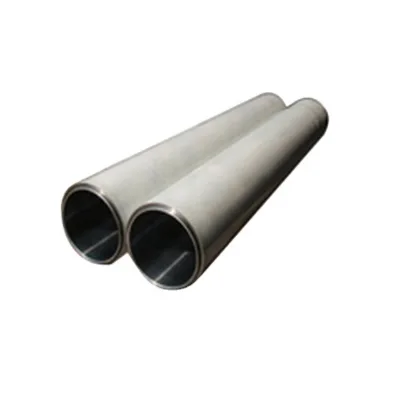
Wear Resistant Concrete Pump Parts Customizable Delivery Cylinder for Concrete Pump
$630.00 - $650.00
MOQ: 10 Pieces




Comprehensive Sourcing Guide
Strategic Sourcing Guide for Concrete Pump Truck Delivery Cylinders
Understanding Technical Specifications and Component Variants
The Concrete Pump Truck Delivery Cylinder is a critical hydraulic component responsible for the reciprocating motion that moves concrete through the pipeline system. When sourcing these parts, buyers must recognize that these are not generic cylinders but highly specialized hydraulic actuators designed to withstand extreme pressure cycles and abrasive environments. The core technical observation from available market data indicates that these units are predominantly categorized as "Concrete Pump Spare Parts" with a specific "Structure" defined as "Cylinder Type."
Material composition is the first critical differentiator in this category. The supplied data highlights that high-performance delivery cylinders are frequently manufactured using "#45 Steel Chrome Plated with Heat Treatment." This specific metallurgical approach ensures the cylinder barrel possesses the necessary hardness to resist wear from the abrasive concrete slurry while maintaining dimensional stability under high hydraulic pressure. In some instances, the material is broadly listed as "Carbon Steel" or simply "Steel," but the chrome-plated variant with heat treatment represents the superior specification for heavy-duty applications. The machining process for these components is explicitly noted as "Hydraulic," suggesting that the internal bores and sealing surfaces are finished using hydraulic machining techniques to achieve the tight tolerances required for effective sealing and smooth operation.
Dimensional specifications vary significantly based on the pump model and the specific application requirements. The market data reveals a wide range of standard and custom models. Specific observed models include "2302174," "DN2302146," and "80 125 150 1842 2012." The internal diameter is a crucial variable, with observed ranges spanning from "100~700mm." Furthermore, standard sizing often aligns with nominal diameters such as "DN180," "DN200," "DN230," "DN235," "DN260," and "DN250." Buyers must verify that the cylinder's internal diameter and stroke length match their specific pump truck's requirements, as the "Stroke" is frequently listed as "as Requirement," indicating a high degree of customization is available. The "Length" is similarly flexible, often determined by the specific customer need rather than a fixed standard dimension.
Compliance, Certification, and Quality Assurance Protocols
In the industrial machinery sector, particularly for components subjected to high stress, certification serves as a primary indicator of a supplier's commitment to quality management systems. The available product data consistently points to "ISO9001" as a prevalent certification for these delivery cylinders. This standard validates that the manufacturer adheres to international quality management principles, ensuring consistent production processes. Additionally, "CE" certification is frequently observed, which is essential for products intended for the European market or those requiring compliance with European safety directives. Some listings explicitly combine these, stating "CE, ISO9001: Condition: New," confirming that the units are manufactured to meet both quality and safety regulatory frameworks.
Beyond general certifications, specific quality assurance documentation is vital for procurement due diligence. The data indicates that suppliers often provide a "Machinery Test Report" for these components. This document is not merely a formality but a record of performance verification, likely including pressure testing and leak checks. Furthermore, the attribute "Video Outgoing-Inspection: Provided" suggests that modern suppliers offer remote visual verification of the product before shipment. This feature allows buyers to visually confirm the condition of the cylinder, the quality of the chrome plating, and the packaging integrity without requiring a physical site visit.
Quality attributes such as "High" and "High Quality" are frequently listed, but these are subjective descriptors that must be backed by objective evidence. Buyers should interpret these claims in conjunction with the provided test reports and certifications. The condition of the products is uniformly listed as "New," which is a baseline expectation for replacement parts but should be verified against the physical inspection reports. The "Quality" attribute is often paired with specific material grades, reinforcing the link between material selection and final product performance.
Cost Drivers and Pricing Dynamics in the Market
The pricing structure for concrete pump delivery cylinders is influenced by several distinct factors, ranging from raw material costs to customization levels. The observed listed price range in the market spans from $1 to $200,000 USD. This wide variance is not indicative of a single product type but rather reflects the spectrum from small, standard replacement parts to large, fully customized hydraulic assemblies. The lower end of the range likely corresponds to standard, off-the-shelf components with minimal customization, while the upper end encompasses complex, high-diameter cylinders with specialized chrome plating and heat treatment processes.
Material costs play a significant role in the final price. The use of "#45 Steel Chrome Plated with Heat Treatment" is more expensive than standard carbon steel due to the additional processing steps required to achieve the desired surface hardness and corrosion resistance. The chrome plating process itself is a cost driver, as it requires precise control to ensure uniform thickness and adhesion. Furthermore, the "Hydraulic" machining process adds to the manufacturing cost, as it requires specialized equipment and skilled labor to maintain the tight tolerances necessary for hydraulic seals.
Customization is another major cost driver. The data explicitly states that "Customization: Available" and that dimensions like "Length" and "Stroke" are "as Requirement." Custom orders typically incur higher costs due to the setup time for machining, the need for specialized tooling, and the potential for lower production volumes compared to standard parts. The "Standard Export Package" or "Pallet/Wooden Case" options also influence the final price, as specialized packaging adds to the logistical cost. Buyers should be aware that the "MOQ" (Minimum Order Quantity) ranges from 1 to 200 units, meaning that small orders may carry a higher per-unit cost due to the lack of economies of scale.
Typical Applications and Industry Suitability
Concrete pump delivery cylinders are designed for a specific set of heavy-duty applications, primarily within the construction and infrastructure sectors. The data identifies "Building Material Shops" and "Machinery Repair Shops" as the primary applicable industries. However, the broader utility of these cylinders extends to "Metallurgy, Mining, Construction Machinery, etc." This indicates that the components are robust enough to handle the harsh environments found in mining operations and large-scale metallurgical plants, in addition to standard concrete pumping on construction sites.
The "Usage" field explicitly lists "Construction Machinery," confirming that these cylinders are integral to the operation of concrete pump trucks. These trucks are essential for pouring concrete in high-rise buildings, bridges, tunnels, and large industrial foundations. The "Pressure Direction" is noted as "Single-Acting Cylinder," which is a specific design choice that influences how the cylinder interacts with the pump's hydraulic system. This design is optimized for the specific reciprocating motion required to push concrete through the pipeline, ensuring efficient energy transfer and minimal wear on the sealing components.
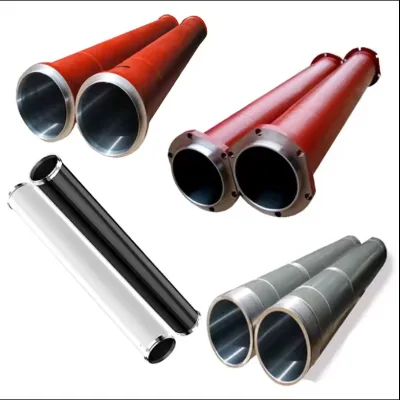
The color options, including "White," "Red," "Black," "Grey," and "Customised," are primarily aesthetic or for identification purposes, though they may also indicate different coating types or surface treatments. The "Product Keywords" of "Concrete Pump Spare Parts" further reinforce the role of these cylinders as critical replacement components for maintaining the operational uptime of concrete pumping equipment.
Supplier Evaluation and Geographic Considerations
When evaluating potential suppliers for concrete pump delivery cylinders, geographic origin is a key factor. The supplied data consistently identifies "China" as the primary origin, with specific mentions of "Hebei" as a manufacturing hub. Hebei is known for its heavy machinery and steel processing industries, which aligns with the production of steel cylinders and hydraulic components. Buyers should verify the specific location of the supplier to ensure they are dealing with a manufacturer in a region with a strong industrial base.
Supplier evaluation should focus on the transparency of their quality control processes. The availability of "Machinery Test Reports" and "Video Outgoing-Inspection" are strong indicators of a supplier's confidence in their product and their willingness to engage in transparent verification. Buyers should prioritize suppliers who can provide these documents readily, as they serve as evidence of the product's integrity before it leaves the factory.
The "Delivery" lead time is another critical metric for procurement planning. The observed range is "15~20 days," which suggests a standard production and shipping timeline. Buyers should factor this lead time into their inventory management strategies, especially for critical spare parts where downtime can be costly. The "prod_packing" options, ranging from "Standard Export Package" to "Wooden Strip, Wrapping Film" and "Bundling," indicate that suppliers offer various packaging solutions to protect the cylinders during transit. Buyers should ensure that the packaging is robust enough to prevent damage, particularly for chrome-plated surfaces which are susceptible to scratching.
Long-Term Procurement and Maintenance Considerations
Sourcing concrete pump delivery cylinders is not just a one-time transaction but part of a long-term maintenance strategy. The "Condition: New" status is standard, but buyers should consider the long-term durability of the components. The use of "#45 Steel Chrome Plated with Heat Treatment" suggests a focus on longevity, as these materials are chosen to resist the abrasive nature of concrete. However, the actual lifespan of the cylinder will depend on the operating conditions, the quality of the hydraulic fluid, and the maintenance practices of the end-user.
The "Standard" field lists various sizes like "DN180/ DN200/ DN230/ DN250" and "230x977mm," which implies that standardization is a key factor in the supply chain. Buyers should aim to standardize their inventory around these common sizes to simplify procurement and reduce the need for custom orders. Custom orders, while available, may have longer lead times and higher costs, making them less suitable for routine maintenance.
Finally, the "Quality" attribute, often listed as "High" or "High Quality," should be interpreted as a baseline expectation rather than a guarantee. Buyers must rely on the objective evidence provided by certifications like "ISO9001" and "CE," as well as the "Machinery Test Report," to validate these claims. By focusing on suppliers who provide comprehensive documentation and adhere to recognized standards, buyers can ensure a steady supply of reliable delivery cylinders that minimize downtime and maximize the efficiency of their concrete pumping operations. The ability to customize the "Stroke" and "Length" allows for precise fitting, which is essential for maintaining the optimal performance of the pump truck over its operational life.
FAQs
What materials are used for concrete pump truck delivery cylinders?
These cylinders are primarily made from #45 Steel Chrome Plated with Heat Treatment to resist wear. Some variants use Carbon Steel or standard Steel, but the chrome-plated option offers superior durability for heavy-duty applications.
Which certifications do Concrete Pump Truck Delivery Cylinder suppliers hold?
Suppliers typically hold ISO9001 certification for quality management and CE certification for safety compliance. Some listings explicitly combine both certifications to ensure the products meet international standards for new condition machinery.
How long is the delivery time for these cylinders?
The standard delivery time ranges from 15 to 20 days. This lead time applies to the production and preparation of the cylinders before they are shipped to the buyer.
Can the cylinder dimensions be customized for specific needs?
Yes, customization is available for length and stroke as per customer requirements. Buyers can specify internal diameters ranging from 100 to 700mm or select from standard sizes like DN180 to DN260.
What is the minimum order quantity for these parts?
The minimum order quantity ranges from 1 to 200 units depending on the supplier and product type. Small orders may incur higher per-unit costs compared to bulk purchases due to production setup requirements.
Where are these concrete pump cylinders manufactured?
The products originate from China, with specific manufacturing hubs located in Hebei. This region is known for its heavy machinery and steel processing industries relevant to hydraulic component production.