Find Concrete Pump Truck for Construction, Mining, and Infrastructure
Source 30 new and used concrete pump trucks with varying capacities and boom heights. Buyers can compare specifications from manufacturers in China to find the right equipment for large-scale projects.
Key considerations
Products List


Concrete Pumptruck 38m/ Truck Concrete Pump Concrete Boom Pump Truck/ Heavy-Duty Construction
$115000.00 - $120000.00
MOQ: 1 Pieces
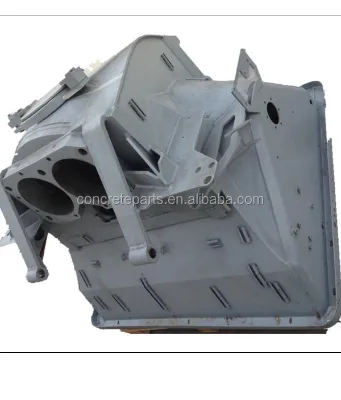


Concrete Pump Machine Small Concrete Pump 49m Concrete Pumping Truck
$270000.00 - $300000.00
MOQ: 1 Pieces


High Quality 58m Concrete Pump Truck Mounted Pumps Concrete Boom Pump Truck for Sale
$190000.00 - $198000.00
MOQ: 1 sets


Diesel Truck Concrete Pump Machine 52m Chinese Brand Concrete Pump Truck
$99000.00 - $109000.00
MOQ: 1 Pieces
Comprehensive Sourcing Guide
Strategic Sourcing Guide for Concrete Pump Trucks
Procuring heavy construction machinery, specifically concrete pump trucks, requires a rigorous approach that balances technical performance with regulatory compliance and supply chain reliability. The global market for these specialized vehicles is characterized by a wide variance in specifications, ranging from compact models to high-reach units capable of serving high-rise construction projects. Buyers must navigate a complex landscape of chassis configurations, pumping capacities, and emission standards to ensure the selected equipment meets the specific demands of their operational environment. This guide outlines the critical factors for sourcing concrete pump trucks, drawing on observed market data to inform decision-making without relying on unverified claims.
Technical Specifications and Configuration Analysis
The technical architecture of a Concrete Pump Truck is defined by its chassis, pumping system, and boom configuration. Market observations indicate a diverse range of configurations available to buyers. Chassis brands frequently cited in the sector include FAW, HOWO, and ISUZU, with specific models such as the ISUZU QINGLING and HTC5291THB38X-4Z appearing in listings. The driving configuration is equally critical; data shows the prevalence of 8x4 and 6x4 drive wheels, with steering options available in both Left-Hand Drive (LHD) and Right-Hand Drive (RHD) formats to accommodate regional traffic laws.
Engine specifications are a primary determinant of performance. The power source is predominantly diesel, though some listings indicate compatibility with CNG and LNG fuels. Engine capacity often exceeds 8 liters, and horsepower ratings in the observed range fall between 351 and 450hp. The transmission type is typically manual, which is standard for heavy-duty applications requiring precise torque management. The pumping mechanism itself is often of the cylinder type, utilizing a hydraulic machining process to ensure smooth operation.
The reach and output capacity are the most visible differentiators. Boom lengths vary significantly, with standard configurations observed at 30, 37, 38, 42, 47, 50, 52, 58, and even up to 37.6 meters for specific high-reach models. Output capacity is a crucial metric for project efficiency; observed figures include rates of 120 cubic meters per hour. The physical dimensions of the vehicles are also standardized, with some units measuring approximately 10815mm in length, 2550mm in width, and 3920mm in height. Buyers must verify that the specific model's dimensions comply with local road transport regulations, as oversized vehicles may require special permits.
Compliance, Certification, and Emission Standards
Navigating the regulatory landscape is essential for importing and operating concrete pump trucks. Compliance is not merely a formality but a prerequisite for market access and operational legality. The supply chain data highlights several key certifications and standards that buyers should verify. ISO certification is a recurring standard, with specific references to ISOCCC, TSEPA, EEC, RoHS, and CE appearing in product listings. These certifications indicate adherence to international quality management systems and safety protocols.
Emission standards are another critical area of compliance. The Euro standard is frequently referenced, with specific mentions of Euro compliance for engine emissions. Buyers must ensure that the engine meets the emission requirements of the destination country, as regulations vary widely between regions. For instance, some markets may require Euro 5 or Euro 6 compliance, while others may have different thresholds. The tire certification is also noted as ECE and ISO, ensuring that the tires meet safety and performance standards for heavy loads.
Additionally, the condition of the vehicle is a significant factor in compliance. While the majority of listings describe units as "Brand New" or "New," there are also entries for "Used" or "Second Hand" pump trucks. When sourcing used equipment, buyers must conduct a thorough inspection to ensure the vehicle still meets current safety and emission standards. The presence of certifications like ISOCCC and EEC on used units should be verified against the current regulatory requirements of the importing country to avoid legal complications.
Cost Drivers and Pricing Variables
The pricing of concrete pump trucks is influenced by a multitude of factors, resulting in a wide observed range from $1 to $580,000 USD. This vast disparity is not indicative of random pricing but rather reflects the differences in specifications, age, and configuration. The primary cost drivers include the boom length, engine power, chassis brand, and the condition of the unit. A 58-meter pump truck will inherently cost significantly more than a 30-meter model due to the engineering complexity and material costs involved.
Chassis brand also plays a substantial role in pricing. Premium chassis brands like ISUZU often command a higher price point compared to other manufacturers, reflecting their reputation for durability and reliability. Furthermore, the fuel type can influence the initial purchase price and long-term operating costs. Diesel engines are the standard, but the availability of CNG or LNG options may affect the upfront cost due to specialized fuel system requirements.
The condition of the vehicle is perhaps the most volatile cost factor. New units, described as "Brand New" or "New," will be at the higher end of the price spectrum. In contrast, "Used" or "Second Hand" units, such as the "Second Hand Pump Truck" mentioned in the data, offer a lower entry price but come with potential risks regarding remaining lifespan and maintenance needs. Buyers should also consider the packaging and shipping costs, as units are often shipped in bulk vessels or via RO-RO (Roll-on/Roll-off) methods, which can add to the total landed cost.
Typical Applications and Operational Use Cases
Concrete pump trucks are versatile pieces of equipment designed for various construction scenarios. The primary application is the placement of concrete in high-rise buildings, bridges, and large-scale infrastructure projects where traditional pouring methods are inefficient. The varying boom lengths allow for flexibility; shorter booms (30-37 meters) are suitable for low-to-mid-rise residential buildings, while longer booms (47-58 meters) are essential for skyscrapers and complex industrial structures.
The output capacity of 120 cubic meters per hour makes these trucks ideal for large-volume pours, such as foundation slabs, dams, and highway bridges. The "High Productivity Concrete Pump" designation suggests that these units are optimized for continuous operation, minimizing downtime during critical pouring phases. The wet shotcrete type mentioned in the data indicates that some models are also equipped for shotcrete applications, which are common in tunneling and slope stabilization projects.
The driving configuration (8x4 or 6x4) and steering type (LHD or RHD) determine the vehicle's suitability for specific job sites. In regions with narrow streets or specific traffic patterns, the choice of steering and chassis width becomes critical. The "C10 Cement Pump Truck" and "Conveying Concrete Equipment" keywords highlight the versatility of these machines in handling different types of concrete mixes, ensuring that the equipment can adapt to the specific material requirements of the project.
Supplier Evaluation and Quality Control
Selecting a reliable supplier is paramount to ensuring the quality and longevity of the Concrete Pump Truck. Buyers should prioritize suppliers who provide transparent documentation regarding the product's origin, condition, and certifications. The observed origin of these units is primarily Shandong, China, a region known for its heavy machinery manufacturing. However, buyers must verify the specific manufacturing details and the supplier's track record.
Quality control should begin with a detailed review of the product specifications. Buyers must confirm that the listed horsepower, engine capacity, and boom length match the actual equipment. The "Nude" packing and "Bulk Ship" or "Bulk Vessel" shipping methods suggest that the equipment is shipped in a disassembled or minimal packaging state, which requires careful inspection upon arrival to ensure no damage occurred during transit.
When evaluating suppliers, buyers should look for evidence of adherence to the mentioned standards, such as ISO, ISOCCC, and EEC. The presence of multiple certifications, including TSEPA, RoHS, and CE, indicates a commitment to international quality and safety norms. For used units, a third-party inspection is highly recommended to verify the mechanical condition, hydraulic system integrity, and remaining service life. The "Second Hand Pump Truck" listings should be scrutinized for maintenance records and any history of major repairs.
Long-Term Procurement Considerations
Beyond the initial purchase, long-term procurement considerations are vital for maximizing the return on investment. Maintenance and spare parts availability are critical factors. Buyers should ensure that the supplier or the manufacturer has a robust network for providing spare parts, especially for the hydraulic system and engine components. The "Hydraulic" machining process mentioned implies a complex system that requires specialized maintenance.
The fuel type is another long-term consideration. While diesel is the standard, the shift towards CNG and LNG fuels may offer cost savings and environmental benefits in the future. Buyers should assess the local availability of these alternative fuels and the infrastructure required to support them. Additionally, the emission standards will likely become stricter over time, so purchasing a unit that meets or exceeds current standards can future-proof the investment against regulatory changes.
The condition of the vehicle also impacts long-term costs. New units offer the advantage of a full warranty and predictable maintenance schedules, whereas used units may require immediate repairs and higher ongoing maintenance costs. Buyers should calculate the total cost of ownership, including fuel, maintenance, and potential downtime, rather than focusing solely on the purchase price. The "High Productivity" nature of these pumps suggests that minimizing downtime is crucial for project profitability, making the reliability of the equipment a key long-term factor.
Summary of Key Procurement Factors
To summarize, sourcing a Concrete Pump Truck involves a careful balance of technical specifications, regulatory compliance, and supplier reliability. The market offers a wide range of options, from 30-meter to 58-meter booms, with varying engine powers and chassis brands. Buyers must verify certifications such as ISO, ISOCCC, and EEC, and ensure compliance with local emission standards. The price range is vast, reflecting differences in condition, configuration, and brand. By focusing on these critical factors and conducting thorough due diligence, buyers can secure equipment that meets their operational needs while ensuring long-term value and compliance.
| Feature Category | Observed Specifications | Verification Requirement |
|---|---|---|
| Chassis Brand | FAW, HOWO, ISUZU | Confirm model compatibility with local regulations. |
| Drive Configuration | 8x4, 6x4 | Verify steering type (LHD/RHD) for destination. |
| Boom Length | 30m to 58m | Ensure reach meets project height requirements. |
| Output Capacity | 120 m³/h | Confirm suitability for project volume. |
| Engine Power | 351-450hp | Check fuel type (Diesel, CNG, LNG) availability. |
| Certifications | ISO, ISOCCC, EEC, CE | Validate against destination country standards. |
| Condition | New, Used, Second Hand | Inspect used units for mechanical integrity. |
| Origin | Shandong, China | Verify shipping terms and logistics. |
By adhering to these guidelines and focusing on the verified data points, buyers can navigate the complex market for concrete pump trucks with confidence, ensuring they acquire equipment that is safe, compliant, and capable of meeting the demands of modern construction projects.
FAQs
What customization options are available for concrete pump trucks?
Customization is available for these concrete pump trucks to meet specific project needs. Buyers can select from various chassis brands like FAW, HOWO, or ISUZU and choose between 6x4 or 8x4 drive configurations to suit their operational requirements.
Which emission standards do the diesel engines meet?
The diesel engines in these units comply with Euro emission standards. This ensures they meet international environmental regulations, making them suitable for import into regions with strict emission controls for heavy construction machinery.
Can I find concrete pump trucks with high output capacity?
Yes, units with an output capacity of 120 cubic meters per hour are available. This high productivity level makes them ideal for large-scale infrastructure projects requiring rapid concrete placement and continuous operation on busy job sites.
What certifications do these trucks hold for safety compliance?
These trucks hold ISO, ISOCCC, EEC, RoHS, and CE certifications. These documents verify adherence to international quality management systems and safety protocols, ensuring the equipment meets global standards for heavy machinery operation.
How does the condition of the truck affect the price?
Price varies significantly based on whether the unit is new or used. New concrete pump trucks command higher prices, while used or second-hand options offer a lower entry cost but require careful inspection for remaining service life.
Which chassis brands are commonly used for these models?
Common chassis brands include FAW, HOWO, and ISUZU. These manufacturers provide reliable platforms for the pumping systems, with specific models like the ISUZU QINGLING offering robust performance for various concrete pumping applications.