Source Constant Current Dimmable LED Transformer for Lighting and Power
Compare 30 listings of Constant Current Dimmable LED Transformer options featuring single-phase designs, ferrite cores, and copper windings. Buyers can evaluate models like EP12 and AL-HT280 for electronic, audio, and rectifier applications with customizable packaging and factory-direct delivery.
Key considerations
Products List


Effective Energy Saving Transformer for Premium LED Lighting Applications
$0.02 - $0.12
MOQ: 500 Pieces


Customized Transformer for LED Light High Stability High Frequency Transformer
$0.27 - $0.30
MOQ: 100 Pieces


Customization transformer factory EE ferrite core transformer for LED driver
$0.21 - $0.27
MOQ: 500 Pieces
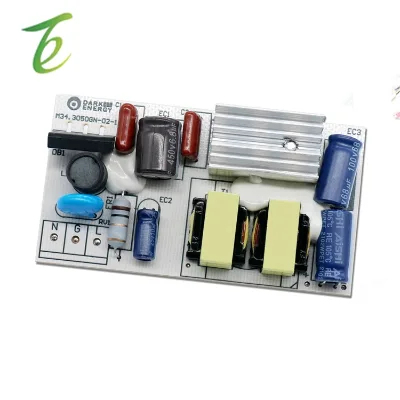


Power Transformer for LED Lighting Power Transformer for Vehicle-Mounted
$0.60 - $0.85
MOQ: 5000 Pieces


Comprehensive Sourcing Guide
Strategic Sourcing Guide for Constant Current Dimmable LED Transformers
Understanding Technical Specifications and Core Architectures
When sourcing constant current dimmable LED transformers, buyers must first distinguish between the specific electrical architectures available in the market. The core keyword implies a device designed to regulate current rather than voltage, a critical distinction for driving high-power LED arrays where current stability ensures consistent luminance and extended lifespan. Based on observed product attributes, the market offers transformers with single-phase configurations and high-frequency characteristics. These high-frequency designs are essential for modern dimming applications, as they allow for smaller physical footprints and more efficient switching compared to traditional low-frequency magnetic components.
The winding architecture is another primary technical differentiator. Sourcing data indicates the availability of multi-winding transformers and auto-transformers. Multi-winding designs are often preferred for complex dimming scenarios where multiple output channels or isolated secondary circuits are required to prevent noise interference. Conversely, auto-transformers may be selected for cost-sensitive applications where electrical isolation between primary and secondary sides is less critical. The core material composition also plays a pivotal role in performance; ferrite cores are frequently observed in these high-frequency applications due to their low loss characteristics at elevated switching speeds. This material choice directly impacts the thermal efficiency and the ability of the transformer to handle rapid dimming cycles without overheating.
Furthermore, the input and output signal characteristics define the compatibility of the transformer with existing lighting systems. Observed specifications include input voltages ranging from AC 85-265V and AC 165-265V, indicating a broad compatibility with global mains standards. The output signal is consistently DC, which is mandatory for LED operation. Some advanced units feature built-in drivers, integrating the constant current regulation directly into the transformer housing. This integration simplifies the installation process but requires careful verification of the output voltage range, which in observed models spans from DC 40V to 80V. Buyers must ensure that this output range aligns precisely with the forward voltage requirements of their specific LED modules to avoid under-driving or over-driving the diodes.
Compliance, Certification, and Safety Standards
Navigating the compliance landscape for LED transformers requires a rigorous verification of certifications and safety standards. While specific certification bodies vary by region, the supply chain data highlights the presence of ISO 9001 and ISO Core certifications. These indicate that the manufacturing processes adhere to international quality management systems, which is a baseline requirement for reliable procurement. Additionally, cooling methods are specified as "Dry-type," which is a critical safety feature for indoor lighting applications. Dry-type transformers do not require liquid cooling, reducing the risk of leaks and simplifying fire safety compliance in commercial and residential environments.
Safety testing is a non-negotiable aspect of procurement. Trusted product attributes confirm that units undergo 100% testing and Hi-Pot (high potential) shock tests. The Hi-Pot test verifies the insulation strength between the primary and secondary windings, ensuring that high voltages do not leak to the low-voltage side where users or sensitive electronics might be exposed. Buyers should explicitly request test reports confirming these Hi-Pot results before finalizing orders. The absence of such data in a supplier's documentation should be treated as a red flag, regardless of other marketing claims.
Regarding standards, the observed data mentions customized standards and specific packing standards like "200pcs/box" or "50pcs/box." While these packing figures are logistical rather than technical, they reflect the supplier's adherence to internal quality control protocols. For international procurement, buyers must verify that the transformer meets the specific electrical safety standards of the destination country, such as UL, CE, or RoHS, even if the provided text only lists generic ISO certifications. The "Customized" nature of the product standard suggests that many manufacturers offer tailored compliance solutions, but the buyer must define the target market's regulatory requirements clearly during the initial inquiry phase.
Cost Drivers and Pricing Dynamics
The pricing structure for constant current dimmable LED transformers is influenced by several tangible factors, including material composition, customization levels, and production volume. The observed price range in the market spans from $0.02 to $14.80 USD, a wide variance that reflects differences in power ratings, feature sets, and build quality. The lower end of this spectrum typically corresponds to basic auto-transformers with minimal features, while the higher end likely includes units with built-in drivers, advanced dimming protocols, and robust safety certifications.
Material costs are a significant driver of the final price. The use of copper wire for windings and ferrite cores for the magnetic circuit represents a substantial portion of the bill of materials. Copper prices fluctuate frequently, and suppliers with long-term contracts may offer more stable pricing. Additionally, the bobbin material, observed as Phenolic and Nylon, affects both cost and thermal performance. Higher-grade bobbins with better thermal resistance may command a premium but offer superior reliability in high-temperature environments.
Customization is another major cost variable. The data confirms that customization is available for these products. Buyers seeking specific output voltages, unique winding configurations, or specialized packaging will incur higher unit costs compared to purchasing off-the-shelf standard models. The "Factory Direct Price" advantage mentioned in supplier attributes suggests that bypassing intermediaries can yield significant savings, particularly for large volume orders. However, buyers must balance these savings against the potential risks of dealing directly with manufacturers without established quality assurance infrastructure.
Volume also plays a critical role in pricing. The observed Minimum Order Quantity (MOQ) ranges from 0 to 100,000 units. An MOQ of 0 implies that some suppliers may offer sample quantities or small-batch production, which is ideal for prototyping but often comes with a higher per-unit cost. Conversely, orders approaching the 100,000-unit range will likely trigger the lowest price points. Buyers should calculate the total cost of ownership, including shipping and inventory holding costs, rather than focusing solely on the unit price.
Typical Applications and Usage Scenarios
Constant current dimmable LED transformers are versatile components used across a diverse range of applications. The observed usage categories include distribution transformers, power transformers, combined transformers, rectifier transformers, and single-phase transformers. This breadth of application indicates that these devices are not limited to simple lighting but are integral to complex power distribution systems. In the lighting sector specifically, they are utilized in electronic, instrument, and audio applications, as well as general power and rectifier systems.
The "Lighting Transformers" classification is the most direct application for the core keyword. These transformers are essential for commercial and residential lighting projects where dimming capability is required to adjust ambiance or reduce energy consumption. The ability to handle high-frequency switching makes them suitable for modern LED drivers that require precise current control to prevent flickering during dimming cycles. The single-phase nature of the observed products aligns with standard residential and light commercial power grids, making them the default choice for most indoor lighting installations.
Beyond general lighting, the data points to usage in electronic and instrument applications. This suggests that these transformers are also employed in specialized equipment where stable DC power is required for sensitive components. The "Combined Transformer" usage category implies that some units may integrate multiple functions, such as isolation and voltage conversion, into a single package. This integration is beneficial in space-constrained environments where multiple components would otherwise clutter the assembly.
The "Rectifier" application is particularly relevant for the constant current aspect. Rectifier transformers convert AC input to DC output, a necessary step for powering LED arrays. The observed output signal of DC confirms this function. In rectifier applications, the transformer must handle the ripple current effectively to ensure a smooth DC output. The high-frequency characteristics observed in the product attributes are crucial here, as they allow for more efficient rectification and smoother current regulation compared to older low-frequency designs.
Supplier Evaluation and Verification Protocols
Evaluating suppliers for constant current dimmable LED transformers requires a multi-faceted approach that goes beyond price comparison. The origin of the products is consistently listed as China, specifically Mainland China. While this indicates a mature manufacturing ecosystem, buyers must verify the specific capabilities of the factory. The "Factory Direct Price" attribute suggests that many suppliers are manufacturers rather than trading companies, which can offer better margins and direct communication channels. However, buyers should confirm this status to ensure they are dealing with the actual production entity.
Supplier evaluation should also focus on their ability to meet customization requirements. The data confirms that customization is available, but the extent of this capability varies. Buyers should inquire about the lead times for custom orders and the flexibility of the supplier to adjust winding types, core materials, or bobbin specifications. The "Customized" standard attribute indicates that suppliers are willing to adapt their products, but the buyer must provide detailed technical specifications to ensure the final product meets the project requirements.
Quality control is another critical evaluation metric. The observation that "All Products Are 100% Test Passed and Hi-Pot Shock" is a strong indicator of a supplier's commitment to quality. Buyers should request evidence of this testing process, such as sample test reports or third-party inspection certificates. The "Export Carton" and "Export Carton on Strong Pallet" packaging standards suggest that the suppliers are experienced in international shipping and understand the need for robust protection during transit. This attention to packaging detail often correlates with a broader commitment to product integrity.
Finally, buyers should assess the supplier's responsiveness and communication. The "Delivery Quickly" advantage mentioned in the data is a valuable attribute, but it must be backed by a track record of on-time delivery. Buyers should ask for references from previous clients in similar industries to verify the supplier's reliability. The "Built-in driver" feature is another point of differentiation; suppliers offering this integration demonstrate a higher level of technical expertise and product development capability.
Quality Control and Long-Term Procurement Considerations
Ensuring the long-term reliability of constant current dimmable LED transformers requires a proactive approach to quality control and procurement strategy. The physical attributes of the transformer, such as the core shape (EE) and structure type (Vertical & Horizontal), impact the thermal management and mechanical stability of the unit. Buyers should verify that the chosen structure type is suitable for the intended installation environment, particularly regarding space constraints and airflow requirements. The weight of the observed units, such as the 50g specification, provides a baseline for handling and mounting considerations, but buyers must confirm the weight for specific models as it may vary with power rating.
Long-term procurement considerations include the availability of spare parts and the supplier's ability to support the product over its lifecycle. The "Single package size" of 50x50x50 cm suggests that the units are compact, which is beneficial for logistics but requires careful planning for storage and handling. Buyers should also consider the "Color Temperature CCT" attribute, noting that the observed value is "other." This indicates that the transformer itself may not dictate the color temperature, but rather the LED load does. However, the transformer's stability is crucial for maintaining consistent color rendering over time.
To mitigate risks, buyers should implement a phased procurement strategy. Start with small sample orders to verify the "100% Test Passed" claims and the performance of the built-in driver. Once the samples meet the technical and quality requirements, gradually increase the order volume to leverage the lower price points associated with higher MOQs. Regular audits of the supplier's production line and quality control processes can help maintain high standards. Additionally, buyers should establish clear communication channels for reporting any field failures or performance issues, ensuring that the supplier can respond quickly to rectify any problems.
The "High Frequency" characteristic of these transformers also implies a need for careful consideration of electromagnetic interference (EMI). Buyers should verify that the transformers include adequate shielding or filtering to prevent interference with other electronic equipment, especially in audio or instrument applications. The "Multi-winding" and "Auto-transformer" options offer different levels of isolation and noise rejection, and the choice should be based on the specific sensitivity of the application.
In conclusion, sourcing constant current dimmable LED transformers requires a deep understanding of technical specifications, a rigorous approach to compliance and certification, and a strategic evaluation of suppliers. By focusing on the observed attributes such as ferrite cores, high-frequency operation, and comprehensive testing, buyers can identify high-quality products that meet their specific application needs. The wide range of customization options and the availability of factory-direct pricing provide opportunities for cost optimization, but these must be balanced with a commitment to quality and reliability. Through careful planning and verification, buyers can secure a supply chain that delivers consistent performance and supports the long-term success of their lighting projects.
FAQs
What certifications do these transformers typically have?
Many units carry ISO9001 and ISO Core certifications indicating quality management adherence. Dry-type cooling methods are standard for safety, and all products undergo 100% testing including Hi-Pot shock verification before shipment.
Can I request customization for winding types or core materials?
Yes, customization is available for winding types, core materials, and bobbin specifications. Buyers can specify multi-winding or auto-transformer designs with ferrite cores and phenolic or nylon bobbins to meet unique project needs.
What is the typical input voltage range for these devices?
Input voltages generally range from AC 85-265V or AC 165-265V to match global mains standards. This broad compatibility ensures the transformers work reliably with single-phase power systems in various international locations.
How are these transformers packaged for export shipping?
Products are packed in export cartons, often placed on strong pallets for stability. Some models specify 20, 50, or 200 pieces per box, ensuring safe transport while maintaining the integrity of the copper wire windings and ferrite cores.
Which output voltage ranges are available for LED applications?
Observed models provide DC output voltages ranging from 40V to 80V to suit various LED arrays. Some advanced units feature built-in drivers to regulate current directly, simplifying installation for constant current dimming requirements.
What is the minimum order quantity for these transformers?
Minimum order quantities vary widely from zero units for samples up to 100,000 units for bulk orders. Lower MOQs allow for prototyping, while larger volumes typically trigger factory direct pricing advantages and faster delivery schedules.
Where are these transformers manufactured and what is the origin?
All listed products originate from Mainland China, specifically from factories offering direct pricing. The single-phase design and high-frequency characteristics are produced locally to serve global distribution and power transformer applications efficiently.