Source Construction Machinery Hose Assembly for excavators, loaders, and bulldozers
Find 30 verified listings for Construction Machinery Hose Assembly featuring steel and rubber materials with high pressure ratings. Compare specifications including working temperature, pressure, and certifications from multiple suppliers to ensure reliable fluid transfer for heavy equipment.
Key considerations
Products List


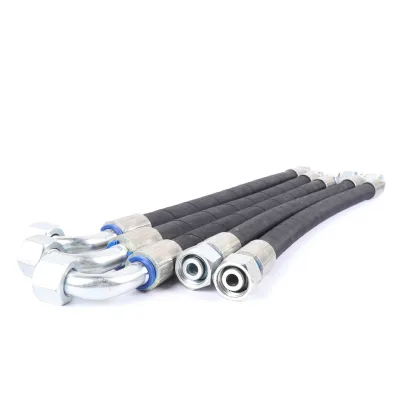


2 Wire Braid Hose Assembly Washer Hose Cleaning Machines Hose Pipe Assembly
$0.60 - $10.00
MOQ: 1000 Meters


Comprehensive Sourcing Guide
Strategic Sourcing Guide for Construction Machinery Hose Assemblies
The procurement of construction machinery hose assemblies represents a critical decision point for buyers in the heavy equipment sector. These components serve as the vascular system of hydraulic, pneumatic, and fluid transfer systems, directly influencing operational safety, maintenance cycles, and overall machine uptime. Unlike general industrial tubing, construction machinery hoses operate under extreme dynamic conditions, including high vibration, fluctuating temperatures, and abrasive environments. A successful sourcing strategy requires a rigorous understanding of material composition, certification requirements, and the specific technical parameters that define a reliable supply chain. This guide outlines the essential factors for evaluating potential suppliers and selecting the correct hose assemblies to meet the demanding needs of construction applications.
Technical Specifications and Material Composition
The foundation of any reliable hose assembly lies in its material composition and dimensional specifications. In the context of construction machinery, the core materials often involve a combination of steel and rubber, designed to balance flexibility with high-pressure resistance. The inner tube is frequently constructed from synthetic rubber or natural rubber, depending on the specific fluid being transferred. For applications requiring resistance to oil and aggressive chemicals, natural rubber or specialized synthetic blends are preferred. The reinforcement layer is equally critical; polyester fiber is commonly utilized to provide the necessary tensile strength to withstand working pressures that can reach up to 50 MPa in heavy-duty scenarios.
Buyers must verify the exact inner diameter and length specifications against their machinery's requirements. While standard dimensions exist, customization is often available to fit unique machine configurations. For instance, specific models may require an inner diameter of 127mm or a standard size of 10mm, with lengths ranging from custom cuts to standard 100-meter rolls. The working pressure rating is a non-negotiable metric; observed data indicates ratings such as 85 bar or 50 MPa, which must align with the machine's maximum operating pressure to prevent catastrophic failure. Furthermore, the temperature range is a vital specification. Hoses intended for outdoor construction sites must typically withstand temperatures ranging from -40°F to +300°F or -40°C to +100°C, ensuring functionality in both freezing winters and scorching summer conditions.
| Specification Category | Typical Observed Values | Verification Requirement |
|---|---|---|
| Material Composition | Steel, Natural Rubber, Synthetic Rubber | Confirm compatibility with specific hydraulic fluids or air. |
| Reinforcement | Polyester Fiber | Verify tensile strength against working pressure. |
| Working Pressure | 50 MPa, 85 bar | Ensure rating exceeds maximum system pressure. |
| Temperature Range | -40°C to +100°C, -40°F to +300°F | Check against local climate and engine heat zones. |
| Inner Diameter | 10mm, 127mm, Custom | Match exactly to fitting and flow requirements. |
| Length | 100m/Roll, Custom | Confirm cut length or roll availability. |
Compliance and Certification Standards
Navigating the regulatory landscape is essential for sourcing hose assemblies that meet international safety and quality benchmarks. The construction industry demands adherence to rigorous standards to ensure that components do not fail under stress. Buyers should prioritize suppliers who can provide documentation for certifications such as ISO 9001, ISO 13485, and ISO 9001:2021. These certifications indicate that the manufacturer has implemented a quality management system capable of maintaining consistent product quality. Additionally, specific industry standards like SAE100 are crucial for hydraulic hoses, ensuring they meet the performance criteria set by the Society of Automotive Engineers for fluid power applications.
Beyond general quality management, environmental and safety certifications play a significant role in modern procurement. Certifications such as Reach, RoHS, and FDA compliance are increasingly relevant, particularly if the hoses are used in applications where environmental contamination or food-grade safety (in specific machinery contexts) is a concern. The presence of CE and DOT markings suggests compliance with European and North American safety regulations, respectively. It is imperative for buyers to request proof of these certifications rather than relying on marketing claims. The absence of a specific standard, such as GB (Guobiao), should be noted, as it may indicate the product is tailored for the domestic Chinese market rather than international export.
Cost Drivers and Pricing Variables
Understanding the cost structure of hose assemblies is vital for budgeting and negotiation. The price of these components is not uniform and fluctuates based on several key drivers. The primary cost factor is the material composition; hoses utilizing high-grade natural rubber, steel reinforcement, or specialized synthetic compounds will command a higher price than those with basic rubber and fabric reinforcement. The complexity of the assembly, including the need for custom fittings or specialized sealing technologies, also adds to the cost.
The Minimum Order Quantity (MOQ) significantly impacts the unit price. Suppliers often offer tiered pricing structures where the cost per unit decreases as the order volume increases. Observed MOQs can range widely, from as low as 1 unit for custom prototypes to 1000 units for standard production runs. Buyers must balance their inventory needs against the MOQ to optimize cash flow. Additionally, the origin of the product influences cost; products manufactured in regions like Dongying, China, may offer competitive pricing due to localized supply chains, but buyers must factor in shipping and logistics costs. Lead times, which can vary from 20 days for standard items to longer periods for custom orders, also affect the total cost of ownership by influencing inventory holding costs and potential downtime.
Typical Applications and Performance Requirements
Construction machinery hose assemblies are designed for a diverse array of applications, each imposing unique stress factors on the component. The most common use cases include hydraulic systems for excavators, loaders, and bulldozers, where the hoses must handle high-pressure fluid transfer efficiently. In these scenarios, the dynamic sealing performance is paramount; the hose must remain leak-proof even under constant vibration and pressure spikes. The ability to provide a fast transfer rate ensures that the machinery operates at peak efficiency, minimizing cycle times.
Pneumatic applications are another significant category, where air hoses are utilized for tools and control systems. These hoses require strong adaptability to handle varying air pressures and temperatures. The wear resistance of the outer cover is critical in construction environments where hoses are dragged over rough terrain, exposed to sharp debris, and subjected to constant abrasion. The "Green Environmental Protection" standard mentioned in some product attributes suggests a focus on eco-friendly manufacturing processes, which may be a requirement for buyers adhering to strict corporate sustainability goals. Whether for steering systems, oil transfer, or general fluid handling, the hose must maintain its structural integrity throughout its service life.
Supplier Evaluation and Origin Verification
Selecting the right supplier involves more than just comparing prices; it requires a deep dive into the supplier's capabilities and geographic origin. The location of the manufacturing facility, such as Dongying, China, provides insight into the supply chain logistics and potential lead times. Buyers should verify the supplier's ability to provide customization, as many construction projects require non-standard hose lengths or specific fitting configurations. The availability of customization options, including packaging and standard specifications, indicates a flexible manufacturing process capable of meeting unique client needs.
When evaluating suppliers, buyers should assess their production capacity and quality control measures. A supplier that offers "Automatic" manufacturing processes may indicate a higher level of consistency and reduced human error in production. The condition of the product, typically listed as "New," should be confirmed to ensure no refurbished or used components are being sold as new. Furthermore, the supplier's track record in meeting delivery times, such as the observed 20-day delivery window, is a key indicator of reliability. Buyers should also consider the supplier's ability to handle large volume orders, given the observed MOQ ranges, to ensure they can scale with the buyer's project demands.
Quality Control and Long-Term Procurement Considerations
Ensuring the long-term reliability of hose assemblies requires a robust quality control framework. Buyers should insist on suppliers who adhere to strict standards for precision manufacturing, particularly regarding sealing performance. The "Strong Sealing" attribute observed in product descriptions highlights the importance of leak-proof designs, which are essential for maintaining system pressure and preventing fluid loss. Regular testing for wear resistance and temperature tolerance is necessary to validate that the hoses will perform as expected in the field.
Long-term procurement considerations extend beyond the initial purchase. Buyers should evaluate the supplier's support for maintenance and replacement, including the availability of spare parts and the ease of installation. The "Safe" attribute regarding ease of installation suggests that the design facilitates quick and secure mounting, reducing labor costs and the risk of installation errors. Additionally, the packaging method, whether in plastic bags, carton boxes, or rolls, should be evaluated to ensure the hoses are protected during transit. A supplier that offers customizable packaging can better accommodate specific shipping requirements. Ultimately, the goal is to establish a partnership with a supplier who can consistently deliver high-quality, compliant, and cost-effective hose assemblies that support the continuous operation of construction machinery.
FAQs
What certifications are available for construction machinery hose assemblies?
Available certifications include CE, DOT, ISO, GB, Reach, RoHS, FDA, ISO13485, and ISO 9001. Buyers should verify specific standards like SAE100 or ISO9001:2021 to ensure compliance with international safety and quality benchmarks for heavy equipment applications.
Can these hoses operate in extreme temperature conditions?
Yes, the hoses function within a temperature range of -40°F to +300°F or -40°C to +100°C. This wide range ensures reliability in both freezing winters and scorching summer conditions typical of outdoor construction sites.
What is the working pressure rating for these hydraulic hoses?
Working pressure ratings observed include 85 bar and 50 MPa. These high-pressure ratings are essential for hydraulic systems in excavators and loaders to prevent catastrophic failure under dynamic operating conditions.
How long is the delivery time for standard orders?
The standard delivery time is approximately 20 days for most orders. Customization requests or large volume orders may require extended lead times depending on the manufacturer's production capacity and current inventory levels.
Are custom lengths and specifications available for these hoses?
Customization is available for length, inner diameter, and standard specifications. Buyers can request specific dimensions like 127mm inner diameter or 10mm standard sizes, with options for 100-meter rolls or custom cuts to fit unique machine configurations.
What materials are used to construct these hose assemblies?
Materials typically include steel, natural rubber, and synthetic rubber with polyester fiber reinforcement. This combination provides the necessary tensile strength and wear resistance required for fluid transfer in abrasive construction environments.