Source Container Style Portable House for Dorms, Warehouses, and Offices
Explore 30 listings of Container Style Portable House units designed for dormitories, warehouses, and temporary offices. Buyers can compare specifications like seismic resistance, insulation materials, and assembly times to find the right solution.
Key considerations
Products List




Comprehensive Sourcing Guide
Sourcing Guide for Container Style Portable Houses
Understanding the Product Category and Core Specifications
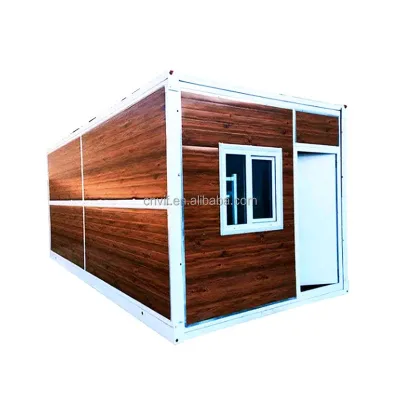
The term "Container Style Portable House" encompasses a diverse range of prefabricated structures designed for rapid deployment, including collapsible container houses, foldable houses, expandable units, and standard porta cabins. These products are engineered to function as temporary or semi-permanent accommodations, offices, and storage facilities. The primary distinction in this category lies in the structural frame and the method of transport and assembly. Buyers must recognize that while all units share a modular aesthetic, their internal engineering varies significantly based on the intended application, such as dormitories, warehouses, or luxury villas.
A critical technical observation for buyers is the dimensional standardization often found in this sector. Many units adhere to specific containerized dimensions to optimize logistics, such as 2.438m by 6.058m or 2.438m by 12.192m. These dimensions align with standard shipping container footprints, facilitating efficient stacking and transport. The structural integrity of these units is frequently defined by the use of low-alloy high-tensile structural steel, with specific grades like Q355 and Q235 being common. The connection methods are equally vital, often utilizing high-strength bolts to ensure the frame remains secure during transit and assembly. The structural frame itself may utilize H, C, or Z sectional steel, providing the necessary rigidity for multi-story configurations or heavy loads.
The exterior envelope is another area requiring careful specification. The roof and wall systems are often optional, allowing buyers to choose between steel sheets or insulated sandwich panels. This choice directly impacts thermal performance and durability. Insulation materials vary widely, with options including EPS, glasswool, rockwool, and PU. The selection of insulation is not merely a comfort issue but a compliance matter in many climates, affecting the unit's ability to maintain internal temperatures and resist moisture. Furthermore, the anti-corrosion treatment applied to the steel frame is a key longevity factor, with processes ranging from alkyd or epoxy painting to hot-dip galvanizing.
Compliance, Certification, and Safety Standards
When sourcing container style portable houses, verifying compliance with international and regional standards is non-negotiable. The market contains products that claim adherence to various certifications, and buyers must distinguish between marketing claims and verified documentation. Common standards cited in this sector include ISO, BV, and CE. However, the presence of a certification mark does not automatically guarantee that every unit in a specific batch meets the criteria; verification of the specific test reports and the scope of the certification is required.
Safety is paramount, particularly regarding environmental resistance. Buyers should demand evidence of seismic and wind resistance capacities. In the observed market data, certain units are rated for seismic resistance greater than Grade 8 and wind resistance exceeding 220km/h. These figures represent high-performance thresholds that are not universal across all portable housing options. A buyer sourcing a unit for a coastal region or a seismic zone must explicitly verify that the specific model, such as the SH121 or SH101, has been tested and certified to meet these specific environmental loads. Relying on general descriptions without requesting the underlying test data can lead to significant safety risks.
The structural frame's material composition also plays a role in compliance. The use of hot-rolled and welded steel, combined with specific steel grades, must be documented to ensure the unit meets the structural integrity requirements of the destination country's building codes. While some suppliers offer "turnkey projects" or customized designs, the base engineering must still align with recognized standards. Buyers should not assume that a "customized design" automatically implies full compliance with international safety norms unless explicitly stated in the contract and supported by third-party engineering certificates.
Cost Drivers and Financial Considerations
The pricing for container style portable houses is influenced by a complex interplay of factors, including material costs, customization levels, and logistical efficiency. The observed price range in the market spans from approximately 800 to 11,900 USD. This wide variance indicates that the base unit price is only one component of the total cost of ownership. A unit priced at the lower end of the spectrum may be a basic, non-insulated container house intended for short-term storage, whereas a unit at the higher end likely includes premium insulation, luxury finishes, and advanced safety features.
One of the most significant cost drivers is the transportation and packing efficiency. Units designed to be collapsible or foldable offer substantial savings in shipping volume. For instance, some models allow four units to be bundled into a single 20-foot container, drastically reducing freight costs per unit. In contrast, expandable or rigid container houses may require more space per unit, increasing the overall logistics expense. Buyers must calculate the total landed cost, which includes the unit price, freight, insurance, and any customs duties, rather than focusing solely on the ex-works price.
Customization is another major factor affecting cost. While many suppliers offer "customized" options, the extent of this customization varies. A standard dormitory unit may be relatively inexpensive, but adding specific features like luxury windows, specialized doors, or custom interior layouts will increase the price. The "turnkey" service model, which includes design, manufacturing, and installation, also commands a premium. Buyers should clearly define their requirements to avoid scope creep that can inflate the budget. Additionally, the Minimum Order Quantity (MOQ) can impact the unit price, with ranges observed from 1 to 16 units. Ordering at the higher end of the MOQ range may provide better economies of scale, but it requires a larger upfront capital outlay.
Typical Applications and Functional Requirements
The versatility of container style portable houses allows them to serve a wide array of applications, from industrial storage to residential living. The intended use dictates the necessary specifications. For example, units designated for "dormitories" require specific attention to occupancy limits, ventilation, and privacy. Some models are explicitly designed for two occupants, while others may be configured for larger groups. The structural frame and insulation must be robust enough to support human habitation over extended periods, ensuring thermal comfort and safety.
In industrial settings, these units are frequently used as "warehouses" or "temporary offices." In these scenarios, the focus shifts to durability, security, and ease of access. Features such as rolling up shutters or sliding doors are essential for logistics operations. The "warehouse" application may also require higher load-bearing capacities for shelving or equipment, necessitating a review of the floor structure and frame strength. The "villa" or "apartment" applications demand a higher level of finish, including aesthetic window and door options like aluminum alloy or plastic steel windows, and potentially more sophisticated roofing systems.
The "fast installation" feature is a critical functional requirement for many buyers. Some units are marketed as requiring only four hours to assemble on-site, which is a significant advantage for projects with tight deadlines. This speed is achieved through pre-fabricated components and simplified connection methods. However, buyers must verify that this assembly time is achievable under their specific site conditions, as ground preparation and crane availability can affect the actual installation timeline. The "eco-friendliness" and "recyclability" of the materials are also increasingly important for applications in environmentally sensitive areas or for companies with sustainability mandates.
Supplier Evaluation and Quality Control
Evaluating suppliers in the Container Style Portable House market requires a rigorous approach to due diligence. Buyers should prioritize suppliers who can provide transparent documentation regarding their manufacturing processes and quality control measures. The origin of the product is a key indicator of supply chain stability, with major production hubs located in cities like Shanghai and Qingdao in China. However, the location of the factory does not guarantee quality; it is the specific manufacturing standards and the supplier's track record that matter.
Quality control should be a continuous process, not a final inspection. Buyers should inquire about the specific steel grades used, such as Q355 or Q235, and verify the anti-corrosion treatments applied. The use of high-strength bolts and the precision of the welding processes are critical for the structural integrity of the unit. Suppliers should be able to provide detailed specifications for the structural frame, including the type of sectional steel used (H, C, or Z) and the connection methods. Additionally, the insulation material must be verified to ensure it meets the thermal and fire safety requirements of the project.
When assessing suppliers, buyers should look for those who offer "turnkey projects" or flexible service models that align with their specific needs. The ability to provide "customized" designs is a positive sign of technical capability, but it must be balanced with the supplier's ability to maintain consistency and quality across different projects. It is also essential to verify the supplier's capacity to handle the logistics of delivery, including the packing methods such as steel pallets or bundled containers. A supplier that can demonstrate a robust logistics network is better equipped to handle the complexities of international shipping and on-site delivery.
Long-Term Procurement and Lifecycle Management
Procuring container style portable houses is not just a one-time transaction but an investment in long-term asset management. Buyers should consider the lifecycle of the unit, including its durability, maintainability, and potential for relocation. The "easily movable" feature is a significant advantage, allowing units to be relocated as project needs change. However, the frequency of relocation can impact the structural integrity of the unit, particularly the connection points and the anti-corrosion coatings.
Maintenance is a critical aspect of long-term ownership. The choice of materials, such as the type of insulation and the finish of the steel frame, will determine the frequency and cost of maintenance. Units with hot-dip galvanizing may require less maintenance than those with standard epoxy painting, but the initial cost may be higher. Buyers should also consider the availability of spare parts, such as windows, doors, and ventilation systems, to ensure that the unit can be repaired quickly if damage occurs.
The environmental impact of the unit is another long-term consideration. The "eco-friendliness" and "recyclability" of the materials are increasingly important for compliance with sustainability regulations. Buyers should verify that the materials used are recyclable and that the manufacturing process minimizes waste. The "low cost" and "environmental protection" advantages of these units are often cited, but they must be substantiated by the actual material composition and end-of-life disposal options.
Finally, buyers should plan for the scalability of their procurement strategy. As projects expand, the ability to add more units or upgrade existing ones is crucial. The "flexibly combinable" nature of these structures allows for easy expansion, but the compatibility of different models and the standardization of components must be ensured. By focusing on these long-term factors, buyers can ensure that their investment in container style portable houses remains viable and cost-effective over the life of the project.
FAQs
How long does it take to assemble a portable house unit?
Just need 4 hours to assemble on unit for easy built models. This rapid installation applies to specific collapsible designs like the SH121, provided the site is prepared for the 4-hour assembly window.
What certifications do these container houses typically hold?
Products often carry ISO, BV, and CE certifications. Buyers should verify specific test reports as standards vary by model, with some units explicitly meeting ISO and BV requirements while others focus on ISO alone.
Which dimensions are standard for these portable structures?
Standard sizes include 2.438m by 6.058m or 2.438m by 12.192m. These dimensions align with shipping container footprints to facilitate efficient stacking and transport across various project sites.
Can these houses be customized for specific projects?
Yes, customization is available for most models including turnkey projects. Buyers can request specific designs, though the base engineering must still align with recognized safety standards for the destination region.
What is the minimum order quantity for these units?
The observed minimum order quantity ranges from 1 to 16 units. Ordering at the higher end of this range may provide better economies of scale, but requires a larger upfront capital outlay.
How many units can fit in one shipping container?
Four units can be bundled into one 20-foot container for cost-effective transportation. This packing efficiency significantly reduces freight costs per unit compared to rigid expandable models that require more space.
What steel grades are used for the structural frame?
Frames utilize low-alloy high-tensile structural steel in grades Q355 and Q235. These materials ensure structural integrity and are often combined with hot-rolled or welded steel for high-strength bolt connections.