Source Cosmetics Perfume Bottle for Daily Use, Gift, and Personal Care
Find and compare 30 glass bottle options for cosmetics and perfume applications. These products feature narrow mouth designs with pump sprayers or screw caps, available in transparent, green, black, and pink colors. Buyers can evaluate various capacities under 100ml and customization options for personal care and chemical uses.
Key considerations
Products List


Fragrance Bottle Perfume Glass Bottle Glass Cosmetic Bottle Round Shape
$0.10 - $0.15
MOQ: 10000 Pieces


Bottle Perfume Glass Perfume Empty Bottles Custom Perfume Bottles with Box
$0.15 - $0.48
MOQ: 10000 Pieces


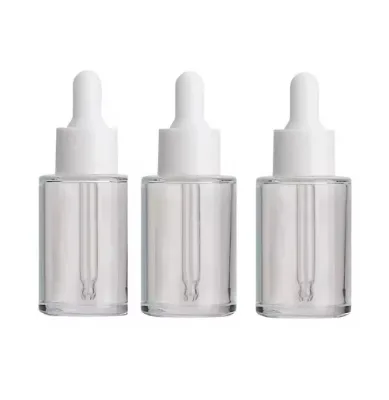


Perfume Crystal Bottle Glass Perfume Bottles Empty Perfume Spray Bottles
$0.25 - $0.39
MOQ: 10000 Pieces

Perfume Crystal Bottle Glass Perfume Bottles Empty Perfume Spray Bottles
$0.25 - $0.39
MOQ: 10000 Pieces

Perfume Crystal Bottle Glass Perfume Bottles Empty Perfume Spray Bottles
$0.25 - $0.39
MOQ: 10000 Pieces

Perfume Crystal Bottle Glass Perfume Bottles Empty Perfume Spray Bottles
$0.25 - $0.39
MOQ: 10000 Pieces

Perfume Crystal Bottle Glass Perfume Bottles Empty Perfume Spray Bottles
$0.25 - $0.39
MOQ: 10000 Pieces

Comprehensive Sourcing Guide
Cosmetics Perfume Bottle Sourcing Guide
Sourcing high-quality glass containers for cosmetics and perfumes requires a nuanced understanding of material properties, sealing mechanisms, and supply chain logistics. The market offers a diverse array of options, ranging from narrow-mouth square bottles with pump sprayers to cylindrical vessels equipped with droppers or screw caps. Buyers must navigate varying minimum order quantities (MOQs), which can range significantly from 500 to 20,000 pieces depending on the supplier and customization level. Understanding these baseline signals is crucial for aligning procurement strategies with production capacity and budget constraints.
This guide provides evidence-based procurement advice for sourcing glass bottles suitable for personal care, essential oils, and cosmetic formulations. It focuses on verifying technical specifications, ensuring compliance with safety standards, and managing commercial terms effectively. By adhering to the observed data and trusted industry knowledge, buyers can mitigate risks associated with material defects, sealing failures, and logistical delays. The following sections detail the critical steps for evaluating suppliers and selecting the right packaging solution for specific product needs.
Product Scope and Observed Listing Signals
The observed product landscape includes glass bottles designed for daily use, personal care, and gift applications. Common attributes include transparent, green, black, and pink color options, with shapes varying between square and cylinder designs. These bottles are typically made from melt glass, a standard material that offers durability and chemical resistance. The volume capacity generally falls below 100 ml, with specific standard sizes including 5ml, 10ml, 15ml, 20ml, 30ml, 50ml, 60ml, 80ml, and 100ml. This range allows for flexibility in packaging small-volume luxury items or concentrated formulations.
Sealing and closure types are critical differentiators in this category. Listings indicate the availability of pump sprayers for narrow-mouth bottles, screw caps for general use, and droppers for precise application. Some products are marketed as disposable, recyclable, or degradable, reflecting growing environmental concerns. Surface handling options such as screen printing are available for branding purposes. Buyers should note that while some listings accept OEM/ODM customization, others may have strict color MOQs, such as 20,000 pieces for custom colors, which can impact cost and inventory planning.
Technical Specifications to Verify
When evaluating glass bottles, buyers must verify the bottleneck type and sealing integrity. Narrow mouth bottles often require specific pump or dropper mechanisms to ensure leak-proof performance. For screw cap closures, the thread compatibility and torque resistance should be tested to prevent leakage during transit. The material composition, specifically melt glass, should be confirmed to ensure it meets the chemical resistance requirements for the intended cosmetic or perfume formulation. Glass thickness and weight distribution are also important factors that affect both product protection and shipping costs.
Capacity and volume accuracy are essential for regulatory compliance and customer satisfaction. Standard sizes such as 30ml, 60ml, 80ml, and 100ml should be verified against actual fill volumes to avoid underfilling or overfilling issues. Additionally, the presence or absence of handles is a key design consideration, with many cosmetic bottles being handle-less for aesthetic and ergonomic reasons. Buyers should request samples to physically inspect the fit between the bottle and its closure, ensuring that the pump or dropper operates smoothly and seals tightly.
Compliance and Safety Documentation
Cosmetics and perfume bottles must comply with relevant safety and quality standards to ensure they do not interact negatively with the product contents. Buyers should verify that the glass used is free from harmful substances such as lead or cadmium, which could leach into the formulation. Documentation should confirm that the bottles meet international standards for food-grade or cosmetic-grade packaging, although specific certification names should be validated with the supplier. The recyclability and degradability claims made by some suppliers should be supported by third-party testing or recognized environmental certifications.
Sealing components, including pumps, droppers, and caps, must also be evaluated for safety. These parts are often made from plastic or metal and should be compatible with the cosmetic formulation to prevent chemical reactions. Buyers should request material safety data sheets (MSDS) for all packaging components to ensure they are safe for use with personal care products. Additionally, compliance with local regulations regarding packaging waste and labeling requirements should be addressed to avoid legal issues in the target market.
Cost Drivers and Commercial Terms
The cost of glass bottles is influenced by several factors, including material quality, customization level, and order volume. Observed price ranges vary, with some listings indicating low unit costs for standard items, while custom colors or specialized closures may incur higher prices. Minimum order quantities (MOQs) play a significant role in pricing, with some suppliers requiring orders of 10,000 to 20,000 pieces to achieve competitive rates. Buyers should negotiate MOQs based on their production needs, considering the possibility of higher per-unit costs for smaller orders.
Shipping and packaging methods also impact the total cost of procurement. Products are typically packed in export-standard cartons and pallets, with delivery options including ship, air, and courier services. The choice of shipping method affects lead times and costs, with air freight being faster but more expensive than sea freight. Buyers should clarify delivery times, which can range from 25 days for standard orders, and factor in potential delays due to customs clearance or logistical issues. Sample availability should be confirmed, as samples may incur additional costs but are essential for quality verification.
Supplier Qualification and Quality Control
Selecting a reliable supplier is crucial for ensuring consistent quality and timely delivery. Buyers should verify the supplier’s origin, with many listings indicating production in China or specific regions like Ningbo. It is important to assess the supplier’s capability to handle OEM/ODM requests, including custom colors, printing, and packaging designs. Suppliers that offer customization should be evaluated based on their design support, prototyping speed, and ability to meet specific branding requirements.
Quality control processes should be clearly defined and agreed upon before placing orders. Buyers should request information on the supplier’s inspection procedures, including pre-production samples, in-line checks, and final random inspections. The use of export-standard packaging helps protect the glass bottles during transit, reducing the risk of breakage. Buyers should also establish clear communication channels for addressing any quality issues or discrepancies, ensuring that problems are resolved promptly and efficiently.
Long-Term Procurement Checks
Establishing a long-term procurement strategy involves regular monitoring of supplier performance and market trends. Buyers should track key performance indicators (KPIs) such as on-time delivery rates, defect rates, and responsiveness to issues. Consistent performance from suppliers allows for better planning and cost management, while recurring issues may necessitate supplier evaluation or replacement. Building strong relationships with reliable suppliers can lead to better pricing, priority production, and improved service levels.
Continuous improvement in packaging design and sustainability should be a priority for long-term success. Buyers should stay informed about emerging trends in eco-friendly materials and manufacturing processes, such as increased use of recycled glass or biodegradable components. Regularly reviewing product specifications and market demands ensures that the packaging remains relevant and competitive. By maintaining a proactive approach to supplier management and product development, buyers can secure a stable supply chain and enhance their brand’s market position.
FAQs
What glass types are available for cosmetics perfume bottles?
Melt glass is the primary material used for these containers, offering durability and clarity. Options include transparent, green, black, and pink colors to match brand aesthetics. The bottles are designed for daily use and personal care applications, ensuring a premium feel for cosmetic products.
Can I customize the shape and closure of the bottles?
Yes, OEM and ODM services are accepted for custom designs. Shapes include square and cylinder styles with narrow mouth or screw cap closures. Pump sprayers and droppers are available for different dispensing needs. Customization allows brands to create unique packaging that stands out in the market.
What are the standard volume capacities for these glass bottles?
Standard capacities range from 5ml to 100ml, including 10ml, 15ml, 20ml, 30ml, 50ml, 60ml, 80ml, and 100ml options. These sizes cater to various product types like perfumes, essential oils, and cosmetics. The <100ml volume range is ideal for travel-sized or premium concentrated formulations.
What is the minimum order quantity for bulk purchases?
MOQs vary by specification, typically ranging from 500 to 20,000 pieces. Some standard models require 10,000 or 20,000 PCS, while color-specific orders may have higher thresholds. Buyers should confirm exact MOQs based on the chosen model, color, and packaging requirements to ensure efficient production scheduling.
How are the bottles packaged and shipped internationally?
Products use export standard packaging, often in cartons or on pallets for stability. Shipping methods include sea, air, and courier services to suit different urgency levels. Delivery times are approximately 25 days, ensuring timely arrival for global supply chains while maintaining product integrity during transit.
Are samples available before placing a large order?
Samples are offered to help buyers evaluate quality and design before committing to bulk production. This allows for verification of color, shape, and functionality. Buyers can assess the glass quality and closure mechanism to ensure the product meets their specific cosmetic or perfume brand requirements.