Source Cosmetics Vial Label for Medicine, Packaging, and Garments
Compare 30 listings for Cosmetics Vial Label featuring waterproof, anti-counterfeit, and holographic options. Buyers can evaluate PVC, PP, PE, and paper materials with custom sizes, logos, and screen or offset printing for medicine, bottled beverages, and packaging applications.
Key considerations
Products List


Elegant Custom New Vial Labels, 10ml Vial Labels, 20ml Vial Hologram Label
$0.15 - $0.23
MOQ: 1000 Pieces


Custom Self-Adhesive Medicine & Cosmetic Drug 2ml 3ml 10ml Bottle Label
$0.15 - $0.23
MOQ: 5000 Pieces


Injection Oil Vial Label Injectable Vial Sticker with Blue Metallic Stamp
$0.30 - $0.50
MOQ: 1000 Pieces


Adhesive Label Sticker Printing Pharmaceutical Vial Label for Health Care
$0.02 - $0.05
MOQ: 3000 Pieces


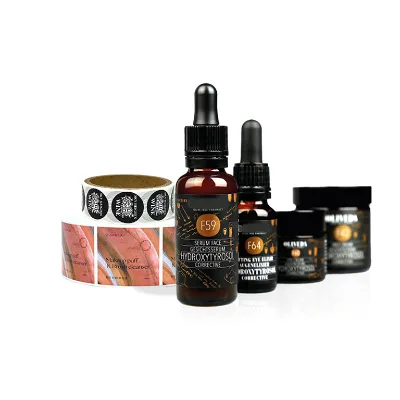


Comprehensive Sourcing Guide
Strategic Sourcing Guide for Cosmetics Vial Labels
The global cosmetics industry relies heavily on packaging integrity and brand differentiation, with labels serving as a critical interface between the product and the consumer. When sourcing cosmetics vial labels, buyers must navigate a complex landscape of material science, printing technologies, and regulatory compliance. The specific requirements for these labels often differ from general packaging due to the small surface area of vials, the potential exposure to moisture or oils, and the need for high-resolution branding. This guide provides a structured approach to evaluating suppliers and specifications based on observed market data and industry standards, ensuring that procurement decisions are grounded in verifiable facts rather than assumptions.
Material Selection and Physical Properties
The foundation of a successful label lies in the substrate material. For cosmetics vials, the material must adhere securely to curved surfaces while resisting environmental factors such as humidity, temperature fluctuations, and potential contact with cosmetic oils or alcohol-based formulations. Market observations indicate a diverse range of materials available for this application, including Polyvinyl Chloride (PVC), Polypropylene (PP), Polyethylene (PE), and Paper. Each material offers distinct advantages depending on the specific vial type and intended use.
PVC is frequently cited for its durability and flexibility, making it suitable for applications requiring a strong bond on curved glass or plastic vials. PP offers excellent chemical resistance and is often preferred for labels that may encounter harsh cleaning agents or oily substances. PE provides a softer, more conformable surface, which can be advantageous for irregular vial shapes. Conversely, paper labels are noted for their eco-friendly characteristics and are often used for outer packaging or vials that do not require high moisture resistance. The choice of material directly influences the label's performance in terms of adhesion, tear resistance, and print quality.
Buyers should verify the specific material composition of any supplier's offering, as the same product category may contain varying substrates. For instance, while some listings specify PVC, others may offer PP or PE options. The selection process should prioritize the chemical compatibility between the label material and the cosmetic formula inside the vial. A mismatch can lead to label degradation, adhesive failure, or contamination of the product.
Printing Technologies and Visual Customization
Visual presentation is paramount in the cosmetics sector, where brand identity is conveyed through color, texture, and design precision. The printing technology employed determines the level of detail, color accuracy, and durability of the final product. Common printing methods observed in the market include Screen Printing, Offset Printing, and Laser Printing. Screen printing is often utilized for bold, opaque colors and specific texture effects, while offset printing is favored for high-volume runs requiring detailed graphics and color consistency. Laser printing offers high precision for variable data, such as batch numbers or unique identifiers.
Customization is a central feature of the cosmetics label market. Buyers can typically expect options for custom colors, often specified in CYMK (Cyan, Yellow, Magenta, Black) formats to ensure accurate brand matching. The ability to incorporate custom logos is standard, with suppliers offering designs that range from simple text to complex holographic patterns. Some advanced solutions include anti-counterfeit features and barcode integration, which are essential for supply chain tracking and brand protection. The surface handling of the label, whether it is glossy, matte, or textured, also plays a role in the tactile experience of the consumer.
When evaluating printing capabilities, buyers should request samples to assess color fidelity and resolution. The "Single" printing page specification suggests that some suppliers may offer single-sided printing, which is typical for vial labels where the back is adhered to the container. However, for larger vials or specific design requirements, double-sided printing or specialized finishes might be necessary. The availability of free design services can also be a significant value-add for buyers lacking in-house graphic design resources.
Compliance, Standards, and Regulatory Adherence
Regulatory compliance is non-negotiable in the cosmetics industry, where labels must meet strict safety and environmental standards. The market data indicates that many suppliers adhere to ROHS (Restriction of Hazardous Substances) standards, which limit the use of specific hazardous materials in electronic and electrical equipment, but also often serve as a benchmark for general product safety in packaging. Additionally, some products are certified as "Eco-Friendly," suggesting the use of sustainable materials or non-toxic inks, which aligns with growing consumer demand for green beauty products.
Buyers must verify that the labels comply with the regulations of the target market. For example, the European Union has specific requirements for cosmetic labeling, including ingredient lists and safety warnings. In the United States, the FDA regulates cosmetic labeling, requiring specific disclosures. While the provided data mentions "ROHS" and "custom" standards, it is crucial for buyers to confirm that the supplier can provide documentation proving compliance with local regulations. The "custom" standard designation implies that suppliers may tailor their production to meet specific client requirements, but this does not automatically guarantee compliance with international laws without explicit verification.
Furthermore, the origin of the product, often cited as Dongguan, Guangdong, China, or generally China, should be considered in the context of trade regulations and import requirements. Buyers should ensure that the supplier can provide necessary certificates of origin and material safety data sheets (MSDS) to facilitate smooth customs clearance and regulatory approval.
Cost Drivers and Procurement Parameters
Understanding the cost structure of cosmetics vial labels is essential for budgeting and negotiation. The observed price range in the market spans from $0.01 to $0.50 per unit, a wide spectrum that reflects differences in material quality, printing complexity, and order volume. Several factors drive these costs, including the choice of material, the printing method, and the level of customization. Labels made from specialized materials like PVC or those featuring holographic or anti-counterfeit features will naturally command a higher price point compared to standard paper labels.
Order volume is another critical cost driver. The Minimum Order Quantity (MOQ) varies significantly, with observed ranges from 100 to 5,000 units. Some suppliers offer low MOQs of 100 pieces, which is beneficial for startups or small-batch production runs. Others may require higher volumes, such as 1,000 or 5,000 pieces, to achieve economies of scale. Buyers should align their order quantities with their production schedules and storage capabilities to avoid unnecessary inventory costs.
Packaging and logistics also contribute to the overall cost. Labels are typically packed in cartons or standard packages, and the weight of the shipment, often less than 0.5 kg for smaller orders, affects shipping fees. Buyers should consider the total landed cost, including shipping, duties, and handling fees, rather than focusing solely on the unit price. Negotiating favorable terms on packaging and shipping can yield significant savings over time.
Supplier Evaluation and Quality Assurance
Selecting the right supplier requires a rigorous evaluation process that goes beyond price and lead time. Buyers should assess the supplier's technical capabilities, production capacity, and quality control measures. The availability of customization options, such as custom sizes, shapes, and logos, indicates a flexible manufacturing process capable of meeting unique client needs. Suppliers that offer free design services and support for various printing technologies demonstrate a commitment to customer satisfaction.
Quality assurance is paramount to ensure that the labels perform as expected. Buyers should request samples to test adhesion, durability, and print quality. Key performance indicators to evaluate include the label's resistance to water, oil, and abrasion, as well as its ability to maintain color vibrancy over time. The "Waterproof" feature is a common specification, but buyers should verify the extent of this resistance through testing. Additionally, the presence of anti-counterfeit and barcode features should be validated to ensure they function correctly with standard scanning equipment.
Supplier reliability is another critical factor. Buyers should investigate the supplier's track record, including their ability to meet deadlines and handle large orders. The production location, often in Guangdong, China, suggests a robust manufacturing infrastructure, but buyers should confirm lead times and production capacity to avoid delays. Establishing a clear communication channel and setting expectations for quality standards can help mitigate risks and ensure a smooth procurement process.
Long-Term Procurement and Strategic Considerations
Sourcing cosmetics vial labels is not a one-time transaction but a strategic partnership that evolves with the brand's growth. Buyers should consider the long-term implications of their supplier choices, including scalability, sustainability, and innovation. As the brand expands, the ability to increase order volumes without compromising quality or lead times becomes crucial. Suppliers with flexible production lines and a history of scaling operations are better positioned to support long-term growth.
Sustainability is increasingly becoming a priority for cosmetics brands. Buyers should explore options for eco-friendly materials and processes, such as biodegradable substrates or water-based inks. The "Eco-Friendly" characteristic observed in some products suggests that suppliers are adapting to these trends. Aligning with suppliers who prioritize sustainability can enhance the brand's reputation and appeal to environmentally conscious consumers.
Finally, buyers should maintain a proactive approach to innovation. The label market is constantly evolving with new materials, printing technologies, and design trends. Staying informed about these developments and maintaining open communication with suppliers can provide a competitive edge. By focusing on technical specifications, compliance, cost efficiency, and supplier reliability, buyers can secure a steady supply of high-quality cosmetics vial labels that meet their brand's standards and market demands.
Summary of Key Specifications and Variations
To facilitate quick reference, the following table summarizes the key specifications and variations observed in the market for cosmetics vial labels. This overview highlights the diversity of options available and the importance of selecting the right combination of attributes for specific needs.
| Attribute | Observed Options | Notes for Buyers |
|---|---|---|
| Material | PVC, PP, PE, Paper, Plastic | Select based on chemical resistance and surface curvature. |
| Printing Type | Screen, Offset, Laser | Screen for bold colors; Offset for high detail; Laser for variable data. |
| Customization | Size, Color, Logo, Design | Most suppliers offer full customization; verify design capabilities. |
| Features | Waterproof, Anti-Counterfeit, Holographic, Barcode | Essential for durability and supply chain security. |
| Standard | ROHS, Custom, 30X69 | Verify specific regulatory compliance for target markets. |
| MOQ | 100 - 5,000 Pieces | Align with production volume and storage capacity. |
| Origin | Dongguan, Guangdong, China | Common manufacturing hub; verify lead times and logistics. |
| Packing | Carton, Standard Package | Check packaging integrity for shipping protection. |
By carefully analyzing these attributes and aligning them with specific project requirements, buyers can make informed decisions that optimize cost, quality, and performance. The diversity of options in the market allows for tailored solutions that meet the unique demands of the cosmetics industry, ensuring that labels not only protect the product but also enhance its market appeal.
FAQs
What materials are available for cosmetics vial labels?
Available materials include PVC, PP, PE, and Paper. PVC offers durability on curved surfaces, while PP provides chemical resistance. PE is conformable for irregular shapes, and Paper is an eco-friendly option for outer packaging or vials with low moisture exposure.
Which printing types are used for these adhesive stickers?
Common printing methods include Screen Printing, Offset Printing, and Laser Printing. Screen printing suits bold colors, offset printing ensures high-volume color consistency, and laser printing provides precision for variable data like batch numbers or unique identifiers on the label surface.
Can I get custom sizes and colors for these labels?
Yes, sizes and colors can be customized to meet specific needs. Buyers can select CYMK color formats for accurate brand matching and request specific dimensions, with options ranging from middle sizes to fully custom specifications depending on the vial requirements.
What certifications do these products typically meet?
Many products adhere to ROHS standards, which restrict hazardous substances. Some labels also carry an Eco-Friendly characteristic, indicating sustainable materials or non-toxic inks. Buyers should verify specific documentation for target market compliance beyond these general standards.
What is the minimum order quantity for these stickers?
Minimum order quantities range from 100 to 5000 pieces depending on the supplier. Some vendors offer low MOQs of 100 units for small batches, while others require higher volumes like 1000 or 5000 pieces to achieve economies of scale and lower unit costs.
Are these labels waterproof and suitable for cosmetics?
Yes, many labels feature waterproof properties suitable for cosmetic applications. They are designed to resist humidity, temperature fluctuations, and potential contact with cosmetic oils or alcohol-based formulations, ensuring adhesion remains secure on glass or plastic vials.
Where are these labels manufactured and what is the origin?
Products originate from locations such as Dongguan, Guangdong, China, or generally China. Buyers should confirm the specific production location to understand trade regulations and import requirements, ensuring the supplier can provide necessary certificates of origin for customs clearance.