Source Croissant Dough Rolling Machine for Bread, Pizza, and Cake
Find and compare 30 Croissant Dough Rolling Machine options from Chinese manufacturers. Evaluate specifications like power, weight, and roller spacing for bread, pizza, and biscuit production lines. These electric units feature stainless steel construction and adjustable settings to meet diverse bakery needs efficiently.
Key considerations
Products List
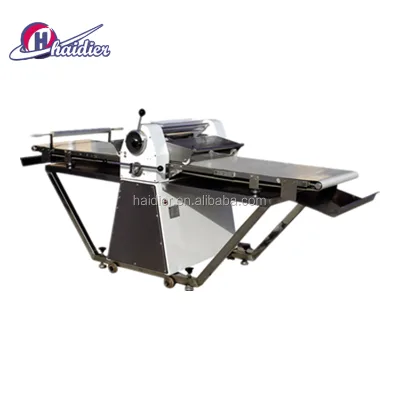


Commercial Bakery Pizza Croissant Bread Dough Rolling Machine Pastry Rolling Machine
$1800.00 - $2000.00
MOQ: 1 Pieces


Paris Croissant Roller Machine Croissant Dough Recipe Dough Cutter and Roller
$4000.00 - $6000.00
MOQ: 1 Pieces


Table Top Dough Sheeter Rolling Pastry Croissant Pizza Dough Roller Machine
$1800.00 - $2000.00
MOQ: 1 Pieces


Automatic Croissant Rolling Forming Croissant Roller Maker Machine Price
$3500.00 - $4500.00
MOQ: 1 Pieces

380mm 520mm Croissant Machine Dough Sheeter Automatic Table Top Dough Sheeter Roller Electric
$1181.00 - $1396.00
MOQ: 5 Pieces

Factory Price Manual Control Pizza Dough Press Machine Dough Rolling Machine
$153.00 - $169.00
MOQ: 5 Pieces


Comprehensive Sourcing Guide
Croissant Dough Rolling Machine Sourcing Guide
Selecting the right Croissant Dough Rolling Machine requires balancing throughput capacity with precise thickness control to maintain laminated structure integrity. Buyers must evaluate whether the equipment supports specific dough types, such as croissant or egg tart dough, while ensuring the roller spacing adjustments align with production recipes. The decision hinges on verifying that the machine’s working width and power source match the facility’s electrical infrastructure and spatial constraints.
Procurement teams should also consider customization options and after-sales support availability, as these factors significantly impact long-term operational efficiency. Machines with timing devices offer automated consistency, whereas manual controls may require more operator intervention. Understanding the material composition, typically stainless steel for hygiene, and the packaging method ensures safe transit and reduces the risk of damage upon arrival from manufacturing hubs in China.
Product Scope and Observed Listing Signals
The current market listings reveal a diverse range of dough sheeters tailored for bread, pizza, cake, and biscuit production, with specific models designed for croissant dough processing. Observed product models include the HDR-600, HT-YM350, BG, BKQ-650, NKR-520E, NKR-650AZ, Q-520E, and SP-500, each presenting distinct capabilities. For instance, the BKQ-520z is explicitly identified as a dough sheeter, while the BKQ650b-Zd serves as a croissant dough sheeter, and the BKQ-540ld functions as a croissant or egg tart cutter, indicating specialized roles within the product line.
Listing signals indicate that power sources are electric, with power ratings varying from 0.75kw to 2.2kw, reflecting differences in motor strength and processing speed. Voltage requirements are predominantly 380V, which is standard for industrial machinery in many regions, necessitating careful verification of site electrical compatibility. The observed price range spans from 153 to 15000 USD, suggesting a wide spectrum of quality, capacity, and feature sets, while minimum order quantities (MOQ) are generally low, ranging from 1 to 5 units, facilitating easier entry for smaller bakeries or pilot testing.
Technical Specifications to Verify
Buyers must rigorously verify the working width and roller spacing capabilities to ensure the machine meets specific dough thickness requirements. For example, the NKR-520E offers a working width of 630mm with a roller spacing of 1-50mm, while the NKR-650AZ provides a wider 500mm working width with a spacing of 0.3-50mm. The Q-520E model features a dough sheeter axis width of 520mm and adjustable thickness from 1 to 40mm, highlighting the importance of matching these dimensions to the intended product size and desired lamination layers.
Physical dimensions and weight are critical for factory layout planning and floor load assessment. The HT-YM350 model measures 13306101060mm and weighs 230kg, whereas the NKR-520E is significantly larger at 26809451270mm. The BG model has a standard of 96*220, which may refer to a different metric or component, requiring clarification. Additionally, the presence or absence of a timing device, as seen in the HT-YM350 (with) versus the BG (without), affects automation levels and operational workflow, influencing the choice based on labor availability and production speed needs.
Compliance and Safety Documentation
Ensuring that the machinery meets international safety and quality standards is paramount for risk mitigation and regulatory compliance. Listings indicate that some models come with CE, SGS, and ISO certifications, which are essential for verifying that the equipment adheres to European and global safety directives. Buyers should request valid certification documents directly from the supplier to confirm that the specific unit purchased has undergone the necessary testing and inspection processes, rather than relying on general claims.
Documentation should also cover electrical safety and material compliance, particularly since the machines are constructed from stainless steel, a material preferred for its hygiene and durability in food processing environments. The origin of the products, primarily from Henan and Guangzhou in China, means that buyers must ensure that the export documentation aligns with import regulations in their respective countries. Verifying that the electrical components are rated for the local voltage and frequency prevents operational hazards and ensures seamless integration into existing production lines.
Cost Drivers and Commercial Terms
The total cost of ownership is influenced by several factors beyond the initial purchase price, including power consumption, maintenance requirements, and spare parts availability. Models with higher power ratings, such as the 2.2kw HDR-600, may consume more energy but offer faster processing speeds, impacting long-term operational costs. Buyers should analyze the energy efficiency of the motor and the potential for downtime due to mechanical wear, especially in high-volume production environments where continuous operation is required.
Commercial terms such as packaging and shipping logistics also play a significant role in the final cost. Products are packed in fumigation-free wooden cases, wooden boxes, or plywood cases, which affect shipping volume and protection during transit. The origin locations in China mean that freight costs and import duties must be calculated accurately. Additionally, the availability of customization services can add to the initial cost but may provide better alignment with specific production needs, reducing the need for post-purchase modifications or additional equipment.
Supplier Qualification and Quality Control
Evaluating supplier qualifications is crucial to ensure reliable product quality and consistent performance. Buyers should verify the supplier’s manufacturing capabilities, quality control processes, and track record in producing dough sheeters. The availability of engineers for overseas service, as mentioned in some listings, is a strong indicator of a supplier’s commitment to after-sales support, which is vital for troubleshooting and maintenance. This service capability can significantly reduce downtime and extend the lifespan of the machinery.
Quality control checks should include inspecting the stainless steel construction for durability and hygiene, as well as testing the roller spacing accuracy and motor performance. Buyers may request sample videos or factory audits to assess the build quality and operational smoothness of the machines. Given the variation in models and specifications, it is essential to confirm that the specific unit ordered matches the agreed-upon technical parameters, including power, weight, and dimensions, to avoid discrepancies upon delivery.
Long-Term Procurement Checks
Long-term procurement success depends on establishing a robust relationship with the supplier for ongoing support and potential future purchases. Buyers should negotiate clear terms for warranty coverage, spare parts supply, and technical assistance to ensure minimal disruption during the machine’s operational life. The availability of customized solutions can also be leveraged for future upgrades or expansions, allowing the production line to adapt to changing market demands or increased throughput requirements.
Regular maintenance and periodic inspections are necessary to maintain optimal performance and safety standards. Buyers should develop a maintenance schedule that includes cleaning, lubrication, and component checks, guided by the supplier’s recommendations. Keeping detailed records of machine performance, repairs, and part replacements can help in predicting maintenance needs and planning budget allocations. By focusing on these long-term aspects, buyers can maximize the return on investment and ensure consistent quality in their baked goods production.
FAQs
Can I get a customized Croissant Dough Rolling Machine?
Yes, customization is available for specific models like the HDR-600. However, some units such as the BKQ-650 are listed as non-customized. Buyers should verify the customization status for each specific model number before placing an order to ensure it meets their unique production requirements.
What voltage does the electric dough sheeter require?
The electric dough sheeter operates on a standard 380V power source. This voltage requirement applies to the heavy-duty units like the HDR-600 model. Ensure your facility has the correct electrical infrastructure to support this power input before installation to prevent equipment damage or operational failures.
Which models include a timing device for automation?
Some models come equipped with a timing device for automated control, while others do not. For instance, one variant lists a timing device, whereas another model explicitly states it is without one. Buyers must check the specific product attributes for each model number to confirm the presence of this feature.
What is the maximum capacity per batch for these machines?
The capacity for these machines is typically less than or equal to 200kg per time. This limit applies to the specific unit described with a 230kg weight. Always confirm the exact capacity for the specific model you intend to purchase to ensure it matches your production volume needs.
How is the machine packed for international shipping?
Packaging varies by model, with options including fumigation-free wooden cases, wooden boxes, or plywood cases. For example, the HT-YM350 uses a fumigation-free wooden case, while the BKQ-650 uses plywood. Verify the specific packing method for your selected model to ensure safe transport and compliance with import regulations.
Are engineers available for overseas service and maintenance?
Yes, after-sales service includes engineers available to service machinery overseas. This support is provided for the equipment listed with this specific attribute. Buyers should confirm the availability of these engineers for their specific region before finalizing the purchase to ensure long-term operational support.
What certifications do the machines hold for safety?
The machines hold certifications including CE, SGS, and ISO standards. These certifications apply to the models listed with these specific attributes. Buyers should request the specific certificate documents for the model they are purchasing to verify compliance with international safety and quality standards.