Source Crystal Glass Terrarium Kit for Home, Desktop, and Hanging Decor
Source Crystal Glass Terrarium Kit options from 30 verified listings. Compare modern designs, custom sizes, and eco-friendly materials suitable for indoor decoration, desktop displays, and hanging installations. Evaluate specifications like glass thickness and package dimensions to find the right fit for your project.
Key considerations
Products List
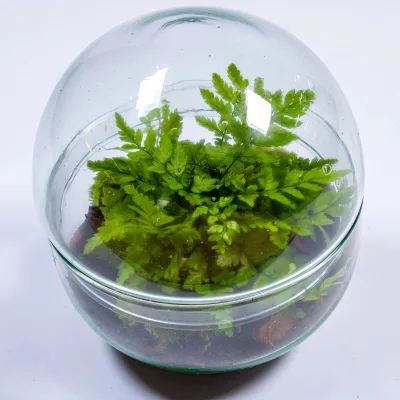
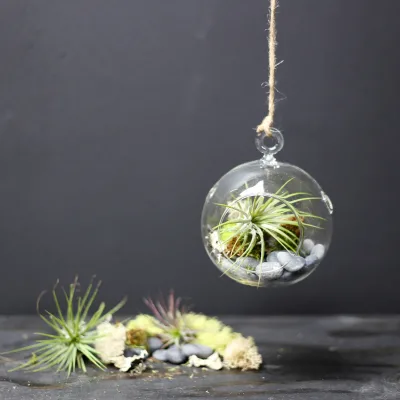
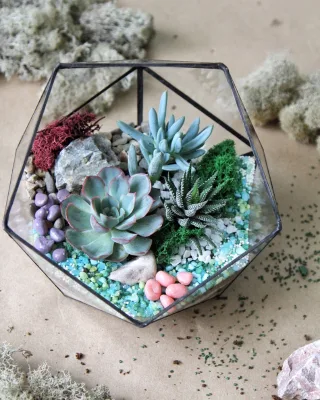
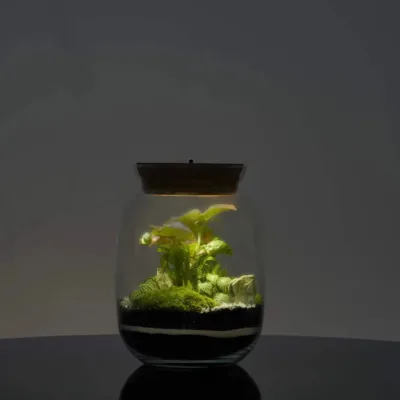
A Mini Orb Glass Terrarium Kit That Suitable Beginners Mossarium and Have Glass
$7.95 - $11.91
MOQ: 1 pieces




Comprehensive Sourcing Guide
Crystal Glass Terrarium Kit Sourcing Guide
Sourcing crystal glass terrarium kits requires a nuanced understanding of both the aesthetic demands of modern interior design and the logistical realities of importing fragile, heavy glass products. Buyers must navigate a market where "crystal" often denotes high-clarity, low-iron glass rather than leaded crystal, impacting both cost and durability. The primary value proposition lies in the DIY nature of these kits, which allow for customizable indoor landscaping using artificial or live plants. This versatility makes them suitable for a wide range of applications, from residential home decor to commercial spaces like hotels, shopping malls, and plant engineering projects. Understanding the distinction between standard glass and premium crystal-grade materials is essential for aligning product selection with target market expectations and price points.
The procurement process involves balancing aesthetic customization with supply chain efficiency. Many suppliers offer OEM services, allowing buyers to apply custom logos and accept various packaging configurations, which is critical for brand differentiation in competitive retail environments. However, the fragility of glass necessitates rigorous packaging standards, often involving wooden boxes or reinforced cartons to prevent breakage during transit. Buyers should also consider the weight implications, as single gross weights can vary significantly from under one kilogram for small desktop units to over one hundred kilograms for large floor-standing installations. This variance directly impacts shipping costs and handling requirements, making accurate weight verification a crucial step in initial supplier negotiations and freight planning.
Product Scope and Observed Listing Signals
The observed market signals indicate a diverse product range with significant variation in specifications, suggesting that buyers must carefully filter listings to find products that match their specific operational needs. Listings reveal a wide price range, typically between two and ninety-six point five USD, reflecting differences in glass thickness, size, and finishing quality. The minimum order quantities (MOQ) also vary substantially, ranging from single items for sample testing to three thousand pieces for bulk industrial orders. Some suppliers explicitly state an MOQ of one thousand pieces, which may be a barrier for smaller retailers or startups. Buyers should interpret these signals as indicators of market segmentation, where low-MOQ suppliers cater to niche or trial markets, while high-MOQ suppliers target large-scale distributors and commercial fit-out projects.
Product attributes observed in listings highlight key differentiators such as style, material, and intended use. The dominant style is modern, with applications spanning home decoration, floor placement, hanging installations, and desktop displays. Materials are primarily glass, though some listings mention fiber glass, which may indicate composite structures or misleading descriptions that require verification. Colors range from clear to glass-toned finishes, with some products featuring black frames or matte finishes. The usage is predominantly indoor, with specific mentions of suitability for artificial flowers, green plants, and even fish, implying that some units may function as aquariums. Buyers must cross-reference these attributes with their own product requirements, as the term "terrarium kit" can encompass everything from simple decorative jars to complex, multi-component structural installations.
Technical Specifications to Verify
Verifying technical specifications is paramount to ensuring product quality and suitability for the end-use environment. Buyers should request detailed dimensional data, as observed single package sizes vary from nine by nine by twelve centimeters to thirty-eight by thirty-eight by fifty-four centimeters. These dimensions directly affect storage capacity and shipping volume, influencing overall landed costs. Additionally, glass thickness is a critical quality indicator, with observed ranges spanning from three to nineteen millimeters. Thicker glass offers greater durability and safety, particularly for larger floor-standing units or those intended for public spaces, while thinner glass may be suitable for lightweight desktop decor. Buyers must confirm the exact thickness for each SKU to avoid receiving products that are too fragile for their intended application.
Model numbers and structural designs also require close scrutiny to prevent miscommunication with suppliers. Observed model numbers such as terrarium08, terrarium05, and 0705-1-14 suggest a complex catalog where similar-looking items may have different structural properties. Buyers should verify the shape, with options including round shapes and tank-style designs, as well as the finishing process, which can be matte or uncoated. The presence of custom size acceptance is a valuable feature for specialized projects, but it often entails longer lead times and higher costs. Furthermore, the weight of the product, ranging from zero point nine kilograms to one hundred kilograms, must be accurately declared for customs and logistics planning. Misdeclaring weight can lead to significant penalties and shipping delays, so precise specification verification is essential.
Compliance and Safety Documentation
Compliance and safety documentation are non-negotiable for importing glass products, particularly those intended for residential or commercial use. Buyers must ensure that suppliers provide relevant certifications, such as ISO9001 for quality management systems and CCC for product conformity, which are observed in some listings. These certifications indicate a baseline level of manufacturing discipline and quality control, reducing the risk of defective products. However, buyers should not assume that all suppliers hold these certifications; verification through official databases or direct requests for certificate copies is necessary. Additionally, for products that may come into contact with water or fish, buyers should inquire about the chemical safety of the glass and any coatings, ensuring they are free from harmful substances like lead or cadmium.
Packaging compliance is another critical area that requires attention to meet international shipping standards. The observed packaging options, including wooden boxes, cartons, and customized packages, must comply with international phytosanitary regulations if wood is used. Buyers should verify that wooden packaging is ISPM15 compliant to avoid customs holds. Furthermore, the fragility of glass necessitates robust packaging solutions that can withstand stacking and handling. Buyers should request packaging test results or detailed packaging diagrams to ensure that the products are adequately protected. Failure to meet packaging standards can result in high breakage rates, leading to customer complaints and financial losses. Therefore, integrating compliance checks into the supplier evaluation process is essential for maintaining product integrity and regulatory adherence.
Cost Drivers and Commercial Terms
Understanding the cost drivers associated with crystal glass terrarium kits is essential for accurate budgeting and margin calculation. The primary cost drivers include the raw material quality, glass thickness, and the complexity of the design. Thicker glass and custom shapes typically incur higher production costs, while standard sizes and thinner glass offer more competitive pricing. The finishing process, such as matte or uncoated surfaces, also affects the final price. Buyers should request detailed cost breakdowns to understand how these factors influence the unit price. Additionally, the MOQ plays a significant role in pricing, with higher volumes generally resulting in lower unit costs. However, buyers must balance cost savings with inventory holding costs, especially for large, heavy items that require significant storage space.
Commercial terms and payment conditions are equally important in shaping the overall procurement strategy. Buyers should negotiate clear terms regarding shipping responsibilities, such as FOB or CIF, to determine who bears the risk and cost of transit. Given the fragility of glass, insurance coverage is highly recommended, and buyers should clarify who is responsible for obtaining it. Payment terms, such as T/T or L/C, should be aligned with the supplier's reliability and the order size. For new suppliers, smaller initial orders with secure payment methods are advisable to mitigate risk. Additionally, buyers should inquire about lead times, as custom orders and large volumes may require extended production periods. Clear communication of commercial terms helps prevent disputes and ensures a smooth transaction process.
Supplier Qualification and Quality Control
Supplier qualification is a critical step in mitigating risks associated with sourcing glass products. Buyers should conduct thorough due diligence, including verifying business licenses, production capabilities, and past performance. Observing the place of origin, such as Fujian or Guangdong in China, can provide insights into the supplier's specialization and supply chain efficiency. Buyers should also assess the supplier's ability to handle customization, as many listings offer OEM services and customized logos. This capability is crucial for brands seeking to differentiate their products in the market. Additionally, buyers should request samples to evaluate the quality of the glass, the precision of the cuts, and the overall finish. Sample evaluation helps identify potential issues before committing to large orders.
Quality control measures must be robust to ensure consistent product quality and minimize defects. Buyers should implement a comprehensive QC plan that includes pre-production inspections, during-production checks, and pre-shipment inspections. For glass products, visual inspections for cracks, bubbles, and scratches are essential, as well as dimensional checks to ensure compliance with specifications. Buyers should also verify the packaging quality to prevent damage during transit. Establishing clear quality standards and acceptance criteria with the supplier is crucial for maintaining consistency. Regular communication and feedback loops help address issues promptly and improve the overall quality of the products. By prioritizing supplier qualification and rigorous quality control, buyers can build a reliable supply chain and deliver high-quality products to their customers.
Long-Term Procurement Checks
Long-term procurement checks are necessary to maintain supplier performance and adapt to market changes. Buyers should conduct regular performance reviews, assessing factors such as on-time delivery, product quality, and responsiveness to issues. Tracking key performance indicators (KPIs) helps identify trends and areas for improvement. Buyers should also monitor market trends and competitor offerings to ensure their product selection remains relevant and competitive. This includes staying informed about new designs, materials, and technologies in the terrarium and glass decor market. Regularly updating product specifications and requirements helps align the supply chain with evolving customer demands. Additionally, buyers should explore opportunities for cost optimization through volume consolidation or alternative sourcing strategies.
Building a resilient supply chain involves diversifying suppliers and developing strong relationships with key partners. Buyers should avoid over-reliance on a single supplier, as this can increase risk in case of disruptions. Establishing backup suppliers for critical components or products ensures continuity of supply. Regular communication and collaboration with suppliers foster trust and facilitate problem-solving. Buyers should also invest in relationship management, recognizing the efforts of suppliers and providing constructive feedback. This approach encourages suppliers to prioritize the buyer's orders and maintain high standards. By implementing long-term procurement checks and fostering strong supplier relationships, buyers can create a sustainable and efficient sourcing strategy that supports business growth and customer satisfaction.
FAQs
What materials are used for crystal glass terrarium kits?
The kits primarily use clear glass for the main structure, offering transparency and durability for indoor decoration. Some variations incorporate fibre glass components for specific structural needs. The finishing is typically not coated or matte, ensuring a clean aesthetic. These materials are selected for their eco-friendly properties and suitability for holding artificial flowers or green plants in modern home settings.
Can I customize the logo on the glass terrarium?
Yes, customized logos are acceptable for these glass terrarium kits. Buyers can request specific branding to be applied to the product. This customization option is available for both the PF brand and OEM orders. It allows businesses to tailor the appearance for retail or promotional purposes. The customization process supports various design requirements while maintaining the product's structural integrity and modern style.
What are the standard package dimensions for the terrarium?
Standard package sizes vary by model, including 9x9x12 cm, 13x13x13 cm, and 25x25x25 cm. Larger models may have dimensions like 38x38x54 cm. The single gross weight ranges from 0.9 kg to 2.7 kg for smaller units. Packaging can be customized, often using wooden boxes or cartons. These dimensions ensure safe transport and storage for desktop, floor, or hanging applications.
Which certifications apply to the glass terrarium production?
The production process adheres to ISO9001 and CCC standards. These certifications ensure quality management and safety compliance for the glass terrarium kits. They are particularly relevant for products originating from Guangdong and Fujian in China. Buyers can rely on these standards for regulatory compliance in various markets. The certifications cover manufacturing processes, material safety, and overall product consistency for indoor decoration use.
What is the minimum order quantity for these kits?
The minimum order quantity is 1000 pieces for standard orders. However, some listings indicate an MOQ range of 1 to 3000 pieces depending on the specific model. Customized orders may have different thresholds. Buyers should verify the exact MOQ with the supplier based on their chosen specifications. This flexibility allows for both bulk procurement and smaller trial orders for testing market response.
How thick is the glass used in the terrarium?
The glass thickness ranges from 3mm to 19mm, depending on the specific model and size. Thicker glass is used for larger structures to ensure stability and safety. This variation allows for different design requirements, from delicate desktop pieces to robust floor-standing units. The thickness directly impacts the weight and durability of the final product. Buyers can select the appropriate thickness based on their intended application and aesthetic preferences.