Source Curved RGB Light Gaming Monitor for Indoor, Computer, and Surveillance
Find and compare a curated selection of 30 curved RGB light gaming monitors featuring TFT and IPS panels with HDMI and DVI interfaces. Buyers can evaluate specifications including 1920x1080 to 3840x2160 resolutions, response times from 2ms to 5ms, and LED backlight displays for indoor, computer, and advertising applications.
Key considerations
Products List


35 Inch 4K 120Hz 200Hz Optional Curved LED Display Computer Gaming Monitor
$248.00 - $253.00
MOQ: 1000 Pieces


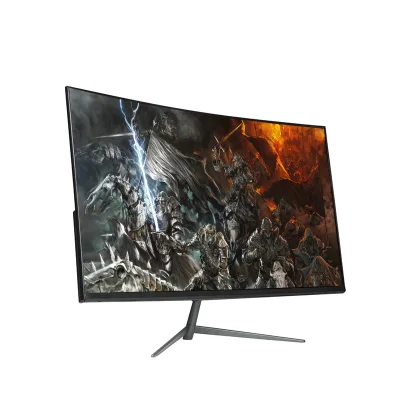
144hz 180hz 4K Gaming Curved Monitor 24 Inch 144hz Gaming Monitor with DP
$185.00 - $198.00
MOQ: 10 pieces


Comprehensive Sourcing Guide
Strategic Sourcing Guide for Curved RGB Light Gaming Monitors
Understanding the Curved RGB Gaming Monitor Landscape
The market for curved RGB light gaming monitors has evolved into a specialized segment where visual immersion and aesthetic customization converge. For B2B buyers, sourcing these units requires a nuanced understanding of how display geometry, backlighting technology, and interface standards interact. The core appeal lies in the combination of a curved panel, which reduces eye strain and enhances peripheral vision, and integrated RGB lighting, which allows for dynamic environmental synchronization. When evaluating potential inventory, buyers must distinguish between products that offer these features as standard versus those where they are optional or model-specific. The observed product data indicates a diverse range of specifications, from standard 27-inch and 32-inch models to larger industrial-grade units, suggesting that a single "curved RGB" definition may not apply uniformly across all suppliers. Buyers should approach the search with the understanding that "curved" and "RGB" are distinct attributes that may appear in varying combinations depending on the specific model series, such as the 32CG or 27GF models noted in available data.
Technical Specifications and Panel Architecture
When analyzing the technical core of a curved gaming monitor, the panel type and resolution are the primary determinants of performance. The supplied data highlights several critical panel technologies, including TFT and IPS types, which offer different trade-offs in viewing angles and color accuracy. For gaming applications, the response time is a vital metric; observed data points to response times ranging from 2ms to 5ms. A 2ms response time, often paired with 1920x1080 or 2560x1440 resolutions, is indicative of high-performance gaming units designed to minimize motion blur. In contrast, 5ms response times may be found in larger or more cost-effective models. The aspect ratio is consistently observed as 16:9, which is the industry standard for widescreen formats.
Interface connectivity is another crucial technical consideration. The data confirms the presence of both HDMI and DVI interfaces, ensuring compatibility with a wide range of gaming consoles and PC graphics cards. For buyers seeking high-end performance, verifying the presence of HDMI 2.0 or DisplayPort is essential, though the specific version must be confirmed with the supplier. Refresh rates are also a key differentiator; while some units in the dataset are listed with 60Hz, gaming monitors typically require higher refresh rates (144Hz or 240Hz) to be considered truly competitive. The "RGB light" aspect often implies a specific controller or software integration, which may not be explicitly detailed in basic spec sheets but is a defining feature of the product category. Buyers must verify that the RGB lighting is not merely a static backlight but offers programmable modes for synchronization with game events.
Compliance, Certification, and Safety Standards
In the B2B procurement of electronic displays, compliance with international safety and environmental standards is non-negotiable. While the provided data does not list specific certification bodies like UL, CE, or FCC, buyers must treat these as mandatory verification points before placing orders. The origin of the products is noted as China, a major manufacturing hub that produces a vast array of electronics. However, the location of manufacture does not guarantee compliance; every batch must be verified against the destination market's regulatory requirements. For instance, if the target market is the European Union, CE marking is required to demonstrate conformity with health, safety, and environmental protection standards. Similarly, products destined for North America often require UL listing or FCC certification for electromagnetic interference.
Buyers should also investigate the environmental standards associated with the manufacturing process. The data mentions "Foam Carton" and "Form Carton" as packing materials, which raises questions about sustainability and recyclability. Modern procurement strategies increasingly favor suppliers who adhere to RoHS (Restriction of Hazardous Substances) and WEEE (Waste Electrical and Electronic Equipment) directives. These standards ensure that the monitors do not contain restricted hazardous materials and that the packaging is designed for efficient recycling. Additionally, the power consumption specifications, such as the 50W rating observed in one model, should be cross-referenced with energy efficiency standards like Energy Star or regional equivalents. Failure to verify these certifications can lead to customs delays, legal liabilities, and reputational damage in the B2B sector.
Cost Drivers and Pricing Dynamics
The pricing of curved RGB gaming monitors is influenced by a complex matrix of factors, including panel size, resolution, refresh rate, and the sophistication of the RGB lighting system. The observed price range in the market data spans from $38 to $960, a significant variance that reflects the diversity of the product pool. The lower end of this spectrum likely corresponds to smaller screens, lower resolutions, or models with basic lighting features. Conversely, the higher end likely represents large-format displays, 4K resolutions, or units with advanced, programmable RGB ecosystems.
Minimum Order Quantity (MOQ) is another critical cost driver. The data indicates an MOQ range of 1 to 1000 units. Buyers seeking to test the market or fulfill small-scale projects may find suppliers with an MOQ of 1, but these often come with a higher per-unit cost. For large-scale distribution or corporate deployments, negotiating an MOQ closer to 1000 can significantly reduce the unit price. The "Customization: Available" attribute suggests that buyers can influence costs through branding and packaging choices. OEM branding, as noted in the data, allows for white-labeling, which can add value but may also incur setup fees or higher MOQs. Additionally, the panel brand, such as BOE, Innolux, AUO, or Panda, can impact the final price, as top-tier panels command a premium over generic alternatives.
Typical Applications and Use Cases
Curved RGB gaming monitors serve a variety of applications beyond traditional home gaming. The data explicitly lists applications including "Indoor," "Computer," "Advertising," and "Surveillance." This versatility makes them suitable for B2B clients in the gaming cafe sector, corporate training environments, and digital signage installations. In gaming cafes, the immersive nature of curved screens combined with RGB lighting creates a high-impact visual environment that attracts customers. For advertising, the "Support TV Function" and "Touch Display" features observed in some models suggest potential use in interactive kiosks or digital billboards, although the "curved" aspect is less common in outdoor advertising due to visibility challenges.
The "Big-Screen Project" application indicates that these monitors can be used in control rooms or command centers where multiple units are tiled together. The "Surveillance" application suggests utility in security operations centers, where the wide viewing angle of a curved screen aids in monitoring multiple camera feeds simultaneously. However, buyers must be cautious when applying these monitors to outdoor environments. While one data point mentions "Outdoor" as an application, the typical specifications for indoor monitors (such as 250-300 nits brightness) may not be sufficient for direct sunlight visibility. Buyers should verify the Maximum Brightness and contrast ratios, such as the 3000:1 or 5000000:1 figures noted, to ensure suitability for the intended environment.
Supplier Evaluation and Quality Assurance
Evaluating suppliers for curved RGB gaming monitors requires a rigorous assessment of their manufacturing capabilities and quality control processes. The data indicates that the "Panel Brand" can vary, including options like BOE, Innolux, AUO, and Panda. Buyers should prioritize suppliers who can guarantee the use of high-quality panels, as the panel is the most expensive and critical component of the monitor. The "Type" attribute, distinguishing between TFT and IPS, is also a key factor; IPS panels generally offer better color accuracy and viewing angles, which are desirable for gaming and professional applications.
Quality control should extend beyond the panel to the assembly and finishing of the unit. The "Machine Weight" of 22kg for a 43cm unit suggests a robust build, but buyers must verify the structural integrity of the stand and the curvature consistency of the panel. The "prod_packing" details, such as "One Piece in Color Box Then 5 Pieces in Master Box," highlight the importance of protective packaging to prevent damage during transit. Buyers should request samples to test for dead pixels, color uniformity, and the functionality of the RGB lighting system. Furthermore, the "OSD Language: Multi-Language OSD Optional" feature indicates that the user interface can be customized, which is a sign of a mature manufacturing process capable of meeting diverse regional requirements.
Long-Term Procurement and Supply Chain Considerations
Sourcing curved RGB gaming monitors is not just a one-time transaction but a long-term partnership that requires careful supply chain management. The "Customization: Available" attribute offers flexibility for branding and product differentiation, but it also introduces complexity in the supply chain. Buyers must ensure that the supplier has the capacity to maintain consistent customization over time, especially if the product is part of a larger ecosystem. The "prod_standard" of 32 inch or 27 inch suggests that standard sizes are readily available, but non-standard sizes may require longer lead times.
Lead times and production capacity are critical factors for B2B buyers. While the data does not specify exact lead times, the MOQ range of 1 to 1000 implies that suppliers may have varying production schedules. Buyers should establish clear communication channels regarding production updates and potential delays. Additionally, the "Interface Type" and "Resolution" compatibility should be considered for future-proofing. As technology evolves, ensuring that the monitors support the latest standards will extend their useful life in the market. Finally, buyers should consider the after-sales support and warranty terms, as the complexity of RGB lighting and curved panels may lead to higher failure rates that require robust support mechanisms.
Comparative Analysis of Key Monitor Attributes
To facilitate decision-making, the following table summarizes the key attributes observed in the product data, highlighting the variations that buyers must navigate.
| Attribute | Observed Variations | Procurement Implication |
|---|---|---|
| Screen Size | 27 inch, 32 inch, 20-22", 45cmX35cmX10cm | Match size to application (gaming vs. surveillance). |
| Resolution | 1920x1080, 2560x1440, 3840x2160 | Higher resolution increases cost and performance. |
| Response Time | 2ms, 4ms, 5ms | 2ms is critical for competitive gaming; 5ms for general use. |
| Panel Type | TFT, IPS | IPS offers better color/viewing angles; TFT is cost-effective. |
| Interface | HDMI, DVI | Verify compatibility with source devices (PC/Console). |
| Brightness | 250 CD/M2, 300 CD/Sqm | Verify suitability for indoor vs. outdoor use. |
| Packing | Foam Carton, Form Carton, Color Box | Ensure packaging protects the curved panel during shipping. |
| Origin | China, Made in China | Verify compliance with destination market regulations. |
This comparative view underscores the necessity of precise specification matching. A buyer seeking a high-performance gaming monitor for a professional esports team would prioritize 2ms response time and IPS panels, whereas a buyer for a corporate training room might prioritize cost-effectiveness and multi-language OSD support. By carefully analyzing these attributes against the specific needs of the end-user, B2B buyers can optimize their procurement strategy and ensure the delivery of high-quality, compliant, and competitive products.
FAQs
What panel types are available for curved gaming monitors?
Available panel types include TFT and IPS variants. Buyers should verify the specific panel brand such as BOE, Innolux, AUO, or Panda to ensure quality standards are met for their gaming applications.
How does response time affect gaming performance?
Response times observed range from 2ms to 5ms depending on the model. Lower response times like 2ms are critical for high-performance gaming to minimize motion blur, while 5ms may suit cost-effective models.
Which interface types support these gaming monitors?
Monitors support HDMI and DVI interface types for connectivity. Buyers must confirm specific interface versions with suppliers to ensure compatibility with modern gaming consoles and PC graphics cards.
Can buyers customize the product packaging and branding?
Customization is available for branding and packaging options. Buyers can select OEM branding and choose between foam cartons or color boxes, though setup fees may apply for large orders.
What is the typical price range for these monitors?
The observed price range spans from 38 to 960 USD. Pricing varies significantly based on screen size, resolution, and the sophistication of the RGB lighting system included in the unit.
What are the standard minimum order quantities?
Minimum order quantities range from 1 to 1000 units. Smaller MOQs allow for market testing but often carry higher per-unit costs, while larger orders can reduce the price per unit.
Where are these monitors manufactured?
Products originate from China as the primary manufacturing location. Buyers must verify that all batches comply with destination market safety and environmental standards regardless of the origin.