Source Custom Anime Character Acrylic Magnets for Home Decoration, Art & Collection, Holiday Gifts
Compare 30 listings for Custom Anime Character Acrylic Magnets from verified suppliers. Buyers can evaluate specifications, customization options, and pricing for home decoration, art collection, and holiday gifts.
Key considerations
Products List


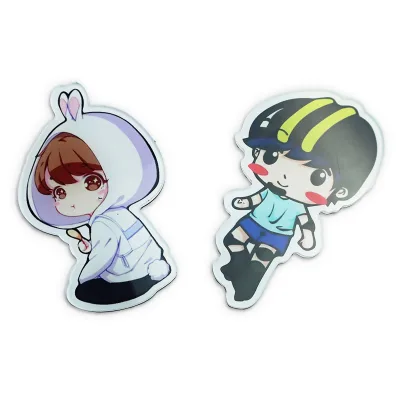


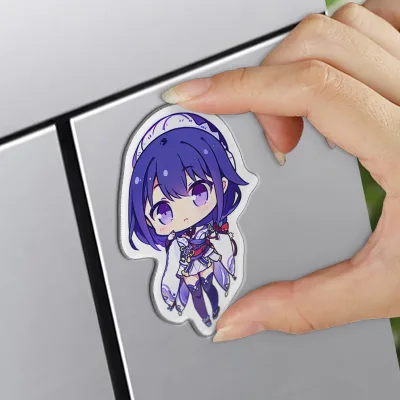


Custom Anime Character PVC Fridge Magnet Custom Cartoon Figure Magnetic Sticker
$0.18 - $0.55
MOQ: 100 pieces


High Quality Custom Cute Animal Cartoon Acrylic Fridge Magnets for Souvenir
$0.25 - $0.42
MOQ: 100 Pieces

Wholesale Custom Personalized Cartoon Design Acrylic Fridge Magnets for Promotion
$0.25 - $0.42
MOQ: 100 Pieces
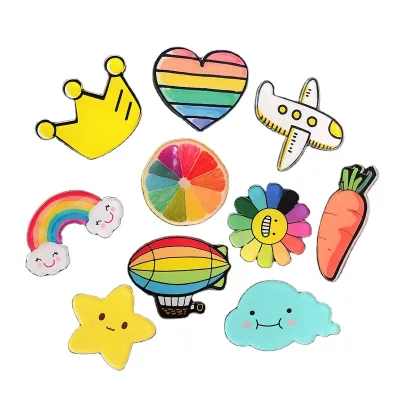


Customized Logo Cute Anime Inspirational Acrylic Promotional Gift Keychain
$0.25 - $0.34
MOQ: 1000 Pieces

Comprehensive Sourcing Guide
Strategic Sourcing Guide for Custom Anime Character Acrylic Magnets
Understanding Product Specifications and Material Standards
When sourcing Custom Anime Character Acrylic Magnets, the primary objective is to align the physical attributes of the product with the intended application while ensuring durability and visual fidelity. The core material is acrylic, a transparent thermoplastic known for its clarity and ease of customization. Based on observed market data, these products are frequently categorized under specific model identifiers such as YX-AM, YX-AM0103, and YX-AM01038, alongside generic descriptors like "Custom Refrigerator Magnet" or "G-PG224." These identifiers often correlate with distinct dimensional standards that buyers must verify against their design requirements.
The physical dimensions of these magnets vary significantly depending on the manufacturer and the specific design complexity. Observed standard sizes include compact formats such as 7.4x10.2cm with a thickness of 3mm, as well as smaller variants like 7x7x1.5cm or 1.5x1.5x1cm. For larger orders or specific packaging needs, bulk shipping dimensions may be listed as 50x40x35cm, which represents the outer carton size rather than the individual unit. The weight of individual units is generally low, with recorded observations ranging from 0.030 Kg to 0.070 Kg per piece, depending on the size and density of the acrylic used.
Color and pattern are critical elements for anime character representations. The supply chain supports a wide spectrum of color options, including clear, solid colors, and multicolor configurations. Customization is a dominant feature, with many suppliers offering "Customized" color profiles to match specific character palettes. The printing technology employed is predominantly screen printing, which allows for vibrant, durable application of character details. However, buyers should verify if alternative printing methods are available for more complex, full-color anime illustrations, as screen printing may have limitations on gradient resolution compared to digital printing. The surface finish is typically smooth, and the product is described as non-disposable, indicating a reusable nature suitable for long-term decoration or collection.
Compliance, Certification, and Material Safety
In the realm of B2B procurement, particularly for products that may be handled by children or used in diverse environments, compliance and material safety are paramount. While the specific supply chain data indicates a low-confidence background regarding FSC (Forest Stewardship Council) certification, this does not imply the product is made from wood or paper. Acrylic is a synthetic polymer, and therefore, FSC certification is generally not applicable to the raw material itself. Instead, buyers must focus on certifications relevant to plastics and safety standards for the target market.
Buyers should explicitly request documentation regarding the chemical composition of the acrylic to ensure it is free from harmful substances such as BPA, phthalates, or heavy metals, especially if the magnets are intended for use in regions with strict toy safety regulations like the EU's EN71 or the US's ASTM F963. Although the provided context does not list specific test results or compliance certificates, the absence of such data in a product listing should trigger a verification step. Procurement teams must ask suppliers for third-party laboratory test reports confirming that the material meets the safety standards of the destination country.
Furthermore, the origin of the product plays a role in compliance. The observed data points to manufacturing origins in Guangdong and Fujian, China. While these are major manufacturing hubs, the specific factory's adherence to international quality management systems (such as ISO 9001) should be verified. Buyers should not assume that a product listed as "Customized" automatically meets all regulatory requirements for the final market. The supplier's ability to provide a Declaration of Conformity or a Material Safety Data Sheet (MSDS) is a critical due diligence step. Additionally, if the magnets are to be sold as gifts or toys, packaging compliance regarding choking hazards and labeling requirements must be scrutinized.
Cost Drivers and Pricing Dynamics
The pricing structure for Custom Anime Character Acrylic Magnets is influenced by several variable factors, primarily driven by customization complexity, order volume, and material quality. The observed market price range for these items spans from $0.06 to $1.03 USD per unit. This wide variance suggests that the final cost is highly dependent on the specific configuration of the order. Lower prices in the observed range typically correspond to standard sizes, solid colors, and minimal customization, whereas the higher end of the spectrum likely reflects complex multi-color designs, custom shapes, or premium packaging.
Minimum Order Quantity (MOQ) is a significant cost driver. The data indicates an MOQ range of 1 to 1000 units, with a specific observation of 100 units or 100 pieces as a common threshold. Orders placed below the standard MOQ may incur higher per-unit costs or setup fees. Conversely, orders exceeding the MOQ often benefit from economies of scale, reducing the unit price. Buyers must balance the desire for a lower unit cost against the capital required to meet the MOQ. For small businesses or startups, the ability to order low quantities (e.g., 1 unit) is a critical factor, even if the per-unit cost is higher.
Additional cost factors include the printing method and packaging. Screen printing is noted as a standard technique, but if a buyer requires high-fidelity, full-color anime art that exceeds the capabilities of screen printing, the cost may increase. Packaging is another variable; options range from simple OPP bags to more elaborate color boxes or blister packs. The observed packing methods include PE protective film, foam protection, and export wood for bulk shipments, all of which add to the overall cost. Buyers should request a detailed breakdown of costs to understand how much of the price is attributed to the base product, the printing, and the packaging.
Typical Applications and Market Use Cases
Custom Anime Character Acrylic Magnets serve a diverse range of applications, extending beyond simple household decoration. The observed usage categories include home decoration, art and collection, holiday gifts, and business gifts. This versatility makes them a popular choice for various B2B and B2C scenarios. In the home decoration sector, these magnets are used to personalize refrigerators, lockers, and metal surfaces, adding a touch of personality and fandom to everyday spaces.
The "Art & Collection" category highlights the product's appeal to enthusiasts and collectors. Anime characters are often rendered in high detail, making these magnets desirable as collectible items. The non-disposable nature of the product ensures they can be kept and displayed for extended periods, increasing their value to collectors. For holiday gifts, the customizable nature of the product allows for personalized touches, making them ideal for birthdays, Christmas, or anime convention souvenirs. The ability to include a custom logo or specific character design enhances their giftability.
In the business context, these magnets function as effective promotional items. Companies can brand them with their own logos alongside popular anime characters to create engaging marketing materials. The "Business Gift" usage category suggests their utility in corporate gifting, trade shows, and customer appreciation programs. The "Universal" suitability mentioned in the product attributes indicates that these magnets can be applied to a wide variety of magnetic surfaces, increasing their functional utility. Whether used as a charm, buckle, button, or applique in a broader crafting context, the product's adaptability is a key selling point.
Supplier Evaluation and Selection Criteria
Selecting the right supplier is critical for ensuring product quality and meeting delivery expectations. The supply chain data reveals several key attributes that buyers should use as evaluation criteria. First, verify the supplier's capability for OEM (Original Equipment Manufacturer) and ODM (Original Design Manufacturer) services. The presence of "OEM and ODM Available" in the product attributes indicates a supplier's flexibility to produce custom designs or modify existing ones. Buyers should assess the supplier's portfolio to ensure they have experience with anime character designs and can handle the specific printing requirements.
Second, evaluate the supplier's customization capabilities. The data shows that customization is available for color, logo, and size. A robust supplier will offer a seamless process for submitting custom designs, providing proofs, and adjusting specifications. The ability to accept "Customized Logo" and "Custom Designs" is essential for branding purposes. Buyers should inquire about the digital file requirements and the turnaround time for design approvals.
Third, consider the supplier's location and logistics. The observed origins are Guangdong and Fujian, China. Buyers should verify the specific factory location to assess shipping times and potential tariffs. The "Delivery: Confirmed" status suggests that the supplier has a track record of meeting delivery schedules, but buyers should still request a detailed lead time estimate based on their specific order volume and customization needs.
Finally, review the supplier's quality control processes. While specific test results are not provided in the general data, buyers should ask about the supplier's internal QC protocols. This includes checks for printing alignment, color accuracy, and structural integrity of the acrylic. A supplier that offers "Customized" options often has more rigorous checks in place to ensure that the custom elements meet the buyer's specifications.
Quality Control and Long-Term Procurement Considerations
Maintaining consistent quality is essential for long-term procurement success. The observed product attributes, such as "PE Protective Film + Foam Protection + Export Wood" and "OPP Bag / Color Box / Blister Packing," indicate that packaging plays a vital role in protecting the product during transit. Buyers should ensure that the packaging is robust enough to prevent scratching or breaking of the acrylic, which is a brittle material. The "Single Gross Weight" and "Single Package Size" data points should be used to calculate shipping costs accurately and to plan warehouse storage.
For long-term procurement, buyers should establish a relationship with a supplier that can scale with their needs. The observed MOQ range of 1 to 1000 suggests flexibility, but buyers should negotiate terms that allow for incremental increases in order volume without significant price jumps. Consistency in color and print quality is crucial, especially for anime characters where specific shades and details are expected. Buyers should request a "golden sample" or a pre-production sample to verify that the final product matches the design intent before committing to a large order.
Additionally, buyers should consider the lifecycle of the product. Since the magnets are non-disposable, they should be durable enough to withstand repeated handling and exposure to various environments. The "Screen Printing" method should be evaluated for its resistance to fading and peeling over time. If the magnets are intended for outdoor use or high-traffic areas, additional protective coatings or UV-resistant inks may be necessary.
Finally, buyers should maintain open communication with the supplier regarding any changes in design or market trends. The anime market is dynamic, with new characters and styles emerging frequently. A supplier that is responsive to these changes and can quickly adapt their production lines will be a valuable partner. By focusing on these quality control and long-term considerations, buyers can ensure a steady supply of high-quality Custom Anime Character Acrylic Magnets that meet their specific business needs.
FAQs
Can I order Custom Anime Character Acrylic Magnets with my own logo?
Yes, suppliers accept customized logos for these magnets. The product attributes confirm that custom logos are acceptable, and OEM and ODM services are available for tailored designs.
What is the minimum order quantity for these acrylic magnets?
The minimum order quantity is typically 100 pieces. Some listings show an MOQ range from 1 to 1000, but 100 units is the standard threshold observed for these products.
How much do Custom Anime Character Acrylic Magnets cost per unit?
The price per unit ranges from 0.06 to 1.03 USD. This cost varies based on customization complexity, order volume, and specific packaging requirements like color boxes or blister packs.
Which printing methods are used for these custom magnets?
Screen printing is the primary method used for these acrylic magnets. This technique allows for vibrant application of character details, though buyers should verify if digital printing is available for complex gradients.
What are the standard dimensions for these acrylic magnets?
Standard sizes include 7.4x10.2cm with 3mm thickness or 7x7x1.5cm. Customized sizes are also available, with individual unit weights ranging from 0.030 to 0.070 Kg depending on the specific model.
Can I get these magnets in different colors or patterns?
Yes, options include clear, solid colors, and multicolor configurations. The product attributes list color as customizable, allowing buyers to match specific character palettes or brand requirements.