Source Custom Brake Caliper Guide Pin for forging, casting, and spinning
Find 30 verified listings for Custom Brake Caliper Guide Pin from Jiangsu and Shenzhen factories. Buyers can compare metal and steel options with ISO and CE certifications, CNC machining processes, and high-precision tolerances up to ±0.01mm for diverse machinery applications.
Key considerations
Products List
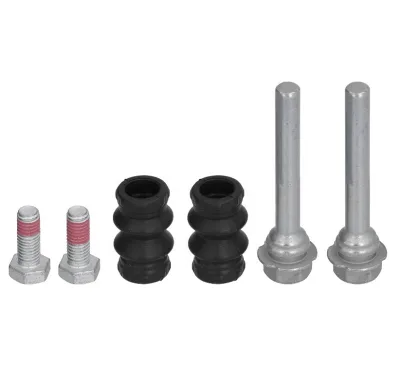


Wholesale Customized Exquisite Car Brake Caliper Bolt Screw Guide Pin Kit
$0.06 - $0.12
MOQ: 1000 Pieces

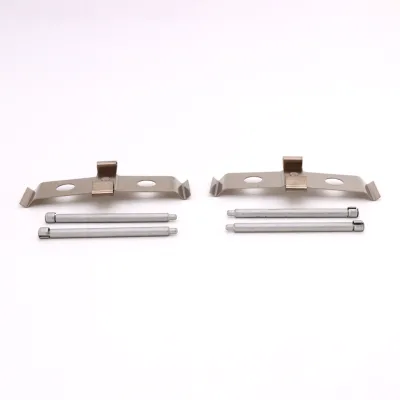


Comprehensive Sourcing Guide
Strategic Sourcing Guide for Custom Brake Caliper Guide Pins
Procuring custom brake caliper guide pins requires a rigorous approach that balances precise mechanical tolerances with material integrity and supply chain reliability. These components are critical for the smooth operation of disc brake systems, ensuring that the caliper slides evenly across the rotor to prevent uneven pad wear and braking noise. The market for these parts is characterized by a high degree of customization, as vehicle manufacturers and aftermarket suppliers often require specific dimensions, surface treatments, and material compositions to match unique braking system architectures. Buyers must navigate a complex landscape of standards, certifications, and production capabilities to ensure that the sourced components meet the demanding safety and performance requirements of the automotive industry.
Technical Specifications and Dimensional Precision
The fundamental requirement for any Custom Brake Caliper Guide Pin is dimensional accuracy. The supplied data indicates that high-precision machining is available, with capabilities extending to tolerances of ±0.01mm. This level of precision is essential because even minor deviations can lead to increased friction, premature wear of the rubber boots, or binding of the caliper piston. When evaluating potential suppliers, buyers should verify that the manufacturer utilizes advanced CNC processes, specifically CNC turning and CNC milling, which are listed as core machining capabilities. These processes allow for the complex geometries often required in guide pins, including specific thread profiles and shoulder dimensions.
Surface finishing is another critical technical parameter. The guide pins must operate in an environment exposed to moisture, road salt, and high temperatures. The available surface finishing options include spraying, electroplating, and anodizing. Buyers must determine which finishing method is appropriate for their specific application. For instance, electroplating may offer superior corrosion resistance for vehicles operating in coastal or high-salt environments, while anodizing might be preferred for specific aesthetic or lightweight requirements. The material composition is equally vital; while the general category includes metal, specific listings highlight steel and aluminum. Steel is typically the preferred material for high-strength applications due to its durability and wear resistance, whereas aluminum may be selected for weight reduction in specific performance scenarios. The buyer must confirm the exact alloy and heat treatment status to ensure the pin meets the required hardness and tensile strength.
Compliance, Certification, and Regulatory Standards
Navigating the regulatory landscape is a non-negotiable aspect of sourcing automotive components. The provided facts confirm that suppliers in this sector often hold ISO, RoHS, and CE certifications. These certifications indicate that the manufacturing processes adhere to international quality management systems and environmental standards. Specifically, the presence of ISO certification suggests a commitment to consistent quality control, while RoHS compliance ensures that the components do not contain restricted hazardous substances, which is a mandatory requirement for many global markets. CE marking indicates conformity with health, safety, and environmental protection standards for products sold within the European Economic Area.
In addition to general certifications, buyers must verify adherence to specific industry standards. The data references ASTM, DIN, and JIS standards. ASTM standards are widely recognized in the United States for material testing and specifications, while DIN standards are prevalent in Europe, and JIS standards are common in Japan. A supplier claiming to meet these standards should be able to provide documentation proving that their guide pins have been tested against the relevant clauses of these standards. It is important to note that while "Standard Specifications or Customized" is a common offering, the buyer must explicitly define which standard applies to their custom order. Relying on a generic "standard" without a specific reference number can lead to ambiguity in quality expectations. Furthermore, the presence of ISO/TS (Technical Specification) certifications, often associated with automotive quality management, should be a priority for buyers sourcing parts for original equipment manufacturer (OEM) applications.
Cost Drivers and Pricing Dynamics
The cost of custom brake caliper guide pins is influenced by several variable factors, primarily material costs, machining complexity, and order volume. The observed price range in the market spans from $0.01 to $100, reflecting the vast difference between simple, high-volume commodity parts and complex, low-volume custom components. The minimum order quantity (MOQ) also varies significantly, ranging from 1 to 1000 units. For buyers requiring prototypes or low-volume production runs, suppliers with lower MOQs are essential, though they may command a higher unit price. Conversely, large-scale procurement can leverage economies of scale to reduce the per-unit cost, but this requires a commitment to higher volume orders.
Material selection is a primary cost driver. Steel guide pins generally cost more than aluminum counterparts due to the raw material price and the energy-intensive processes required for heat treatment and machining. Additionally, the surface finishing process adds to the cost; electroplating and specialized spraying are more expensive than standard packaging or basic treatments. The level of customization also impacts pricing. Orders requiring "As drawing" specifications or unique dimensions necessitate the creation of new tooling and programming, which increases the initial setup cost. Buyers should be prepared for a higher upfront investment for custom molds or fixtures, which can be amortized over the production run. It is crucial to request a detailed cost breakdown that separates material, machining, finishing, and tooling costs to understand the true value proposition of a supplier.
Typical Applications and Performance Requirements
Custom brake caliper guide pins are primarily used in metal forging machinery, metal processing machinery parts, and specifically within the automotive braking systems. The supplied data highlights applications in metal casting, engraving, and spinning machinery, but the core function of the guide pin remains consistent: facilitating the sliding motion of the brake caliper. The performance requirements for these pins are stringent. They must exhibit high strength, wear resistance, and corrosion resistance. The data explicitly mentions these performance attributes, indicating that the components are designed to withstand the high friction and thermal loads generated during braking.
The position of the guide pin within the braking system is also a key consideration. While the data mentions "Front" as a classification for related components like drum brakes, guide pins are typically used in disc brake systems on both front and rear axles. The specific application dictates the load requirements; front brake guide pins often experience higher thermal and mechanical stress than rear components. Buyers must ensure that the selected guide pin is rated for the specific axle and vehicle type. The "Brake Pads" and "Brake Cylinders" classifications in the data suggest that these components are part of a broader ecosystem of braking parts. Therefore, compatibility with the specific brake pad material and caliper housing design is essential. A mismatch in material hardness or thermal expansion coefficients between the guide pin and the caliper housing can lead to system failure.
Supplier Evaluation and Production Capabilities
Evaluating a supplier for custom brake caliper guide pins requires a deep dive into their production capabilities and quality assurance processes. The data indicates that many suppliers are "Original Factory Produced," suggesting direct manufacturing rather than trading. This is advantageous for buyers seeking better control over the production process and pricing. Key evaluation criteria should include the supplier's location, with Jiangsu and Shenzhen in China being prominent hubs for such manufacturing. These regions offer a mature supply chain for automotive components, but buyers must verify the specific factory's capacity and reputation.
Quality control is paramount. The available facts mention "Full-Process Inspection with Complete Test Reports." Buyers should insist on seeing sample test reports that verify dimensional tolerance, material hardness, and surface finish quality. The supplier should be able to demonstrate a closed-loop quality control system where defects are identified and corrected at every stage of production. Additionally, the supplier's ability to handle OEM and ODM customization is a critical factor. The data confirms that OEM and ODM services are accepted, meaning the supplier can produce parts based on the buyer's drawings or develop new designs in collaboration with the buyer. Buyers should assess the supplier's engineering team's capability to interpret complex CAD files and translate them into precise manufacturing instructions.
Quality Control Protocols and Inspection Standards
Implementing a robust quality control protocol is essential to mitigate the risks associated with sourcing custom automotive components. The supplier's quality control system should align with international standards such as ISO 9001. The data references "Quality Is Good" as a general attribute, but this is insufficient for procurement purposes. Buyers must define specific acceptance criteria, including the maximum allowable deviation from the ±0.01mm tolerance. Statistical Process Control (SPC) should be employed to monitor production consistency over time.
Inspection methods should include both first-article inspection and periodic sampling. First-article inspection involves a comprehensive measurement of the first batch of parts to ensure they meet all design specifications. Periodic sampling, often based on AQL (Acceptable Quality Level) standards, ensures that the production run maintains quality. The supplier should provide detailed test reports that cover material composition analysis, tensile strength testing, and corrosion resistance testing. For surface finishes, buyers should verify the thickness of the plating or coating and its adhesion properties. The "Complete Test Reports" mentioned in the data should be a mandatory deliverable for every shipment, providing traceability and proof of compliance.
Long-Term Procurement and Supply Chain Considerations
Long-term procurement of custom brake caliper guide pins involves more than just the initial transaction; it requires a strategic partnership with a reliable supplier. Lead times are a critical factor, with the data indicating a typical delivery time of 15 days. However, this can vary based on the complexity of the order and the supplier's current workload. Buyers should negotiate lead times that align with their production schedules and maintain a buffer for unexpected delays. The packaging of the components is also important for long-term storage and transportation. Options include plastic bags, cartons, wooden boxes, or customized packaging. Proper packaging prevents damage during transit and protects the surface finish from corrosion during storage.
Sustainability and supply chain resilience are increasingly important considerations. Buyers should evaluate the supplier's environmental practices, particularly regarding waste management and energy usage in the machining and finishing processes. The "Main Market" data shows a global reach, including South America, North America, and Europe, suggesting that the supplier has experience with international logistics. However, buyers should verify the supplier's ability to handle export documentation and compliance with local regulations in the destination market. Building a relationship with a supplier that offers flexible customization and reliable quality control ensures a steady supply of high-performance guide pins, reducing the risk of production stoppages and maintaining the safety and reliability of the final braking systems.
Comparative Overview of Key Sourcing Attributes
To facilitate decision-making, the following table summarizes the key attributes observed in the market for custom brake caliper guide pins. This comparison highlights the variability in specifications and capabilities that buyers must navigate.
| Attribute Category | Observed Options / Standards | Buyer Verification Requirement |
|---|---|---|
| Material | Steel, Aluminum, General Metal | Confirm specific alloy and heat treatment for application load. |
| Tolerance | High-Precision (±0.01mm Capability) | Verify actual Cpk data for the specific production run. |
| Certifications | ISO, RoHS, CE, ISO/TS | Request valid certificates and check scope of coverage. |
| Standards | ASTM, DIN, JIS | Define which standard applies to the custom drawing. |
| Surface Finish | Spraying, Electroplating, Anodizing | Specify finish type and thickness requirements. |
| Customization | OEM, ODM, As Drawing, Customized | Provide detailed CAD files and tolerance charts. |
| Packaging | Plastic Bags, Cartons, Wooden Box | Select packaging based on storage and transport needs. |
| Origin | China (Jiangsu, Shenzhen) | Verify factory location and logistics capabilities. |
| Lead Time | Approx. 15 Days (Variable) | Confirm lead time for custom tooling and production volume. |
By adhering to these guidelines and rigorously verifying the technical and compliance details, buyers can successfully source high-quality custom brake caliper guide pins that meet the demanding standards of the automotive industry. The focus must remain on data-driven decision-making, ensuring that every component sourced contributes to the safety and performance of the final vehicle.
FAQs
What certifications do Custom Brake Caliper Guide Pin suppliers hold?
Suppliers typically hold ISO, RoHS, and CE certifications to ensure quality and safety. Some listings also include ISO/TS and GS certifications. These standards verify compliance with international manufacturing and environmental regulations for automotive parts.
Which materials are used for custom brake caliper guide pins?
Common materials include steel and aluminum to meet strength and weight requirements. Steel offers high strength and wear resistance, while aluminum provides weight reduction. The specific alloy depends on the application and performance needs.
How precise are the dimensional tolerances for these parts?
High-precision machining capabilities allow for tolerances up to ±0.01mm. This accuracy is critical for preventing caliper binding and ensuring smooth operation. CNC turning and milling processes are used to achieve these tight specifications.
Can suppliers provide OEM and ODM customization services?
Yes, suppliers accept OEM and ODM customization based on buyer drawings or specifications. They offer standard or customized packaging and can produce parts according to specific dimensions. This allows for tailored solutions for different vehicle models.
What surface finishing options are available for guide pins?
Available finishing methods include spraying, electroplating, and anodizing to enhance durability. These treatments provide corrosion resistance and wear protection essential for braking systems. The choice depends on the operating environment and specific performance requirements.
What is the typical delivery time for custom orders?
The typical delivery time is around 15 days for standard custom orders. This duration may vary based on order volume and specific customization requirements. Suppliers generally operate as original factories to manage production schedules efficiently.
Which standards do the guide pins comply with?
Guide pins comply with ASTM, DIN, and JIS standards depending on the target market. These standards define material properties and testing methods. Suppliers often offer different sizes and specifications to match these international requirements.