Source Custom Engineered Vacuum Formed Panel for Construction
Compare 30 listings for Custom Engineered Vacuum Formed Panel designed for industrial electrical equipment, mining areas, and refrigeration equipment. These panels feature ABS, PP, and PC materials with customizable sizes and thicknesses up to 12mm for diverse applications.
Key considerations
Products List
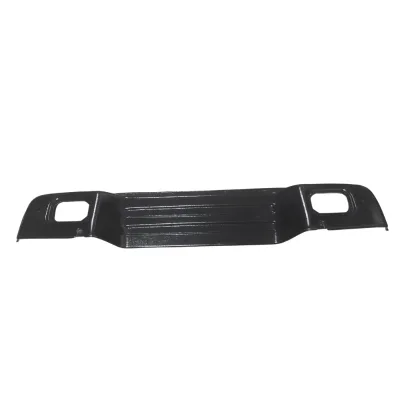

Eco-Friendly Core Material Vacuum Panel for Sustainable Construction
$13.14 - $17.14
MOQ: 1 Square Meters

Multi-Purpose Customizable Core Insulation Material Vacuum Insulation Panel
$13.14 - $17.14
MOQ: 1 Square Meters

Customizable Specifications Eco-Friendly Material Vacuum Insulation Panel
$13.14 - $17.14
MOQ: 1 Square Meters


Vacuum Insulation Panel Specially Designed for a-Rated Energy-Efficient Refrigerators
$13.14 - $17.14
MOQ: 1 Square Meters

Customizable Shape and Thickness Ultra-Low Thermal Conductivity Vacuum Insulation Panel
$13.14 - $17.14
MOQ: 1 Square Meters


$35.00 - $55.00
MOQ: 500 Square Meters

$35.00 - $55.00
MOQ: 500 Square Meters



Comprehensive Sourcing Guide
Strategic Sourcing Guide for Custom Engineered Vacuum Formed Panels
Procuring custom engineered vacuum formed panels requires a disciplined approach that balances technical precision with supply chain reliability. The market for these components is diverse, ranging from industrial electrical equipment to specialized cold chain logistics. Buyers must navigate a landscape where material selection, processing capabilities, and certification status are critical determinants of product performance. This guide outlines the essential factors for evaluating suppliers and specifications, ensuring that the final procurement aligns with rigorous engineering standards and operational requirements.
Technical Specifications and Material Engineering
The foundation of a successful procurement strategy lies in a deep understanding of the technical specifications inherent to vacuum formed panels. The core material composition is a primary variable, with suppliers offering a wide spectrum of engineering plastics. Available materials include ABS, PA66, PP, PC, PMMA, PSU, PCTG, TPE, TPU, and PBT. Each material offers distinct properties regarding impact resistance, chemical stability, and thermal performance. For instance, applications requiring high thermal resistance may necessitate PSU or PC, while flexible components might rely on TPE or TPU.
Thickness is another critical dimension that dictates the structural integrity of the panel. Industry observations indicate a standard thickness range of 1-12mm. This variability allows for the customization of panels to meet specific load-bearing or insulation needs. The processing services available, such as cutting and moulding, are essential for transforming raw sheets into complex geometries. The plastic moulding type is typically categorized as "Mould," indicating a process where a vacuum is applied to a heated sheet over a mould to create the desired shape.
Size customization is a defining feature of this product category. While some standard dimensions exist, the market heavily favors "Customer Customized" sizes. The single package size for shipping often averages around 60x60x40 cm, with a single gross weight of approximately 10.000 kg per unit, though this can vary based on the specific order volume and density of the material. Buyers must verify the exact panel size and frame dimensions, as some specialized applications, such as VIP insulated pallets or containers, may require specific frame sizes like 20FT.
Compliance, Certification, and Regulatory Standards
In the B2B procurement of engineered components, compliance is non-negotiable. Buyers must rigorously verify that suppliers hold valid certifications that align with international quality and safety standards. High-confidence data indicates that reputable manufacturers often maintain a portfolio of certifications including ISO9001, ISO45001, ISO14001, and IATF16949. These certifications demonstrate a commitment to quality management, occupational health and safety, environmental management, and automotive industry-specific quality systems, respectively.
Fire safety is a paramount concern, particularly for applications in construction, mining areas, and transportation. The fire rating of the panels must be verified against local regulations. Available data points to a Class A fire rating, which is the highest standard for fire resistance in many jurisdictions. However, buyers should not assume this rating applies to every SKU without verification. Additional standards such as UL 94 or ISO 13485 may be relevant depending on the specific industry, such as medical or consumer electronics, though these should be treated as potential requirements rather than guaranteed attributes of every listing.
When evaluating a supplier, request documentation proving the current status of these certifications. Do not rely on marketing claims alone. The presence of IATF16949, for example, is a strong indicator that the supplier is capable of meeting the stringent requirements of the automotive supply chain, which often overlaps with industrial and electrical equipment manufacturing.
Cost Drivers and Pricing Dynamics
Understanding the cost structure of custom vacuum formed panels is essential for budgeting and negotiation. The observed price range in the market spans from 1 to 165 USD, reflecting the vast difference between simple, small-scale prototypes and complex, large-scale industrial components. Several factors drive these costs. The primary driver is the material selection; engineering plastics like PA66, PC, and PSU are significantly more expensive than standard PP or ABS.
The complexity of the moulding process also impacts pricing. Customized shapes and sizes require the creation of specific moulds, which involves upfront tooling costs. The Minimum Order Quantity (MOQ) is a significant factor in the unit price. While some suppliers may list an MOQ of 100 pcs, others may require up to 800 pcs to achieve competitive pricing. Buyers with lower volume needs must be prepared for higher per-unit costs or seek suppliers with flexible MOQ policies.
Payment terms, typically T/T (Telegraphic Transfer), influence cash flow and risk management. The gross weight and shipping dimensions, such as the 17.5t gross weight observed for larger containerized orders, directly affect logistics costs. Buyers should factor in the cost of packaging, which is often listed as "Packing CTN Pallet," and the single package dimensions when calculating the total landed cost.
Typical Applications and Industry Use Cases
Custom vacuum formed panels serve a multitude of industries, each with unique performance requirements. The product applications are extensive, covering sectors such as construction, industrial electrical equipment, mining areas, ports, and urban roads. In the industrial sector, these panels are used for sheet metal enclosures and machine components where durability and chemical resistance are vital.
A significant segment of the market is dedicated to refrigeration and cold chain logistics. The panels are integral to the construction of refrigerators, freezers, and reefer containers. Specific applications include VIP (Vacuum Insulated Panel) insulated shippers, pallets, and cooler boxes. The ability to maintain a maximum operating temperature of 100℃ makes these materials suitable for a wide range of thermal environments, though their primary strength often lies in insulation for cold chain transport, vending machines, and refrigerated trucks and cars.
The versatility of the product is further highlighted by its use in feeder systems and general machinery. The "Customized Shapes" attribute allows for the creation of bespoke components that fit tightly into existing equipment, reducing the need for secondary assembly. Whether for a standard industrial machine or a specialized VIP insulated shipper, the panel must be engineered to withstand the specific stresses of its application environment.
Supplier Evaluation and Service Capabilities
Selecting the right supplier involves more than just comparing prices; it requires a holistic evaluation of their service capabilities. The "Service" attribute often includes OEM (Original Equipment Manufacturer) and ODM (Original Design Manufacturer) options. This indicates that the supplier can not only manufacture parts based on provided designs but also assist in the design and engineering process. The "Brand Name" of the supplier, such as Ditai, may be relevant for brand recognition, but the technical capability is the primary concern.
Buyers should assess the supplier's ability to handle customization. The "Customization: Available" and "Costom Order: Accept" attributes suggest flexibility, but the depth of this capability must be verified. Can the supplier handle complex geometries? Do they have the in-house moulding facilities, or do they outsource? The "Processing Service" of cutting and moulding should be confirmed as a core competency.
Furthermore, the "Single package size" and "Single gross weight" provide insight into their logistics and packaging standards. A supplier that can consistently package products in 60x60x40 cm units with a weight of 10.000 kg demonstrates a standardized approach to shipping, which is crucial for inventory management and cost control. The "Payment" terms of T/T are standard, but the specific conditions (e.g., deposit percentage, balance upon shipment) should be negotiated based on the order value and relationship history.
Quality Control and Long-Term Procurement Considerations
Quality control is the final barrier before a product enters the supply chain. Buyers must establish clear acceptance criteria based on the observed specifications. The "Thickness" of 1-12mm and "Color" options (Black, White) must be strictly adhered to. The "Core Material" of Fiberglass, when specified, adds another layer of complexity to the quality assurance process, requiring verification of the lamination and bonding quality.
For long-term procurement, consistency is key. The "Model Number" (e.g., DTAX049, VIP, SES) serves as a unique identifier for the product line. Buyers should ensure that the supplier maintains a consistent manufacturing process to prevent variations in future orders. The "Standard" of 100x100-800x1800 provides a reference for the range of sizes available, but buyers must confirm that the specific model they are ordering falls within this range and meets their dimensional requirements.
Sustainability and environmental compliance are increasingly important. The ISO14001 certification indicates a commitment to environmental management, which is crucial for companies with their own sustainability goals. Additionally, the "Fire Rating" of Class A ensures that the panels meet safety standards, reducing liability and insurance risks.
Comparative Analysis of Product Attributes
To facilitate decision-making, the following table summarizes the key attributes observed in the market for custom vacuum formed panels. This comparison helps buyers quickly identify the features that align with their specific project needs.
| Attribute Category | Observed Specifications | Verification Requirement |
|---|---|---|
| Material | ABS, PA66, PP, PC, PMMA, PSU, PCTG, TPE, TPU, PBT | Confirm material grade and purity for application |
| Thickness | 1-12mm | Verify exact thickness tolerance for structural fit |
| Size | Customized, 100x100-800x1800 (Standard Range) | Confirm specific dimensions and frame size (e.g., 20FT) |
| Certification | ISO9001, ISO45001, ISO14001, IATF16949 | Request valid certificates and audit reports |
| Fire Rating | Class A | Verify test reports for specific batch |
| MOQ | 100 pcs to 800 pcs | Negotiate based on volume and cost |
| Applications | Construction, Refrigeration, Mining, Industrial | Match application to material properties |
| Packaging | CTN Pallet, 60x60x40 cm | Confirm packaging for shipping efficiency |
Conclusion
Sourcing custom engineered vacuum formed panels is a complex process that demands attention to detail across technical, regulatory, and logistical domains. The market offers a wide array of materials, from standard plastics to high-performance engineering resins, capable of meeting diverse application needs ranging from industrial machinery to cold chain logistics. The observed specifications, including thickness ranges, fire ratings, and certification standards, provide a baseline for evaluation, but buyers must verify these attributes for each specific order.
By focusing on suppliers with robust quality management systems, clear customization capabilities, and transparent pricing structures, buyers can mitigate risks and ensure the delivery of high-performance components. The interplay between material selection, processing services, and compliance standards defines the value proposition of these panels. Ultimately, a successful procurement strategy relies on a thorough understanding of the product's technical specifications and a rigorous evaluation of the supplier's ability to deliver consistent, high-quality results in line with the buyer's specific operational requirements.
FAQs
What materials are available for custom engineered vacuum formed panels?
Available materials include ABS, PA66, PP, PC, PMMA, PSU, PCTG, TPE, TPU, and PBT. Buyers should select specific grades based on required thermal resistance and chemical stability for their application environment.
Can suppliers provide custom sizes and shapes for these panels?
Yes, customization is available for both panel size and shape to meet specific engineering needs. The standard thickness ranges from 1 to 12mm, allowing for tailored structural integrity in various industrial or refrigeration applications.
Which certifications do reputable manufacturers typically hold?
High-confidence data indicates manufacturers often hold ISO9001, ISO45001, ISO14001, and IATF16949 certifications. These credentials verify adherence to quality management, safety, and environmental standards required for automotive and industrial sectors.
What is the typical minimum order quantity for these panels?
The observed minimum order quantity ranges from 100 to 800 pieces depending on the supplier. Lower volume orders may incur higher per-unit costs, so buyers should negotiate based on their specific production volume requirements.
How do fire ratings apply to these vacuum formed panels?
Some products carry a Class A fire rating, which is the highest standard for fire resistance. Buyers must verify test reports for specific batches, as this rating is critical for applications in construction, mining, and transportation.
Where are these custom panels typically manufactured?
The primary place of origin for these products is Guangdong, China. Suppliers in this region offer processing services like cutting and moulding, with single package sizes often averaging 60x60x40 cm for shipping.