Source Custom Logo Printed Woven Bag for Vegetable, Sand, and Fertilizer
Find 30 suppliers offering Custom Logo Printed Woven Bag solutions for diverse industrial needs. Compare specifications like thickness, width, and closure types to select the right packaging for vegetables, sand, or fertilizer transport.
Key considerations
Products List


Small Shopping Bag Non-Woven Bag
$0.08 - $0.29
MOQ: 1000 Pieces
Qingdao Zhongkang Printing and Packaging Machinery Co., Ltd.

Promotional Woven Bag with Customer Logo Printing, Advertising Shopping Bag
$0.35 - $0.45
MOQ: 2000 Pieces


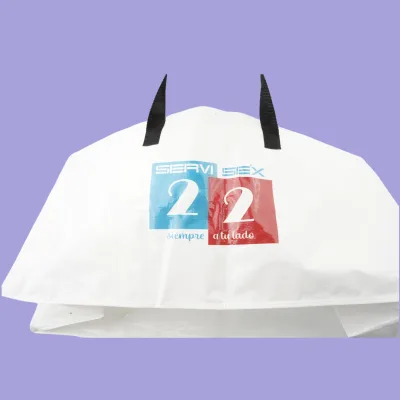


Custom Logo Printed Eco-Friendly Recyclable Laminated PP Woven Tote Bag
$0.50 - $0.63
MOQ: 1000 Pieces


Comprehensive Sourcing Guide
Strategic Sourcing Guide for Custom Logo Printed Woven Bags
Understanding Technical Specifications and Material Variability
When sourcing custom logo printed woven bags, the first critical step is defining the precise technical parameters required for your specific application. The market for these packaging solutions is characterized by significant variability in material composition and structural dimensions. Based on available product data, the primary material base for these bags is Polypropylene (PP), which can be sourced in either woven or non-woven forms. This distinction is vital because woven PP offers superior tensile strength and durability, making it ideal for heavy-duty applications such as transporting cement, fertilizer, and industrial chemicals. Conversely, non-woven variants often provide a softer texture and are frequently utilized for lighter retail applications like garment packaging, cosmetic gifts, or promotional tote bags.
The physical specifications of the bag must be aligned with the intended load. The observed thickness range for these products spans from 0.05mm to 0.2mm, with specific common values including 0.06mm, 0.07mm, 0.08mm, 0.09mm, 0.12mm, 0.14mm, 0.16mm, 0.18mm, and 0.2mm. Buyers must verify the exact thickness required for their load-bearing needs, as thinner gauges may compromise the structural integrity of bags intended for bulk materials like sand or feed. Furthermore, the dimensions are highly customizable, with width sizes typically ranging from 25cm to 200cm and length sizes extending from 30cm to 800cm. This flexibility allows for the creation of bags in various shapes, including square formats and upright bags, to suit different stacking and storage requirements.
The closure mechanism is another technical variable that defines the bag's utility. While some designs feature no closure, allowing for open-top filling, others may utilize open styles or specific sealing methods. The surface treatment is often a glossy finish, which not only enhances the aesthetic appeal for logo printing but also provides a degree of moisture resistance, although the material itself is generally noted as non-waterproof unless specific coatings are applied. The manufacturing process typically involves sewing techniques to reinforce seams, ensuring the bag can withstand the weight of its contents, which can range from light items under 0.5 kg to heavy industrial loads up to 50 kg.
Compliance, Certification, and Environmental Considerations
In the context of global procurement, compliance and environmental standards are increasingly becoming decisive factors in supplier selection. The product data indicates that a significant portion of the market offers bags with a "Recyclable" feature, and some specific variants are marketed as "Bio-Degradable." However, buyers must exercise caution when interpreting these claims. The term "Bio-Degradable" implies a specific chemical breakdown capability, which requires verification against recognized international standards such as ISO 14855 or ASTM D6400. Without explicit certification documentation from the supplier, these claims should be treated as observations rather than guaranteed performance metrics.
Safety is a paramount concern, particularly for bags used in the transport of food, chemicals, or construction materials. The data mentions a "Safety Factor" attribute, suggesting that manufacturers consider load limits and structural integrity. For applications involving food or fodder, it is essential to verify that the raw materials used are food-grade and free from harmful contaminants. While the observed data lists "Safety" as an attribute, it does not specify compliance with specific regulatory bodies like the FDA or EU regulations. Buyers should request Certificates of Analysis (CoA) or specific material safety data sheets to confirm that the polypropylene raw materials meet the necessary hygiene and safety standards for their intended use.
Furthermore, the origin of the product plays a role in regulatory compliance. The observed data points to production origins in Shandong and Wenzhou, China. These regions are known for their manufacturing capabilities, but buyers must ensure that the specific factory they engage with adheres to local and international environmental regulations regarding waste disposal and chemical usage. If the bags are intended for export to markets with strict environmental laws, such as the European Union or North America, verifying that the supplier has the necessary environmental management certifications (e.g., ISO 14001) is a prudent step to mitigate supply chain risks.
Cost Drivers and Pricing Dynamics
The pricing structure for custom logo printed woven bags is influenced by a complex interplay of material costs, customization requirements, and order volume. The observed price range in the market is between $0.02 and $2.15 USD per unit. This wide disparity is not indicative of a single product line but rather reflects the diversity of specifications. The lower end of the price spectrum typically corresponds to non-woven bags with simple printing, minimal thickness, and smaller dimensions. In contrast, the higher price points are associated with heavy-duty woven PP bags, thicker gauges (e.g., 0.2mm), larger dimensions, and complex multi-color logo printing.
Material costs are the primary driver of the base price. Polypropylene prices fluctuate based on global oil markets, and the choice between woven and non-woven forms significantly impacts the final cost. Woven bags generally require more energy-intensive production processes and thicker raw materials, leading to a higher unit cost compared to non-woven alternatives. Additionally, the customization level is a major cost factor. The availability of "Customized Printing" and "Logo Printing" services adds to the expense. The complexity of the logo, the number of colors used, and the printing technique employed (such as offset printing or hot stamping) will directly influence the unit price.
Order volume is another critical determinant of cost. The observed Minimum Order Quantity (MOQ) ranges from 100 to 20,000 units. Suppliers often offer tiered pricing structures where the unit cost decreases as the order quantity increases. For buyers with smaller requirements, the MOQ of 100 units may be accessible, but the per-unit cost will be higher due to the setup costs for printing plates and machine adjustments. Conversely, large-scale orders of 20,000 units or more can leverage economies of scale to achieve the lower end of the price range. Buyers should also consider the packaging method, as the data indicates options such as "Bales" or "CTN" (Carton) packing, which can affect shipping costs and overall logistics expenses.
Typical Applications and Usage Scenarios
The versatility of custom logo printed woven bags allows them to serve a wide array of industries, from agriculture and construction to retail and logistics. The product data highlights several key application areas. In the agricultural sector, these bags are commonly used for vegetable bags, fruit bags, and fodder storage. The durability of woven PP makes them suitable for transporting bulk agricultural products that require breathability and strength. Similarly, in the construction and industrial sectors, the bags are utilized for cement, chemical, and sand transport. The ability to handle weights up to 50 kg and the availability of specific thicknesses ensure that these bags can withstand the rigors of industrial handling and transportation.
In the retail and consumer goods sector, the application shifts towards branding and presentation. The data lists uses for garment and shoes, jewelry, electronic products, cosmetics, and gifts. Here, the aesthetic appeal of the bag becomes as important as its functional utility. The "Glossy Finish" and "Customized Printing" features make these bags ideal for creating branded tote bags, shopper bags, and drawstring bags. The "Bio-Degradable" variants are particularly relevant for eco-conscious brands looking to align their packaging with sustainability goals. The "Square" and "Upright" shapes are often preferred for retail display, as they allow for better stacking and shelf presence.
The table below summarizes the correlation between bag specifications and their typical applications based on the observed data:
| Application Sector | Typical Bag Type | Key Specifications | Primary Features |
|---|---|---|---|
| Agriculture & Food | Vegetable Bag, Fodder Bag | Thickness 0.1mm-0.2mm, Woven PP | High Load Capacity, Breathable |
| Construction & Chemical | Cement Bag, Sand Bag | Thickness 0.18mm-0.2mm, Woven PP | High Tensile Strength, Sewn Seams |
| Retail & Consumer | Tote Bag, Shopper Bag | Non-Woven or Woven, Custom Size | Glossy Finish, Logo Printing |
| Logistics & Transport | Transport Bag, Upright Bag | Width 25cm-200cm, Length 30cm-800cm | Recyclable, Durable |
| Gift & Cosmetic | Gift Bag, Cosmetic Bag | Small Size, Soft Hardness | Bio-Degradable, Simple Style |
Supplier Evaluation and Origin Verification
Selecting the right supplier requires a thorough evaluation of their capabilities, location, and production standards. The data indicates that production originates primarily from Shandong and Wenzhou, China. These regions are established manufacturing hubs with extensive experience in plastic packaging. Shandong is often associated with heavy industrial packaging, while Wenzhou is known for its diverse range of consumer goods and lighter packaging solutions. Buyers should verify the specific factory location to ensure it aligns with their logistical and quality expectations.
When evaluating suppliers, the "Making Process" and "Surface Treatment" capabilities are critical indicators of quality. Suppliers should demonstrate proficiency in "Plastic Packaging Bags" manufacturing, with specific expertise in "Sewing" techniques for reinforced seams and "Hot Stamping" or "Offset Printing" for high-quality logo application. The ability to offer "Customized" sizes and "Customized Printing" is a standard expectation, but buyers must confirm the supplier's flexibility in meeting unique design requirements. The "Delivery Time" is noted as usually 30 days, which serves as a benchmark for lead time planning. However, buyers should negotiate specific timelines based on order complexity and volume, as rush orders may incur additional costs or require expedited shipping arrangements.
Quality control is another essential aspect of supplier evaluation. Buyers should inquire about the supplier's internal quality assurance processes, including checks for seam strength, print registration, and material consistency. The "Safety Factor" and "Weight Limit" attributes suggest that suppliers should have established protocols for testing load-bearing capacity. It is advisable to request samples before placing a large order to verify that the physical properties, such as hardness (ranging from soft to medium soft) and closure types, meet the buyer's specifications. Additionally, the "prod_packing" method, whether "Bales" or "CTN," should be discussed to ensure the packaging is suitable for long-distance shipping and storage.
Quality Control and Long-Term Procurement Strategy
Implementing a robust quality control (QC) strategy is essential for maintaining the integrity of the supply chain and ensuring customer satisfaction. Given the variability in thickness and material composition, buyers should establish clear acceptance criteria for incoming goods. This includes verifying the thickness measurements against the agreed specifications (e.g., 0.1mm vs. 0.2mm) and checking the print quality for color accuracy and logo clarity. The "Gross Weight" of the bag, which is noted as greater than 0.3 kg for some variants, should also be monitored to ensure consistency in material usage.
For long-term procurement, building a strategic relationship with a reliable supplier is more beneficial than seeking the lowest initial price. The "Customized" nature of these bags means that once a supplier understands the buyer's specific requirements, they can offer more efficient production runs and better pricing over time. Buyers should consider the "Feature" of recyclability and bio-degradability as long-term value drivers, especially if their brand identity is tied to sustainability. Ensuring that the supplier can consistently meet these environmental claims will protect the brand's reputation.
Furthermore, buyers should plan for potential fluctuations in raw material costs and lead times. The "Delivery Time" of 30 days is a standard estimate, but external factors such as supply chain disruptions or raw material shortages can impact this. Establishing a buffer stock or negotiating flexible delivery terms can mitigate these risks. Finally, regular audits and performance reviews of the supplier's output will help maintain high standards and identify areas for improvement. By focusing on technical specifications, compliance, and supplier reliability, buyers can secure a steady supply of high-quality custom logo printed woven bags that meet their operational and branding needs.
FAQs
What materials are used for custom logo printed woven bags?
These bags are primarily made from Polypropylene (PP) in either woven or non-woven forms. Woven PP offers superior strength for heavy loads like cement, while non-woven variants suit lighter retail uses.
Can I get custom sizes for these plastic packaging bags?
Yes, the bags feature fully customizable dimensions with widths ranging from 25cm to 200cm and lengths from 30cm to 800cm. Buyers can request specific thicknesses between 0.05mm and 0.2mm to match their load requirements.
How long is the delivery time for custom orders?
The standard delivery time is usually 30 days for custom orders. This timeline accounts for the sewing process, logo printing, and packaging into bales or cartons depending on the buyer's preference.
What is the minimum order quantity for these bags?
The minimum order quantity ranges from 100 to 20,000 units depending on the supplier and specific customization needs. Smaller orders may incur higher per-unit costs due to setup requirements for printing plates.
Which printing methods are available for logo application?
Available printing processes include offset printing and hot stamping to apply custom logos. These methods ensure a glossy finish and allow for detailed branding on the plastic packaging bags for various industrial or retail applications.
Are these bags suitable for heavy industrial transport?
Yes, the bags are designed with a loading capacity of up to 50 Kg for industrial applications. They are commonly used for transporting sand, cement, fertilizer, and chemicals due to their high tensile strength and sewn seams.