Source Eco-Friendly Transparent Organza Envelope Bag for Jewelry, Gift, and Cosmetic
Compare 30 listings for Eco-Friendly Transparent Organza Envelope Bag suitable for jewelry, gift, and cosmetic packaging. Buyers can review customization options, sizes, and pricing details from verified suppliers in China.
Key considerations
Products List


Transparent Drawstring Bow Gift Bag 17*23cm Packaging Organza Jewelry Bags
$0.14 - $0.18
MOQ: 100 Pieces


Wholesale Logo Organza Drawstring Gift Bag Transparent Mesh Organza Bag
$0.07 - $0.09
MOQ: 5000 Pieces

Transparent Bow Cosmetics Gift Bags Custom 20*30cm Organza Jewelry Bag Logo
$0.17 - $0.22
MOQ: 100 Pieces

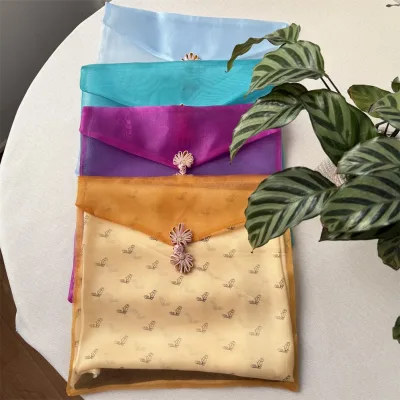
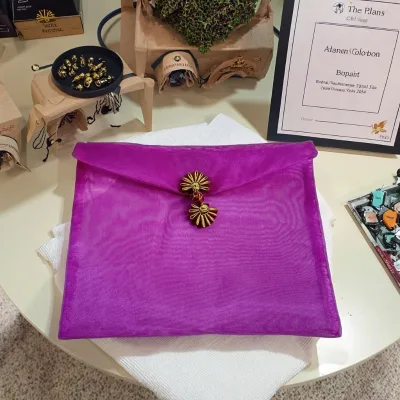
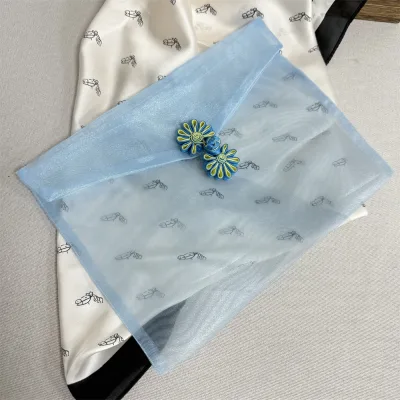
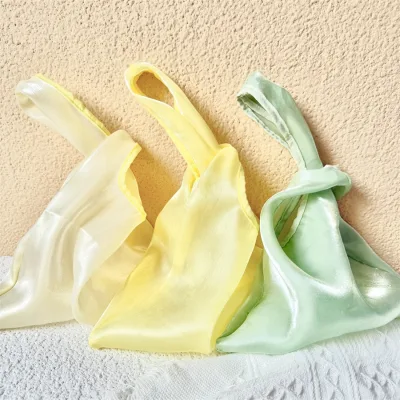
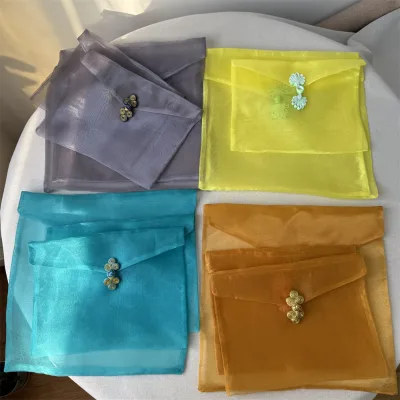
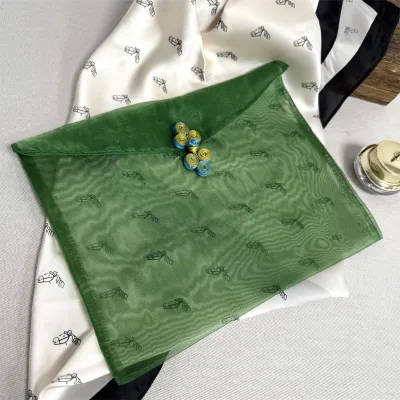


Personalized Organza Bag Organza Drawstring Gift Bag Premium Organza Cosmetic Bag
$0.30 - $0.60
MOQ: 1000 Pieces


Comprehensive Sourcing Guide
Sourcing Guide for Eco-Friendly Transparent Organza Envelope Bags
The global demand for sustainable packaging solutions has elevated the status of organza envelopes as a preferred choice for brands seeking a balance between aesthetic appeal and environmental responsibility. For procurement professionals researching the core keyword "eco-friendly transparent organza envelope bag," the market presents a diverse array of options ranging from small-scale craft supplies to large-volume industrial packaging. This guide synthesizes observed product attributes, technical specifications, and procurement realities to provide a disciplined framework for sourcing these items. The focus remains on verifying tangible product facts while navigating the complexities of supply chain verification without relying on unconfirmed marketing claims.
Understanding Material Composition and Transparency Standards
The foundational element of any organza envelope is the material itself. In the context of the observed product data, "Organza" is explicitly listed as the primary material for several high-volume listings. Organza is a sheer, lightweight plain-woven fabric, traditionally made from silk but now commonly produced from synthetic fibers like polyester or nylon to achieve cost efficiency and durability. The "transparent" attribute observed in the search results is a critical visual and functional characteristic. Buyers must verify that the transparency is consistent across the batch, as variations in weave density can lead to opacity issues that compromise the product's intended use for displaying contents.
While the term "eco-friendly" is frequently used in marketing, the supplied facts do not confirm specific organic certifications like GOTS or OEKO-TEX for the general organza listings. Therefore, procurement teams must treat the "eco-friendly" designation as a claim requiring verification rather than an inherent fact. The material's sustainability profile depends heavily on the fiber source and the manufacturing process. Some listings indicate the material is "Eco-Friendly" as a feature, but this should be cross-referenced with the supplier's ability to provide third-party test reports or specific fiber composition declarations. Buyers should request documentation confirming whether the organza is made from recycled polyester, virgin polyester, or a blend, as this distinction significantly impacts the product's environmental footprint.
Technical Specifications and Dimensional Variability
Technical specifications for organza envelopes vary significantly based on the intended application. The observed data reveals a wide spectrum of sizes, ranging from "Small" to "Middle" dimensions, with specific standard measurements provided in some listings. For instance, one specification lists a standard size of 1723cm (6.79inch), while another indicates 2030cm (7.811.8inch) and a smaller variant at 1015cm (3.95.9inch). These dimensions are not universal; they are product-specific attributes that must be matched precisely to the buyer's inventory needs.
The shape of the envelope is another critical technical parameter. The data shows a divergence between "Square" and "Oval" shapes. A square envelope is typically more efficient for stacking and storage, whereas an oval shape may be preferred for aesthetic reasons in gift packaging. Furthermore, the "Single package size" is noted as 12X20X0.2 cm in one listing, which provides insight into the compactness of the product when shipped in bulk. This dimension is vital for logistics planning, as it affects the volume of goods that can be loaded into a container.
Buyers must also consider the "prod_standard" attribute, which in some cases refers to a specific size (e.g., 17*23cm) and in others refers to a "Customized" standard. This indicates that while off-the-shelf sizes exist, the market is highly flexible regarding custom dimensions. When sourcing, it is essential to confirm whether the "customized" standard implies a new mold or simply a cut-to-size operation, as this distinction impacts the lead time and unit cost. The "Drawstring" feature is also highlighted in the data, with "organza bag" noted as the mechanism, which adds a functional closure element that must be durable enough to withstand repeated opening and closing.
Cost Drivers and Minimum Order Quantity Dynamics
The economics of sourcing organza envelopes are heavily influenced by the Minimum Order Quantity (MOQ) and the customization level. The observed MOQ range spans from 50 pieces to 5,000 pieces, with specific listings citing 50, 100, 300, 500, and 5,000 units. This wide variance suggests that the market accommodates both small-batch buyers and large-scale distributors. The lower MOQs, such as 50 or 100 pieces, are often associated with stock items or standard sizes, while higher MOQs like 5,000 pieces are typically required for custom branding or non-standard dimensions.
Price is another significant driver, with observed listed prices ranging from $0.01 to $1.80 USD. This broad range reflects differences in material quality, size, and the extent of customization. The "Without Logo Printing" items generally command lower prices compared to those with "With Logo Printing" or "Accept Custom Logo" capabilities. The cost of printing, specifically "Silk Screen Printing" or "Screen Printing" as noted in the process data, adds a variable cost layer. Buyers should anticipate that the inclusion of a custom logo will increase the unit price and potentially the lead time.
The "Sample" availability is a crucial factor in cost management. Data indicates that samples are available, with some suppliers offering "without logo for free" while charging for "with logo" samples. This distinction allows buyers to test the material quality and transparency without incurring high initial costs. However, the "Sample time" varies, with "without logo" samples taking 1-2 days and "with logo" samples taking 2-3 days. These lead times for samples should be factored into the overall procurement timeline. Additionally, the "Fast Delivery" option of 10 days for stock colors offers a cost-effective solution for urgent needs, whereas custom orders may require a longer lead time of 5-8 days or more, depending on the complexity of the customization.
Compliance, Certification, and Environmental Verification
A central challenge in sourcing "eco-friendly" products is the verification of environmental claims. The supplied facts do not explicitly confirm certifications such as GOTS, BSCI, ISO 14001, or EN 13432 for the specific organza listings. While these certifications are mentioned in the background knowledge, they should not be assumed to apply to every product unless the supplier provides explicit proof. The "Feature" attribute lists "Eco-Friendly" and "Dust Removal," but these are marketing descriptors that require substantiation.
Buyers must adopt a rigorous verification process. When a supplier claims their organza bags are eco-friendly, the procurement team should request specific documentation. This may include a Material Safety Data Sheet (MSDS), a fiber composition certificate, or a third-party audit report. The "prod_standard" being "Customized" in some cases implies that the environmental attributes might also be customizable, meaning a buyer could specify a recycled content percentage. However, without a specific standard like OEKO-TEX or GOTS confirmed in the product data, the buyer cannot assert that the product meets those specific thresholds.
Furthermore, the "Location" of origin, such as "Quanzhou City of Fujian Province" or "Guangdong, China," provides context for the supply chain but does not inherently guarantee compliance with international environmental standards. Buyers should evaluate the supplier's location in the context of local environmental regulations and the supplier's history of compliance. The "Payment" terms, including "T/T" and "Trade Assurance," offer a layer of financial security but do not substitute for technical compliance verification. It is essential to include compliance clauses in the purchase agreement, requiring the supplier to indemnify the buyer against any non-compliance with environmental regulations in the destination market.
Typical Applications and Usage Scenarios
The versatility of organza envelopes is evident in the diverse "Usage" categories observed in the product data. These include "Garment & Shoes," "Toy," "Jewelry," "Gift," "Arts and Craft," "Greeting Card/Letter," "Food," and "Cosmetic." This breadth of application underscores the product's adaptability across multiple industries. For the "Cosmetic" sector, the transparency of the bag allows customers to see the product inside, which is a significant marketing advantage. The "Dust Removal" feature is particularly relevant for jewelry and garment packaging, where protection from dust and debris is essential.
In the "Toy" and "Gift" sectors, the "Korean Style" aesthetic noted in the data suggests a trend towards fashionable and visually appealing packaging. The "Multiple Colors Available" and "4 Colors" options allow brands to align their packaging with their brand identity. The "Square" and "Oval" shapes offer different tactile experiences, with the oval shape often perceived as more premium or elegant. The "OPP Bag" packing method mentioned in the data indicates that the organza envelopes are often further protected during shipping, ensuring they arrive in pristine condition.
For "Arts and Craft" and "Greeting Card/Letter" applications, the small and middle sizes are particularly suitable. The ability to customize the size and shape allows artisans to create unique packaging solutions for their specific products. The "Drawstring" closure is a functional element that adds a touch of sophistication, making the bag reusable and enhancing the unboxing experience. Buyers should consider the end-user's interaction with the packaging; for example, a jewelry brand might prioritize the "Fashionable" aspect, while a food brand might prioritize the "Eco-Friendly" and "Dust Removal" features.
Supplier Evaluation and Quality Control Protocols
Selecting the right supplier requires a multi-faceted evaluation strategy. The "Brand Name" and "Place of Origin" are basic identifiers, but deeper due diligence is necessary. Buyers should assess the supplier's capacity to handle "Custom Order" requests, as the data shows a high degree of customization. The "Lead time" of 5-8 days for custom orders and 10 days for stock colors provides a benchmark for planning, but buyers must verify if these timelines are consistent across different suppliers.
Quality control is paramount, especially given the "Eco-Friendly" claims. Buyers should implement a rigorous inspection protocol that includes checking for material consistency, transparency levels, and the durability of the drawstring. The "Single gross weight" of 0.500 kg for a single package provides a reference point for weight verification, ensuring that the supplier is not underfilling the package or using substandard materials. The "Printing Handling" method, specifically "Silk Screen Printing," should be inspected for color consistency and adhesion, as poor printing quality can detract from the product's value.
The "Sample" process is a critical quality control step. Buyers should order samples with and without logos to test the material's feel, transparency, and print quality. The "Sampple time" of 1-2 days for non-logo samples and 2-3 days for logo samples allows for rapid iteration. If the sample does not meet the required standards, the buyer should request a revision before proceeding with a large order. The "Payment" terms, such as "Trade Assurance," can be leveraged to ensure that the supplier adheres to the agreed-upon quality standards before releasing funds.
Long-Term Procurement and Supply Chain Resilience
Sourcing organza envelopes is not a one-time transaction but a long-term partnership that requires strategic planning. The "Customized" standard and "Accept Custom Logo" attributes indicate that the market is dynamic and responsive to changing consumer preferences. Buyers should build relationships with suppliers who can adapt to new trends, such as the "Korean Style" aesthetic or new color palettes. The "Fast Delivery" option for stock colors provides a safety net for urgent needs, but reliance on this should be balanced with a robust inventory management strategy.
Supply chain resilience is also influenced by the "Location" of the supplier. With origins in Fujian and Guangdong, buyers should consider the logistical implications of shipping from these regions. Diversifying the supplier base can mitigate risks associated with regional disruptions. The "MOQ" flexibility, ranging from 50 to 5,000 pieces, allows buyers to scale their orders based on demand fluctuations. However, buyers must be mindful of the cost implications of smaller orders, which may have higher unit prices.
Finally, the "Eco-Friendly" aspect of the product requires ongoing monitoring. As environmental regulations evolve, buyers must stay informed about new standards and certifications. The ability to verify the "Eco-Friendly" claim through third-party testing will become increasingly important. By maintaining a disciplined approach to verification and quality control, buyers can ensure that their sourcing of eco-friendly transparent organza envelope bags meets both commercial and environmental objectives. The data provided offers a solid foundation for these decisions, but the ultimate success lies in the buyer's ability to validate claims and maintain high standards throughout the supply chain.
FAQs
What customization options are available for organza envelope bags?
Customization is available for size, logo, and shape. Buyers can request specific dimensions like 17x23cm or 20x30cm, choose between square or oval shapes, and add custom logos via silk screen printing. Standard sizes are also offered for immediate stock needs.
Can I get samples of eco friendly transparent organza bags?
Samples are available for both stock and custom orders. Samples without logos are typically free and take 1-2 days to produce, while samples with custom logos require a fee and take 2-3 days. This allows buyers to verify material quality before placing bulk orders.
How does the minimum order quantity vary for these bags?
Minimum order quantities range from 50 pieces to 5000 pieces depending on the supplier and customization level. Stock items often have lower MOQs like 50 or 100 units, whereas custom branding or non-standard sizes may require higher volumes such as 500 or 5000 pieces to be viable.
What are the typical lead times for stock versus custom orders?
Lead times differ based on order type and color availability. Stock colors can be delivered quickly in about 10 days, while custom orders generally require 5 to 8 days for production. Specific lead times may vary based on the supplier's location in Fujian or Guangdong provinces.
Which materials and features define these transparent organza bags?
The primary material is organza, often described as eco-friendly and dust removal capable. These bags are transparent, available in multiple colors, and feature drawstrings for closure. They are suitable for various uses including jewelry, cosmetics, toys, and gift packaging.
What payment methods are accepted for purchasing these envelopes?
Common payment methods include T/T and Trade Assurance. These options provide financial security for buyers while allowing flexibility for international transactions. Buyers should confirm specific payment terms with the supplier before finalizing the order to ensure smooth processing.
How are the organza envelope bags packaged for shipping?
Packaging options include OPP bags for individual protection or bulk boxes containing 100 or 500 pieces. The single package size is approximately 12x20x0.2 cm, ensuring compact shipping. Bulk packaging helps prevent damage during transit and simplifies inventory management for the buyer.