Source Custom Size Printable ID Card for Access Control
Find and compare 30 listings for Custom Size Printable ID Card options including PVC and stainless steel materials. Buyers can evaluate specifications such as magnetic stripe types, NFC chip integration, and printing methods to select the right solution for access control systems, business gifts, and electronic game cards.
Updated
Key considerations
Products List


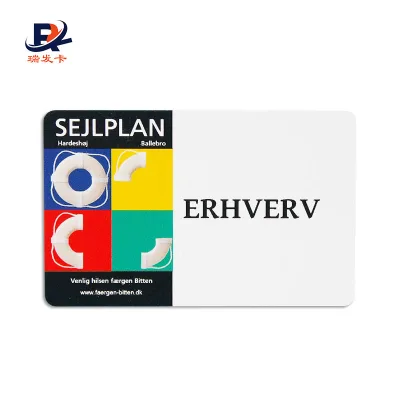
Custom Plastic Magnetic Business ID Card with Different Employee Name Printing
$0.10 - $0.50
MOQ: 500 Pieces


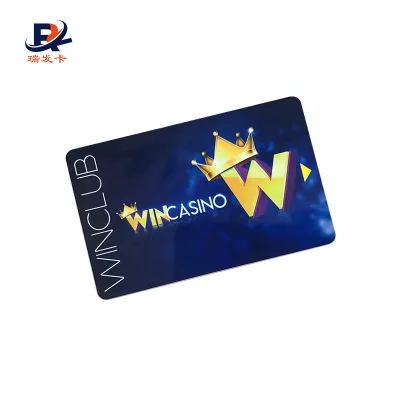
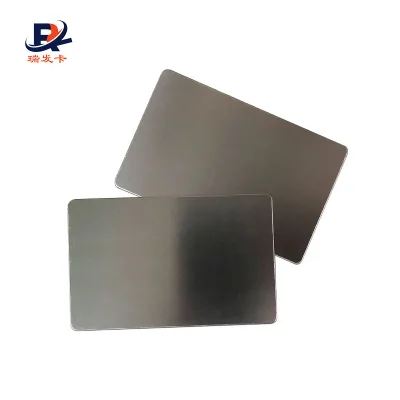
Custom Luxury Membership Card New Design Printing RFID Metal Custom Business Card
$0.5853 - $1.3129
MOQ: 1 Minimum


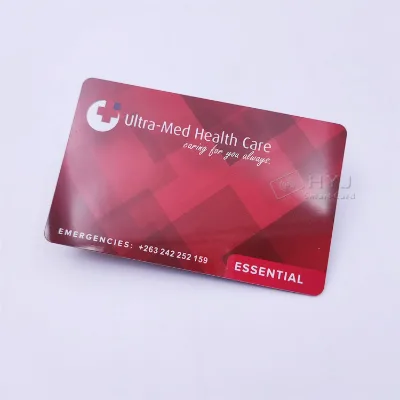
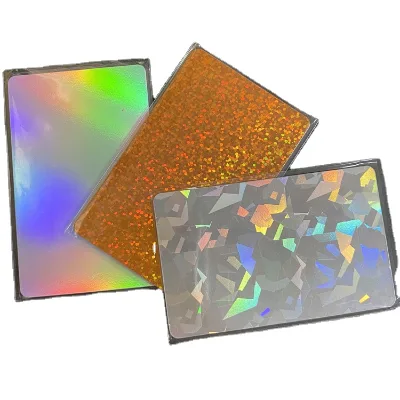
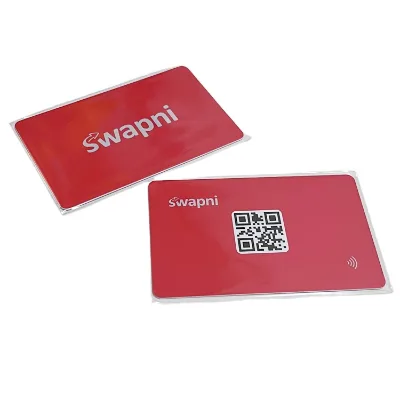
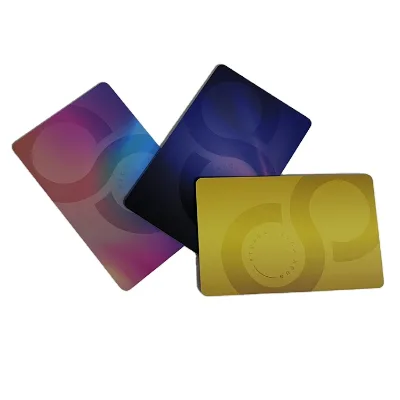
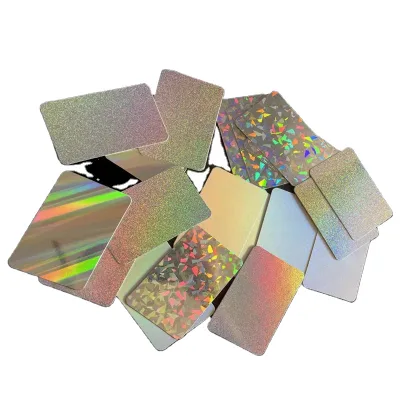
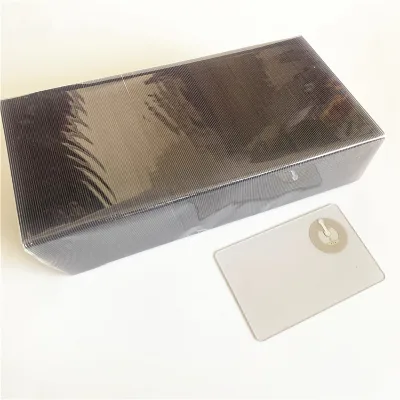
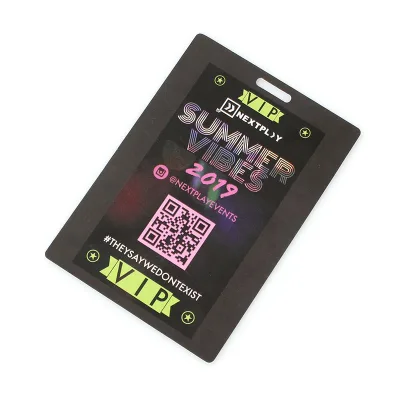


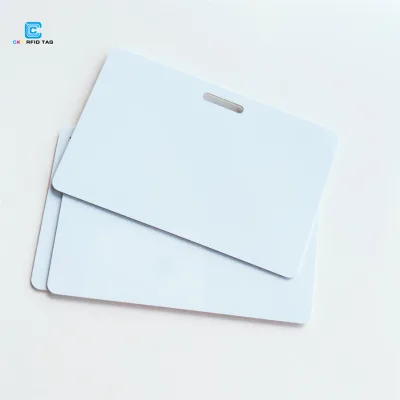


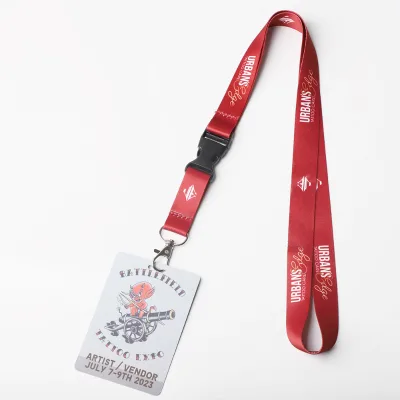
Preprinted Printable Plastic PVC Membership ID Card with Photo Printing
$0.027 - $0.75
MOQ: 1000 Pieces


Comprehensive Sourcing Guide
Custom Size Printable ID Card Sourcing Guide
Custom size printable ID cards occupy a practical middle ground in the identification products market: buyers can order cards matched to their specific application—standard credit card format for payment or access programs, or non-standard dimensions for niche readers and gift programs—while retaining full printable surfaces for branding, variable data, and security overprints. The listings observed span a wide commercial range, from commodity blank PVC cards priced as low as a few cents per unit to finished stainless steel cards at roughly the upper dollar mark, with minimum order quantities stretching from single samples to tens of thousands of pieces. This spread tells buyers two things at once: the product category is highly accessible for pilot programs and small branded runs, yet it is also industrialized enough to support high-volume identification deployments with mature tooling and finishing processes.
This guide is written for procurement teams evaluating suppliers of printable ID cards in custom sizes. It focuses on what the observed listings actually disclose—materials, printing methods, magnetic stripe specifications, dimensions, lead times, and packaging—and on the verification steps a buyer should complete before committing to a production order. Because listings present attributes as observations rather than guarantees, every section below pairs the disclosed signals with a practical check the buyer should perform, either through documentation requests or through pre-production samples.
Product Scope and Observed Listing Signals
The observed listings cluster around several recognizable product families. The dominant family is PVC magnetic stripe cards in the standard credit card format (85.5×54mm, 0.76mm thickness or custom), positioned for identification, payment, encryption/decryption, and information functions, with stated usage covering credit card, bus card, and electronic game card applications. A second family is 13.56MHz high-frequency smart cards and passive NFC read-write cards, described as non-contact type with parallel data transmission, applied to access control systems and business gifts. A third family is stainless steel cards with engraving, etching, and screen-printing artwork options, marketed as blank ID, gift, or smart cards with customized logo support.
Commercial signals from the listings are equally informative. Product models such as C000093, C000081, C0000100, ZF20230302003, and ZF20230228007 indicate catalogue-managed production lines. Origins concentrate in Shenzhen, Guangzhou, and Hubei, China. Stated lead times run as short as seven days, MOQs range from 1 to 10,000 units, packaging is carton or standard (with one listing specifying 200pcs/box), and samples are explicitly available. Buyers should treat these as starting points: confirm which family actually matches the target application before comparing quotes across families.
Technical Specifications to Verify
Dimension and thickness tolerance should be the first specification locked down. The listings disclose 85.5×54mm as the standard credit card format, with 0.76mm PVC thickness or custom thickness (one stainless steel listing states 0.86mm). If cards must pass through existing printers, laminators, or readers, request written tolerance ranges and confirm the card conforms to the dimensional standard your equipment assumes, since the background standards referenced (ISO 2026, IEC 7810, IEC 10373, IEC 24789) appear in context but their applicability to a given listing is not established. For custom sizes, request a die-cut sample before tooling is finalized.
For magnetic stripe cards, the listings specify Hi-Co 2750OE or Lo-Co 300OE—verify which coercivity your reader infrastructure requires, since mismatch renders cards unreadable. For contactless smart card listings, confirm chip type (NFC is disclosed), frequency (13.56MHz is disclosed), read-write method, and the card layout options offered (2×5, 3×8, 3×6, 4×8, 5×6, etc.). Printing method matters as well: Heidelberg offset, silk screen, or general offset printing are disclosed options—choose based on artwork complexity and variable-data needs, and test print quality on actual card stock.
Compliance and Safety Documentation
The listings disclose CE and RoHS certification, which is a meaningful baseline signal but should never be accepted at face value. Request the actual certificates, verify they are current and issued to the manufacturing entity that will produce your order, and check the scope covers PVC card construction and, where relevant, the stainless steel material. RoHS compliance is particularly relevant for payment and electronic game card applications where cards may be handled frequently or enter restricted markets; ask for material declarations or test reports supporting the claim rather than the certificate alone.
Beyond the disclosed certifications, buyers should consider what documentation their own market requires. Cards carrying magnetic stripes or NFC chips destined for payment, access control, or transit use may need to demonstrate interoperability with the buyer's reader systems even if no statutory certification applies. For custom-size cards especially, dimensional conformance documentation—reports referencing recognized test methods such as those suggested by the background standards, provided the supplier confirms applicability—should be requested in writing. Build a documentation checklist into your purchase agreement: certificate copies, material declarations, and dimensional inspection reports delivered with each production lot, not just with the golden sample.
Cost Drivers and Commercial Terms
The observed price range of roughly USD 0.03 to 1.31 reflects real cost drivers buyers should understand before comparing quotes. Material choice is the largest factor: thin PVC blanks at the bottom of the range versus stainless steel with engraving or etching at the top. Second is card complexity: magnetic stripe (Hi-Co typically costs more than Lo-Co), NFC or smart chip inclusion, and printing method (offset for full-color artwork versus silk screen for simpler designs). Surface finish—gloss, frosted, matte, or glitter—and customization level (ODM/OEM services are disclosed as available) add cost. Finally, order volume against the stated MOQ range of 1 to 10,000 units strongly influences unit price, with the lowest prices almost certainly tied to the highest volumes.
Commercial terms deserve equal scrutiny. Stated lead time of seven days applies to some listings but may not hold for customized or large orders—confirm the actual lead time for your specification, including proofing time. Clarify packaging (carton, standard, or 200pcs/box), freight terms, sample policy and sample cost, payment terms, and whether tooling charges for custom sizes are one-time or recurring. With MOQs as low as 1 unit in some listings, buyers can de-risk by ordering samples first, but should negotiate production pricing separately rather than extrapolating from sample pricing.
Supplier Qualification and Quality Control
Supplier qualification should begin with a capability match, not a price comparison. The listings show manufacturers offering ODM/OEM customization, multiple printing processes (Heidelberg offset, silk screen, offset), four surface finishes, and both PVC and stainless steel construction—evidence of production breadth, but also a signal that quality may vary across product lines within one factory. Ask which production line will handle your order, request factory information including the disclosed origins (Shenzhen, Guangzhou, Hubei), and verify that the supplier controls the critical processes for your card type: stripe application, chip encoding, and die-cutting for custom dimensions.
Quality control should be structured around pre-production and pre-shipment checkpoints. Before mass production, approve a golden sample covering size, thickness, print colors, stripe coercivity, and chip function. For production lots, specify inspection criteria in writing: dimensional checks against the agreed 85.5×54mm or custom standard, print adhesion and registration, stripe readability across the lot, and read-write testing for smart cards. Sample availability is disclosed in the listings—use it. For first orders, consider third-party inspection before shipment, especially for customized runs where rework or replacement would disrupt a launch timeline.
Long-Term Procurement Checks
For repeat purchasing, consistency matters more than the initial quote. Track whether successive production lots match the golden sample in color, thickness, and stripe or chip performance; gradual drift often indicates changed materials or subcontracted production. Maintain documented specifications on file—model numbers such as C000093 or ZF20230302003 in the listings help anchor repeat orders, but buyers should attach their own controlled specification sheet to every purchase order so that "custom" remains precisely defined over time. Reconfirm certificates annually, since CE and RoHS status can lapse or be renewed under a different legal entity.
Supply continuity is the other long-term risk. Cards for payment, access control, or transit programs are consumed continuously, so evaluate whether the supplier can sustain your demand profile—confirm material sourcing for PVC or stainless steel, capacity for the higher end of the observed MOQ range, and lead-time stability beyond the disclosed seven-day figure. Diversify before problems arise: qualify a second source with the same specification once volumes justify it. Finally, review total cost of ownership periodically, including print quality-related failure rates in the field, not just unit price, to decide when renegotiation or resourcing is warranted.
FAQs
Can custom size printable id cards be manufactured with specific certifications?
Yes, these cards can be produced with CE and RoHS certifications to meet international safety and environmental standards. Buyers requiring compliant identification solutions should verify that the manufacturer holds these specific credentials before placing bulk orders. This ensures the final product adheres to regulatory requirements for electronic components and materials used in card production.
What is the standard thickness for these PVC identification cards?
The standard thickness is typically 0.76mm, though custom thickness options are available upon request. This dimension aligns with standard credit card sizes, ensuring compatibility with most card readers and wallets. Buyers needing non-standard profiles should specify their requirements during the customization phase to ensure proper functionality with existing hardware systems.
How long does production take for custom printed ID cards?
Production lead time is generally seven days for standard orders. This timeframe applies to most customization requests, including logo printing and specific material selections. Buyers should account for shipping duration separately and confirm exact delivery schedules with the supplier, as peak seasons or complex customizations may slightly extend the manufacturing window.
What printing methods are available for these blank PVC cards?
Available printing methods include Heidelberg Offset Printing and Silk Printing for high-quality graphics. These techniques ensure durable and vibrant images on the card surface. Buyers can choose between glossy, frosted, matte, or glitter finishes to match their branding needs. The selected method impacts the final aesthetic and durability of the printed identification cards.
Are smart card features available for these customizable ID cards?
Yes, smart card variants are available featuring NFC chips and high-frequency operation at 13.56MHz. These cards support read-write functions and encryption for secure data transmission. Buyers requiring advanced security or contactless payment capabilities should select these models. They are suitable for access control systems and electronic game cards requiring secure identification.
What is the minimum order quantity for custom ID cards?
The minimum order quantity varies, with some suppliers accepting orders as low as one piece for samples. Bulk orders typically start at 100 units, while larger productions may require up to 10,000 units. Buyers should confirm the specific MOQ with their chosen manufacturer, as pricing and production capabilities often depend on the volume ordered.