Source Customizable Animal Plush Toy for Gifts, Promos, and Retail
Explore 27 options for customizable animal plush toy products suitable for gifts, promotional items, and retail inventory. Compare specifications such as material, size, and certification to find the right supplier for your needs; compare the available evidence and request quotations based on your requirements.
Key considerations
Products List




Comprehensive Sourcing Guide
Customizable Animal Plush Toy Sourcing Guide
Sourcing customizable animal plush toys requires a strategic balance between creative design flexibility and rigorous manufacturing oversight. Buyers must recognize that these products are not off-the-shelf items but rather bespoke goods where every element, from material selection to packaging, is tailored to specific brand requirements. The process begins with defining the exact specifications for the plush toy, including its size, filling type, and interaction features. Since customization is available, suppliers can accommodate unique requests, but this flexibility introduces complexity in quality control and production timelines. Understanding the scope of customization is critical to avoiding misunderstandings with suppliers and ensuring the final product aligns with brand expectations.
The market for these toys is diverse, ranging from simple keychains to larger interactive dolls. Observed listings indicate a wide range of models, such as Interaction Toy-073N and various HW series codes, suggesting that suppliers offer multiple base templates that can be modified. Buyers should evaluate whether they need a simple plush keychain or a more complex electronic interaction toy. The choice of model affects the technical specifications, compliance requirements, and cost structure. It is essential to clarify the intended use, whether for gifts, promotional items, or retail, as this influences the level of detail and quality expected in the final product.
Product Scope and Observed Listing Signals
The observed product range includes items described as custom plush dolls, keychains, and interactive toys, with materials primarily consisting of cotton fabric and plush combined with PP cotton filling. Sizes vary from medium to large, and colors like black are common, though customization allows for any hue. Interaction modes can be electronic, with features like light changes, indicating that some products are designed for infants aged 0-3 months, while others are suitable for ages 3 and up. This diversity means buyers must carefully select the appropriate product type based on the target audience and intended function, ensuring the physical attributes match the desired user experience.
Packing methods observed include polybags, boxes, and OPP bags, with carton quantities ranging from 30 to 40 pieces. This variability in packaging suggests that suppliers offer different levels of retail readiness, from bulk shipping to individual gift-ready presentation. Buyers should consider the end-market requirements when specifying packaging, as this impacts logistics costs and shelf appeal. Additionally, the presence of OEM and ODM services indicates that suppliers are equipped to handle custom branding, including logos and hang tags. This capability allows for strong brand integration, but it requires clear communication of design files and branding guidelines to ensure accurate execution.
Technical Specifications to Verify
Verifying technical specifications is crucial for ensuring the plush toy meets functional and aesthetic requirements. Key attributes to confirm include the interaction mode, such as electronic features for light changes, and the age appropriateness, which dictates safety standards and design complexity. For interactive toys, the reliability of electronic components must be assessed, while for standard plush toys, the focus should be on the quality of the cotton fabric and the density of the PP cotton filling. Buyers should request samples to evaluate the tactile feel, durability, and overall craftsmanship, as these factors significantly influence customer satisfaction and product longevity.
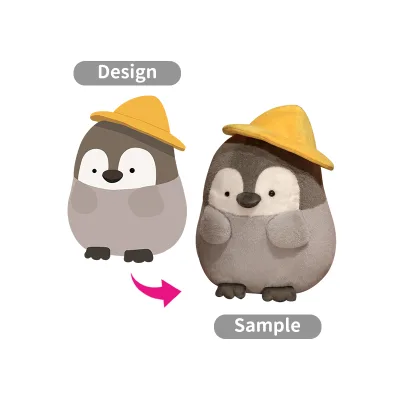
Size and weight are also critical technical parameters that affect shipping costs and product perception. Observed sizes range from medium to large, and weights are often customizable, allowing for precise control over the final product's heft and presence. Buyers should specify exact dimensions and weight tolerances to avoid discrepancies in production. Additionally, the modeling source, whether custom or based on existing templates, impacts the production time and cost. Clear technical drawings and specifications are essential to guide the supplier in creating accurate prototypes, ensuring that the final product matches the design intent without unexpected variations in shape or proportion.
Compliance and Safety Documentation
Compliance with safety standards is non-negotiable for plush toys, especially those intended for children. Certifications such as CE, En71, ASTM, CPSIA, and REACH are commonly cited, indicating adherence to international safety regulations. Buyers must verify that the supplier holds valid certificates for the specific product type and target market, as requirements vary by region. For instance, ASTM and CPSIA are critical for the US market, while CE and REACH are essential for Europe. Documentation should be up-to-date and cover the specific materials and components used in the plush toy, ensuring that all parts, including electronic elements, meet safety criteria.
Testing reports are another vital component of compliance documentation. Suppliers should provide test results for physical and mechanical properties, flammability, and chemical safety, as per ASTM and En71 standards. These tests ensure that the plush toy is free from harmful substances and is durable enough to withstand typical use. Buyers should request these reports before placing large orders and consider third-party inspections to validate the supplier's claims. Additionally, labels and hang tags must include accurate age warnings and care instructions, which are often customizable but must comply with regulatory requirements to avoid legal issues and ensure consumer safety.
Cost Drivers and Commercial Terms
Several factors influence the cost of customizable animal plush toys, including material quality, customization complexity, and order quantity. The use of premium cotton fabric and high-density PP cotton filling increases costs, as does the inclusion of electronic components for interactive features. Custom designs and unique packaging solutions also add to the expense, as they require additional labor and resources. Buyers should understand these cost drivers to budget effectively and negotiate favorable terms. It is important to request detailed quotes that break down costs by material, labor, and overhead, allowing for transparent comparison between suppliers.
Commercial terms such as MOQ, lead time, and payment conditions significantly impact procurement strategy. Observed MOQs range from 1 piece to 2000, with some suppliers requiring 10,000 pieces for certain customizations. Lead times vary, with sample production taking 3-7 working days and bulk production around 20 days, depending on order quantity. Buyers should align their order quantities with their sales forecasts to minimize inventory costs while meeting MOQ requirements. Payment terms should be negotiated to balance risk, with options like partial upfront payment and balance upon shipment being common. Clear commercial terms help avoid disputes and ensure smooth transaction processes.
Supplier Qualification and Quality Control
Qualifying suppliers involves assessing their manufacturing capabilities, quality control systems, and past performance. Buyers should verify certifications such as BSCI and ISO9001, which indicate adherence to social responsibility and quality management standards. Site audits or virtual inspections can provide insights into the supplier's production environment, workforce conditions, and quality control processes. It is essential to ensure that the supplier has experience in producing customizable plush toys and can handle complex designs and electronic components. A supplier's ability to provide high-quality samples is a strong indicator of their manufacturing competence and attention to detail.
Quality control measures should be established throughout the production process, from raw material inspection to final product testing. Buyers should define clear quality standards and inspection criteria, including checks for stitching, filling distribution, and electronic functionality. Third-party inspection services can be engaged to conduct pre-shipment inspections, ensuring that the products meet the agreed-upon specifications. Feedback loops should be established to address any quality issues promptly, with suppliers required to implement corrective actions. Regular communication and collaboration with the supplier help maintain quality consistency and build a reliable supply chain for customizable plush toys.
Long-Term Procurement Checks
Long-term procurement success depends on continuous monitoring of supplier performance and market trends. Buyers should regularly review supplier metrics, such as on-time delivery rates, defect rates, and responsiveness to issues. Building a strong relationship with the supplier facilitates better communication and problem-solving, leading to improved product quality and service. It is also important to stay updated on changes in safety regulations and market demands, as these can impact product specifications and compliance requirements. Adapting to these changes ensures that the plush toys remain relevant and compliant in the target market.
Sustainability and ethical sourcing are increasingly important considerations for long-term procurement. Buyers should encourage suppliers to adopt sustainable practices, such as using eco-friendly materials and reducing waste. This not only aligns with consumer preferences but also mitigates risks associated with environmental regulations. Regularly evaluating the supply chain for ethical compliance, including labor practices and environmental impact, helps maintain brand integrity and customer trust. By focusing on these long-term checks, buyers can build a resilient and responsible supply chain for customizable animal plush toys, ensuring sustained success and growth.
FAQs
Can I customize the design of the plush toy?
Yes, customization is available for these plush toys. Buyers can provide custom designs or logos to create unique products. The manufacturing process supports OEM and ODM services, allowing for tailored features such as specific colors, sizes, and materials like cotton fabric to meet individual brand requirements.
What certifications do the plush toys have?
The plush toys hold multiple safety certifications including CE, En71, ASTM, CPSIA, and Reach. These standards ensure the products meet international safety requirements for children's items. Additional quality assurance is supported by BSCI and ISO9001 certificates, providing confidence in the manufacturing quality and ethical production practices.
What is the minimum order quantity for these toys?
The minimum order quantity varies by product type. Some items have an MOQ of 1 piece, while others require 10,000 units. Buyers should check specific product listings for exact MOQ values. This flexibility allows both small-scale testing and large-volume industrial orders to be accommodated by different suppliers.
How long does production take for custom orders?
Production time is approximately 20 days, though it may vary based on order quantity. Sample preparation typically takes 3 to 7 working days. These timelines help buyers plan their inventory and launch schedules effectively. Exact lead times should be confirmed with the supplier based on the specific customization complexity.
What materials are used in the plush toys?
The toys are primarily made from cotton fabric and filled with PP cotton or cotton filling. They are designed to be soft and comfortable for users. The materials are selected to meet safety standards and provide a high-quality tactile experience. Some models may also feature electronic interaction modes for enhanced engagement.
Are these toys suitable for infants under three months?
Yes, specific models are designed for infants aged 0-3 months. These toys often feature light changes and electronic interaction modes to stimulate early development. They are crafted with soft, comfortable materials to ensure safety. Buyers should verify the specific age recommendations on the product page to ensure suitability for their target demographic.