Source Customized Casting Pickleball Medals for awards, souvenirs, and gifts
Find 30 listings for Customized Casting Pickleball Medals from Chinese manufacturers. Buyers can compare plating options, techniques like die casting and enamel, and custom shapes for sports awards and promotional gifts.
Key considerations
Products List


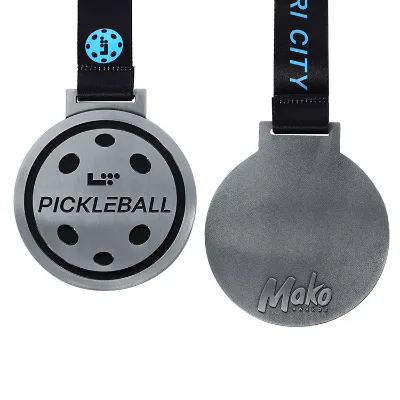
Silver Medal Sports Medals Custom Manufacturer in China Custom Pickleball Medal
$0.10 - $1.53
MOQ: 50 Minimum
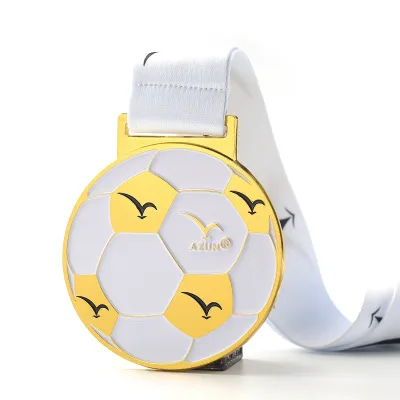


Personalized Sport Medal Custom Gymnastics Softball Volleyball Winners Medal
$0.68 - $1.25
MOQ: 10 Pieces




Comprehensive Sourcing Guide
Strategic Sourcing Guide for Customized Casting Pickleball Medals
Understanding the Product Landscape and Technical Specifications
The procurement of Customized Casting Pickleball Medals requires a precise understanding of the intersection between traditional metal casting techniques and modern sports award aesthetics. Based on the available market data, these items are fundamentally defined as "Customized Pickleball Medals" or "Custom Pickle Ball Medals," often categorized under broader keywords like "Award Sport Medal" and "Custom Sports Medals." The core material composition is identified as metal, which serves as the substrate for various finishing processes. A critical technical distinction in this category is the manufacturing technique. While the product data explicitly lists "Die Casting" as a primary method, it also frequently references "3D Soft Enamel" and "Hard Enamel" techniques. This suggests that the sourcing strategy must account for hybrid manufacturing processes where a die-cast metal base is subsequently treated with enamel to achieve the desired visual depth and color fidelity.
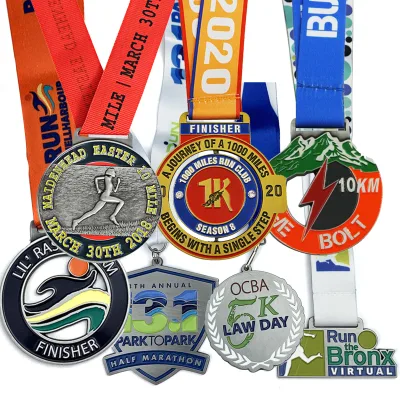
The physical attributes of these medals are highly flexible, driven by the "Customized Shape" and "Customized Size" specifications observed in the market. Buyers should expect dimensions to range significantly, with specific observations noting sizes from 3 cm up to 20 cm, suitable for various categories from youth tournaments to professional championships. The shape is not limited to standard circular forms; the "Customized Shape" attribute indicates that die-casting allows for complex geometries that can incorporate pickleball-specific motifs, such as paddles, balls, or court outlines. Furthermore, the plating options are extensive, including Gold, Silver, Copper, Black Nickel, and Antique finishes. This variety allows procurement teams to align the medal's appearance with the prestige of the event, ranging from standard silver finishes for participation awards to gold-plated options for championship winners. The "Custom Logo" capability is a standard feature, ensuring that organizational branding can be integrated directly into the casting or enamel process.
Cost Drivers and Pricing Dynamics
When analyzing the cost structure for Customized Casting Pickleball Medals, several variables influence the final unit price. The observed price range in the market spans from $0.10 to $1.53 USD per unit. This wide variance is not arbitrary but is directly correlated with the complexity of the die-casting process, the weight of the metal used, and the sophistication of the plating and enamel application. A simple, flat die-cast medal with a basic gold plating will sit at the lower end of this spectrum, whereas a multi-layered 3D soft enamel medal with an antique finish and a custom, intricate shape will command a price closer to the upper limit.
The Minimum Order Quantity (MOQ) is another significant cost driver. The data indicates an MOQ range between 2 and 100 units, with a specific observation of 50 pieces as a common threshold. For buyers with smaller budgets or those testing a new design, the lower MOQs allow for entry into the market with minimal capital risk. However, the unit cost typically decreases as the order volume increases due to the amortization of the die-casting mold costs and the efficiency of bulk plating and packaging. The "Selling Units" are listed as "Single Item," which implies that the pricing is calculated per individual medal, but the transaction is usually bound by the MOQ constraints. Additionally, the "Customized Package" option introduces a variable cost; while standard packaging like "Opp Bag + foam + Carton Box" is common, custom packaging solutions will increase the overall procurement cost. Buyers must balance the desire for premium packaging against the per-unit cost to optimize their total budget.
Compliance, Certification, and Quality Verification
In the realm of B2B procurement for sports awards, compliance and quality verification are paramount, even for items that are often perceived as decorative. The product data confirms the origin as "Chinese Manufacturer," specifically noting "Zhejiang, China" as a place of origin. While the data does not list specific third-party certifications (such as ISO or ASTM), buyers must proactively verify that the metal alloys used comply with international safety standards, particularly regarding lead and cadmium content, which are critical for items that may be handled by children or worn by athletes.
Quality is explicitly marketed as "High Quality" in the product descriptions, but this is an observation rather than a guaranteed standard for every supplier. To ensure compliance, buyers should request material safety data sheets (MSDS) for the metal and plating chemicals. The "Customized size" and "Customized package" attributes suggest that the production process is flexible, which can introduce variability in quality control. Therefore, the verification process should include a rigorous review of the "Sample Time," which is noted as 3-10 work days. This window is crucial for conducting physical inspections of the prototype. Buyers should verify that the die-casting process does not result in porosity or weak points, and that the enamel application is free of bubbles or uneven coloring. The "Finished" status is listed as "Custom," reinforcing the need for a pre-shipment inspection to ensure the final product matches the approved sample in terms of weight, dimensions, and finish quality.
Typical Applications and Usage Scenarios
The versatility of Customized Casting Pickleball Medals makes them suitable for a diverse array of applications beyond the immediate context of a pickleball tournament. The "Usage" attributes list "Personal Decorations," "Promotion Gifts," "Souvenirs," "Home Decorations," "Commerce Gift," "Collection," and "Religious Crafts." This broad categorization indicates that these medals serve as high-value promotional tools for businesses looking to brand their events, as well as collectible items for enthusiasts.
In the specific context of sports, the "Application" field highlights "Art & Collectible," "PRAYER," "Business Gift," "Promotion Gift," "Travel," "Advertising," "Anniversary," and "Awards Souvenior." This suggests that the medals are often used in corporate gifting strategies where a sports theme is appropriate, or as commemorative items for anniversaries and travel events. The "Style" is identified as "Sports," which aligns with their primary function as awards for competitions. However, the "Customized Shape" and "Custom Logo" capabilities allow these items to be repurposed for non-sporting events, such as corporate recognition awards or charity fundraiser souvenirs. The "Keyword" data, which includes terms like "Marathon Medals" and "Karate Medals," further illustrates that the same manufacturing platform can be adapted for various sporting disciplines, making these medals a flexible asset for event organizers who may host multiple types of competitions.
Supplier Evaluation and Production Capabilities
Selecting the right supplier for Customized Casting Pickleball Medals requires a deep dive into their technical capabilities and production flexibility. The data indicates that suppliers offer "Customized Package" and "Customized size," which implies a high degree of customization capability. A robust supplier evaluation should focus on their ability to handle the "Die Casting" process while simultaneously managing the "3D Soft Enamel" and "Hard Enamel" finishing steps. The presence of multiple plating options (Gold, Silver, Copper, Black Nickel, Antique) suggests that the supplier has access to diverse electroplating facilities.
Buyers should verify the supplier's experience with the specific "Model Number" of "custom" or "Pickleball Medals Medalla Medallion Medal." The "Brand Name" "Dream Culture" appears in the data, but buyers should not rely on a single brand; instead, they should evaluate the supplier's portfolio for similar projects. The "Sample Time" of 3-10 work days is a key performance indicator for the supplier's responsiveness. A supplier that consistently meets this timeline demonstrates efficient workflow management. Additionally, the "Single gross weight" of 1.000 kg and "Single package size" of 20X20X20 cm provide concrete data for logistics planning. Buyers should ensure that the supplier can scale these packaging dimensions for larger orders without compromising the protection of the medals during transit. The "Printing" capability, described as "base on your design," confirms that the supplier can handle digital or vector file inputs for custom logos, a critical requirement for branding.
Long-Term Procurement and Quality Control Strategies
Establishing a long-term procurement relationship for Customized Casting Pickleball Medals involves more than just securing a single order; it requires a strategy for consistent quality and supply chain reliability. The "Customized" nature of the product means that every order is essentially a new project, making the standardization of quality control processes essential. Buyers should implement a "First Article Inspection" (FAI) protocol for every new design to ensure that the die-casting mold produces the correct dimensions and that the enamel application meets the color specifications.
Given the "High Quality" claim in the product data, buyers must define what that means in their specific context. This could involve setting tolerances for weight variance, plating thickness, and enamel adhesion. The "Customized Package" attribute suggests that packaging should be part of the quality control checklist to prevent damage during shipping. For long-term contracts, buyers should negotiate a "Sample Time" that remains consistent, as delays in sample approval can cascade into delays in mass production. Furthermore, the "MOQ" of 50 pieces offers a baseline for inventory management, but buyers should discuss the feasibility of smaller re-order quantities to maintain lean inventory levels. Finally, the "Place of Origin" being Zhejiang, China, implies that buyers should factor in lead times for international shipping and potential customs duties when planning their event timelines. By establishing clear communication channels and defining quality benchmarks early, buyers can ensure a steady supply of high-quality medals that meet the evolving needs of their sporting events and promotional campaigns.
FAQs
What customization options are available for the medals?
Buyers can request customized shapes, sizes, and logos to match specific event needs. The manufacturing process supports die casting and enamel techniques, allowing for complex geometries and detailed branding on the metal surface.
How long does it take to receive a sample?
The sample time typically ranges from 3 to 10 work days. This period allows manufacturers to produce a prototype for quality verification before proceeding with mass production of the custom order.
Which plating finishes can be selected for the medals?
Available plating options include Gold, Silver, Copper, Black Nickel, and Antique finishes. These choices allow buyers to align the medal's appearance with the prestige of the award or the theme of the event.
What is the minimum order quantity for these medals?
The minimum order quantity generally ranges from 2 to 100 units, with 50 pieces being a common threshold. Lower MOQs are available for testing designs, while larger orders may reduce the per-unit cost.
Can the packaging be customized for bulk orders?
Yes, customized packaging is available to meet specific branding or shipping requirements. Standard options include OPP bags with foam and carton boxes, but buyers can request tailored solutions for their distribution needs.
What materials are used to manufacture these sports medals?
The medals are manufactured using metal as the primary substrate. This material serves as the base for various finishing processes like die casting and enamel application to ensure durability and high quality.
Where are these medals typically manufactured?
These products originate from manufacturers in Zhejiang, China. This location is a known hub for metal casting and award production, offering access to established supply chains for custom sports memorabilia.